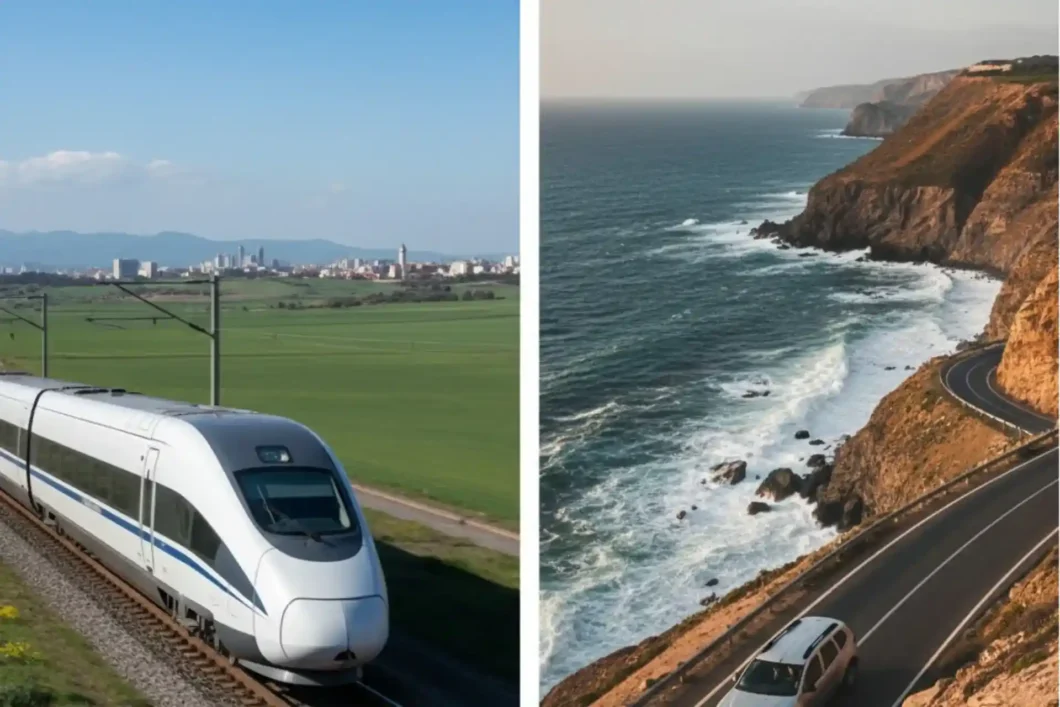
10-Day Morocco Atlantic Coast Road Trip: Complete Transport & Logistics Guide

Morocco’s Atlantic coast stretches over 1,800 kilometers from Tangier in the north to the edge of the Western Sahara. A 10-day Morocco Atlantic coast road trip from Tangier to Agadir captures the best of this dramatic shoreline without feeling rushed. You’ll experience imperial cities, windswept beaches, Portuguese forts, and fishing villages where time moves slower than anywhere else in the country.

What makes this itinerary different is the transport strategy. Instead of renting a car for the entire journey and battling urban traffic in Tangier, Rabat, and Casablanca, you’ll use Morocco’s excellent rail network for the northern cities, then pick up a rental car in Casablanca to explore the coastal roads south. This hybrid approach — train for efficiency, car for freedom — is how smart travelers navigate Morocco.

The logistics matter here. Knowing when to use the high-speed Al Boraq train versus when you absolutely need four wheels makes the difference between a smooth journey and a stressful one. Understanding Morocco’s toll highway system, the informal parking guardian economy, and the “medina gap” (why your car can’t go where your hotel is) transforms this from a trip into an adventure you’re equipped to handle.

The Logistical Strategy: Train + Car Hybrid

The biggest mistake first-time visitors make is either renting a car for their entire Morocco trip (unnecessary expense and urban driving stress) or trying to rely entirely on public transport (limiting and time-consuming for coastal exploration). The solution is splitting your journey into two distinct phases.

Phase 1: The High-Speed North (Train-Based)

From Tangier to Casablanca, you’re traveling between major cities connected by Morocco’s pride: the Al Boraq high-speed train. This French-built TGV covers the route in under 2 hours, compared to 4-5 hours by car through congested urban areas and toll highways.

In these northern cities — Tangier, Rabat, Casablanca — a car is a liability. Parking is expensive or nonexistent, traffic is chaotic, and medinas (where you’ll likely stay) don’t allow vehicles anyway. The train deposits you at centrally located stations where petit taxis can shuttle you to your accommodation for 15-30 MAD.

Train travel in Morocco is comfortable, punctual, and remarkably affordable when you book in advance. First-class tickets on the Al Boraq from Tangier to Casablanca cost around 200-250 MAD (versus 400+ MAD per day for car rental plus fuel and tolls).

Phase 2: The Coastal Freedom (Car-Based)

South of Casablanca, the logic flips entirely. The coastal route through El Jadida, Oualidia, Safi, and Essaouira to Agadir isn’t served by convenient trains or frequent buses. The towns are smaller, accommodation is spread out, and the real treasures — hidden beaches, argan cooperatives, clifftop viewpoints — lie between towns, not in them.

This is where renting a car becomes essential. You pick up your rental at Casablanca airport or city center, drive the coast at your own pace, and either return the car in Agadir (with a one-way fee) or complete the loop back to Casablanca via the faster inland highway.

The hybrid strategy saves money, reduces stress, and maximizes your time actually experiencing Morocco rather than sitting in traffic or waiting for buses.
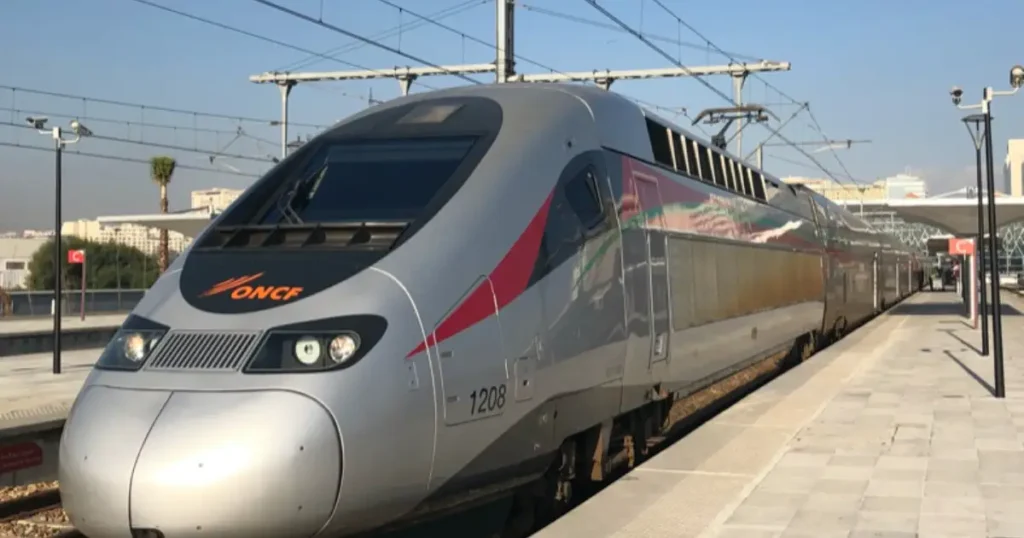
Al Boraq high speed train Morocco TGV Tangier to Casablanca

Morocco’s Al Boraq high-speed train connects Tangier to Casablanca in under 2 hours, providing comfortable first-class service that eliminates the need for car rental in northern cities.

One critical detail: timing your car rental pickup. Don’t collect your vehicle the moment you arrive in Casablanca. Spend a day exploring the city by foot and taxi, then pick up your car the morning you’re ready to head south. This avoids paying for a car that sits unused in expensive parking while you navigate an urban medina.
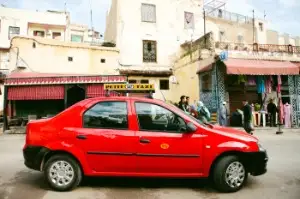
Red petit taxi Rabat Morocco train station transport

Phase 1: The High-Speed North (Days 1-3)

Your journey begins in Tangier, Morocco’s gateway to Europe. The city’s Tanger Ville train station is modern and efficient, with clear signage in Arabic, French, and English. This is where you board the Al Boraq.

Tangier to Rabat & Casablanca: TGV Logistics

The Al Boraq train departs multiple times daily from Tangier to Casablanca, with stops in Kenitra and Rabat. If you’re stopping in Rabat (recommended for 1-2 nights to explore Morocco’s capital), you’ll disembark after about 1 hour and 20 minutes.

Read More: Phase 1 High-Speed North →

Book tickets online at oncf-voyages.ma at least one week in advance to secure the “S’rîi” promotional fare, which can cut ticket prices by 30-40%. During peak travel periods (Moroccan holidays, summer), trains fill up quickly. Don’t assume you can just show up and buy a ticket at the station.

Ticket classes matter. Second class is perfectly adequate — clean, air-conditioned, with comfortable seats. First class offers more legroom, wider seats, and fewer passengers. If you’re traveling with large luggage, first class is worth the extra 50-80 MAD for the easier storage.

The Al Boraq is punctual. Boarding begins 20 minutes before departure. Arrive at the station 30 minutes early to navigate ticket checks, find your platform, and locate your assigned car and seat (marked on your ticket).

City Navigation: The Petit Taxi System

When you arrive at Rabat Ville or Casablanca Voyageurs station, you’ll need to get to your hotel. This is where Morocco’s petit taxi system becomes your best friend.

Petit taxis are color-coded by city: blue in Tangier, red in Rabat, white in Casablanca. They’re small sedans (usually Dacia Logans or Fiat Unos) that operate on meters within city limits only. Maximum capacity is three passengers.

Key logistics:

1. Insist on the meter: Tell the driver “Compteur, s’il vous plaît” (meter, please). If they refuse, find another taxi. The meter starts at 7-8 MAD and increments based on distance. A typical ride from the train station to a medina hotel should cost 15-30 MAD depending on the city.

2. Have small bills: Drivers often claim they don’t have change for 200 MAD notes. Keep 20 MAD and 50 MAD bills handy.

3. Know your destination: Have your hotel name and address written down or on your phone. “Near the medina” isn’t specific enough. If your riad is deep in the medina, the taxi will drop you at the nearest accessible gate — you may need to walk the final 100-300 meters.

4. Night surcharge: After 8:00 PM, fares increase by 50%. This is legal and indicated by a “Tarif 2” setting on the meter.

Train stations always have taxi stands with queues. Don’t accept offers from “helpful” men claiming to arrange taxis for you — they’ll take a cut of an inflated fare. Just walk to the official taxi line.

Rabat’s distinctive red petit taxis operate on meters within city limits, providing reliable transport from train stations to medina hotels for 15-30 MAD per ride.

Phase 2: The Freedom of the Open Road (Days 4-10)

After exploring Casablanca, you’re ready to pick up your rental car and head south. This is where your Atlantic coast road trip truly begins.
After exploring Casablanca, you’re ready to pick up your rental car and head south. This is where your Atlantic coast road trip truly begins.

Read More: Phase 2 Car Rental Strategy →

Car Rental Logistics: The One-Way Option

You have two main pickup locations in Casablanca: Mohammed V Airport (CMN) or city center agencies. The airport is more convenient if you’re ready to leave immediately, as it connects directly to highways. City center rentals work if you’ve spent time in Casablanca and want to avoid the airport drive.

The critical decision is whether to do a one-way rental. If you drop the car in Agadir or Marrakech instead of returning to Casablanca, expect a one-way fee of 500-1,000 MAD depending on the agency and distance.

Is it worth it? Calculate the trade-off:

One-way (Casa → Agadir): Pay the fee but save 4-5 hours of driving back. Makes sense if you’re flying out of Agadir or continuing south.

Round-trip (Casa → Agadir → Casa): No one-way fee, but you must budget time and fuel for the return drive via the inland A7 highway (approximately 550 kilometers, 5-6 hours).

Negotiate the one-way fee. Some agencies waive or reduce it during low season or if you’re renting for 7+ days. It never hurts to ask.

Full insurance is mandatory. Morocco’s roads can be unpredictable — donkey carts, unmarked speed bumps, aggressive drivers. Don’t risk being liable for damage. The peace of mind is worth the extra 80-120 MAD per day.

The Toll System: A1 and A3 Highways

Morocco’s modern toll highways (autoroutes) are excellent — smooth, well-maintained, and significantly faster than secondary roads. The main coastal highways are the A1 (Rabat-Casablanca-El Jadida) and A3 (Casablanca-Marrakech).

Here’s how tolls work:

1. Entry ticket: When you enter the highway, you collect a ticket from an automated machine or attendant. Keep this ticket — you need it to exit.

2. Exit payment: At your exit, hand the ticket to the toll booth attendant. They calculate the fee based on distance traveled. Payment is cash (MAD) or credit card at most major toll plazas. Some smaller exits are cash-only.

3. Costs: Tolls are reasonable. Casablanca to El Jadida on the A1 costs around 15-20 MAD. Casablanca to Marrakech on the A3 is approximately 60-70 MAD.

4. Tag Jawaz: This is Morocco’s electronic toll system, similar to E-ZPass. Only useful if you’re a resident or frequent traveler. Tourists stick to cash/card.

Keep small bills (20 MAD, 50 MAD) in your car console for tolls. Some attendants genuinely don’t have change for 200 MAD notes during slow hours.

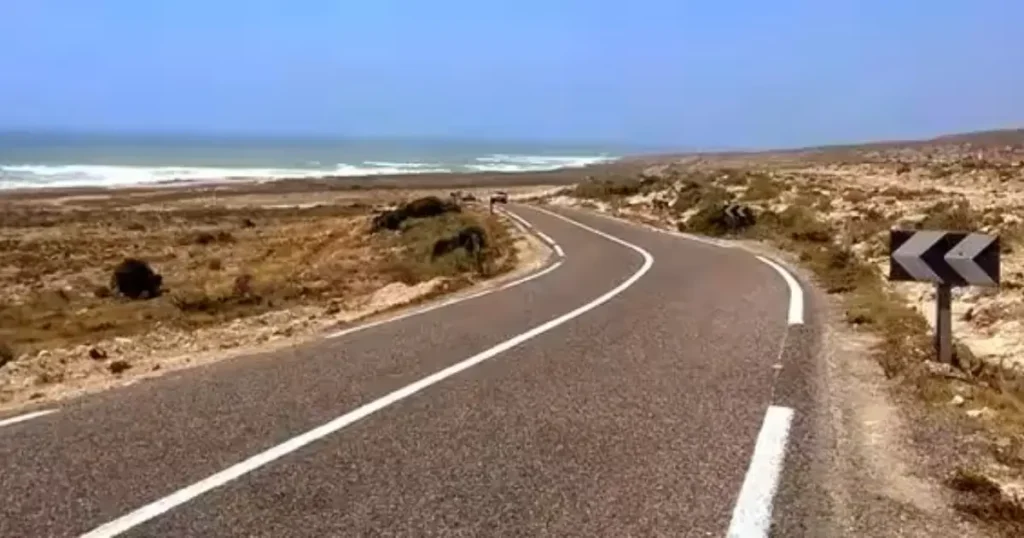
N1 coastal road Morocco between Essaouira and Agadir hairpin curves

Navigating the Scenic Coastal Roads (R301 & N1)

Once you leave the highways and hit the coastal roads, the pace changes completely. This is where the journey becomes the destination.

Read More: Coastal Roads Navigation →

Road Conditions: Speed Reality Check

The primary coastal roads are the R301 (Casablanca-El Jadida-Oualidia-Safi) and the N1 (Safi-Essaouira-Agadir). These are paved national roads, not dirt tracks, but they’re nothing like the highways.

Expect:

Highway speed: 120 km/h (75 mph) on autoroutes, though you’ll often cruise at 100-110 km/h comfortably.

Coastal road speed: 60-80 km/h (35-50 mph) on R301 and N1 due to curves, villages, speed bumps, and slower traffic.

What Google Maps tells you (2 hours from Safi to Essaouira) often becomes 2.5-3 hours in reality when you factor in slow-moving tractors, photo stops at cliffs, and the inevitable argan cooperative visit.

The coastal roads are scenic but demand attention. Curves appear suddenly, livestock crosses without warning, and farm vehicles pull out unexpectedly. Drive defensively. This isn’t the place to zone out.

Fuel Planning: The Quarter-Tank Rule

Gas stations in northern Morocco (Casablanca, Rabat, Tangier) are everywhere. South of Safi, they become sparser. You don’t want to be searching for fuel with 20 kilometers of range remaining on a windy coastal road with no services.

The golden rule: “Never go below 1/4 tank.”

Practical fuel strategy:

Fill up in major towns: Casablanca, El Jadida, Safi, Essaouira. These have multiple stations with competitive prices.

Don’t wait for “cheaper” fuel: Prices are regulated and vary by only 1-2 MAD per liter across the country. Waiting to save 10 MAD isn’t worth running low.

Diesel vs. gasoline: Diesel (“Gazole”) is cheaper (around 11-12 MAD/liter) and rental cars often run on diesel for better mileage. Gasoline (“Essence”) is around 14-15 MAD/liter.

Attendant service: Most Moroccan gas stations are full-service. An attendant pumps your fuel. Tipping 2-5 MAD is customary, especially if they wash your windshield.

Major chains: Shell, Afriquia, Petrom, Total. All are reliable. Avoid isolated independent stations unless desperate — fuel quality can vary.

The N1 coastal route between Essaouira and Agadir winds through the Atlas foothills with hairpin curves requiring careful navigation and frequent fuel monitoring south of major towns.

The “Parking Guardian” Logistics One aspect of driving in Morocco that confuses first-timers is the informal parking guardian system. Understanding this saves frustration and actually makes parking easier.

Read More: Parking Guardian System →

Who Are the Men in Yellow Vests?

In almost every Moroccan town, certain streets and parking areas are monitored by parking guardians — men (occasionally women) wearing yellow or orange reflective vests. They’re not government employees. They’re self-employed individuals who have claimed a street or lot as their territory.

Their role is simple: they guide you into parking spots, watch your car while you’re away, and help you exit when you return. It’s a legitimate job that provides income for people who might otherwise be unemployed.

The system is informal but highly structured. Guardians have territories, respect each other’s zones, and provide real value. Cars under their watch are less likely to be broken into or ticketed (though official parking restrictions still apply).

Pricing: What to Pay

Payment is customary and expected, though not legally mandatory. Here’s the going rate:

Short-term (1-3 hours): 2-5 MAD when you return to your car.

Long-term (overnight or full day): 10-30 MAD depending on the location and security level. Tourist areas cost more.

Guarded lots near medinas: 10-20 MAD per 24 hours in designated parking areas. These are the safest option for overnight.

Pay when you return to your car, not when you park. The guardian will approach you as you’re leaving. Have small bills ready — 5 MAD, 10 MAD, 20 MAD coins and notes.

Communication Tips

A simple interaction makes everything smoother:

When parking: Make eye contact with the guardian. They’ll guide you with hand signals. Nod to acknowledge. If you plan to park long-term, tell them: “Je reviens demain matin” (I’m returning tomorrow morning) or “Trois heures” (Three hours). This helps them know what to expect.

When returning: The guardian will be watching. They’ll often help you navigate out of tight spots. Hand them payment with a simple “Merci” or “Shukran” (thank you in Arabic).

If a guardian seems overly aggressive or demands unreasonable amounts (50+ MAD for an hour), politely refuse and park elsewhere. Most are honest, but bad actors exist.

Essaouira Bab Marrakech gate parking area medina Morocco

Managing the “Medina Gap”

This is the single biggest logistical challenge for drivers in Morocco: your car cannot go where your hotel is if you’re staying in a traditional medina riad.The Car-Free Reality

Morocco’s historic medinas — the old walled cities in Rabat, El Jadida, Essaouira, and others — are entirely or mostly car-free. Streets are too narrow, often just 1-2 meters wide. Cars are prohibited, period.Your beautiful riad deep in the medina’s labyrinth? You can’t drive there. You must park outside the medina walls and either walk with your luggage or use a porter service.

Read More: Medina Parking Challenge →

Where to Park: Gate Parking Locations

Every medina has designated parking areas near the main gates (babs). Examples:

Essaouira: Large lots near Bab Marrakech and the port. 10-15 MAD per 24 hours, guarded.

El Jadida: Parking along Boulevard de Suez near Bab Marrakech. Street parking with guardians.

Rabat: Parking areas near Bab el-Had and along the medina’s outer walls.

These lots fill up during peak season. Arrive early or be prepared to circle for a spot. Once parked, lock valuables in the trunk, take what you need, and either carry your bags or hire a porter.

Using Porter Services (Charrettes)

In larger medinas like Essaouira, licensed porters operate blue hand carts (charrettes). They wait near parking areas and medina gates specifically to transport luggage.

Standard rates:

Short distance (near the gate): 10-20 MAD per cart.

Deep medina (10+ minutes walk): 20-40 MAD per cart.

Negotiate the price before they load your bags. Most riads can arrange for a porter to meet you at a specific gate if you call ahead — highly recommended if you have heavy luggage or are arriving at night.

In smaller medinas without formal porter services, you’ll need to walk. Pack light or use wheeled luggage that handles cobblestones reasonably well.

Essaouira’s main parking area near Bab Marrakech gate serves the car-free medina with 24-hour guarded lots requiring porters to transport luggage to interior riads.

Complete 10-Day Itinerary Logistics Table

ÉtapeTransport IdéalDuréeConseil Logistique
Tanger → RabatTGV Al Boraq1h 20minRéservez 1 semaine avant pour tarif “S’rîi”
Rabat → CasaTrain Atlas50min1ère classe pour confort bagages
Casa → OualidiaVoiture location2h 30minÉvitez sortie Casa 17h-19h
Oualidia → EssaouiraVoiture (Côte R301/N1)3h 30minRoute sinueuse, attention vent latéral
Essaouira → AgadirVoiture (N1)3h“Route du Miel” – virages serrés montagne

Final Recommendations and Practical Wisdom

This 10-day Atlantic coast itinerary works because it respects Morocco’s transportation realities. Trains are brilliant for city-hopping in the north. Cars are essential for coastal exploration in the south. Trying to force one method for the entire trip creates unnecessary problems.

Budget approximately 1,500-2,500 MAD for train tickets (depending on class and booking timing), plus 2,500-4,000 MAD for car rental (7 days at 350-500 MAD per day plus fuel). Total transport costs: around 4,000-6,500 MAD for the complete journey.

For comprehensive guidance on driving conditions and road safety throughout Morocco, including desert and mountain routes, check our detailed resource. If you need help choosing between different Morocco road trip routes, we cover all major itineraries from 7 to 21 days.

The car rental process in Morocco deserves its own attention — understanding insurance options, fuel policies, and agency comparisons can save hundreds of dirhams. And for broader trip planning, from accommodation strategies to seasonal timing, visit our Morocco road trip logistics guide.

Best times for this Atlantic coast journey are spring (March-May) when wildflowers bloom and temperatures hover around 20-25°C, or autumn (September-November) when summer heat subsides but the ocean remains warm. Winter is possible but brings rain and cooler temperatures. Summer can be hot inland but pleasant along the coast with Atlantic breezes.

Pack layers. Coastal Morocco experiences microclimates — sunny and warm one hour, foggy and cool the next. Bring a light jacket even in summer. Comfortable walking shoes are essential for medina exploration. And don’t forget sunscreen; the coastal sun is deceptively strong.

This journey isn’t about ticking off UNESCO sites or Instagram hotspots. It’s about rhythm — the slow unfurling of Morocco’s Atlantic character from the European-facing north to the Berber-influenced south. It’s fresh sardines grilled on beach fires, kasbahs crumbling into the sea, and the constant conversation between land and ocean.

The hybrid transport strategy — train for efficiency, car for discovery — lets you experience both Moroccos: the modern, connected one represented by the Al Boraq streaking through the countryside, and the timeless, unhurried one revealed only from behind a steering wheel on a coastal road going nowhere in particular.