

Updated: November 3, 2025
I’ve always wanted to explore Morocco’s vast deserts and winding mountain roads. The kind of adventure where you wake up in a riad in Marrakech and end the day watching the sunset over sand dunes in Merzouga. Until you experience the freedom of driving yourself through Morocco’s diverse landscapes, it’s hard to understand just how transformative it can be. The country opens up in ways that buses and organized tours simply can’t match.
Whether you’re planning to navigate the Atlas Mountains, venture into the Sahara, or explore the dramatic Todra Gorges, renting a car gives you the flexibility to discover Morocco at your own pace. But here’s the thing: car rental in Morocco comes with its own set of challenges that most travel guides gloss over.
In this comprehensive guide, I’ll walk you through everything you need to know about renting a car in Morocco. We’ll cover the real costs, the insurance traps to avoid, the driving laws that tourists often miss, and those insider tips that locals know but guidebooks rarely mention. Let’s get started!
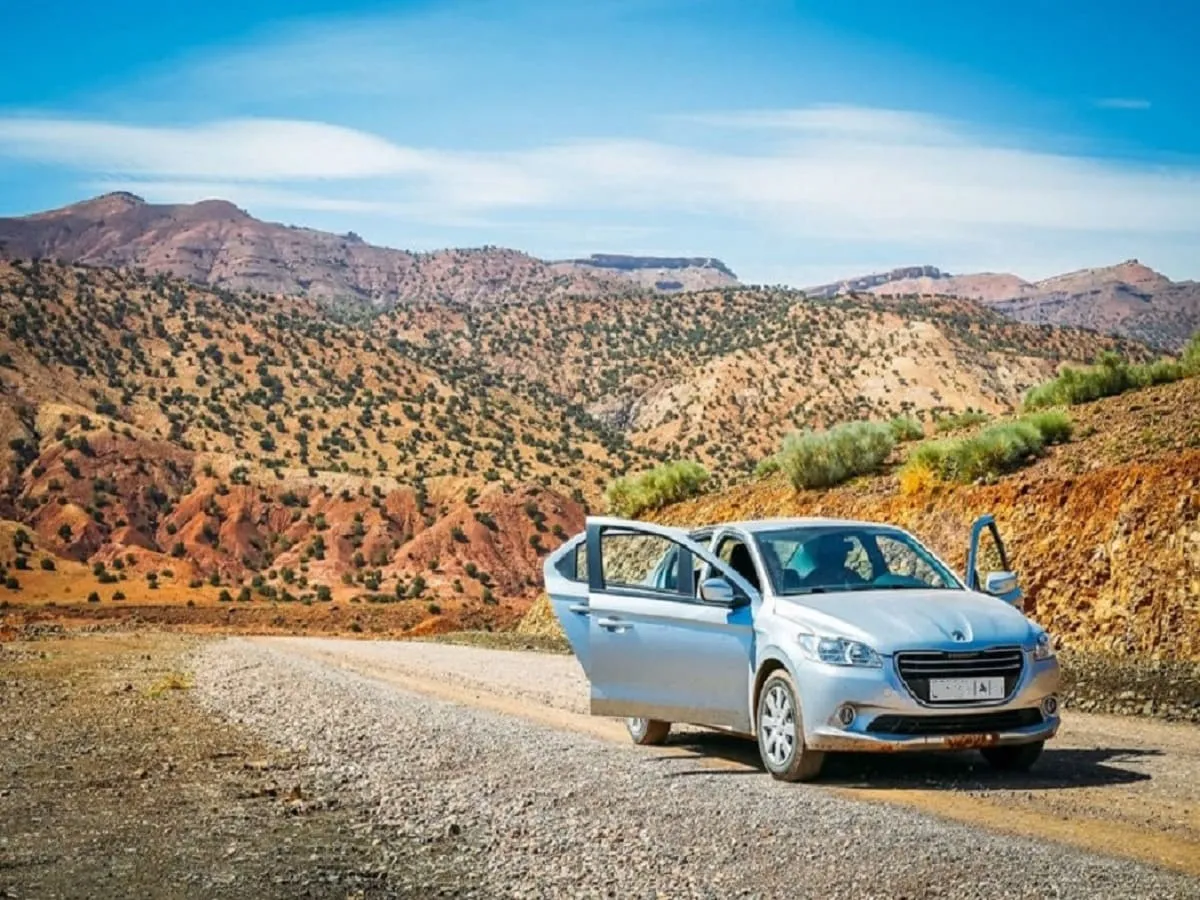
The Atlas Mountains offer some of Morocco’s most spectacular driving routes
Part 1: Making the Decision (Why Rent and Which Vehicle to Choose)
Car Rental vs. Public Transport and Tours: The Real Advantages
Let’s be honest about the cost. Renting a car in Morocco isn’t the cheapest option, but it’s often the most rewarding. When you compare the total cost of hiring a private guide and driver for a week-long journey through the Atlas Mountains and Sahara, you’re looking at anywhere from $600 to $1,200 USD, depending on the itinerary and level of service.
A decent SUV rental, on the other hand, will run you about $35-50 per day, plus fuel costs. Over a week, that’s $245-350, plus maybe $100-150 in gas. You’re saving money while gaining complete freedom over your schedule.
But the real advantage isn’t just financial. It’s about access. Public transport in Morocco is excellent for reaching major cities, but it falls short when you want to explore places like Aït-Ben-Haddou, the ancient fortified village that’s a UNESCO World Heritage site. Or Merzouga, the gateway to the Sahara’s towering dunes. The Todra and Dades Gorges are spectacular, but they’re practically inaccessible without your own wheels.
💡 Insider Tip: If you’re on a tight budget, consider splitting the rental cost with other travelers. Many hostels in Marrakech and Fes have notice boards where you can find travel companions heading in the same direction.
Choosing the Ideal Vehicle for Your Moroccan Adventure
The vehicle you choose can make or break your trip. Here’s what you need to know about each category.
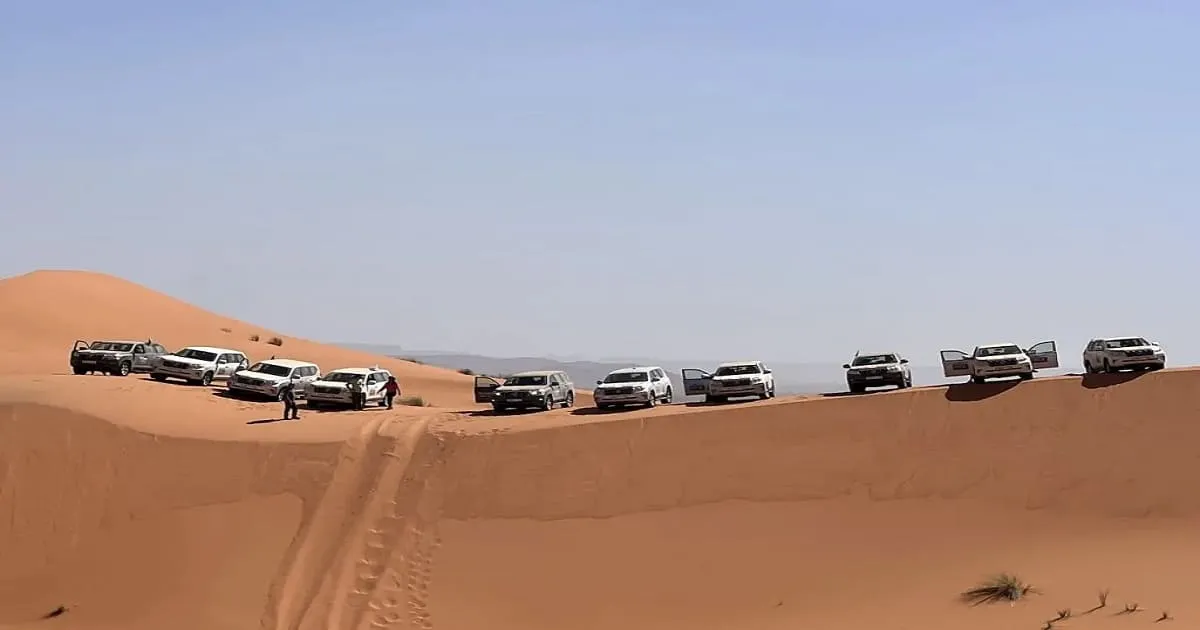
A 4×4 is essential for desert and mountain exploration
Economy/City Cars: Best for Urban Explorers
If you’re sticking to the main highways and city centers — think Casablanca to Marrakech or Rabat to Fes — an economy car will serve you well. These vehicles are fuel-efficient, easy to park in Morocco’s narrow medina streets, and significantly cheaper.
Expect to pay around $15-25 per day for models like a Dacia Logan or Renault Clio. They’re perfect for short trips and paved roads, but don’t even think about taking one into the desert or up mountain tracks.
SUVs and 4x4s: The Desert and Mountain Essential
Here’s where things get serious. If your itinerary includes the Atlas Mountains, the Sahara Desert, or any of Morocco’s spectacular gorges, a 4×4 isn’t just recommended — it’s absolutely necessary.
I learned this the hard way when I tried to take a regular sedan up to Jebel Toubkal base camp. The unpaved mountain roads, the steep inclines, and the loose gravel made it clear within an hour that I’d made a mistake. A 4×4 with good ground clearance transforms these challenging routes into manageable adventures.
Part 2: Logistics and Costs (When and Where to Book)
The Booking Process and Real Costs
Book early for the best rates and selection
When to Book: Timing is Everything
The golden rule for car rental Morocco is simple: book at least 30 days in advance. I’ve seen prices jump by 40-50% for last-minute bookings during peak season (March-May and September-October). If you’re traveling during these months, early booking is even more critical because the best vehicles sell out fast.
Interestingly, January is typically the cheapest month to rent a car in Morocco. Temperatures are cooler, tourist numbers drop, and rental agencies are keen to keep their fleets moving. I’ve scored economy cars for as low as $12 per day in January.
Average Costs: What You’ll Actually Pay
Let’s break down the real numbers for Morocco rental cars based on current market rates. Keep in mind these are daily rates for weekly rentals — single-day rentals can be 30-50% more expensive.
| Vehicle Category | Daily Rate | Security Deposit | Best For |
|---|---|---|---|
| Economy (Dacia Logan, Renault Clio) |
$15-25 | $300-500 | City travel, main highways |
| Compact SUV (Dacia Duster) |
$25-40 | $500-700 | Mixed city/rural driving |
| 4×4/SUV (Suzuki Jimny, Toyota) |
$40-70 | $700-1000 | Mountains, desert, off-road |
| Luxury (Mercedes, BMW) |
$70-120 | $1000-1500 | Business travel, comfort |
Those security deposits aren’t small, and they’re held on your credit card for the duration of the rental. Make sure you have enough credit available — I’ve seen travelers scramble when they realized their card limit wouldn’t cover both the rental and the deposit.
Where to Book: Aggregators vs. Airport Counters
You have two main options when booking car hire in Morocco.
Option 1: Online Comparison Sites like Rentyno, KAYAK, or Discover Cars offer transparency and the ability to compare dozens of agencies at once. You’ll see exactly what’s included in the price, read customer reviews, and often get better rates than booking directly. I always start here to get a baseline for prices.
The downside? You’re often dealing with international brokers, and if something goes wrong, there’s an extra layer between you and the local agency.
Option 2: Airport Counters are more convenient, especially if you arrive late or your plans changed. Marrakech Menara Airport has about a dozen rental companies with desks right in the arrival hall. The advantage is immediate service and the ability to inspect the vehicle before leaving.
However, airport rentals typically cost 20-30% more than advance online bookings. If convenience matters more than budget, it’s a valid choice for your car rental Marrakech needs.
Part 3: Safety and Laws (What Tourists Must Know)
Insurance: Don’t Get Trapped
Understanding insurance coverage is crucial for car rental Maroc
Insurance is where most tourists make expensive mistakes with Budget Morocco rent car options. Let me be very clear: get comprehensive, all-inclusive insurance. Yes, it’s an extra $15-25 per day. But it’s worth every penny.
Here’s why.
What Basic CDW Doesn’t Cover (And Will Cost You)
Most rental agencies include basic Collision Damage Waiver (CDW) in their rates. This sounds protective, but it has massive gaps that will hit your wallet hard if something goes wrong.
Standard CDW typically does NOT cover:
- Tires and wheels: Punctures are incredibly common on Moroccan roads. A single tire replacement can cost $100-200
- Undercarriage damage: Hit a rock on a mountain road? That’s $300-800 out of pocket
- Windows and mirrors: Flying stones on rural roads can crack windshields easily
- Theft of belongings: Your luggage isn’t covered, only the vehicle itself
- High deductibles: Even when damage is covered, you might owe $500-1000 before insurance kicks in
I met a couple in Merzouga who declined full coverage to save $120 on their week-long rental. They got a flat tire in the desert and damaged the undercarriage on a rough track. Total cost? $680. That “savings” turned into a very expensive mistake.
⚠️ Full Coverage is Non-Negotiable For: Any desert driving, Atlas Mountain routes, unpaved roads or tracks, and multi-week rentals where risk accumulates.
Driving Realities and Local Hazards
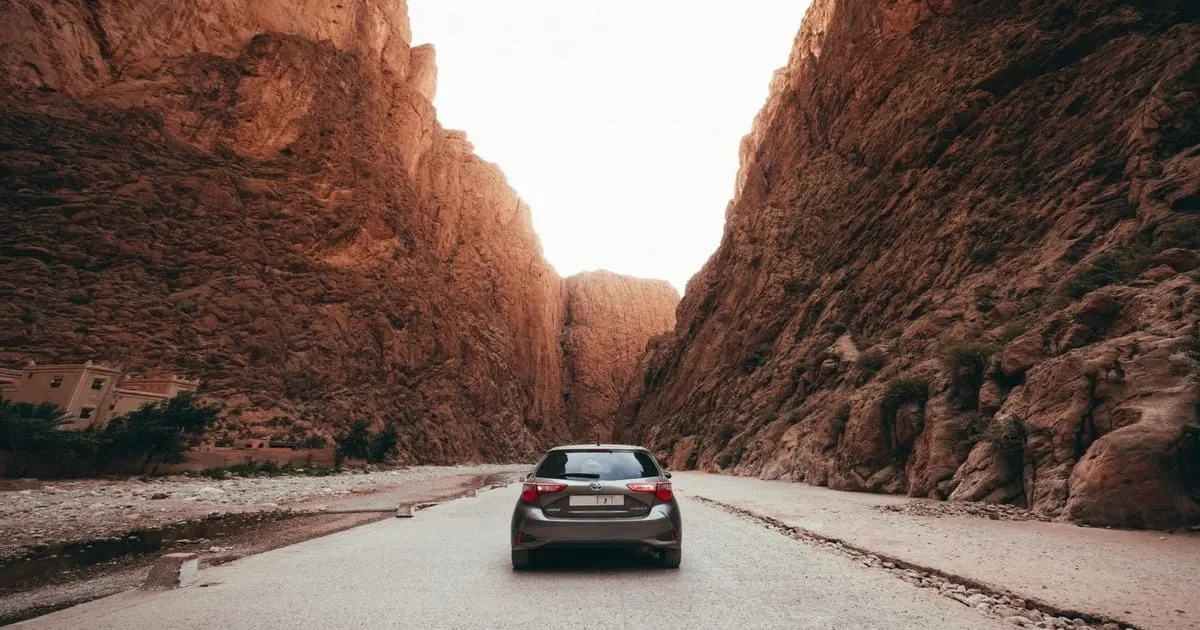
City driving requires defensive awareness and patience
Urban Driving: Embrace the Chaos
Driving in Moroccan cities, especially Marrakech and Casablanca, is an acquired skill. Traffic flow is less about strict rules and more about negotiation and awareness.
Expect:
- Motorcycles everywhere: They weave between cars, often carrying entire families. Check your mirrors constantly
- Pedestrians crossing unpredictably: Crosswalks are suggestions, not rules
- Honking as communication: It’s not aggression — it’s how drivers signal their presence
- Creative parking: Double parking is common, blocking traffic until someone needs to leave
- Roundabouts as free-for-alls: Lanes are more like guidelines than rigid paths
Drive defensively, stay alert, and don’t let the apparent chaos stress you out. It has its own logic once you adjust.
Rural Road Hazards: The Unexpected Dangers
Once you leave the cities, the dangers shift but don’t disappear. Moroccan rural roads present unique challenges:
Animals on the road are constant companions. Sheep, goats, donkeys, and occasionally camels can appear around any bend. Locals know to slow down through villages because animals roam freely. A collision with livestock can be legally complicated — you may be liable for the animal’s value.
Potholes and poor surfaces plague many rural roads. Even main routes can have sections with significant damage. What looks like a good road on the map might be treacherous in reality. The road from Ouarzazate to Merzouga, for example, alternates between perfect asphalt and bone-jarring rough patches.
Horse-drawn carts and slow vehicles share the roads, especially near villages. They don’t have lights at night and can be nearly invisible. Pass with extreme caution.
Never Drive After Dark
⚠️ CRITICAL: Avoid driving at night in Morocco, especially on rural roads.
Why? Because rural roads often lack proper lighting, and vehicles frequently drive without working headlights or taillights. Animals are nearly impossible to see. Road conditions you could navigate in daylight become dangerous hazards in darkness.
I once ignored this advice driving from Fes to Chefchaouen after sunset. Within 30 minutes, I nearly hit a donkey cart with no lights, swerved to avoid a massive pothole that appeared suddenly, and found myself following a truck with one flickering taillight.
Plan your drives to arrive before dark. If you’re running late, stop for the night and finish the journey in the morning.
Part 4: Practical Advanced Tips
Fuel, Parking, and Navigation Essentials
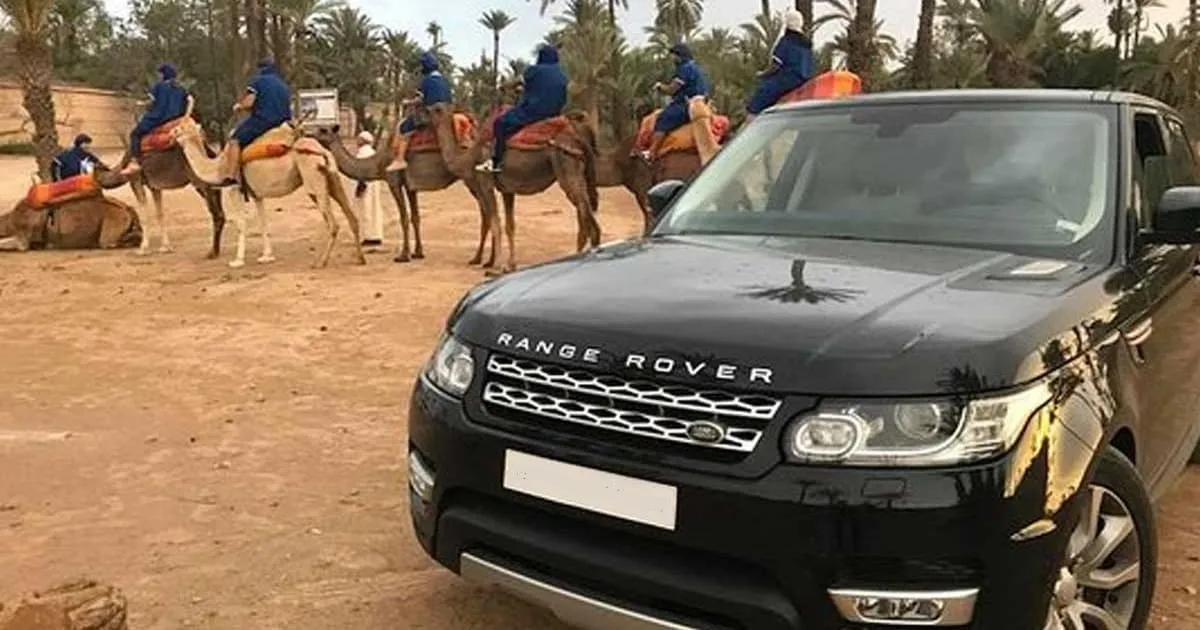
Always carry cash for fuel purchases
Fuel: What You Need to Know
Morocco uses two main fuel types: Sans Plomb (unleaded gasoline) and Gazole (diesel). Most rental cars run on one or the other, and it’s critical to know which before you fill up. Check the fuel cap or rental agreement if you’re unsure.
Fuel prices are government-regulated and consistent across the country, averaging around 14-15 MAD per liter for gasoline and 12-13 MAD for diesel (roughly $5.50-6 per gallon). This makes Morocco moderately expensive for fuel compared to North American prices but reasonable by European standards.
Here’s the critical point: always carry cash in Moroccan dirhams (MAD). While some urban stations accept credit cards, many rural stations are cash-only. I’ve seen tourists stranded at remote stations because they assumed cards would work everywhere. Keep at least 300-500 MAD in small bills for fuel stops.
Gas stations are plentiful along main routes, but distances between them increase dramatically in rural and desert areas. Fill up before heading into the Atlas Mountains or toward Merzouga. Running out of fuel in the desert is not an experience you want.
Parking: Navigating Morocco’s Unique System
Parking in Morocco operates on an informal system that confuses many first-time visitors. In most cities, you’ll encounter parking guardians — unofficial attendants in reflective vests who guide you into spots and “watch” your car.
This isn’t a scam. It’s an accepted part of Moroccan culture.
When you park on the street, a guardian will typically approach and direct you. When you return to your car, tip them 5-10 MAD for a short stop (under 2 hours) or 10-20 MAD for longer periods. At tourist sites or overnight parking, 20-50 MAD is appropriate.
For valuable vehicles or overnight stays, use official parking garages whenever possible. These cost 10-30 MAD for a few hours and 50-100 MAD for overnight. They offer real security with barriers and attendants. In Marrakech, Fes, and other major cities, these parkings are clearly marked and well-maintained.
Never leave valuables visible in your parked car, even in “secure” areas. Break-ins are opportunistic, and a visible camera bag or laptop is an invitation.
Final Thoughts: Is Renting a Car in Morocco Worth It?
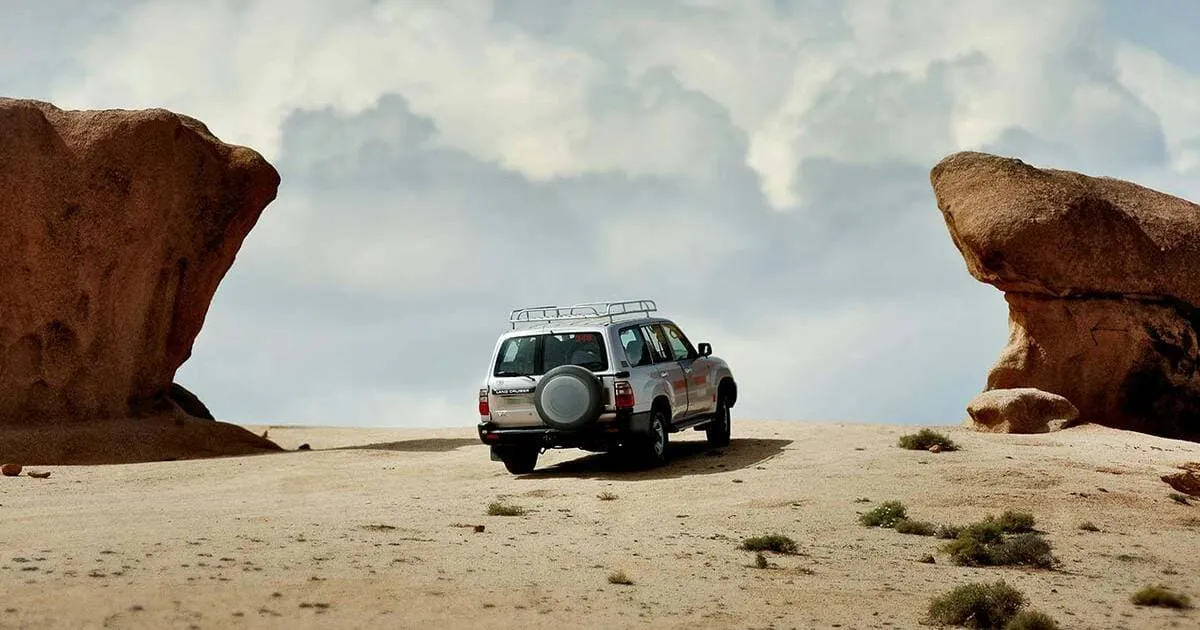
The freedom to explore Morocco at your own pace is priceless
After everything we’ve covered — the costs, the insurance traps, the driving challenges, the bureaucracy — you might be wondering if renting a car in Morocco is actually worth the hassle.
The answer depends on what kind of traveler you are.
If you’re content sticking to major cities and don’t mind structured tour schedules, public transport and organized tours will serve you well. They’re cheaper, less stressful, and require zero navigation skills.
But if you crave flexibility, if you want to watch the sunrise over the Sahara from a spot you discovered yourself, if you dream of stopping at a roadside Berber village simply because it looks interesting — then yes, renting a car is absolutely worth it.
The freedom to create your own itinerary, to spend an extra hour at a viewpoint because the light is perfect, to take a detour down a dirt road to find a hidden kasbah — these are the experiences that tour buses and trains can’t provide.
Just approach it with preparation. Book early with a reputable agency, get full insurance coverage, respect Moroccan driving laws, and embrace the adventure. Morocco’s landscapes are vast, diverse, and often remote. The best of them are only accessible by car.
And when you’re standing at the edge of the Todra Gorge or watching the sun sink behind the dunes of Erg Chebbi, knowing you drove yourself there through some of the world’s most dramatic scenery, you’ll understand why so many travelers consider their Morocco road trip one of their best travel experiences.
💡 Final Pro Tip: Don’t try to see everything in one trip. Morocco rewards slow travel. Pick 2-3 regions and explore them thoroughly rather than racing across the country. You’ll enjoy the driving more, reduce fatigue, and actually experience the places you visit instead of just checking them off a list.
Have questions about renting a car in Morocco? Planning a specific route and wondering about road conditions? Drop your questions in the comments below — I’d love to help you plan your Moroccan road trip!
This comprehensive guide to car rental Morocco was written by someone who’s logged thousands of kilometers across Moroccan roads, from the Atlantic coast to the Algerian border. Whether you’re planning your first Morocco car hire or returning for another adventure, safe travels and enjoy the journey!