by Hatim BH
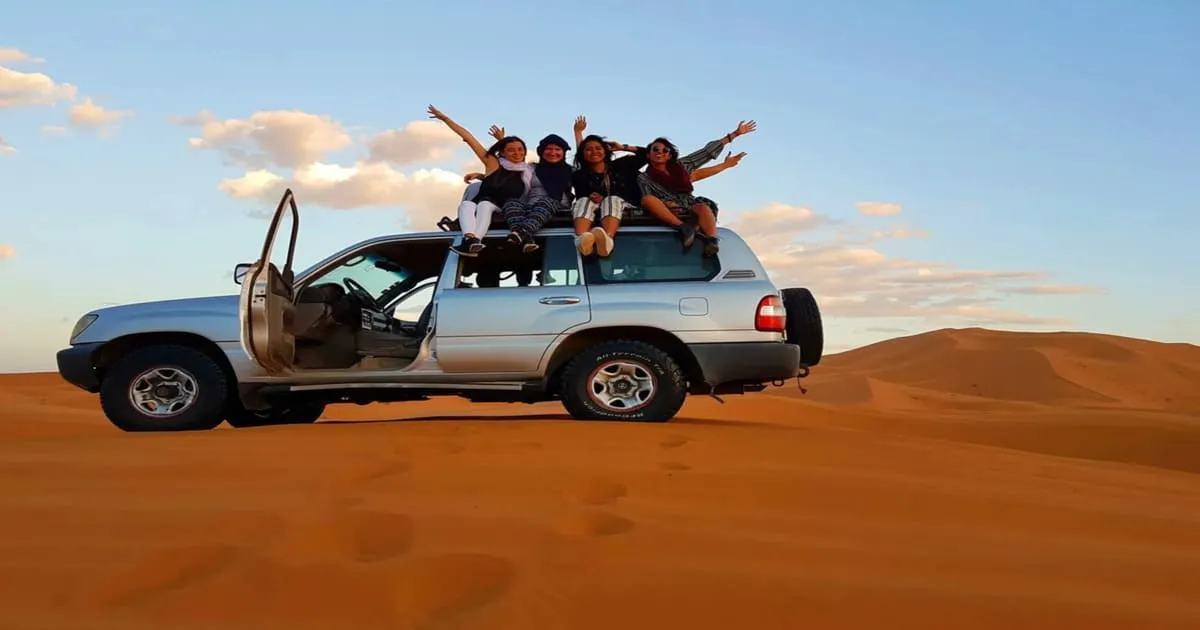
Morocco stands as one of the world’s most fascinating road trip destinations. From imperial medinas to golden Sahara dunes, snow-capped Atlas peaks to Atlantic shores, this North African kingdom offers a landscape diversity rarely matched in such a compact territory. A Morocco road trip represents far more than a simple journey: it’s total immersion in a millennia-old culture, an adventure where each turn reveals a new marvel.
Planning a trip to Morocco requires meticulous preparation to maximize your experience. The logistics of a Morocco road trip involve unique specificities: from navigating labyrinthine souks to negotiations with car rental agencies, understanding cultural codes and managing road contingencies. This comprehensive guide will accompany you through every preparation step.
Whether you’re a solo traveler seeking authenticity, an adventurous couple, or a digital nomad searching for new horizons, this 2026 guide provides all the keys to succeed in your Morocco road trip logistics. From practical car rental advice to strategies for avoiding tourist traps, you’ll find here the expertise needed to transform your journey into an unforgettable experience.
Section 1: Introduction and Essential Planning
1.1 Why Morocco is the Ideal Road Trip Destination
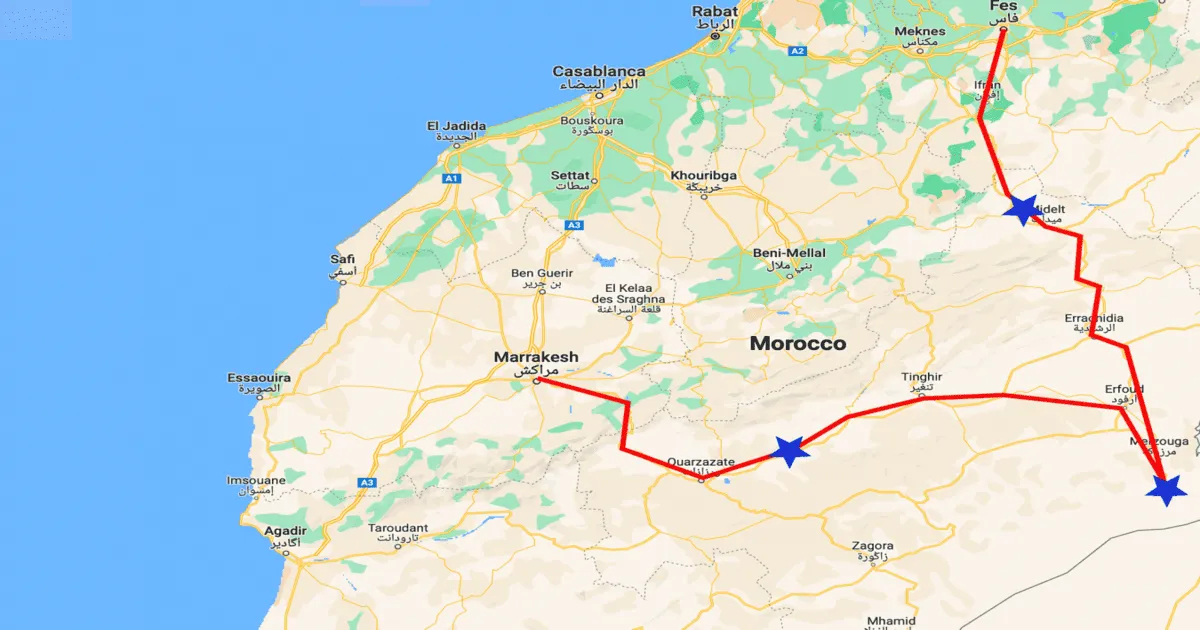
Morocco possesses a major asset making it an exceptional road trip destination: its concentrated geographic diversity. Within hours of driving, you can transition from Atlantic beaches to mountain peaks, cedar forests to infinite desert expanses. This proximity of contrasts allows composing varied itineraries without losing time on monotonous journeys.
Moroccan road infrastructure has considerably improved over the past decade. The modern highway network now connects major imperial cities: Marrakech, Fes, Meknes, Rabat and Casablanca are connected by excellent-condition toll highways. National roads, though sometimes winding in mountainous regions, generally remain passable and well-maintained.
Morocco’s accessibility from Europe constitutes another major advantage. With direct flights from most European capitals to Marrakech, Casablanca, Fes or Tangier, you can be on Moroccan roads in less than three hours from Paris, Madrid or London. This proximity, combined with competitive airfares, makes Morocco ideal for 10-14 day stays.
1.2 When to Go: Detailed Seasonality for Your Morocco Road Trip
Choosing the period for your road trip in Morocco will significantly influence your experience. The Maghreb kingdom enjoys a Mediterranean climate on coasts and continental inland, with significant variations by region and altitude.
Spring (March to May): The Ideal Period
Spring undoubtedly represents the best season for a Morocco road trip. Temperatures range between 20°C and 28°C in most regions, offering optimal comfort for driving and visits. Atlas valleys fill with wildflowers, oases green from recent rains, and desert landscapes offer shimmering colors without summer heat haze.
March and April are particularly recommended for exploring southern Morocco and the desert. Nights remain cool but pleasant (10-15°C), perfect for a starlit experience in a Berber camp.
Read More: Autumn & Other Seasons Guide →
Autumn (September to November): The Privileged Alternative
Autumn constitutes the second-best period, with similar climatic conditions to spring but different landscapes. October and November offer ideal conditions with mild temperatures (18-25°C) and exceptional light appreciated by photographers.
This season presents the advantage of lower tourist attendance than spring, particularly in popular sites like Todra gorges or Dades Valley kasbahs. Accommodation prices can also be more advantageous.
Summer (June to August): Challenges and Strategies
Moroccan summer requires specific preparation. Temperatures can reach 45°C in desert regions and plains. The Atlantic coast, from Tangier to Essaouira, benefits from sea breezes maintaining bearable temperatures (25-30°C). The Rif and Middle Atlas also offer cool refuges with high altitudes.
Winter (December to February): A Contrasted Season
Moroccan winter often surprises unprepared travelers. While days generally remain sunny and pleasant (15-20°C in plains), nights can be freezing, particularly in the desert (negative temperatures possible) and mountains. Atlas peaks become snow-covered, transforming certain roads into impassable zones without adapted equipment.
Impact and Practical Advice During Ramadan
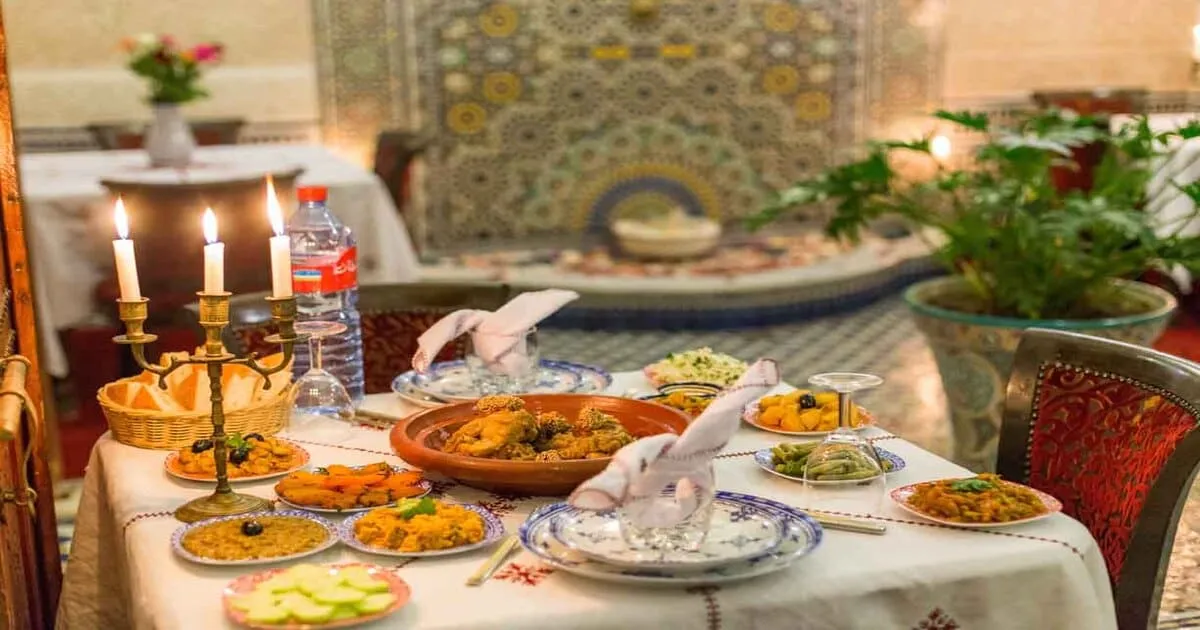
Ramadan, the holy month of fasting in Islam, significantly modifies Morocco’s rhythm of life. This mobile period (based on lunar calendar) profoundly influences road trip organization.
During Ramadan, practicing Muslims abstain from eating, drinking and smoking from sunrise to sunset. Many restaurants close during daytime, store opening hours are modified, and city rhythms change radically.
Read More: Detailed Ramadan Travel Tips →
Practical Tips for Traveling During Ramadan:
- Dining: Plan meals in advance. Large hotels and tourist restaurants generally remain open. Carry snacks and water in your vehicle.
- Cultural respect: Avoid eating, drinking or smoking publicly during fasting hours.
- Traffic: Be particularly vigilant one hour before Iftar. Roads become more dangerous with drivers rushing home.
- Modified hours: Administrations, museums and tourist sites operate with reduced hours.
- Cultural experience: Ramadan offers unique opportunities. Attending an Iftar in a riad constitutes an extraordinary experience.
Ramadan dates vary each year. For 2026, Ramadan should occur approximately from late February to late March. Consult exact dates when planning.
1.3 Your Budget in Morocco: From Hostel to Luxury Experience
Morocco offers remarkable budget flexibility, allowing all traveler types to enjoy the country according to their means. A backpacker can live comfortably with 25-35€ per day, while luxury travelers can spend 200€+ for a premium experience.
Backpacker Budget (300-400 MAD / 28-38€ per day)
- Accommodation: Youth hostels (80-120 MAD/night) or budget riads in dormitories
- Dining: Local eateries and street food (15-30 MAD per meal)
- Transport: Carpooling between travelers to share fuel costs
- Activities: Free medina entries, self-guided hikes
Read More: Mid-Range & Luxury Budgets →
Mid-Range Budget (800-1200 MAD / 75-110€ per day)
This budget represents the sweet spot for most travelers, offering excellent balance between comfort and authenticity.
- Accommodation: Mid-range riads with private rooms and AC (250-400 MAD/night)
- Dining: Mix of authentic local restaurants and quality tourist establishments (80-150 MAD per meal)
- Transport: Car rental shared between 2-4 people (200-300 MAD/day per person including fuel)
- Activities: Occasional guided excursions (300-500 MAD), cooking classes (400-600 MAD)
Luxury Budget (2500+ MAD / 230+ € per day)
- Accommodation: Luxury riads and 5-star hotels (1000-3000+ MAD/night)
- Dining: Gourmet restaurants (300-800 MAD per meal)
- Transport: Premium vehicle rental with possible private driver (1500-2500 MAD/day)
- Activities: Custom private excursions, hot air balloon rides (2000 MAD), luxury desert camps (3000-5000 MAD)
Currency Exchange Tips: The Importance of Dirham (MAD)
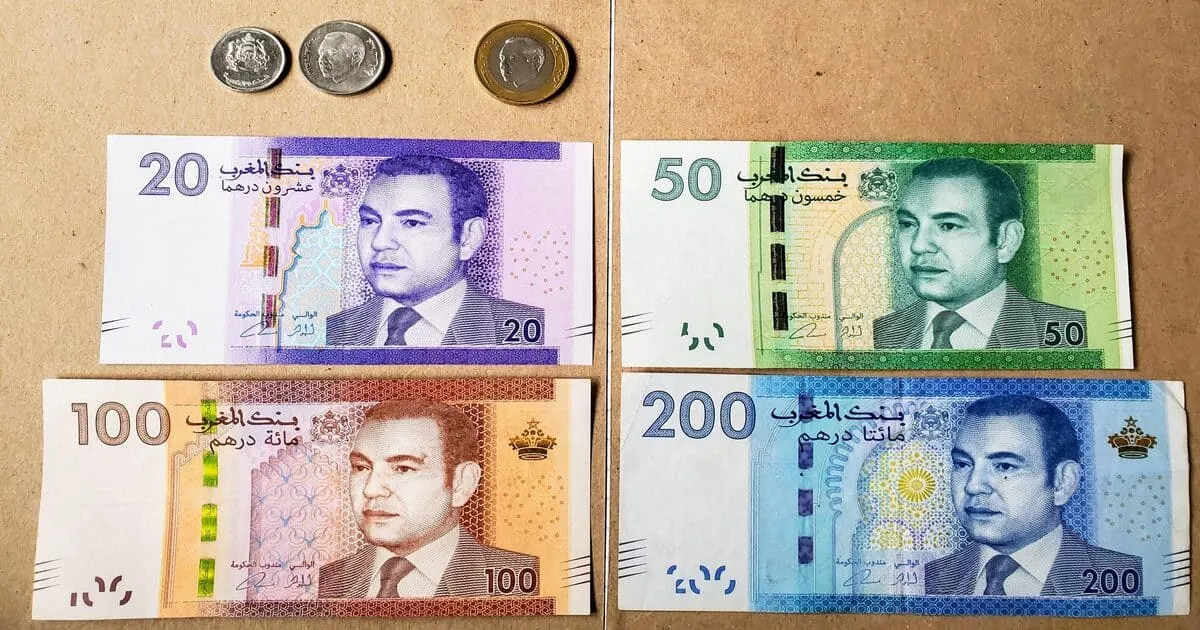
Managing your money in Morocco requires a thoughtful strategy to avoid poor exchange rates. The Moroccan Dirham (MAD) remains the only currency accepted for most transactions.
Where to Exchange Your Money:
- TO AVOID: Airport exchange bureaus – Least advantageous rates (5-8% hidden commission). Exchange only 200-300 MAD minimum for initial expenses.
- RECOMMENDED: ATMs in cities – Best available exchange rate. Prefer ATMs from major banks (Attijariwafa Bank, BMCE).
- ACCEPTABLE: Official exchange bureaus in cities – Correct rates. Compare before exchanging.
- NEVER: Unofficial street exchangers – High scam risk.
Read More: Banking & Card Payment Tips →
Optimal Banking Strategy:
- Before departure: Notify your bank about travel. Check international withdrawal fees.
- Credit vs. debit card: Visa and Mastercard widely accepted. American Express only high-end establishments.
- Cash/card distribution: Keep 60-70% in cash for souks, small restaurants, taxis, tips.
- Security: Never carry all your money. Use your riad/hotel safe.
- Tips (Bakchich): Keep small denominations (5, 10, 20 MAD). Tips are culturally important.
Pro Tip: Open an online banking account like Revolut, N26 or Wise. These neobanks offer real exchange rates without hidden commission. Ideal solution for digital nomads.
Section 2: Detailed Itineraries and Key Destinations
2.1 The Classic Itinerary (10-14 Days): Best Morocco Road Trip Itinerary
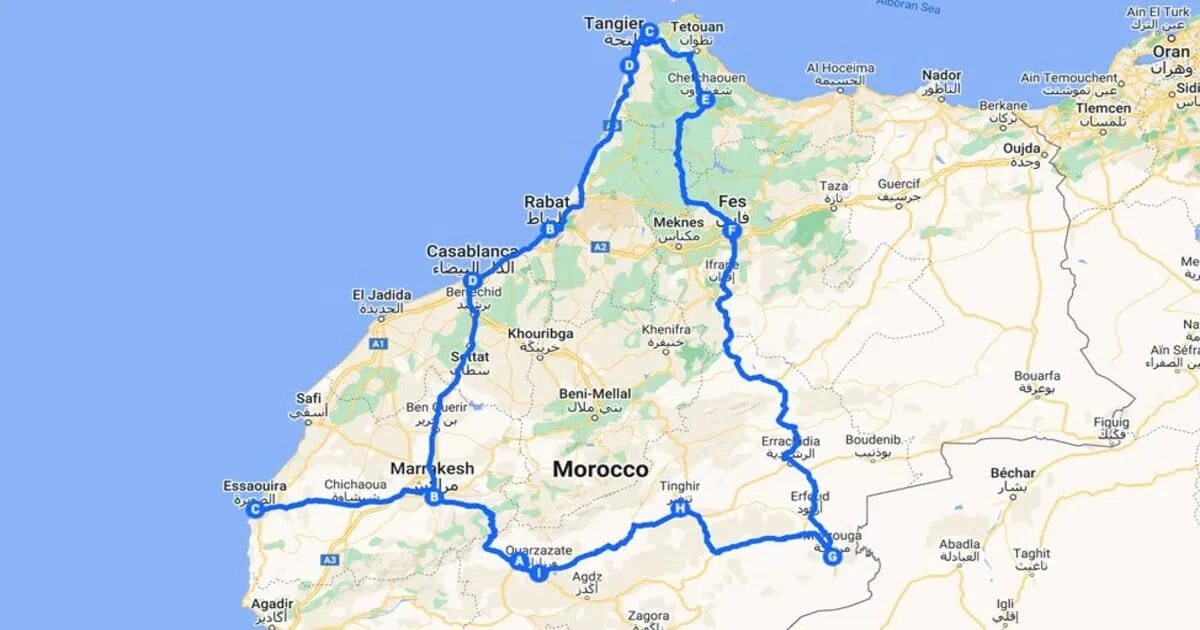
The classic Morocco itinerary constitutes the fundamental route for any first-time visitor. This 10-14 day loop crosses the kingdom’s major points of interest, offering perfect balance between imperial cities, desert landscapes, Atlas mountains and Atlantic coast.
Day 1-3: Marrakech – The Gateway
Your Moroccan adventure typically begins in Marrakech, the ochre city immediately captivating with its vibrant energy. Dedicate two to three full days to this imperial city. Rent your vehicle on the second day to familiarize yourself with driving in Morocco in less dense surroundings.
Day 4-5: Essaouira – Atlantic Escape (180 km, 3h)
Head west toward Essaouira, ancient Mogador. This scenic route crosses argan forests where you might spot goats perched in trees. Essaouira offers a refreshing pause with its ocean-facing ramparts.
Read More: Complete 14-Day Itinerary Details →
Day 6-7: Kasbahs Route toward Ouarzazate (370 km, 5-6h)
Return toward Marrakech then turn south crossing the Tizi n’Tichka pass (2260m altitude) in the High Atlas. This spectacular road requires attentive driving but rewards with breathtaking panoramas. Stop at Aït Benhaddou Kasbah, classified UNESCO site.
Day 8: Dades Valley and Todra Gorges (200 km, 4h)
Take the thousand kasbahs route through Dades Valley. Erosion-sculpted rock formations create a fascinating lunar landscape. Todra gorges, vertiginous canyon with 300-meter-high walls, merit an extended stop.
Day 9-10: Sahara Desert – Erg Chebbi (250 km, 4h)
The highlight: Merzouga desert and majestic Erg Chebbi dunes. Leave your vehicle in the village and join your Berber camp. Plan two nights to truly live the Saharan experience: sunrise on dunes, sandboarding, night under stars.
Day 11: Route to Midelt via Ziz Valley (280 km, 5h)
Leave the desert to head north through Ziz Valley, dotted with oases and palm groves. The landscape changes dramatically: from golden sand to rocky Middle Atlas mountains.
Day 12-13: Fes – The Imperial Jewel (200 km, 3h)
Arrival in Fes, oldest of the imperial cities and Morocco’s spiritual heart. Its medieval medina requires two full days of exploration. Get lost in its 9000 alleys, visit Chouara tanneries, admire medersas.
Day 14: Chefchaouen – The Blue City (200 km, 4h)
Conclude with Chefchaouen, the blue pearl nestled in Rif mountains. This indigo-painted alley city offers striking contrast. Its relaxed atmosphere makes it ideal for closing your journey.
Variations and Extensions:
- For 10 days: Remove Essaouira or Chefchaouen
- For 17-21 days: Add Meknes, Volubilis, Ourika Valley, or Agadir
- Desert alternative: Erg Chigaga offers more isolated experience but requires 4×4
2.2 Imperial Cities Focus: Marrakech and Fes
Marrakech: Between Tradition and Modernity
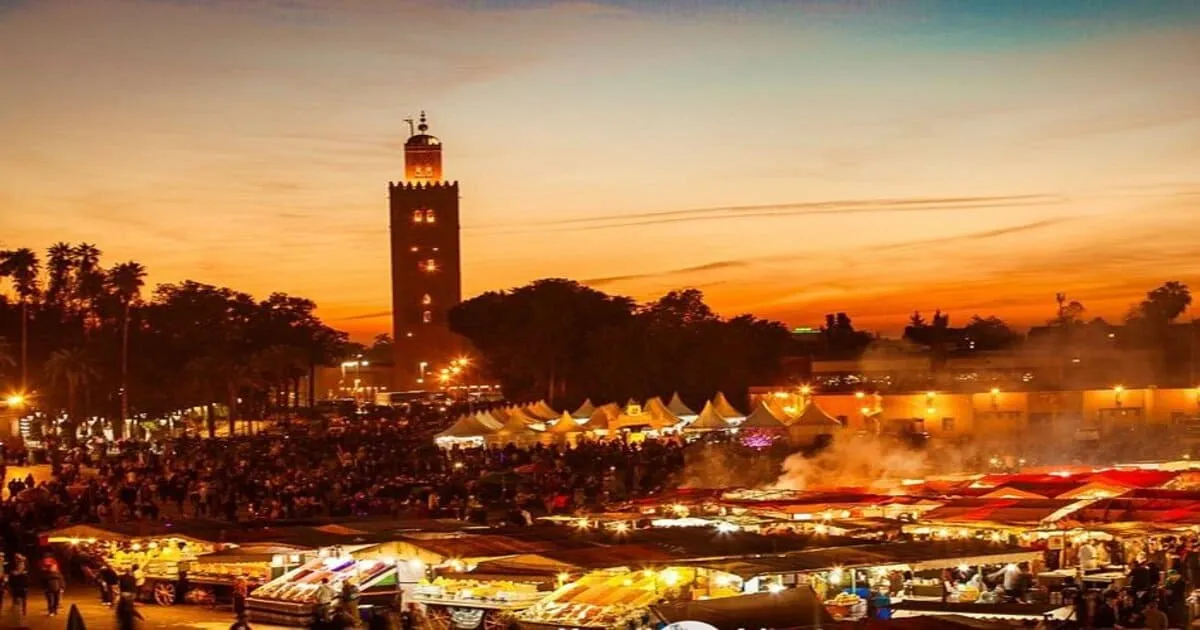
Marrakech represents Morocco in all its contrasted splendor. The ochre city fascinates with its blend of ancestral authenticity and contemporary sophistication.
Djemaa el Fna: Morocco’s Living Theater
Marrakech’s beating heart changes dramatically between day and night. By day, the square hosts snake charmers, monkey trainers, fresh orange juice vendors (10 MAD per glass). From 5pm, a magical transformation occurs. Dozens of street food stalls set up, creating a giant open-air restaurant.
Read More: Complete Marrakech & Fes Guides →
The Souks: Artisan Labyrinth
North of Djemaa el Fna extends Morocco’s largest covered market. These thematic souks organize by guild. Plan minimum half a day to explore stress-free.
Practical souk tips:
- Leave early morning (9-10am) to avoid heat and crowds
- Download maps.me offline
- Negotiate systematically: start at 40-50% of quoted price
- Beware “spontaneous guides”
- Cash payments enable better negotiations
Gardens and Palaces: Serenity Oases
Majorelle Gardens (150 MAD, 8am-6pm) offer peaceful refuge. Created by Jacques Majorelle then restored by Yves Saint Laurent, these botanical gardens with intense cobalt blue walls rank among Africa’s most visited. Tip: arrive at opening.
Bahia Palace (70 MAD, 9am-5pm) impresses with its patios, interior gardens, carved cedar ceilings and multicolored zellige. The Saadian Tombs (70 MAD) present royal mausoleums of remarkable finesse.
Fes: Medieval Time Travel
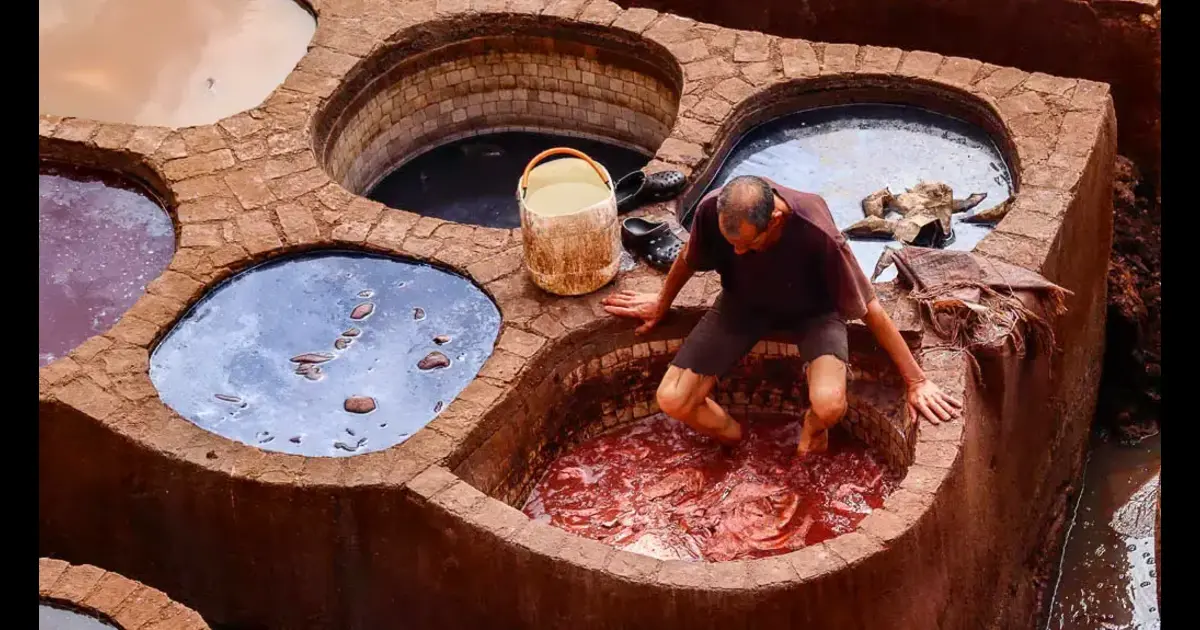
Fes el-Bali, Fes’s medieval medina, instantly transports visitors a thousand years back. UNESCO-classified, this fortified city remains the world’s largest pedestrian urban zone and Morocco’s spiritual heart.
Chouara Tanneries: Olfactory and Visual Spectacle
The millennium-old tanneries offer a fascinating and challenging spectacle. Hundreds of vats filled with natural pigments create a colored mosaic where artisans work leather using unchanged ancestral methods.
Essential anti-odor tips:
- Accept offered fresh mint sprigs – keep them under your nose
- Apply menthol balm under nostrils before visit
- Visit mornings when odor is less intense
- Terraces overlooking tanneries offer best photo viewpoint
Essential Fes Sites:
The Bou Inania Medersa (20 MAD, 9am-5pm) ranks among the Islamic world’s most beautiful Koranic schools. The el-Attarine Medersa (20 MAD), more intimate, charms with its harmonious proportions.
The Al Quaraouiyine University, founded in 859, remains the world’s oldest continuously operating university. Access to the mosque is forbidden to non-Muslims, but you can admire its monumental gate.
Section 3: Advanced Logistics and Practical Tips
3.1 Complete Guide: Driving in Morocco and Car Rental
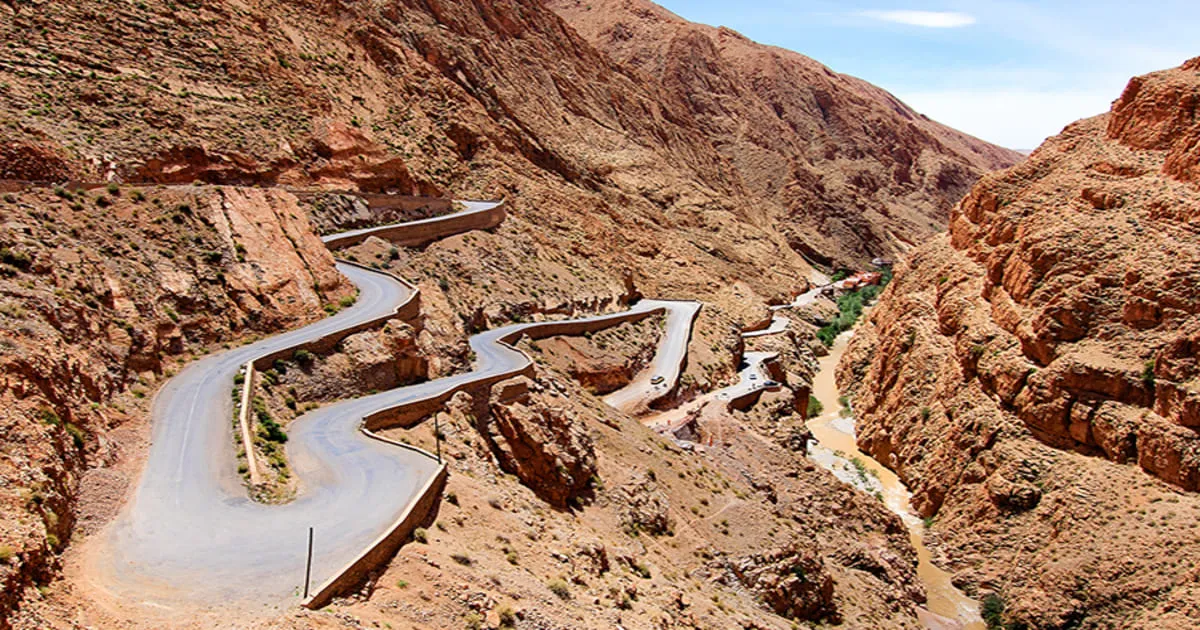
Car rental in Morocco requires thorough understanding of local specificities. The Moroccan rental market contains traps for the uninitiated, but adequate preparation transforms this step into simple formality.
Should You Rent a 4×4 or Small Vehicle? Morocco Car Rental Guide
This question returns systematically. Contrary to preconceptions, a 4×4 is NOT necessary for 90% of Moroccan tourist itineraries.
Read More: Choosing Your Vehicle →
Small SUV/Sedan (Recommended for majority):
A compact vehicle like Dacia Duster, Renault Captur or Peugeot 2008 suffices amply for classic itinerary including Marrakech, Fes, Chefchaouen, Essaouira and even Merzouga desert via paved roads.
- Sufficient height for speed bumps
- Reasonable consumption (7-9L/100km vs 12-15L for 4×4)
- Advantageous rental rate (250-450 MAD/day vs 600-1200 MAD for 4×4)
- Maneuverability in medinas and narrow parking
4×4 (Necessary only if):
- You wish to access Erg Chigaga via desert tracks (200 km from M’hamid)
- Your itinerary includes remote mountain tracks
- You plan off-beaten-path road trip (Anti-Atlas, deep south)
- You travel in winter in Atlas with snow/ice risk
Our Recommendation: The Small SUV Compromise
For 95% of visitors, a small SUV like Dacia Duster represents optimal choice. Average price: 300-400 MAD/day (30-40€) for 10-14 day rental.
Morocco Road Safety: Traffic Safety and Driving
Driving in Morocco presents specific challenges foreign drivers must anticipate. The road network constantly improves, but certain cultural particularities influence daily traffic.
Driving Rules and Local Behaviors:
- Speed limits: 120 km/h highways, 100 km/h national roads, 60 km/h towns, 40 km/h medinas. Very frequent radars.
- Police checks: Frequent at city entries/exits. Remain courteous, present international license + passport.
- Local driving style: More aggressive than European average. Adopt defensive driving and anticipate the unpredictable.
- Road sharing: Watch for carts, cyclists, pedestrians, sheep/goat herds.
- Night driving: Avoid as much as possible. No public lighting outside cities, vehicles without lights, animals on roads.
Read More: Booking Process & Prices →
Rental Process and Realistic Prices
Recommended Platforms:
- RentalCars.com / AutoEurope: Reliable comparators, clear insurance
- Reliable local renters: First Car, Afric Car, Avis Morocco, Hertz Morocco
- TO AVOID: Renters without physical office, too cheap offers
Realistic Price Ranges (high season, 14 days):
| Category |
Vehicle Type |
Price/Day (MAD) |
Total 14d |
| Economy |
Dacia Logan, Hyundai i10 |
250-350 MAD |
3500-4900 MAD |
| Compact SUV (Recommended) |
Dacia Duster, Renault Captur |
300-450 MAD |
4200-6300 MAD |
| 4×4 |
Dacia Duster 4WD, Toyota RAV4 |
600-900 MAD |
8400-12600 MAD |
Required Documents:
- National driver’s license + International Driving Permit MANDATORY
- Valid passport
- Credit card in main driver’s name (deposit blocked 5000-15000 MAD)
Vehicle Inspection (CRUCIAL STEP):
- Photograph/film vehicle from all angles BEFORE departing
- Check lights, horn, wipers, AC functioning
- Control presence of spare tire + jack + triangle + yellow vest
- Test central locking and alarm
- Note any anomaly on report BEFORE signing
Read More: Insurance & Traffic Laws →
Insurance and Coverage (Legal Detail)
Available Insurance Types:
-
Liability (RC) – MANDATORY:
Systematically included. Covers damages to third parties. Does NOT cover your rental vehicle. Very high deductible (8000-15000 MAD).
-
CDW (Collision Damage Waiver) – RECOMMENDED:
Reduces deductible to 3000-5000 MAD. Supplement 80-150 MAD/day. Does NOT include tires, undercarriage, mirrors, windows.
-
Super CDW / Full Coverage – IDEAL:
Zero or minimal deductible (500-1000 MAD). Generally covers tires, windows, undercarriage. Supplement 150-250 MAD/day. STRONGLY RECOMMENDED given Moroccan road conditions.
EXPERT ADVICE: Invest in Full Coverage from start. A single flat tire costs 800-1200 MAD. Stone impact on windshield? 2000-4000 MAD. Insurance surcharge (2100-3500 MAD over 14 days) quickly pays off.
International Driving Permit (Legal Requirement):
Morocco officially REQUIRES international permit alongside national license. Renters systematically verify, as do police checks. Without this document:
- Possible rental refusal
- 300-600 MAD fine during traffic stops
- Insurance potentially invalid in accident
Obtaining: Free in France (ANTS online request), valid 3 years, delivered in 2-6 weeks. Anticipate 2-3 months before departure.
3.2 Staying Connected: SIM, eSIM and Digital Nomads
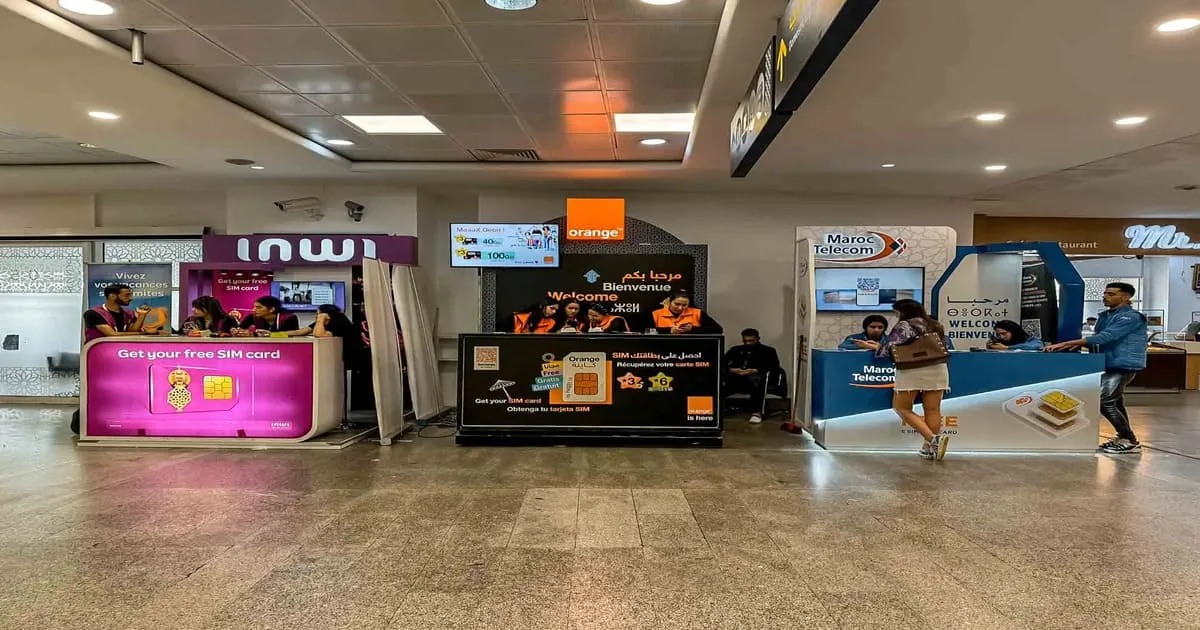
Mobile connectivity in Morocco has considerably improved. The country has 4G infrastructure covering nearly all territory.
Local Operator Comparison:
| Operator |
Coverage |
Data Rates |
Strengths |
| Maroc Telecom (IAM) |
Best (95% territory) |
50 MAD/10GB (30d) |
Leader, desert coverage |
| Orange Morocco |
Excellent (90% territory) |
40 MAD/10GB (30d) |
Best value for money |
| Inwi |
Good (85% territory) |
30 MAD/10GB (30d) |
Lowest price |
Read More: Digital Nomad Complete Guide →
Physical SIM Card vs eSIM
Buying a local SIM remains the most economical option for 10+ day stays.
Where to Buy:
- At airport: Official shops of 3 operators (8am-10pm). Slightly higher prices but maximum convenience.
- In city: Numerous official shops. Standard prices, better assistance.
Total Cost:
- SIM card: 20-50 MAD (including 5-10 MAD credit)
- Recommended data package: 40-100 MAD for 10-50 GB valid 30 days
eSIM: The Modern Solution
eSIM (virtual SIM) revolutionizes travel connectivity. Compatible with recent smartphones (iPhone XS+, Samsung S20+, Google Pixel 3+).
eSIM Advantages:
- Pre-departure activation
- Keep your main number (dual SIM)
- No SIM tray manipulation
- Instant online plan changes
- Enhanced security
Recommended eSIM Providers:
- Saily: 10 GB / 30 days / €12 – Simple interface
- Holafly: Unlimited / 15 days / €47 – Ideal digital nomads
- Airalo: 5 GB / 30 days / €9 – Most economical
Digital Nomad Tips in Morocco
Morocco emerges as attractive destination for digital nomads, combining affordable cost of living with exotic setting.
WiFi Reliability:
- Coworking spaces: Reliable WiFi 50-100 Mbps, ideal for video calls
- Mid-range+ riads/hotels: 10-30 Mbps, unstable for HD videos
- Modern cafés: 5-20 Mbps, fluctuating with attendance
Recommended Coworking Spaces:
Marrakech:
- Sun Desk – 150 MAD/day, 1200 MAD/month – Pool, WiFi 100 Mbps
- Work & Mint – 100 MAD/day, 800 MAD/month – Gueliz center
Monthly Digital Nomad Budget:
| Item |
Budget |
Comfortable |
| Accommodation |
3500 MAD |
6000 MAD |
| Coworking |
0 |
1000 MAD |
| Food |
2500 MAD |
4000 MAD |
| TOTAL |
7600 MAD (€720) |
14800 MAD (€1400) |
Section 4: Culture, Cuisine and Safety
4.1 Safety in Morocco: Practical Guide for Travelers
Morocco remains globally a safe destination, significantly more secure than many regional countries. However, adequate preparation and proven strategies optimize your experience.
Women Solo Traveler Safety
Most women traveling in Morocco will face some degree of verbal harassment. Understanding these mechanisms helps relativize without excusing.
Read More: Women Solo Travel Safety Guide →
Effective Anti-Harassment Strategies:
1. Confident Body Language
- Walk confidently: Head high, decided pace, look straight ahead
- Sunglasses: Avoid involuntary eye contact
- Earphones: Even without music, signal unavailability
2. Ultra-Effective Darija Phrases:
- “Safi, baraka” (SA-fi, ba-RA-ka) = Enough, stop
- “Hshuma alik” (hSHOU-ma a-LIK) = You should be ashamed
- “Sir f’halek” (SEER f’ha-LEK) = Go your way
3. Safe Places and Risk Moments
SAFE zones: Daytime in frequented tourist areas, riads/hotels, established restaurants, private tourist transport.
INCREASED VIGILANCE zones: Evening/night in less frequented alleys, crowded public transport, very dense markets.
Beyond Conservative Dress
Wearing modest clothing HELPS but does NOT guarantee absence of harassment. The problem lies in attitudes, not your outfit. NEVER blame yourself.
Harassment and Scams: Defense Guide
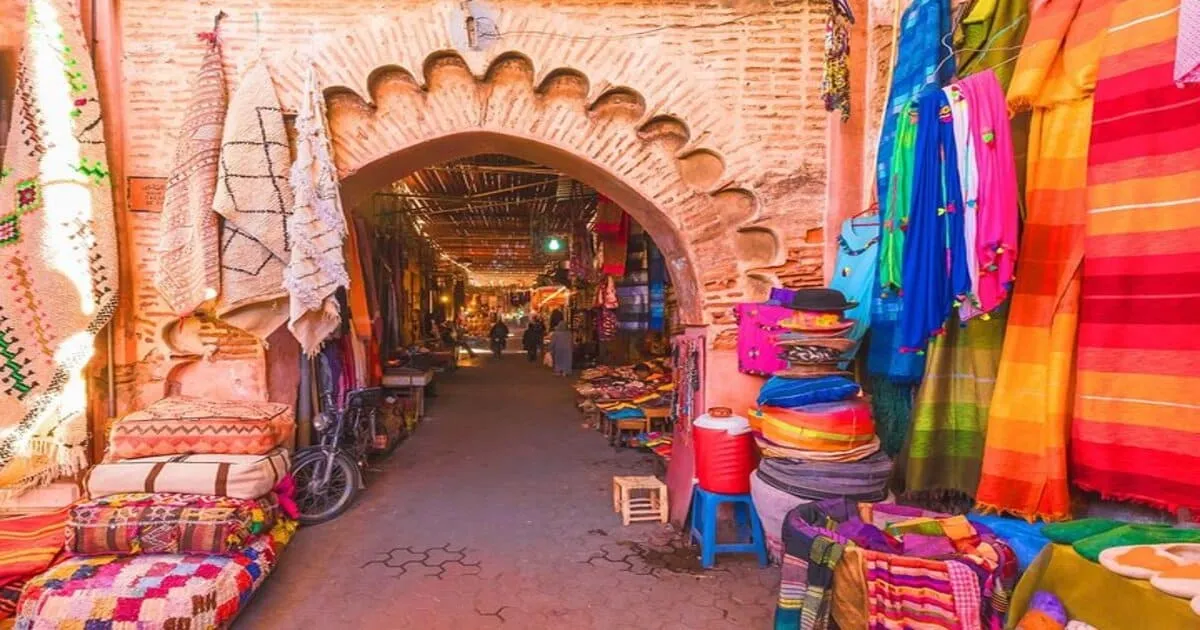
Tourist scams in Morocco follow recurring and predictable patterns. Knowing these tactics immunizes against 95% of scam attempts.
Firm Souk Negotiation
Negotiation is integral to Moroccan commercial culture. Posted prices often represent 300-500% of real price. Negotiating isn’t rude – it’s expected.
Read More: Scams Prevention Complete Guide →
Optimal Negotiation Strategy:
- Step 1: Scouting without commitment – Visit several shops to compare WITHOUT negotiating.
- Step 2: Determine fair price – “Fair price” sits at 40-60% of first quoted price for common items.
- Step 3: Negotiation dance – Start at 30% of quoted price, negotiate progressively.
- Step 4: Psychological techniques – Calculated disinterest, comparison, limited budget, group purchase.
Identifying and Avoiding Fake Guides
“Spontaneous guides” constitute Morocco’s #1 scam.
Typical Profile:
- Young man (20-35 years) near tourist attractions
- “Friendly” approach: “Welcome! Where are you from?”
- Gradually imposes himself
- Offers services “for free” then demands 200-500 MAD
Classic Scam Phrases:
| Scam Phrase |
Reality |
Response |
| “The medina is closed for prayer” |
FALSE – Medinas never close |
“I’ll check, thanks” |
| “Your riad no longer exists” |
SCAM |
“I confirmed this morning” |
| “I don’t want money, just practice my English” |
Liar – Will demand 200+ MAD |
“No thanks” |
Anti-Fake Guide Defense:
- Firm immediate refusal: “No thanks, I prefer alone”
- No justification
- Ignore guilt
- If persistent: “Hshuma alik, sir f’halek”
4.2 Ethical and Sustainable Tourism in Morocco
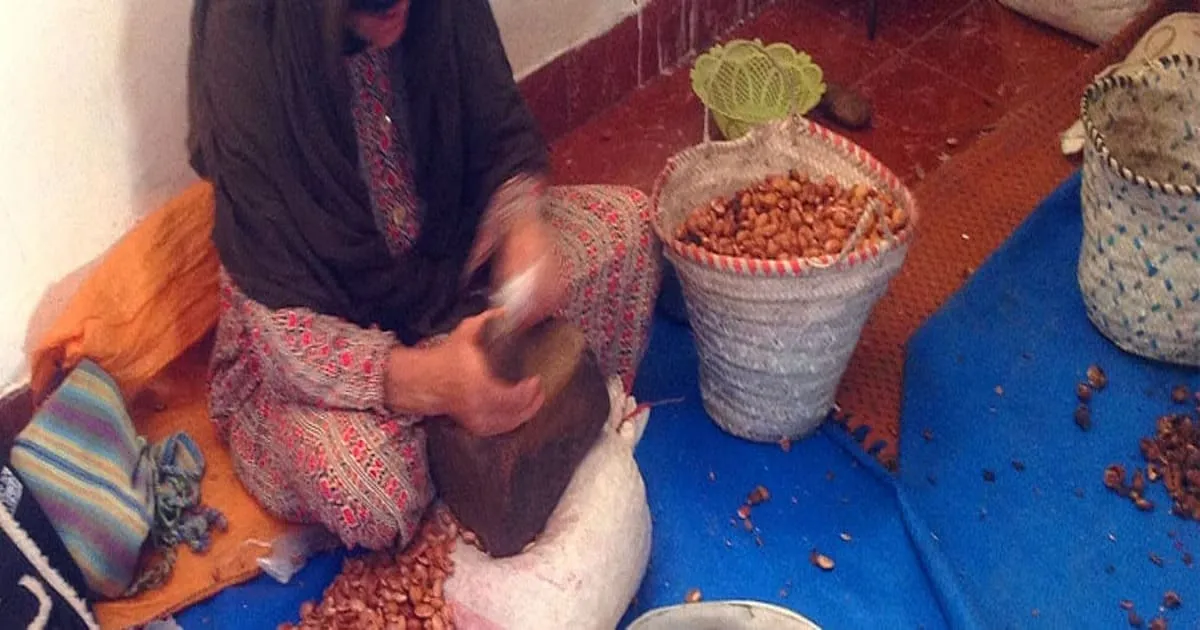
Traveling ethically in Morocco means directing your tourist budget toward actors who truly need it and minimizing your environmental impact.
Supporting Authentic Local Cooperatives
Berber women’s cooperatives offer a sustainable development model empowering rural women.
Read More: Ethical Tourism Complete Guide →
Argan Oil Cooperatives:
Argan oil, “Morocco’s liquid gold,” comes exclusively from argan tree, endemic to southwestern Morocco.
How to recognize a real cooperative:
- ✅ Free production workshop visit
- ✅ Women working on-site during visit
- ✅ Detailed process explanation
- ✅ Consistent prices: 150-250 MAD/250ml cosmetic oil
- ❌ Purchase pressure, aggressive techniques
- ❌ Suspiciously low prices (diluted oil)
Choosing Responsible Operators (Desert and Mountains)
Desert tourism explosion generated negative environmental impacts. Choosing ethical operators makes all the difference.
Responsible Desert Operator Criteria:
- Waste management: Collection and evacuation system
- Renewable energy: Solar panels (not generators)
- Local employment: Berber staff, fair wages
- Camel respect: 1-1.5h ride limitation, rotation, veterinary follow-up
- Visitor limitation: Small camps (15 tents max)
Unscrupulous Operator Red Flags:
- 3-4 hour camel excursions (animal suffering)
- No visible bins
- Groups of 30+ people
- Suspicious low prices (likely exploitation)
This article was updated in November 2026. Prices, practical information and advice reflect current Moroccan tourism situation. For questions or experience feedback, feel free to share in comments.
Share this guide with your travel companions!

