

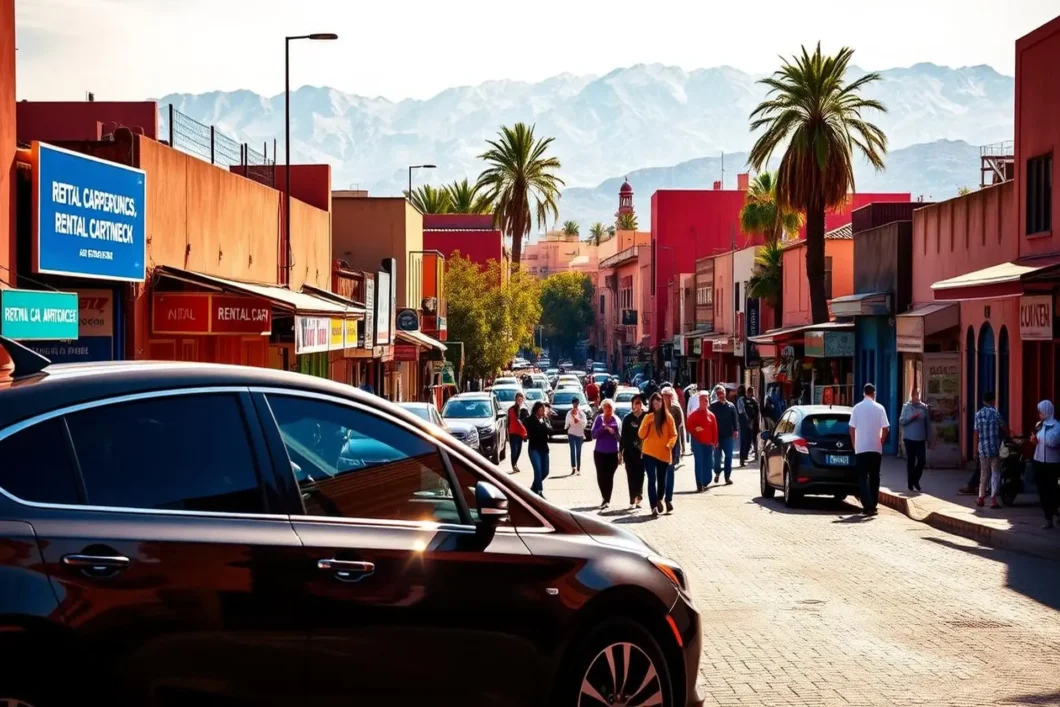
🕌 Planning to drive into Morocco’s ancient medinas? Hold up! Before you navigate your rental car into those narrow alleyways, there’s something CRITICAL you need to know.
I’ll be straight with you. When we first arrived in Marrakech, our GPS cheerfully directed us right toward the heart of the medina. We nearly followed it… until a parking guardian frantically waved us down and saved us from a nightmare scenario.
Here’s what most tourists don’t realize: You can’t actually drive inside Moroccan medinas. Like, at all. Well, technically some can, but if you’re a tourist in a rental car? Forget it.
💎 The truth about driving in Moroccan medinas? The medinas themselves are ancient pedestrian zones with alleyways barely wide enough for a donkey cart. But here’s the good news — parking near medinas is safe, cheap, and incredibly well-organized. You just need to know how the system works.
After visiting medinas in Fes, Marrakech, Chefchaouen, Essaouira, and Tangier, dealing with countless parking guardians, navigating the chaotic streets around these ancient quarters, and learning the hard way what works (and what doesn’t), I’m going to give you the complete truth about driving and medinas in Morocco.
Because understanding how to properly park near a medina, interact with guardians, and navigate the surrounding streets will save you stress, money, and potentially your rental car deposit.
* This post may contain affiliate links that may earn me a small commission should you decide to click through and make a valid purchase (at no extra cost to you). Thanks for your support!*
Can You Actually Drive Inside a Moroccan Medina?
Let me make this crystal clear from the start: No, tourists cannot drive inside Moroccan medinas.
Why Medinas Are Off-Limits to Vehicles
Moroccan medinas are ancient walled cities, some dating back over 1,000 years. They were designed for pedestrians, donkeys, and hand-pulled carts — NOT modern cars.
The typical medina alleyway is less than 2 meters wide. Many are even narrower. Your rental car? Probably around 1.8 meters wide with mirrors. You do the math.
At every major gate (called a “Bab”), you’ll see clear “Accès Interdit” (Access Forbidden) signs for vehicles. These aren’t suggestions. They’re enforced.
🤯 Fun fact: In Fes el-Bali (the world’s largest car-free urban area), even emergency vehicles can’t enter most parts. They rely on motorcycles and stretchers. That should tell you everything about how narrow these streets are!
Who CAN Drive in Medinas?
You’ll see some vehicles in medinas, which confuses tourists. Here’s who’s allowed:
- Residents with special permits — They have official authorization and know the navigable routes
- Delivery vehicles (early morning only) — Usually small trucks or motorcycles, strict time windows
- Petit taxis — Only on specific wider routes that connect to medina edges
- Police and official vehicles — For emergencies or enforcement
Notice what’s missing from that list? Tourists in rental cars.
Why Attempting to Drive In Is a Terrible Idea
Even if you somehow got past the entrance (please don’t), here’s what you’d face:
Dead ends everywhere. Medinas are labyrinths. You’d drive down a promising-looking street only to find it narrows to nothing or ends at a wall. Then you’d need to reverse… while locals watch and laugh.
Pedestrians absolutely everywhere. Medinas are FULL of people. Kids playing, shoppers, tourists wandering. Driving would be like navigating a crowded mall parking lot on Christmas Eve. Except the mall is a maze.
Fast-moving scooters. Locals on motorcycles know these alleys like the back of their hand. They zip around corners at surprising speeds. As a nervous tourist trying not to scrape your mirrors? Recipe for disaster.
Guaranteed damage to your rental. The walls are stone. The passages are tight. One wrong turn and you’re wedged in with scratches down both sides of your car. Your rental deposit? Gone.
Police and Security Around Medinas
Police actively monitor medina entrances, especially in tourist-heavy cities like Marrakech and Fes.
If you try to enter where you shouldn’t, they’ll stop you. Politely but firmly. This isn’t a money-making scheme — they’re preventing traffic chaos and protecting the historic sites.
CRITICAL: Never attempt to bribe an officer. Morocco has seriously cracked down on corruption. Offering money can get you arrested. The officers are professional, honest, and just doing their job.
We were stopped twice trying to find parking near Bab Ftouh in Fes. Both times the officer simply redirected us to the proper parking area. Took 30 seconds, zero hassle.
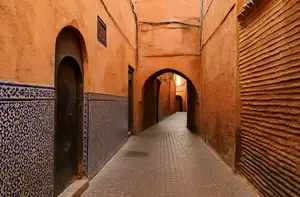
The impossibly narrow alleys of Moroccan medinas are designed for pedestrians and donkeys, not modern vehicles. These ancient passages, often less than 2 meters wide, make it physically impossible for modern cars to navigate safely. The stone walls on either side leave no margin for error, and attempting to drive through would inevitably result in damage to your rental vehicle.
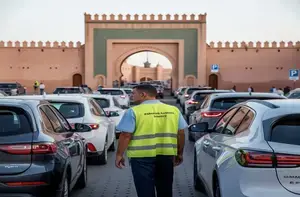
Parking guardians near medina entrances provide safe, affordable car watching services for just a few dirhams. These guardians, often wearing reflective vests, are an integral part of Morocco’s informal parking system. They’ll wave you into a spot, watch your vehicle while you explore the medina, and ensure your car is safe when you return. The cost is minimal — usually just 10-30 MAD depending on how long you stay — and the peace of mind is absolutely worth it.
Do You Need a Car to Visit Moroccan Medinas?
Short answer: No, not for the medina itself. But maybe yes for everything else.
Inside the Medina: All on Foot
Once you’ve parked, exploring the medina is 100% walking. That’s the whole point.
The winding alleyways, hidden riads, tiny workshops, surprise courtyards — you experience all of this on foot. It’s how medinas were designed to be explored.
Marrakech’s medina? We walked for 4-5 hours easily. Fes el-Bali? Even bigger — you could spend days wandering. Chefchaouen? Smaller and hillier, but still all pedestrian.
Comfortable walking shoes are essential. Your car stays parked and safe while you explore.
Why a Car Is Still Useful
While you don’t need a car IN the medina, having one for your Morocco trip opens up incredible experiences:
- Driving through the Atlas Mountains
- Visiting remote Berber villages
- Reaching hidden waterfalls and oases
- Exploring the Sahara gateway towns
- Taking scenic coastal routes
- Stopping at roadside argan cooperatives
Our Morocco road trip routes combined medina visits with countryside exploration. We’d park near the medina, explore on foot for a day, then drive to the next destination.
Check out our complete guide on driving in Morocco to see if self-driving is right for your trip.
Alternatives If You’d Rather Not Drive
Petit taxis: These small taxis are everywhere in Moroccan cities. Cheap (20-40 MAD for most rides), metered, and drivers know how to navigate around medinas perfectly.
Private driver tours: Companies offer custom tours with drivers who handle all the navigation stress. You get the flexibility without the driving hassle.
Local buses: CTM and other companies run between major cities. Less convenient than driving but very affordable.
For car rental in Morocco, we found aggregators offered the best deals and insurance options if you do decide to drive.
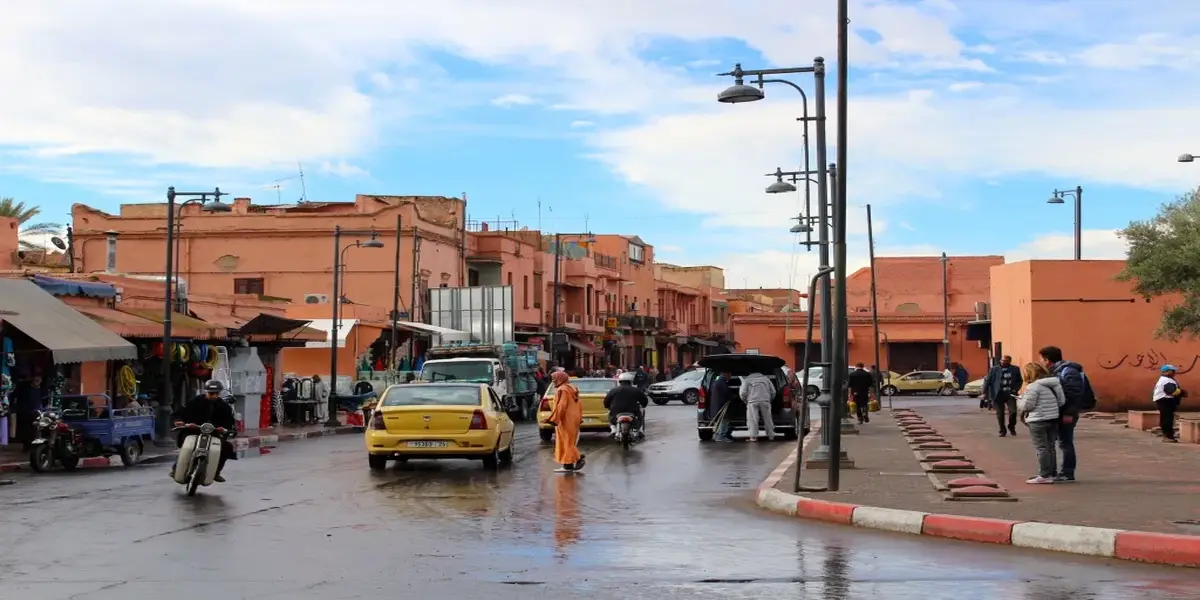
Traffic near medina entrances can be chaotic with cars, scooters, and pedestrians all sharing tight spaces. The streets surrounding Morocco’s ancient medinas are a fascinating blend of old and new, where traditional donkey carts share space with modern vehicles, and where the constant honking serves as communication rather than aggression.
Essential Tips to Avoid Problems
Let me share the lessons we learned (sometimes the hard way) about driving in Moroccan medinas and the areas around them.
Never Enter a Narrow Street Unless You’re Sure
If you’re looking at an alley and thinking “hmm, can I fit?”… the answer is NO.
If you hesitate even slightly, stop and ask. Guardians, shopkeepers, random locals — everyone will happily point you to proper parking. Takes 20 seconds and saves potential disaster.
The Moroccan medina rule: When in doubt, don’t go in.
What to Do If You Get Stuck
Despite our warnings, if you somehow end up wedged in a tight spot:
- Stay calm. Panicking helps zero percent.
- Get out and assess. See what you’re dealing with.
- Ask for help. Locals will appear like magic to assist.
- Follow their guidance. They’ve seen this before, trust them.
- Tip generously. 20-30 MAD for helping you escape is fair.
We witnessed a German couple get stuck near Bab Debbagh in Fes. Within 2 minutes, five locals appeared, directed the reversing, guided them out safely. The couple paid 20 MAD and everyone was happy.
Night Driving Around Medinas
My strong recommendation: Avoid it if possible.
The areas around medinas at night present challenges:
- Pedestrians in dark clothing crossing everywhere
- Scooters without working lights
- Poorly lit streets and alleyways
- Delivery carts that appear suddenly
- Harder to spot parking guardians or proper parking areas
If you must drive near a medina after dark, go extremely slow and stay hyper-alert. Better yet, arrive during daylight and use taxis for evening activities.
Insurance Considerations
For driving around medinas, your biggest risk isn’t speed or accidents — it’s scratches and scrapes.
Those narrow passages near medina edges? Perfect for mirror damage. Tight parking spots? Great for door dings. Stone walls everywhere? Your car’s worst enemy.
Always get full excess reduction coverage when you rent a car in Morocco. The extra €5-10 per day is absolutely worth it for peace of mind around medinas.
Without it, a single scrape could cost you hundreds in excess fees. With it? Not your problem.
Review our detailed Morocco road trip logistics guide for more insurance and planning tips.
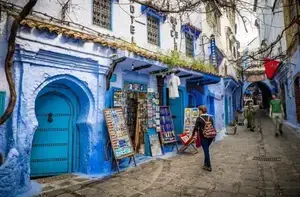
Inside medinas like Chefchaouen, exploration happens entirely on foot through picturesque pedestrian alleyways. The famous blue-washed streets of Chefchaouen are a perfect example of why medinas are best experienced on foot. Every turn reveals a new photo opportunity, a hidden courtyard, or a tiny workshop where artisans practice traditional crafts. This is the authentic Morocco that you simply cannot experience from a car window.
Final Thoughts: Medinas and Driving in Morocco
Let me bring this all together with what you actually need to know.
You don’t drive IN Moroccan medinas. You can’t, you shouldn’t, and you won’t. They’re ancient pedestrian zones designed for a world before automobiles existed.
But here’s what you CAN do easily:
- Drive TO medina entrances without stress
- Park safely and cheaply with professional guardians
- Explore the medina entirely on foot (the authentic way)
- Return to find your car exactly where you left it
- Use your car to reach other incredible destinations
🌟 The truth is, the parking guardian system near medinas is one of Morocco’s hidden gems. For just a few dirhams, someone watches your car all day, helps you navigate tight spots, and ensures you have a vehicle to return to. That’s pretty amazing.
Understanding this system transforms medina visits from potentially stressful to wonderfully simple.
Ready to Explore Morocco’s Medinas?
For Confident Drivers:
If you’re planning to self-drive in Morocco and visit multiple medinas, renting a car makes perfect sense. Just remember — drive TO them, not IN them.
We used Discover Cars for our Morocco rental and the insurance coverage was excellent. Having that protection around tight medina streets gave us real peace of mind.
Start planning your journey with our complete Morocco road trip planning guide.
Prefer a Stress-Free Experience?
If the idea of navigating around medinas makes you nervous, private driver tours are fantastic. You get all the flexibility of a car without any driving stress. Your driver knows exactly where to park, handles all the navigation, and you just enjoy the experience.
Many tour companies offer custom itineraries that combine medina visits with countryside exploration.
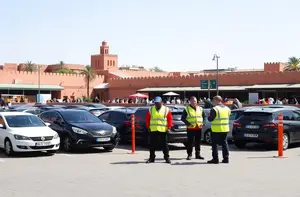
Well-organized parking near Essaouira’s medina makes visiting easy — park safely, explore on foot, return stress-free. Essaouira is one of the more relaxed medinas to visit by car, with clearly marked parking areas near the main gates and friendly guardians who help tourists navigate the system. The coastal breeze and laid-back atmosphere extend to the parking experience, making it a great first medina visit if you’re nervous about the process.
What to Explore Next
Planning your Morocco adventure? Check out our other essential guides:
- Complete Morocco Travel Guide — Start planning at Morocco Travel Trip
- Best Road Trip Routes — Scenic drives and must-see stops
- City-by-City Medina Guides — Specific parking and navigation tips
- Morocco Budget Planning — Costs, money-saving strategies
The medinas of Morocco are waiting. Ancient, magical, full of life. And now you know exactly how to visit them without driving stress.
Park smart, explore on foot, and experience these incredible places the way they were meant to be enjoyed.
Safe travels!
Have questions about parking near specific medinas? Drop them in the comments! I’m happy to share details about Marrakech, Fes, Chefchaouen, or any other medina we visited. And if you’ve navigated medina parking yourself, share your tips — this community thrives on shared experiences!