

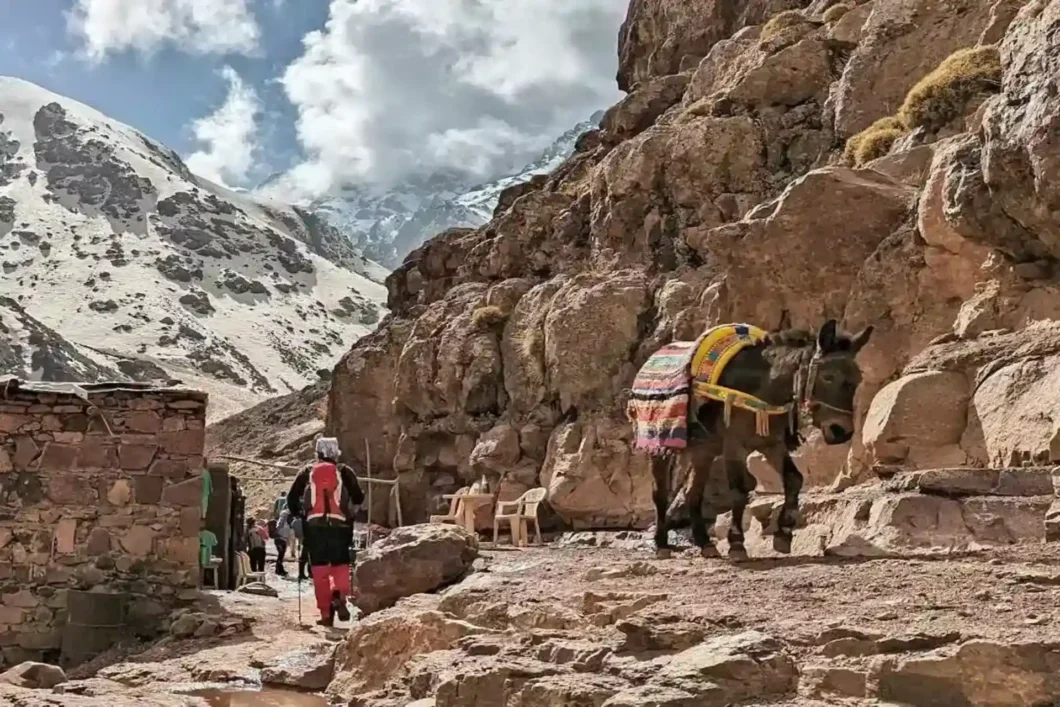
The Atlas Mountains stretch across Morocco like a natural fortress, offering some of North Africa’s most dramatic landscapes. From the snow-capped peaks of the High Atlas to the winding gorges of the Dadès Valley, a 10-day journey through this mountain range reveals a Morocco far removed from the coastal cities and desert dunes.
This 10-day Atlas Mountains itinerary strikes the perfect balance between adventure and cultural immersion. You’ll trek through Berber villages where time moves slowly, navigate hairpin turns with views that stop you in your tracks, and sleep in mountain refuges under star-filled skies. Whether you’re drawn to the challenge of hiking Morocco’s highest peak or simply want to wind through valleys dotted with ancient kasbahs, ten days gives you enough time to experience the Atlas without rushing.
This isn’t a trip for those seeking luxury resorts and paved paths. The High Atlas road trip demands a sturdy vehicle, a sense of adventure, and a willingness to embrace unpredictable mountain weather. But the rewards are substantial: authentic encounters with Berber hospitality, trails that lead to hidden waterfalls, and panoramic vistas that few tourists ever witness.
Why Choose a 10-Day Atlas Mountains Itinerary?
Ten days in the Atlas Mountains offers enough time to explore both the High Atlas and the transition zones leading to the Sahara without feeling rushed. Unlike shorter trips that force you to choose between hiking and road-tripping, this itinerary combines both.
The duration allows for acclimatization to altitude, especially if you’re planning treks around Jebel Toubkal (4,167m). You’ll spend quality time in Berber villages, learning about traditional agriculture and sharing mint tea with locals who’ve lived in these mountains for generations. The extra days also provide flexibility for weather delays, which are common in mountain regions.
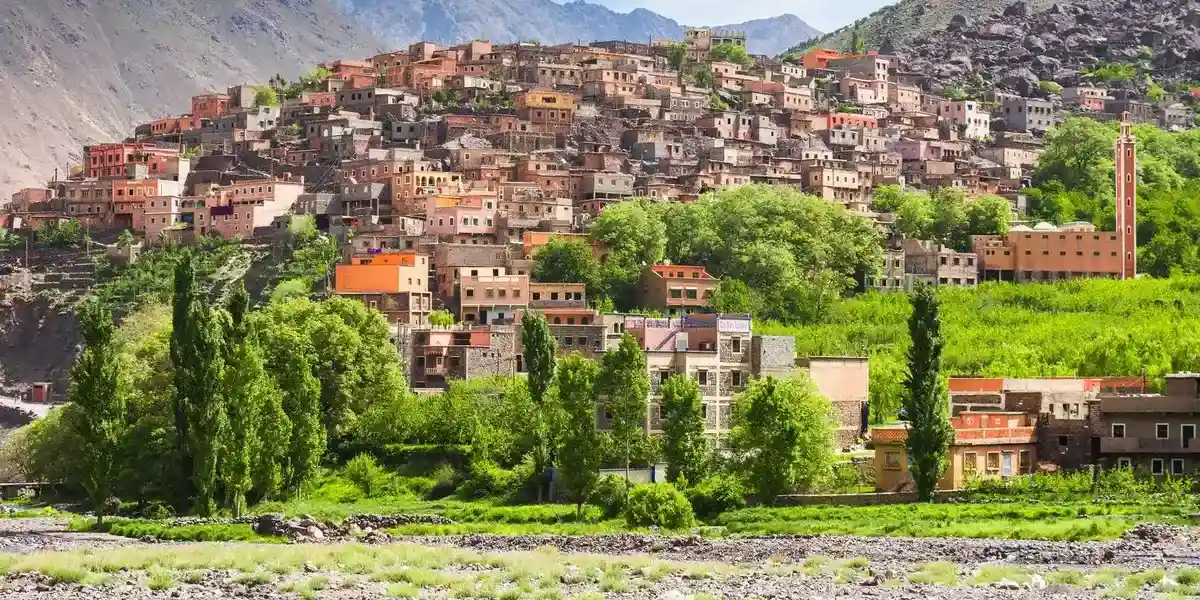
From a practical standpoint, 10 days in the Atlas Mountains means you can drive at a comfortable pace, stopping for photos without worrying about tight schedules. Mountain roads demand respect and attention. The journey from Marrakech to the Dadès Gorges alone involves hundreds of switchbacks, and rushing through them misses the point entirely.
Best Time for Your Atlas Mountains Road Trip
Timing matters significantly when planning your Atlas Mountains 10-day itinerary. Spring (April-May) and autumn (September-October) offer ideal conditions. Spring brings wildflowers to the valleys and snow-melt waterfalls, while autumn provides clear skies and stable weather for high-altitude trekking.
Summer (June-August) sees temperatures soar in the valleys, though the high peaks remain pleasantly cool. This is peak season for climbing Toubkal, but lower elevations can be uncomfortably hot. Winter (November-March) transforms the High Atlas into a snow-covered landscape. While beautiful, many high passes become impassable, and mountain refuges close.
Avoid traveling during heavy rain periods (typically November and March), as mountain roads can become treacherous or blocked by landslides. Always check weather forecasts and local conditions before heading into remote areas.
Preparing Your High Atlas Road Trip: Vehicle & Logistics
Your vehicle choice significantly impacts your Morocco Atlas Mountains road trip experience. While many tourists assume a 4×4 is mandatory, the reality is more nuanced.
Choosing Your Vehicle
For the main routes covered in this itinerary—Marrakech to Imlil, the Tizi n’Tichka pass, and the Dadès Valley—a standard SUV with good ground clearance suffices. The roads are paved, though conditions vary from excellent highways to potholed mountain roads.
A 4×4 becomes necessary only if you’re planning to explore off-road pistes or attempt routes like the remote Mgoun Valley crossings. For most travelers following this 10-day hiking itinerary Atlas Mountains, a Dacia Duster or similar compact SUV provides adequate capability at a reasonable rental price.
10-Day Atlas Mountains Itinerary: Day-by-Day Breakdown
This High Atlas road trip 10 days itinerary balances driving, hiking, and cultural experiences. Each day is designed to be manageable without rushing, though you can adjust based on your fitness level and interests.
Day 1: Marrakech – Acclimatization & Planning
Start your 10 days in the Atlas Mountains with a day in Marrakech. This isn’t wasted time—it’s essential preparation. Visit the Marrakech medina early in the morning before crowds arrive, then spend the afternoon organizing your trip logistics.
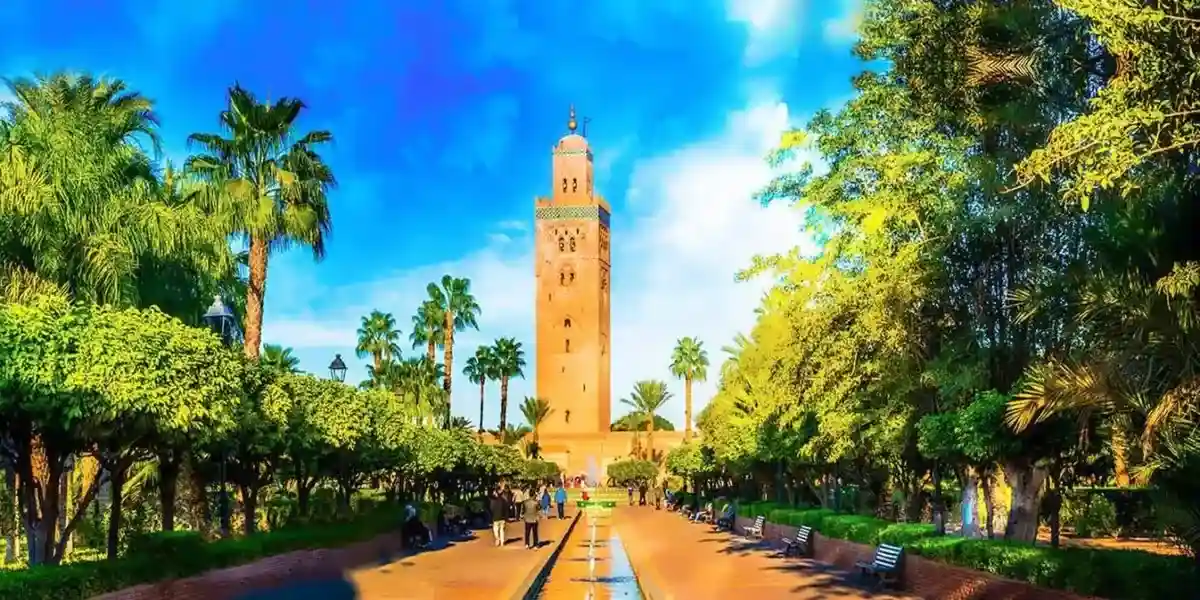
Check your rental vehicle thoroughly, purchase any forgotten supplies, and confirm your first night’s accommodation in Imlil. The drive from Marrakech to Imlil takes only 90 minutes, so there’s no rush to leave early. Use this day to adjust to the time zone if you’ve just arrived internationally.
Day 6: Drive to Telouet & Kasbah du Glaoui
Today begins the road trip portion of your Atlas Mountains 10-day itinerary. Drive from the Azzaden Valley/Ouirgane area to Telouet (approximately 2.5 hours), stopping at viewpoints along the way.
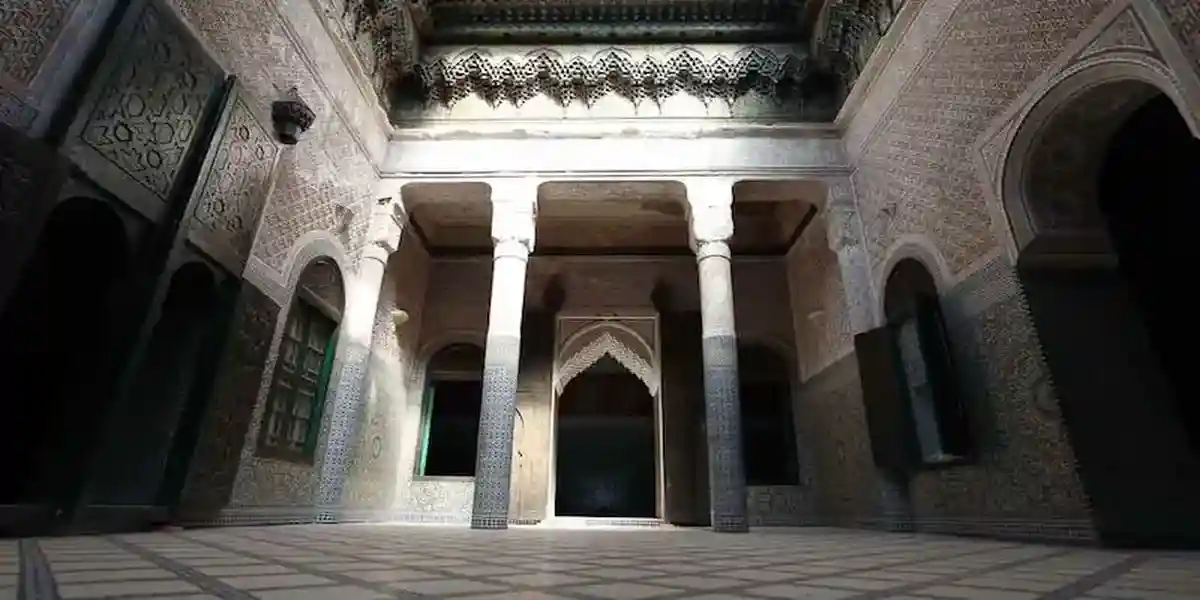
The Kasbah du Glaoui in Telouet is one of Morocco’s most fascinating ruins. Once the palace of the powerful Glaoui family who controlled the region in the early 20th century, it now stands partially collapsed but still magnificent. The painted ceilings and carved cedar wood in the preserved sections hint at its former grandeur.
Day 7: Tizi n’Tichka Pass to Aït Ben Haddou
The Tizi n’Tichka pass (2,260m) is the highest major road pass in North Africa. The drive from Telouet includes countless switchbacks with dramatic drops and panoramic mountain views. Take your time and stop frequently at viewpoints.
Roadside vendors sell fossils, geodes, and semi-precious stones at marked-up tourist prices. Bargaining is expected. The minerals are genuine, though quality varies significantly. If you’re interested, examine items carefully and don’t pay more than 30-40% of the initial asking price.
Aït Ben Haddou, a UNESCO World Heritage site, appears suddenly as you descend the southern slopes of the Atlas. This fortified village (ksar) has starred in numerous films and TV shows, from Gladiator to Game of Thrones. Despite the tourist attention, Aït Ben Haddou remains a functioning village with several families still living within the ancient walls.
Day 8: Ouarzazate & Route to Dadès Valley
Ouarzazate (30km from Aït Ben Haddou) serves as the “Hollywood of Morocco” due to its film studios. The Atlas Film Studios and CLA Studios offer tours showing sets from major productions. If film history interests you, allocate 2-3 hours here.
The Taourirt Kasbah in Ouarzazate town is worth a quick visit (20 dirhams entrance). Like Telouet, it was owned by the Glaoui family and shows similar architectural styles, though better preserved.
Day 9: Dadès Gorges Exploration
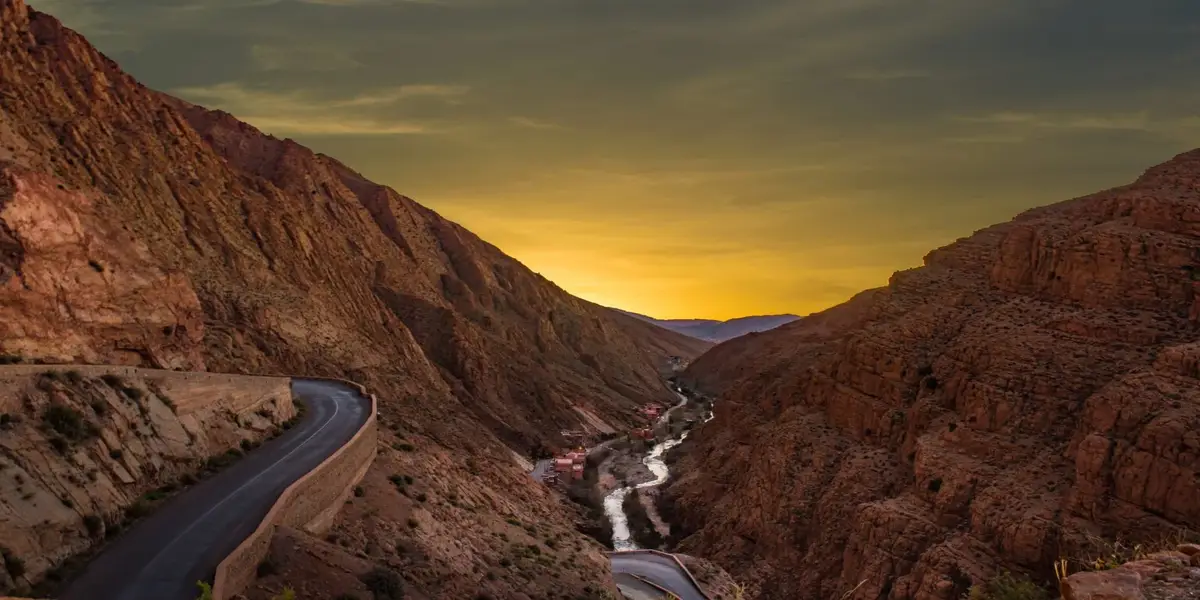
The Dadès Gorges are famous for their dramatic rock formations and the series of hairpin turns known as the “Monkey Fingers” or “Serpentine Road.” Drive slowly and stop frequently for photos—the views are phenomenal.
Park at one of the viewpoints and hike into the gorge itself. Multiple trails lead along the river and up to Berber villages perched on cliff ledges. The gorge walls tower hundreds of meters overhead, and the narrow passage creates dramatic light effects throughout the day.
Day 10: Todra Gorges & Return Route
Drive to the Todra Gorges (45km from Dadès, via Tinghir). The Todra canyon narrows to just 10 meters in places, with 300-meter-high vertical walls on either side. It’s one of Morocco’s most impressive natural formations.
Park at the gorge entrance and walk the paved path into the canyon. The temperature drops noticeably as you enter, and the narrow opening above creates unique light effects. Rock climbers often practice on the gorge walls—Morocco’s best climbing routes are here.
Essential Hiking Routes for Your 10-Day Atlas Mountains Trip
The hiking component of this 10-day hiking itinerary Atlas Mountains deserves special attention. While the itinerary includes several walks, you can adjust the difficulty based on your fitness level and experience.
Imlil to Aremd & Sidi Chamharouch
This is the most accessible trek in the itinerary. The trail is well-maintained, heavily traveled, and suitable for most fitness levels. Distance is 11km round trip from Imlil, with 600 meters of elevation gain. Allow 4-5 hours including breaks.
The path follows a stream valley, passing through terraced fields and walnut groves. Berber villages dot the route, and you’ll see traditional agriculture in action. Mules carry supplies up and down the trail—step aside when you hear them approaching.
Toubkal Base Camp (Optional Extension)
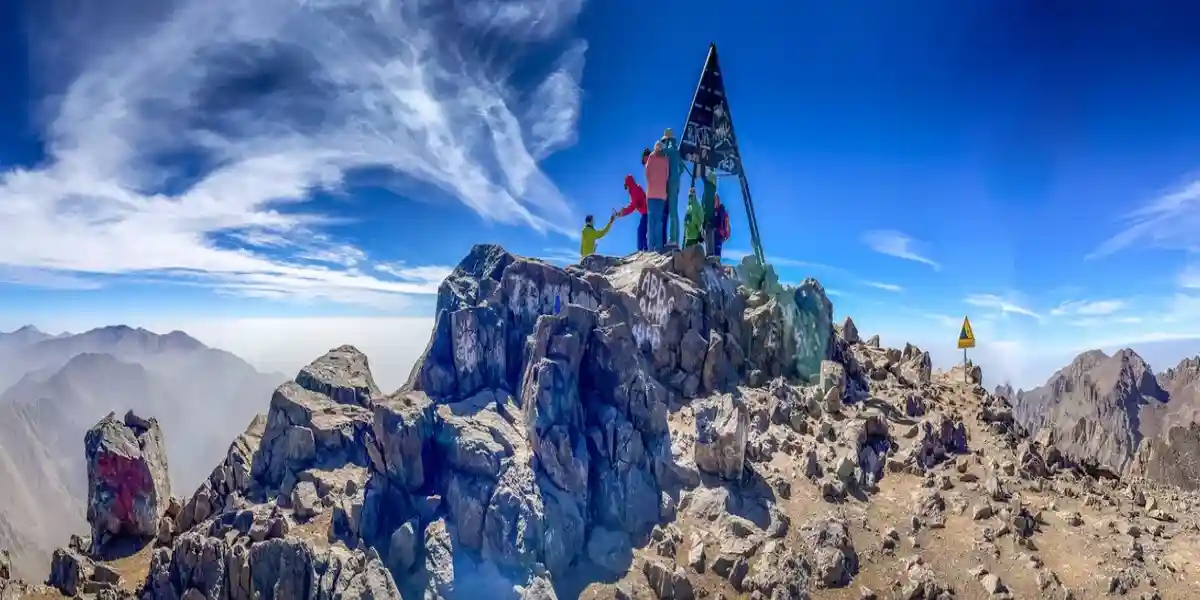
If you’re an experienced hiker with good fitness, consider adding a Toubkal Base Camp overnight to Day 3. The trail continues past Sidi Chamharouch to the Toubkal Refuge at 3,207 meters (additional 3-4 hours, 850m elevation gain).
Azzaden Valley Trails
The Azzaden offers more remote hiking with fewer crowds. Trails are less maintained but well-defined. The valley trek to Tizi Oudid (half-day) provides excellent acclimatization for altitude without technical difficulty.
Longer options include hiking over to the Imlil valley (full day) or exploring high pastures where shepherds take their flocks in summer. These areas require good navigation skills or a local guide, as trails can be indistinct.
Dadès & Todra Canyon Walks
The gorge walks require minimal technical skill but offer spectacular scenery. The Dadès valley hike to Aït Oudinar (4 hours round trip) follows clear paths through dramatic rock formations.
In Todra, the main canyon walk is only 2-3km round trip on flat, paved path—suitable for all abilities. Longer routes lead up side canyons and to high viewpoints, requiring 3-5 hours and moderate fitness.
Practical Tips for Your Morocco Atlas Mountains Road Trip
After covering the itinerary and hiking details, here are practical considerations that will make your High Atlas road trip 10 days smoother.
Accommodation Strategy
Book your first two nights in advance (Marrakech and Imlil), then remain flexible. Mountain guesthouses rarely fill completely outside peak season (July-August), and showing up allows you to inspect rooms before committing.
Expect basic facilities in mountain areas. Hot water may be limited or solar-heated (meaning cold showers if you’re late). WiFi is often non-existent or painfully slow. Embrace the disconnection—it’s part of the experience.
Money & Budgeting
ATMs exist in major towns (Marrakech, Ouarzazate, Boumalne Dadès, Tinghir) but become scarce in mountain areas. Withdraw enough cash in Marrakech to cover several days, plus emergency buffer.
Daily costs for this itinerary run approximately 500-800 dirhams per person (excluding vehicle rental), depending on accommodation choices and dining preferences. This includes guesthouse nights, meals, guide fees if hired, and incidental expenses.
Small denominations (20, 50, 100 dirham notes) are essential. Mountain shops and guesthouses often can’t break 200 dirham notes. Keep coins for roadside toilets and small purchases.
Communication & Connectivity
Cell coverage is surprisingly good along main roads but drops in valleys and remote areas. Maroc Telecom has the best mountain coverage, followed by Orange. Buy a local SIM in Marrakech (50 dirhams for SIM + 50-100 dirhams for data package).
Download offline content before leaving Marrakech: maps, guidebooks, music, and podcasts. You’ll have plenty of driving time with no radio signal. Offline maps on Maps.me or Google Maps work well throughout the Atlas.
Food & Water
Bottled water is available in all villages, though plastic waste is a growing problem. Consider bringing a reusable bottle with filter or purification tablets. Spring water from mountain sources is generally safe but use judgment.
Restaurants in tourist areas (Imlil, Aït Ben Haddou) serve varied menus. Remote guesthouses offer whatever they’re cooking that day—usually tagine, couscous, or omelets. If you have serious dietary restrictions, bring supplementary food.
Safety & Insurance
The Atlas Mountains are generally safe, with crime rates low. The main risks are altitude sickness (if climbing high), dehydration, sunburn, and vehicle accidents on mountain roads.
Travel insurance covering mountain activities is essential. Many standard policies exclude trekking above 3,000 meters or off-road driving. Verify coverage before departure and carry policy details.
What This 10-Day Atlas Mountains Itinerary Doesn’t Include
To keep this itinerary manageable in ten days, several worthwhile destinations are excluded. Understanding what’s missing helps you decide if this route suits your interests or if modifications are needed.
The Anti-Atlas Mountains south of the High Atlas offer different landscapes—more arid, with distinct geology and quieter villages. Adding them requires 3-4 additional days. The Middle Atlas around Ifrane and Azrou features cedar forests and Barbary macaques, but it’s geographically distant from this southern route.
Extended treks like the Mgoun traverse (5-7 days) or the Toubkal circuit (4-5 days) are full trips in themselves. This itinerary samples mountain trekking without committing to multi-day backpacking.
The Sahara desert (Merzouga, Erg Chebbi) lies beyond the Atlas’s southern edge. While some itineraries try combining Atlas and Sahara in 10 days, the result feels rushed. Better to focus on mountains OR desert, not both.
Final Thoughts on Your 10 Days in the Atlas Mountains
This Atlas Mountains 10-day itinerary provides a framework, not a rigid schedule. Mountain travel rewards flexibility—weather delays happen, roads close unexpectedly, and sometimes the best experiences come from deviations.
The Atlas Mountains offer adventure without extreme difficulty. You don’t need technical climbing skills or high-altitude mountaineering experience. What you do need is reasonable fitness, patience with mountain driving, and openness to basic conditions.
Berber hospitality remains genuine in these mountains despite increasing tourism. Accept invitations for tea, engage with locals beyond transactions, and show respect for traditions that predate paved roads by centuries. The connections you make often outlast memories of scenic viewpoints.
Whether you’re drawn by the hiking challenges, the dramatic gorges, or simply the chance to explore Morocco beyond the coastal cities, the Atlas Mountains deliver. Ten days is enough to experience the range’s diversity without feeling constantly rushed. Take your time, drive carefully, and let the mountains reveal themselves at their own pace.
“`