

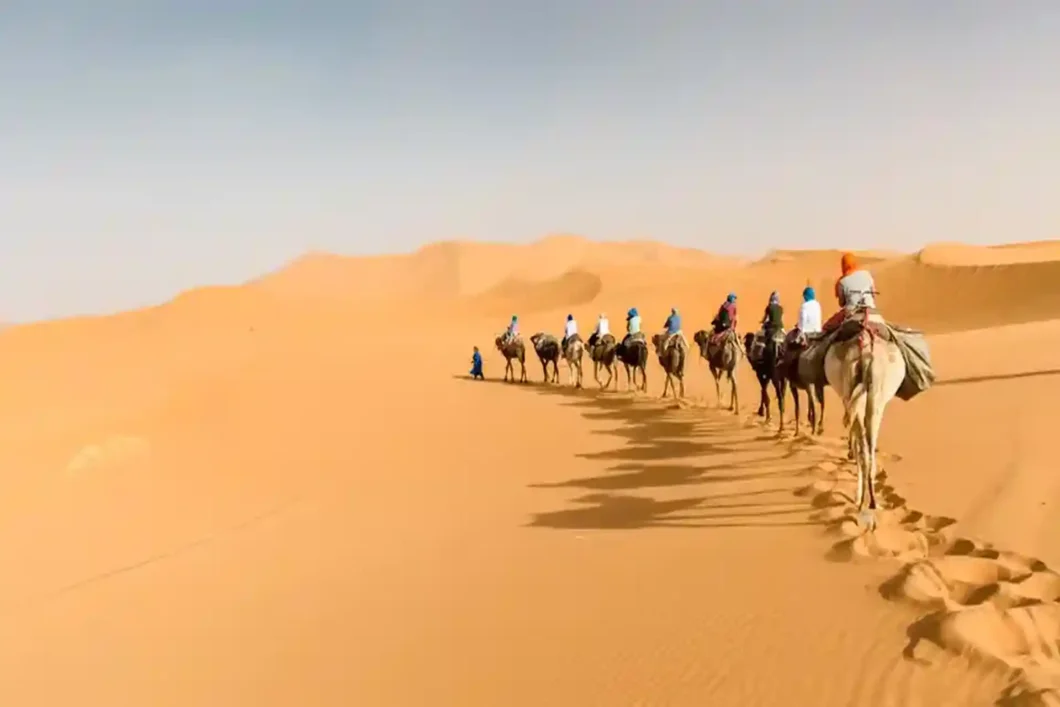
The Morocco road trip Sahara desert represents one of North Africa’s most compelling journeys. Driving from the green valleys of the Atlas Mountains into the golden expanse of the world’s largest hot desert creates a contrast so dramatic it feels like crossing into another world. The shift happens gradually—palm oases thin out, red earth gives way to sand, and eventually the horizon becomes an endless sea of dunes.
Most travelers visiting Morocco stick to the imperial cities and coastal towns. Those who venture into the Sahara discover something entirely different. The desert offers silence so profound you can hear your own heartbeat, night skies so clear the Milky Way casts shadows, and a sense of scale that makes human concerns feel appropriately small. This isn’t a side trip you squeeze into an afternoon—it’s an experience that demands at least two days and rewards those who give it proper time.
A Sahara desert road trip Morocco requires planning. The desert sits several hundred kilometers from major cities, accessible only by long drives through mountain passes and desert plains. But the journey itself becomes part of the experience. The changing landscapes, roadside kasbahs, and Berber villages encountered along the way provide context for understanding why this desert has shaped Moroccan culture for centuries.
Why You Should Include the Sahara Desert in Your Morocco Road Trip
The Sahara occupies a unique position in travel experiences. Unlike beaches or mountains where similar versions exist worldwide, few places replicate the scale and character of the Sahara’s sand seas. The desert camps in Morocco provide access to this environment while maintaining reasonable comfort levels.
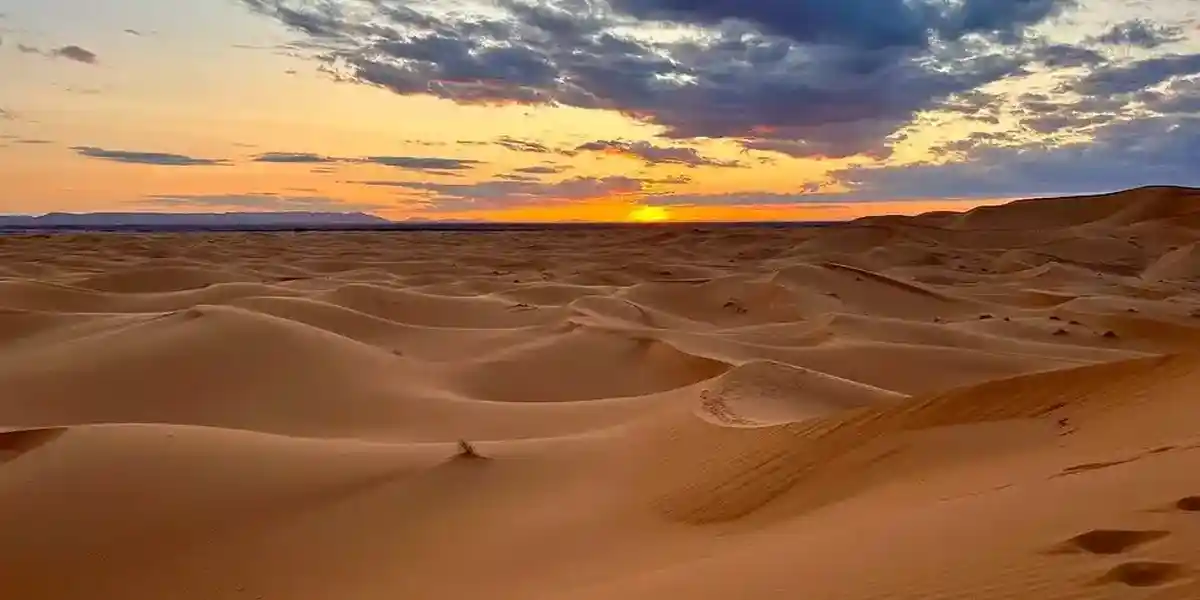
The landscape alone justifies the journey. Erg Chebbi near Merzouga features dunes reaching 150 meters high, their ridges sharp as knife blades against blue sky. The sand shifts from gold to deep orange depending on sun angle, creating constantly changing vistas. During the golden hour before sunset, the dunes take on an almost surreal quality as shadows emphasize every ripple and curve.
Where to Go: Merzouga vs. Erg Chebbi vs. Erg Chigaga
Morocco’s Sahara has several accessible sand seas, each with distinct characteristics. Understanding the differences helps choose the right destination for your Sahara desert experience Morocco.
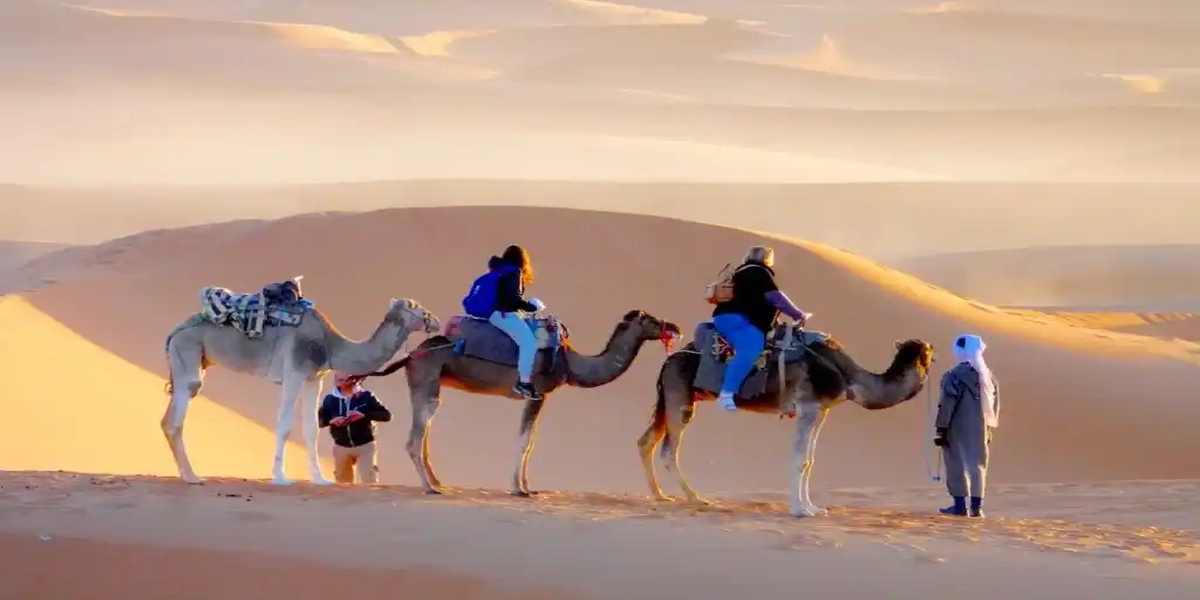
Merzouga and Erg Chebbi are technically the same destination—Merzouga is the village, Erg Chebbi is the dune field beside it. This is Morocco’s most accessible desert destination, sitting just 2km from paved road. The dunes stretch roughly 22km long and 5km wide, with some peaks reaching 150 meters. From Marrakech, the drive takes 9-10 hours via the Tizi n’Tichka pass and Ouarzazate. From Fes, it’s about 7 hours through Midelt and the Ziz Valley.
Erg Chebbi’s accessibility is both advantage and drawback. Standard vehicles reach the village edge, making it feasible for those without 4x4s. However, this accessibility brings crowds. During peak season, dozens of camel caravans depart simultaneously at sunset, and the camps can feel like a small village rather than isolated desert experience.
Driving to the Sahara — Road Conditions & Itinerary Tips
The drive to the Sahara desert forms a significant portion of your trip. Understanding distances, road conditions, and necessary stops helps with realistic planning.
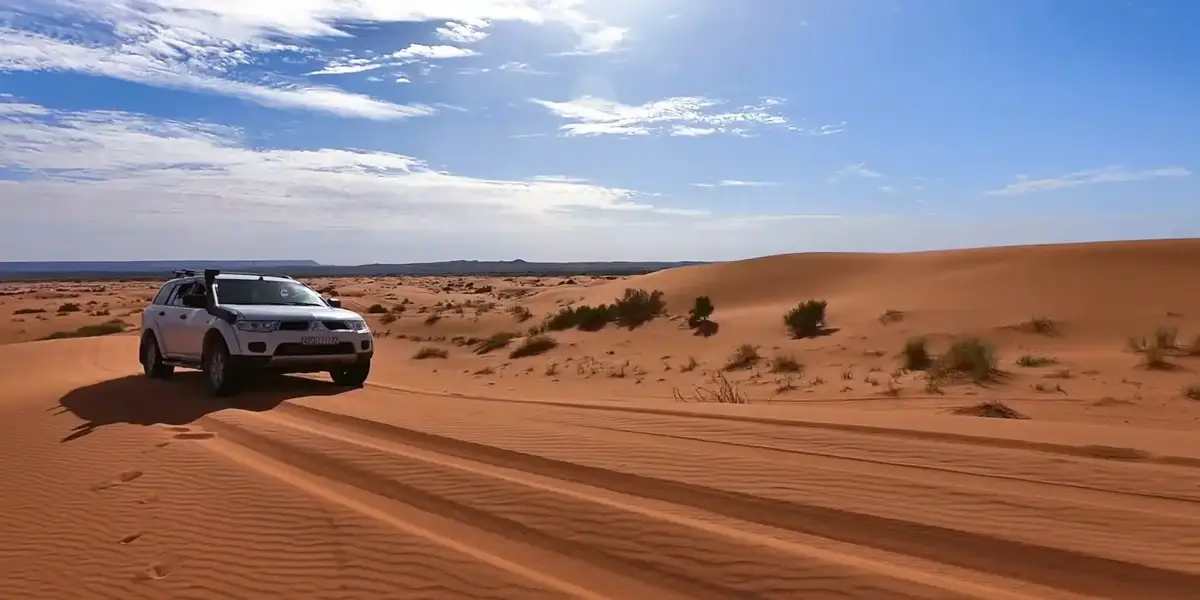
From Marrakech to Merzouga, the most common route covers approximately 560 kilometers and takes 9-10 hours of actual driving. Most travelers split this over two days, staying overnight in the Dades Valley or Todra Gorges. The route crosses the Tizi n’Tichka pass (2,260m), descends through Ouarzazate, and follows the N10 east through increasingly arid landscapes.
How to Include the Desert in Your Road Trip Itinerary
Integrating the Sahara into your Morocco Sahara desert itinerary requires choosing from three main approaches, each with different time requirements and experiences.
Option 1: Self-Drive to Desert Edge involves driving your rental car to Merzouga or M’Hamid, then joining a camel trek or 4×4 tour for the final desert portion. This approach offers maximum flexibility for the outbound journey, allowing stops at places like Aït Ben Haddou, Todra Gorges, and Dades Valley without schedule constraints.
Camel Trek Experience — What Really Happens
The camel trek Merzouga experience is central to most Sahara visits, though what actually happens differs from many travelers’ expectations.
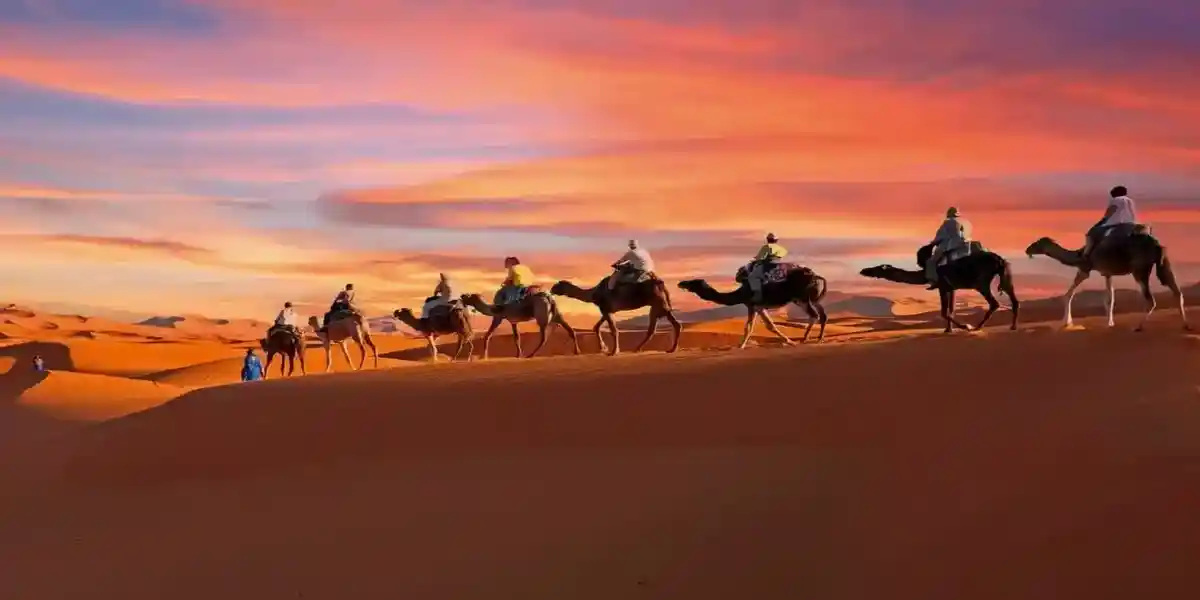
Standard camel treks from Merzouga last 1-2 hours each way. The afternoon trek departs around 4-5pm, timed to reach the camp area for sunset. You’ll ride approximately 7-10 kilometers into the dunes, though the pace is slow—camels walk at 4-5 km/h. The return trek next morning leaves before sunrise (5-6am depending on season) to catch dawn light on the dunes.
Desert Camps — Standard, Luxury, or Nomadic?
The desert camps in Morocco vary dramatically in comfort level and price. Understanding the categories helps set realistic expectations.
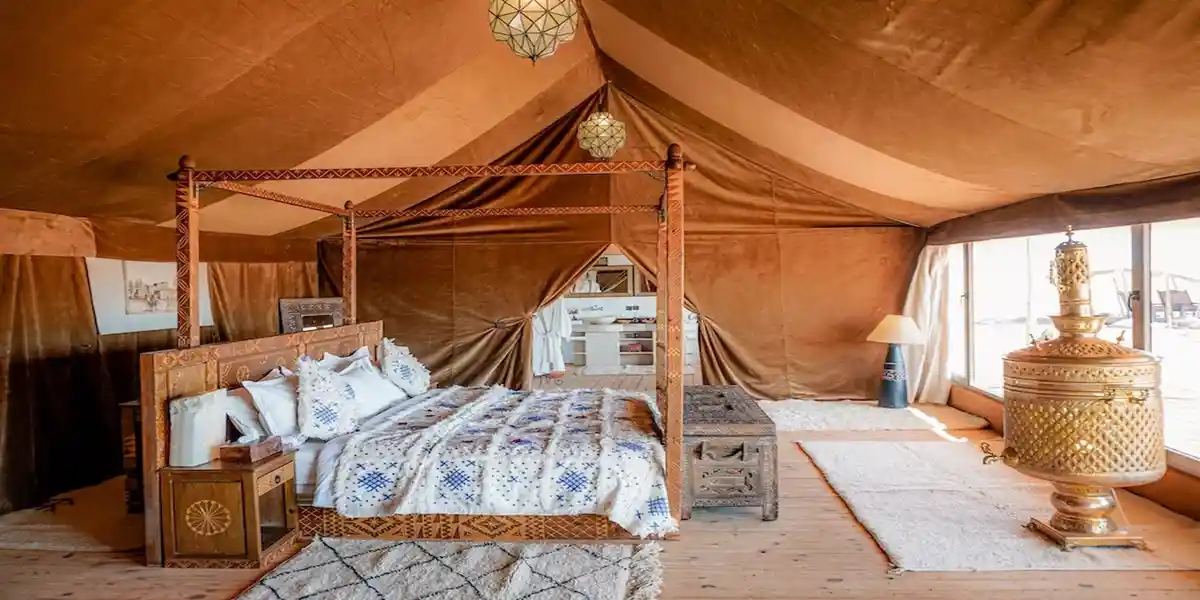
Budget camps (30-50 euros per person) provide basic shelter and meals. Tents are simple Berber-style with mattresses on sand, shared communal toilets (often squat-style), and basic washing facilities. Dinner is standard tagine or couscous served family-style. These camps are clean and safe but offer minimal comfort beyond shelter.
Choosing the Right Sahara Tour Operator
The operator you choose significantly impacts your Sahara desert experience Morocco. Quality varies dramatically, and the cheapest options often come with hidden problems.
Safety should be your primary concern. Reputable operators maintain insured 4×4 vehicles, employ licensed guides, and carry emergency communication equipment. Budget operators sometimes use old vehicles with questionable maintenance and guides without proper training. In the desert, vehicle breakdowns can become dangerous situations.
When to Visit the Sahara Desert
Timing your best time to visit Sahara Morocco determines whether you experience comfortable adventure or physical ordeal.
The ideal months are October through April. October and November offer warm days (25-30°C) and cool nights (10-15°C). Desert in autumn feels pleasant with minimal temperature extremes. March and April bring similar conditions with the added benefit of occasional wildflowers in areas that received winter rain.
What to Pack for the Sahara Desert
Proper packing makes the difference between comfortable and miserable desert experiences. The Sahara’s extreme temperature swings and harsh sun create specific requirements.
Warm layers for night are essential even in mild months. A fleece jacket or down vest plus long pants prevent cold-induced misery after sunset. Winter visits require genuine winter clothing—hat, gloves, warm jacket. The desert at night is surprisingly cold, catching many travelers unprepared.
Safety Tips for Driving and Desert Activities
Desert environments present specific risks that standard travel doesn’t. Awareness and preparation prevent most problems.
Avoid night driving on desert routes. The roads from Marrakech to Merzouga pass through remote areas with minimal lighting, frequent animal crossings, and occasional unmarked hazards. Fatigue after long driving days makes night driving particularly dangerous. Plan your journey to arrive at destinations before dark.
The Morocco road trip Sahara desert combines adventure, culture, and landscapes in ways few other destinations match. With proper planning and realistic expectations, the journey becomes one of travel’s great experiences. The desert doesn’t offer easy comfort, but the rewards for those willing to embrace its challenges last long after you’ve shaken the sand from your shoes.