


The journey from Marrakech to Chefchaouen takes you across the entire breadth of Morocco, from the ochre walls of the Red City to the dreamlike blue streets of the Rif Mountains. This isn’t just a transfer between two destinations. It’s a chance to experience the remarkable diversity that makes Morocco so captivating. Whether you’re chasing the fastest route or seeking the ultimate Marrakech to Chefchaouen road trip experience, this guide has you covered.
Chefchaouen sits tucked into the Rif Mountains in northern Morocco, roughly 600 kilometers from Marrakech by the most direct route. That distance presents both a challenge and an opportunity. You could rush through in a single long day of driving. But why would you? Some of Morocco’s most compelling attractions lie between these two cities, and the smart traveler knows when to slow down.
The famous blue-washed medina draws visitors from around the world, but the getting there can be just as memorable as the destination itself. Ancient Roman ruins, imperial cities, and rolling countryside await those willing to take their time. And honestly, the drive itself reveals a Morocco that most package tourists never glimpse.
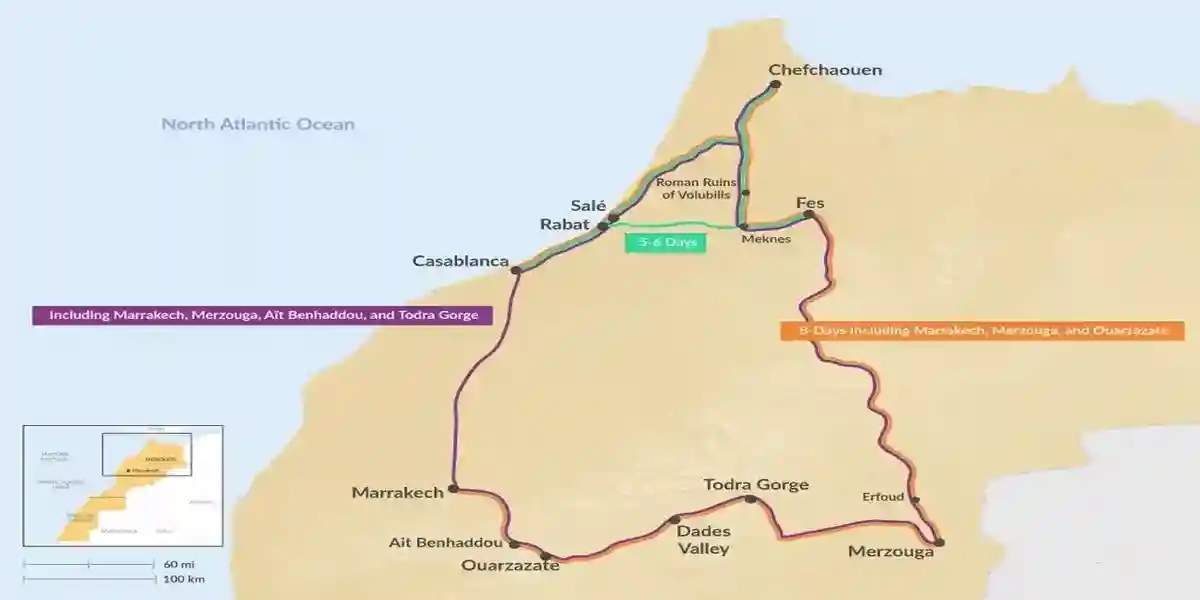
Route map showing both options from Marrakech to Chefchaouen
Two Route Options: Fast vs Scenic
When planning your driving from Marrakech to Chefchaouen adventure, you face a fundamental choice. The route you select shapes your entire experience, so let’s break down both options honestly.
The Fastest Route: Direct via Rabat
The quickest path follows the A7 motorway north from Marrakech to Casablanca, continues on the A1 to Rabat, then takes the A1/N2 northeast through Souk el Arbaa before climbing into the Rif Mountains. Total distance runs approximately 550-580 kilometers with a driving time of 6-7 hours under ideal conditions.
This route makes sense if time is genuinely tight or if you’ve already explored the imperial cities on a previous trip. The motorways are modern and well-maintained, tolls total around 250-300 MAD, and the driving is straightforward. You’ll pass through unremarkable terrain for much of the journey, but you’ll arrive with energy left to explore Chefchaouen’s medina before sunset.
The final stretch from Souk el Arbaa into the mountains deserves attention. The road narrows and winds through increasingly dramatic scenery as you approach Chefchaouen. Even on the fast route, this last hour provides a taste of the Rif’s rugged beauty.
The Scenic Route: Marrakech to Chefchaouen via Fes
Now we’re talking about a proper road trip. The Marrakech to Chefchaouen via Fes route adds significant distance but transforms a simple transfer into an unforgettable journey through Morocco’s heartland. This option covers roughly 650-700 kilometers and requires at minimum two days, though three or four days allows for proper exploration.
Heading northeast from Marrakech, you’ll pass through Beni Mellal and the Middle Atlas foothills before reaching Fes. From there, a detour west to Meknes and Volubilis adds historical depth before the final push north to Chefchaouen. This routing lets you experience three distinct Moroccan environments: the agricultural plains, the imperial city grandeur, and the mountain culture of the north.
Best Stops on the Way: Essential Highlights
The best stops on the way from Marrakech to Chefchaouen deserve more than a quick photo. Each offers genuine insight into different facets of Moroccan history and culture.
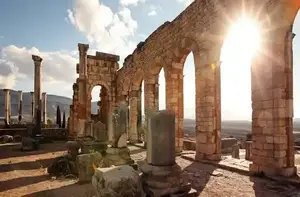
Volubilis: Morocco’s Roman Treasure
These remarkably preserved Roman ruins lie just 30 kilometers north of Meknes, making them an easy addition to any scenic route itinerary. Founded in the 3rd century BC and later becoming the capital of the Roman province of Mauretania Tingitana, Volubilis showcases stunning mosaics, triumphal arches, and basilica remains that rival sites in Italy or Tunisia.
Why stop: The mosaics alone justify the visit. The House of Orpheus, House of the Athlete, and House of Venus contain floor mosaics depicting mythological scenes with surprising vibrancy considering their age. The setting, with the Rif Mountains rising in the distance, adds dramatic backdrop to every photograph.
Recommended time: 2-3 hours allows thorough exploration. Visit early morning or late afternoon for the best light and fewer crowds. Entrance fee is 70 MAD.
Meknes: The Overlooked Imperial City
Sandwiched between the more famous Fes and the beach destinations further north, Meknes often gets unfairly skipped. This is a mistake. The city served as Morocco’s capital under Sultan Moulay Ismail in the 17th century, and his grandiose building projects left a legacy of massive gates, sprawling palaces, and impressive granaries that rival anything in Marrakech.
Why stop: Bab Mansour, the main gate to the imperial city, is arguably Morocco’s most impressive gateway. The medina feels authentically Moroccan without the tourist pressure of Marrakech or Fes. And the Royal Stables, designed to house 12,000 horses, demonstrate the ambition that defined Moulay Ismail’s reign.
Recommended time: Half a day minimum for the highlights, full day if combining with Volubilis. Overnight stays allow evening exploration when the medina comes alive.
Fes: The Medieval Marvel
No Marrakech to Chefchaouen road trip via the scenic route should skip Fes. This UNESCO World Heritage medina represents the world’s largest car-free urban zone and offers an intensity of sensory experience unmatched anywhere in Morocco. The tanneries, the ancient university, the countless mosques and madrasas all compete for attention in this medieval city that continues to function as it has for over a millennium.
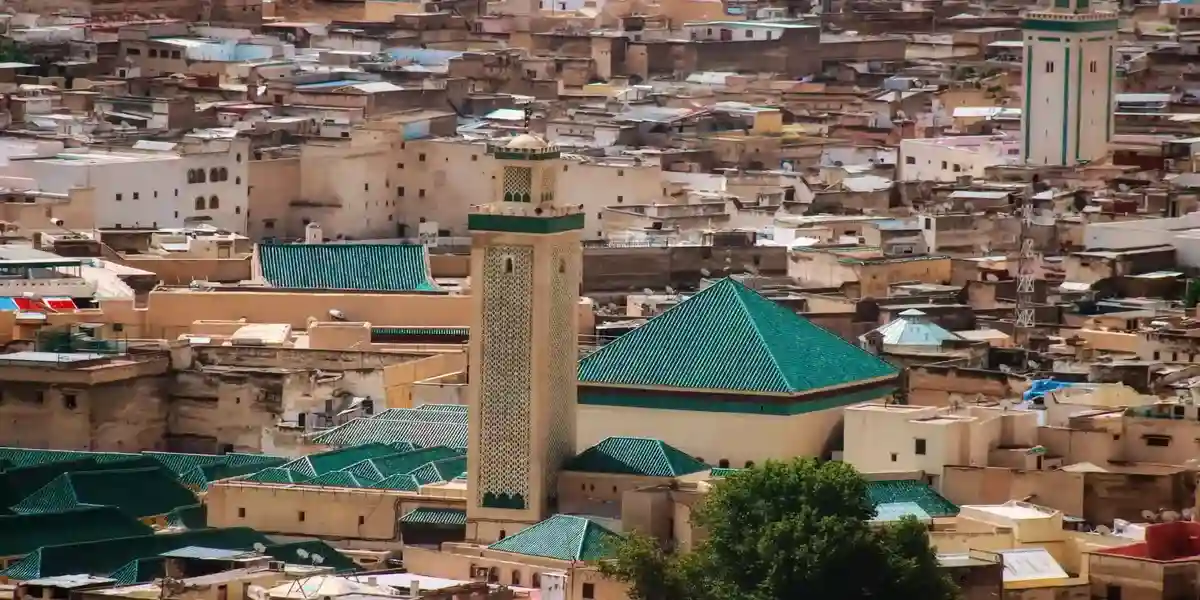
Panoramic view over the Fes medina from a rooftop terrace
Why stop: Fes demands at least a full day, ideally two. A guided walking tour through the medina reveals layers of history and craft traditions that independent exploration might miss. The tanneries, viewed from leather shop terraces, provide that quintessential Morocco photograph. And getting genuinely lost in the labyrinthine streets remains one of travel’s great adventures.
Recommended time: Minimum one full day, ideally two nights. This allows morning and evening exploration when temperatures cool and crowds thin.
For detailed information about Fes, see our comprehensive Morocco road trip routes guide.
Arriving in Chefchaouen: Practical Tips
The Blue Pearl deserves its reputation, but arriving prepared makes the experience significantly smoother. The town presents unique challenges that catch unprepared visitors off guard.
Parking Your Vehicle
Here’s something the Instagram posts don’t show: Chefchaouen’s medina sits on a steep hillside with streets far too narrow for vehicles. You cannot drive into the blue-painted areas that drew you here in the first place. Plan accordingly.
Several parking options exist around the medina’s edges. The main municipal lot near Place Outa el Hammam charges around 20-30 MAD per day and offers reasonable security. Smaller lots and street parking exist on the roads approaching town, but security varies. If your accommodation offers parking, use it, even if the walk to your room involves hauling luggage up steep lanes.
Many travelers on a driving from Marrakech to Chefchaouen journey arrive exhausted and frustrated after circling the town looking for their hotel entrance. Save yourself the stress. Park in the main lot, contact your accommodation, and arrange to be met. Most guesthouse owners are happy to send someone to help with bags.
Accommodation Considerations
Hotels and guesthouses in Chefchaouen cluster in two areas: within the medina itself or on the hillsides above town. Each has advantages worth considering.
Medina riads put you steps from the blue streets and main square, perfect for evening exploration and early morning photography. The tradeoff involves steep stairs, potentially noisy surroundings, and the luggage hauling mentioned above. Prices range from 300-1500 MAD per night depending on quality and location.
Hillside hotels offer views, parking, and easier vehicle access. Several sit along the road entering town from the south, with terraces overlooking the medina and mountains. You’ll need to walk or taxi into the medina, but the panoramic sunset views compensate nicely. Prices typically run 400-2000 MAD per night.
Best Time for Photography
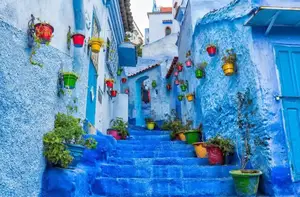
The blue streets that define Chefchaouen photograph best in morning light. Serious photographers should plan to be out by 7-8 AM before tour groups arrive and while the low sun creates interesting shadows on the painted walls. The famous blue-on-blue shots that flood social media require patience and timing that most visitors don’t invest.
Evening light also works well, though shadows fall differently and the streets fill with locals and visitors taking their evening stroll. The golden hour before sunset paints the blue walls with warm tones that create a different but equally compelling atmosphere.
Midday light flattens the textures and creates harsh shadows. Use this time for lunch, shopping, or escaping the heat rather than photography. The local cafes around Place Outa el Hammam offer perfect people-watching spots while waiting for better light.
Shopping in Chefchaouen
The medina offers excellent shopping with a distinctly different character than Morocco’s larger cities. The specialty here is woven goods: blankets, rugs, bags, and clothing featuring the bold geometric patterns traditional to the Rif region. Quality varies enormously, so examine items carefully before purchasing.
Prices run lower than Marrakech or Fes for comparable items, and the bargaining tends to be less aggressive. Start at roughly half the asking price and expect to settle around 60-70% for most items. Shops selling genuine handmade goods will often demonstrate the weaving process or show you the artisan workshop, which justifies higher prices than mass-produced alternatives.
Leather goods, while available, don’t match the quality or selection of Fes. Ceramics and metalwork similarly play second fiddle to the textiles. Focus your shopping energy on what Chefchaouen does best: those distinctive woven blankets and bags that you’ll see draped everywhere in the medina.
Is It Worth Driving to Chefchaouen?
This question deserves an honest answer. Is it worth driving to Chefchaouen from Marrakech? The answer depends entirely on your travel style, available time, and priorities.
Yes, driving is worth it if:
- You have at least 3-4 days for the journey including time in Chefchaouen
- You want to include Fes, Meknes, or Volubilis in your Morocco experience
- You value flexibility and the freedom to stop whenever something catches your eye
- You’re comfortable with driving in Morocco including mountain roads
- You plan to continue exploring northern Morocco after Chefchaouen
Consider alternatives if:
- You have less than 2 days total
- Chefchaouen is your only northern Morocco destination
- Mountain driving makes you uncomfortable
- Budget is extremely tight (bus travel costs a fraction of car rental)
For many travelers, the scenic route through Fes transforms what could be a simple photo-op in Chefchaouen into a comprehensive Morocco experience. Those best stops on the way provide context and variety that deepen appreciation for both the journey and the destination.
Safety Considerations
The route from Marrakech to Chefchaouen presents several safety factors worth addressing before departure.
Road Conditions
Motorways between Marrakech, Casablanca, Rabat, and Fes meet European standards. Well-maintained, clearly marked, and patrolled, these roads pose minimal concerns for competent drivers. The challenges begin on secondary roads, particularly in the Rif Mountains.
The final approach to Chefchaouen involves winding mountain roads with sharp curves, steep gradients, and occasional livestock on the pavement. Drive defensively, especially around blind corners. Local drivers sometimes take liberties with centerlines that visitors find alarming. For comprehensive driving safety information, consult our detailed guide.
The Rif Region
The mountains surrounding Chefchaouen have a reputation that sometimes concerns first-time visitors. Cannabis cultivation occurs in the region, and you may be approached by sellers, particularly along roadsides. The simple solution: politely decline and continue on your way. Tourists who don’t engage with drug offers face no issues whatsoever.
Chefchaouen itself feels remarkably safe, with a relaxed atmosphere quite different from larger Moroccan cities. The medina is walkable at any hour, and the locals have long experience with tourism. Standard travel precautions apply, but specific concerns about the town itself are largely unfounded.
Night Driving
Avoid driving in Morocco after dark, especially on mountain roads. Limited lighting, wandering animals, and unfamiliar terrain combine to make night driving genuinely risky. Plan your daily distances to arrive at each destination well before sunset. For detailed road trip logistics and planning, see our comprehensive guide.
Suggested Itineraries
3-Day Quick Route
Day 1: Marrakech to Fes via motorway (5-6 hours driving). Afternoon arrival allows evening medina exploration.
Day 2: Morning in Fes, then drive to Chefchaouen via Meknes (4-5 hours total with stops). Arrive for sunset.
Day 3: Full day in Chefchaouen for morning photography, shopping, and exploration.
5-Day Scenic Route
Day 1: Marrakech to Fes. Overnight Fes.
Day 2: Full day exploring Fes medina with guided tour. Overnight Fes.
Day 3: Morning at Volubilis, afternoon in Meknes. Overnight Meknes or continue to Chefchaouen.
Day 4: Full day in Chefchaouen. Early morning photography, afternoon shopping and exploration.
Day 5: Second morning in Chefchaouen or begin return journey.
For vehicle rental options and recommendations, check our detailed car rental guide.
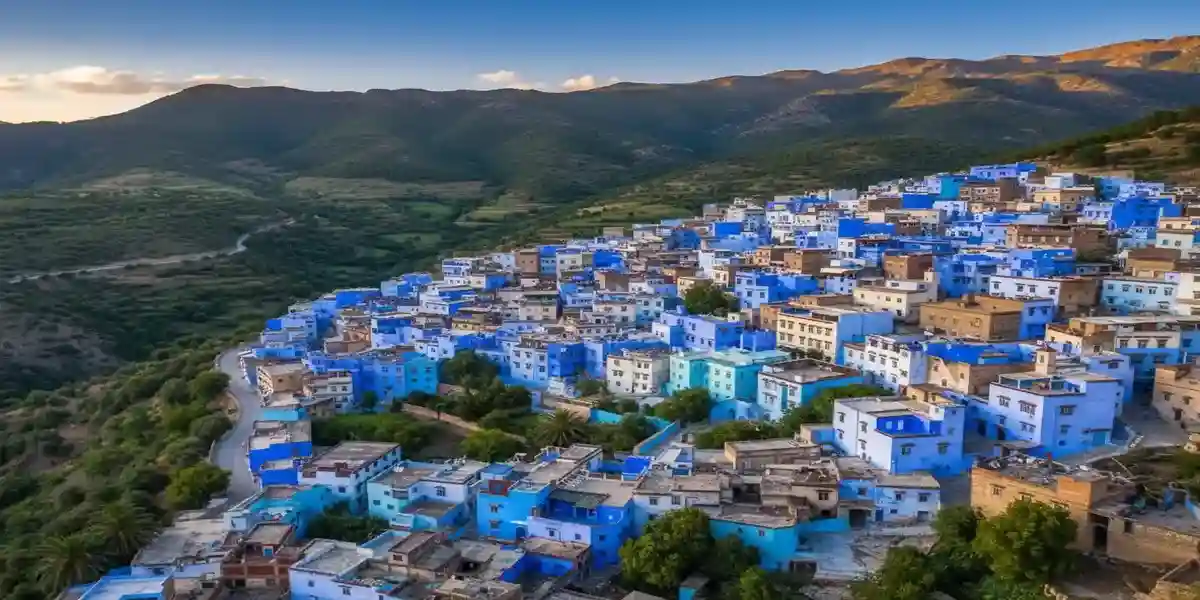
The blue medina of Chefchaouen nestled in the Rif Mountains
Final Thoughts
The Marrakech to Chefchaouen road trip rewards those who approach it as a journey rather than merely a transfer. Yes, the Blue Pearl delivers on its photogenic promise. Those impossibly blue streets, the mountain backdrop, the relaxed atmosphere all justify the journey. But the getting there, through imperial cities and ancient ruins and rolling countryside, offers experiences equally memorable.
Take your time. Stop often. Let Morocco reveal itself at its own pace. The blue streets will wait for you, and you’ll arrive with stories beyond just the destination.
For more comprehensive planning resources, explore our complete Morocco travel guide and road trip routes collection.