Morocco Transport Guide 2026: Car vs Train | Complete Guide

Choosing between car vs train Morocco for your 2026 journey requires understanding the geographic realities of Moroccan infrastructure. The country’s rail network, while modern and efficient within its coverage area, serves only the northern corridor and stops abruptly at Marrakech. Beyond this point, the entire south becomes a driver’s territory where renting a car in Morocco transforms from optional convenience to absolute necessity for independent travel.

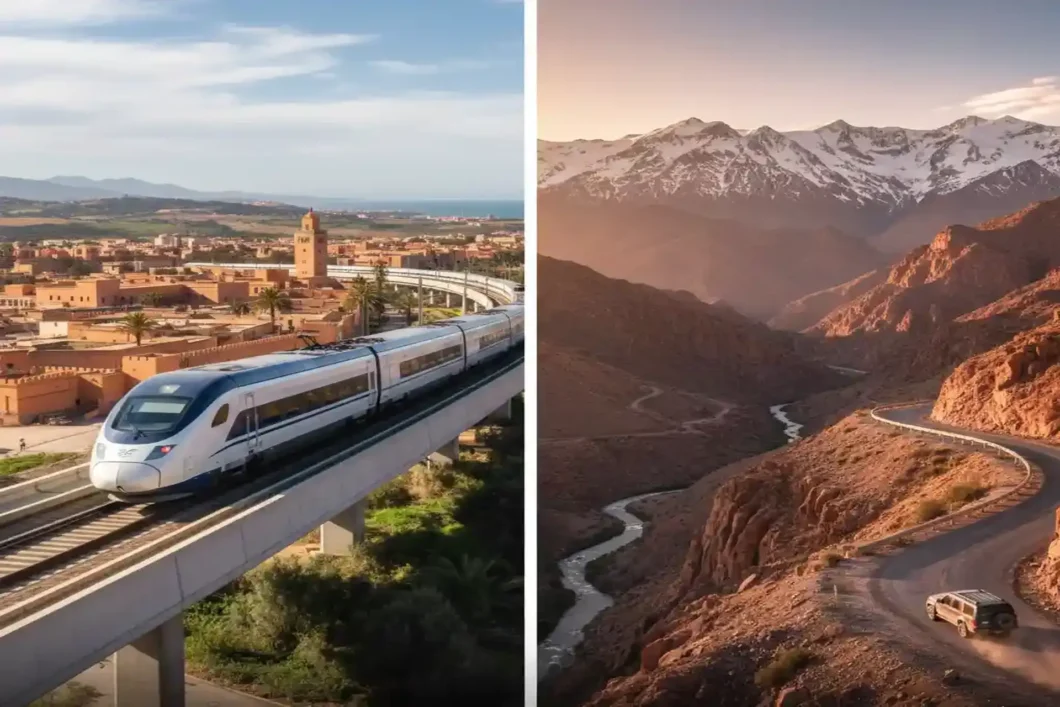
This Morocco transport guide breaks down the technical logistics that determine your transportation strategy. The Al Boraq high-speed train connecting Tangier to Casablanca represents world-class rail infrastructure, yet the moment you plan a South Morocco road trip to Essaouira, the Drâa Valley, or the Sahara desert, you are dealing with entirely different Morocco travel logistics. The key is knowing exactly where one mode ends and the other begins, then optimizing your route accordingly.
Understanding driving in Morocco versus taking the train is not about choosing one over the other universally. It is about matching transportation mode to geographic sector. The Casa-Rabat train covers 87 kilometers in 45 minutes, faster than any car can manage through urban traffic. However, reaching Aït Benhaddou or Merzouga without a vehicle means depending on tour operators with fixed schedules and limited flexibility. This guide provides the data you need to construct an efficient, cost-effective transport plan for your Moroccan journey.

The Geographic Reality of Morocco’s Transport Network

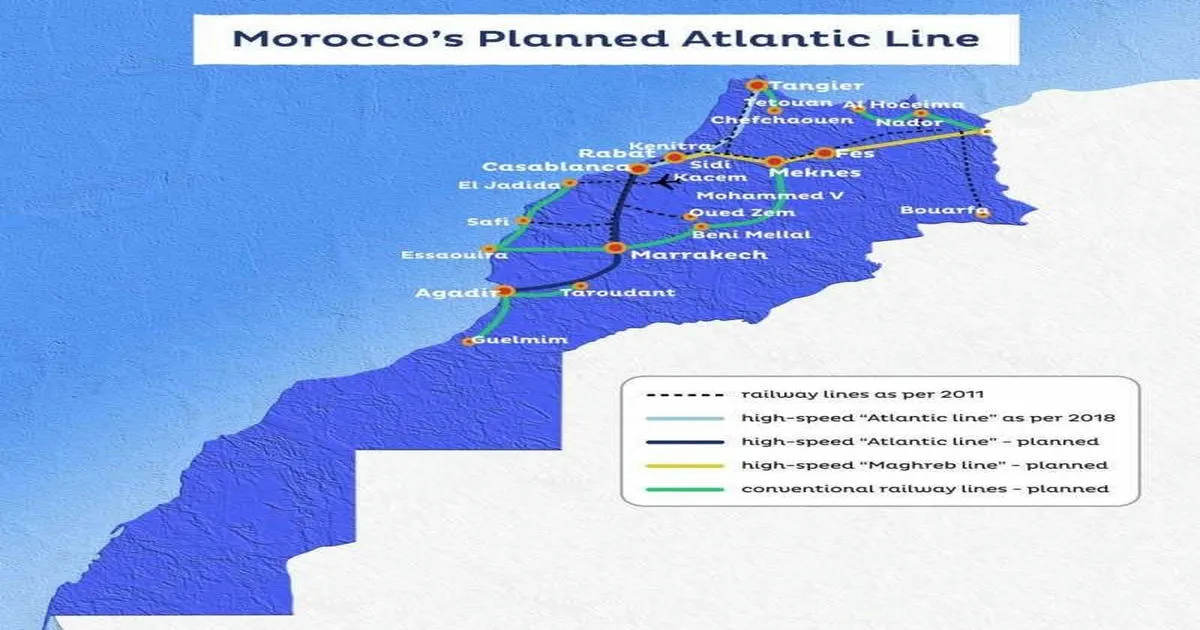
Morocco’s transport infrastructure divides cleanly into two zones: the northern rail corridor and the southern road network. The train system forms what logistics experts call the “Imperial Triangle” connecting Tangier, Fes, Casablanca, Rabat, and Marrakech through modern rail lines including the flagship Al Boraq high-speed service. This northern zone represents roughly 40% of Morocco’s territory but contains approximately 65% of its population and economic activity.

The rail network’s terminal point at Marrakech creates a hard boundary for Morocco train travel. South and east of this line, the entire Atlas Mountain region, the Atlantic coast beyond Essaouira, the Anti-Atlas, the Sahara desert, and the Drâa and Dades valleys are accessible only by road. This geographic division is not a planning inconvenience but rather a fundamental constraint that shapes all Morocco travel logistics for independent travelers.
Current Rail Infrastructure and Coverage

The Moroccan rail network operated by ONCF (Office National des Chemins de Fer) comprises approximately 2,110 kilometers of track as of 2026. The network’s core runs along the Atlantic coast from Tangier to Marrakech with an eastern branch serving Oujda via Fes and Meknes. The Al Boraq high-speed line, operational since 2018, covers the Tangier-Kenitra segment at speeds up to 320 km/h before connecting to conventional lines toward Casablanca.

Show more...

Key rail corridors for travelers include Tangier-Casablanca (2h10 on Al Boraq), Casablanca-Rabat (45min), Casablanca-Marrakech (2h40), and Fes-Marrakech (7h15 via Casablanca). These routes serve stations located in city centers, providing direct access to medinas and tourist zones. However, coastal cities like Essaouira, Agadir, and Sidi Ifni, mountain towns like Chefchaouen and Azrou, and the entire Sahara region from Ouarzazate to Merzouga remain unconnected to rail infrastructure.

Route Distance Train Duration Frequency Price (2nd Class)
Tangier → Casablanca 343 km 2h10 (Al Boraq) 8 daily 200-270 MAD
Casablanca → Rabat 87 km 45 min 24 daily 37 MAD
Casablanca → Marrakech 240 km 2h40 10 daily 99-125 MAD
Fes → Marrakech ~530 km 7h15 (via Casa) 2 daily direct 198-245 MAD
Rabat → Fes 213 km 3h35 6 daily 82-105 MAD

The train network excels in frequency and punctuality for the main arteries. The Casa-Rabat train operates virtually every 30 minutes during peak hours, making this corridor highly efficient for business and tourist travel. However, beyond the core network, travelers must transition to road transport, which is where renting a car in Morocco becomes strategically important for maintaining travel autonomy and flexible scheduling.

Road Network Quality and Access

Morocco’s road infrastructure has seen substantial investment over the past two decades, creating a three-tier system that determines vehicle requirements and travel times. The autoroutes (toll highways) connect major cities with well-maintained asphalt comparable to European standards, charging tolls of approximately 0.80 MAD per kilometer. National roads (routes nationales) vary significantly in quality, from excellent two-lane highways to narrow mountain passes requiring careful navigation.

For those planning a South Morocco road trip, understanding road categories is critical. The N9 from Marrakech to Ouarzazate via the Tizi n’Tichka pass is a spectacular but demanding route with steep grades and hairpin turns where average speeds drop to 40-50 km/h. The coastal N1 from Agadir to Tan-Tan offers smooth, fast driving on well-maintained asphalt with minimal traffic. Regional roads (routes régionales) serving smaller towns and villages can be unpaved or poorly maintained, sometimes requiring 4×4 vehicles during winter months.
Detailed Road Quality Assessment

The Atlantic coastal corridor from Tangier to Agadir features excellent road infrastructure with the A1 autoroute serving most of the northern section. South of Essaouira, the N1 national road provides reliable two-lane access with good asphalt and clear signage. This route is suitable for standard economy cars and does not require specialized vehicles. Average travel speeds of 80-90 km/h are realistic on these coastal roads outside urban areas.

Show more...

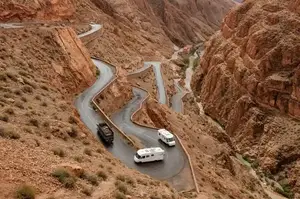
The Atlas Mountain crossings present different challenges. The Tizi n’Tichka pass (N9) between Marrakech and Ouarzazate reaches 2,260 meters elevation with continuous curves and narrow sections where large vehicles struggle to pass. Winter conditions (December-March) can bring snow and ice, requiring chains or winter tires. The Tizi n’Test pass (R203) offers an alternative southern route but is even more demanding technically, with sections barely wide enough for two vehicles to pass safely.

Desert roads in the south vary dramatically. The N9/N10 from Ouarzazate to Zagora and Merzouga is fully paved and well-maintained, suitable for any vehicle. However, reaching more remote destinations like Erg Chigaga requires driving on unpaved pistes (dirt tracks) where 4×4 vehicles become mandatory. Ground clearance and all-wheel drive are essential for these routes, particularly after rain when sections can become impassable for standard vehicles.

Urban driving conditions in major cities present their own complexities. Casablanca, Rabat, and Marrakech feature modern road networks but suffer from aggressive traffic, minimal lane discipline, and frequent unmarked intersections. Parking in medina areas is challenging, with most rental cars requiring storage in guarded lots (5-20 MAD per hour) outside pedestrian zones. For navigating these urban centers, many travelers find that Morocco train travel combined with local taxis provides a less stressful alternative to driving in Morocco.

Strategic Transportation Planning by Destination

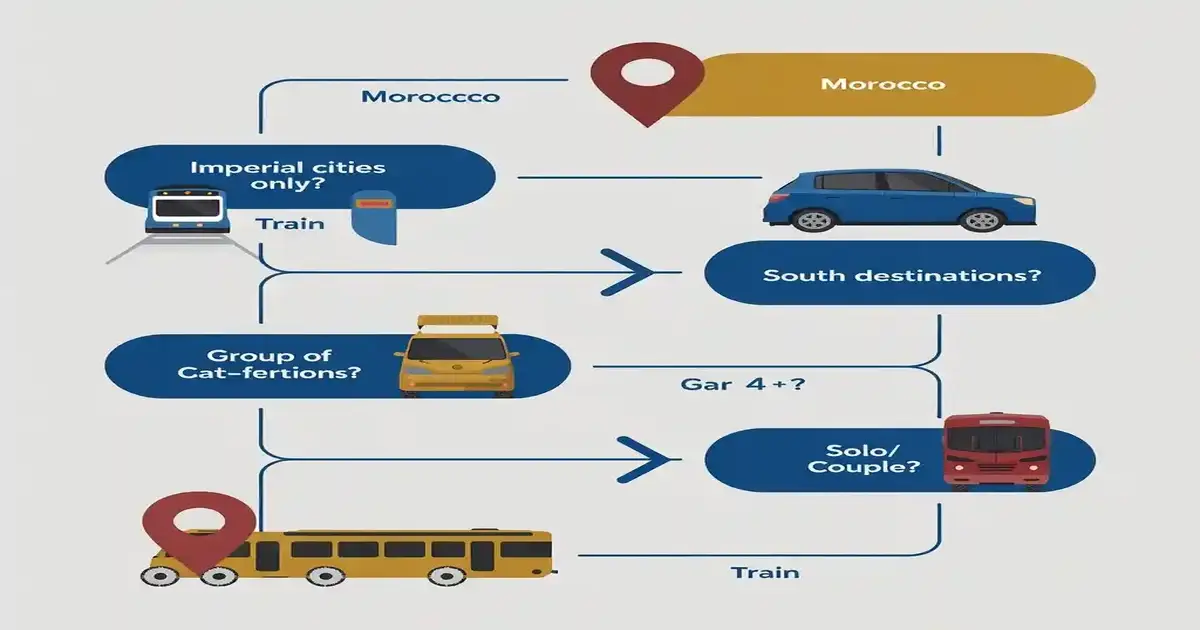
Effective Morocco travel logistics require matching transportation mode to specific destinations and route types. The decision between car vs train Morocco is not universal but rather depends on your precise itinerary segments. A 14-day Morocco journey typically benefits from a hybrid strategy: rail transport for the northern imperial cities corridor, then vehicle rental for southern exploration. This approach maximizes efficiency while minimizing costs and stress.

The fundamental principle is straightforward: if your destination has a train station and your schedule aligns with train departures, rail travel offers superior speed, comfort, and cost-effectiveness. If your destination lies outside the rail network or you need flexible departure times and the ability to stop at intermediate points, renting a car in Morocco becomes the logical choice. The following sections break down specific destination categories to guide your planning.
Show more...

Tangier-Rabat-Casablanca-Marrakech Corridor

For travel within the main northern corridor connecting Tangier, Rabat, Casablanca, Fes, Meknes, and Marrakech, Morocco train travel provides optimal logistics. The Al Boraq high-speed service makes the Tangier-Casablanca run in 2 hours 10 minutes, significantly faster than the 3.5-4 hours required by car on the A1 autoroute plus the time needed for parking upon arrival. Train stations in these cities are centrally located, often within walking distance of medinas and major tourist sites.

The Casa-Rabat train exemplifies the efficiency of rail travel in this corridor. Departing every 30-60 minutes throughout the day, the 45-minute journey eliminates the stress of navigating Casablanca’s chaotic traffic and finding parking in Rabat. The cost of 37 MAD for second class versus approximately 50 MAD in fuel plus 15 MAD in tolls makes train travel more economical, even before considering parking fees. For solo travelers and couples, this route strongly favors rail over road.

However, groups of 3-4 travelers may find different economics. A rental car costing 300 MAD per day split among four people equals 75 MAD per person, while four train tickets on the Casa-Rabat route cost 148 MAD total. When groups plan multiple stops within a day visiting sites like the Hassan Tower, Kasbah des Oudayas, and Chellah in Rabat, having a vehicle eliminates taxi transfers and provides schedule flexibility. For families with luggage, a car also eliminates the need to manage bags on trains and platforms.

The Casablanca-Marrakech route presents similar considerations. The train takes 2 hours 40 minutes direct for 99-125 MAD, while driving via the A7 autoroute requires 3-3.5 hours depending on traffic, approximately 150 MAD in fuel for a small car, plus 70 MAD in tolls. The train wins on time and cost for individuals. However, travelers planning stops at intermediate destinations like El Jadida or Safi must use a car, as these coastal cities lack rail connections.

Scenario Best Option Reason Approx. Cost/Person
Solo traveler, city-to-city Train Speed, cost, no parking hassle 37-270 MAD
Couple, direct routes Train Comfort, efficiency 37-270 MAD
Family 4+, multiple stops Car Luggage, flexibility, cost split 75-100 MAD + fuel
Group, off-rail destinations Car No alternative access 75-150 MAD total

South Morocco and Atlas Mountains Access

Once your itinerary includes destinations south of Marrakech or east into the Atlas Mountains, renting a car in Morocco shifts from optional to essential. The entire zone encompassing Essaouira, Agadir, Ouarzazate, the Dades and Drâa valleys, and the Sahara desert areas of Merzouga and M’Hamid has zero rail connectivity. Public buses serve these routes but operate on limited schedules with long journey times that consume substantial portions of travel days.

The South Morocco road trip presents some of Morocco’s most spectacular scenery but requires realistic planning around driving conditions. The Marrakech-Ouarzazate route via Tizi n’Tichka covers only 190 kilometers but requires 3.5-4 hours due to constant elevation changes and hairpin curves. Attempting this drive at night is inadvisable due to minimal lighting, potential rockfalls, and livestock on the roadway. The route from Ouarzazate to Merzouga spans 365 kilometers and requires approximately 6 hours, with the final sections crossing remote desert where fuel stations become sparse.
Essential Southern Driving Routes

The coastal route from Marrakech to Essaouira (175 km, 2.5 hours) offers one of Morocco’s most straightforward southern drives on well-maintained N8 highway. This route is suitable for any vehicle type and features minimal elevation changes. Essaouira itself is compact and walkable, making it ideal for a 2-3 day excursion with a rental car. Continuing south to Agadir adds another 175 km (2.5 hours) on similar quality roads, though Agadir’s urban sprawl makes it less pedestrian-friendly and somewhat less appealing for tourists seeking authentic Moroccan experiences.

Show more...

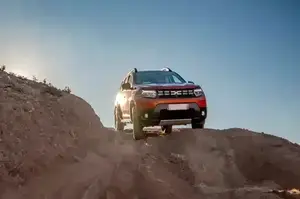
The classic South Morocco road trip follows the circuit Marrakech → Ouarzazate → Dades Valley → Todra Gorges → Merzouga → Ouarzazate → Marrakech, covering approximately 1,100 kilometers over 5-7 days. This route requires a reliable vehicle preferably with higher ground clearance, though a standard SUV like a Dacia Duster or similar is sufficient for paved sections. The N9 and N10 highways forming the spine of this route are fully paved, but side trips to kasbahs and oases may involve unpaved access roads where careful driving is required.

For photographers and landscape enthusiasts, the Dades and Todra gorges justify the driving investment. The Dades Valley road (R704) features sections of extraordinary scenery including the famous “monkey fingers” rock formations, but includes very narrow sections where two vehicles can barely pass. Local guides recommend visiting early morning to avoid tourist minibuses that dominate the road during midday. The Todra Gorge road dead-ends at the narrowest point of the canyon, requiring backtracking, which means proper route planning prevents wasted time.

The Merzouga area presents special considerations for vehicle choice. Reaching the large hotels at the edge of Erg Chebbi requires only paved roads suitable for any car. However, truly remote desert camps and the spectacular Erg Chigaga dunes necessitate 4×4 vehicles with experienced drivers. Most travelers park at Merzouga and join organized 4×4 excursions or camel treks to desert camps, avoiding the need to rent expensive 4×4 vehicles for the entire southern loop. This hybrid approach optimizes costs while maintaining safety on challenging terrain.

Cost Analysis and Budget Optimization

Understanding the true costs of car vs train Morocco requires accounting for all variables beyond base ticket or rental prices. Train travel appears economical on paper with tickets ranging from 37 MAD for short segments like Casa-Rabat to 270 MAD for long-distance Al Boraq journeys. However, station-to-hotel transfers via petit taxi (typically 20-50 MAD) and the potential need for multiple tickets per day add up. Conversely, renting a car in Morocco involves the daily rental rate, fuel, tolls, parking fees, and insurance, creating a more complex calculation.

The economic break-even point typically occurs around 3-4 travelers. For solo travelers and couples on the Tangier-Rabat-Casablanca-Marrakech corridor, trains provide clear cost advantages. For families and groups, particularly those planning southern itineraries beyond the rail network, car rental becomes cost-effective when daily expenses are divided among passengers. The following detailed analysis provides the data needed to optimize your transportation budget for specific scenarios.
Train Travel Comprehensive Costs

Train ticket prices in Morocco use distance-based pricing with premium charges for Al Boraq high-speed services. Second-class tickets provide excellent value with comfortable seating, while first-class typically costs 30-40% more with only marginal improvements in space and quietness. For budget optimization, second-class suffices for journeys under 3 hours. For the 7+ hour Fes-Marrakech route via Casablanca, first-class provides worthwhile additional comfort for the small price difference.

Show more...

A typical 7-day itinerary covering Tangier → Fes → Marrakech → Essaouira → Marrakech → Casablanca → Rabat → Tangier would require the following train segments for the portions with rail coverage:

  • Tangier → Fes: 180 MAD (4h30, via Meknes)
  • Fes → Marrakech: 220 MAD (7h15, via Casablanca)
  • Marrakech → Casablanca: 110 MAD (2h40)
  • Casablanca → Rabat: 37 MAD (45 min)
  • Rabat → Tangier: 150 MAD (3h45)

Total train costs per person: 697 MAD (~€63). For a couple, this doubles to 1,394 MAD. Add taxi transfers between stations and hotels (approximately 30 MAD each way, 6 transfers = 360 MAD total) and the couple’s total train-based transport cost reaches 1,754 MAD (~€159). Note that this itinerary excludes Essaouira, which has no train station and would require a separate bus journey (90 MAD each way per person) or organized tour.

For groups, the economics shift dramatically. A family of four paying the above fares spends 2,788 MAD on train tickets alone, plus 720 MAD in taxi transfers, totaling 3,508 MAD. This figure approaches the cost of a 7-day car rental even before considering the added flexibility and time savings of having a private vehicle.

Show more...

Car Rental Comprehensive Costs

Morocco car rental rates vary significantly by season, vehicle type, rental duration, and booking method. Booking 30+ days in advance through international comparison sites (Rentalcars.com, Auto Europe, Kayak) typically yields rates 20-40% lower than last-minute airport counter bookings. For 2026 planning, the following represent realistic base rates for economy and compact SUV categories:

Vehicle Type Low Season (Nov-Feb) Mid Season (Mar-May, Sep-Oct) High Season (Jun-Aug, Dec)
Economy car
(Dacia Logan, Fiat Tipo)
250-300 MAD/day 300-400 MAD/day 450-600 MAD/day
Compact SUV
(Dacia Duster, Peugeot 2008)
400-500 MAD/day 500-650 MAD/day 700-900 MAD/day
4×4 SUV
(Toyota RAV4, Dacia Duster 4×4)
700-850 MAD/day 850-1100 MAD/day 1200-1500 MAD/day

Insurance represents a significant additional cost that many travelers underestimate. Moroccan rental agencies strongly push Collision Damage Waiver (CDW) and theft protection, typically adding 150-250 MAD per day. Credit cards and travel insurance policies sometimes provide rental car coverage, but verification of coverage applicability in Morocco is essential before declining the rental agency insurance. For a 7-day rental, insurance can add 1,050-1,750 MAD to total costs.

Fuel costs depend on vehicle efficiency and routes driven. Unleaded gasoline costs approximately 12 MAD per liter (June 2024 pricing), while diesel runs slightly cheaper at 10-11 MAD per liter. A fuel-efficient economy car achieving 6 liters per 100 km traveling 1,200 km during a week consumes 72 liters, costing about 864 MAD. A less efficient SUV at 8 liters per 100 km on the same route uses 96 liters, costing 1,152 MAD. These figures assume mixed driving including mountain passes where consumption increases substantially.

Autoroute tolls on major highways add another layer of cost. The Tangier-Marrakech corridor via A1/A3/A7 autoroutes costs approximately 180 MAD one-way. Casablanca-Marrakech runs about 70 MAD each way. A typical 7-day itinerary using autoroutes for the fastest segments accumulates 300-400 MAD in toll charges. Parking in city centers costs 5-20 MAD per hour in guarded lots, with daily rates often negotiable at 50-100 MAD for 24 hours.

Complete 7-day car rental cost example (mid-season, compact SUV, couple):

  • Base rental: 7 days × 550 MAD = 3,850 MAD
  • Insurance (CDW + theft): 7 days × 200 MAD = 1,400 MAD
  • Fuel (1,200 km): 1,000 MAD
  • Tolls: 350 MAD
  • Parking (estimated): 300 MAD
  • Total: 6,900 MAD (~€625) for two people = 3,450 MAD per person

For a solo traveler, this cost is prohibitive compared to train travel. For a couple, it represents approximately 5× the cost of train-only transport on the northern corridor. However, for a family of four, the per-person cost drops to 1,725 MAD, becoming competitive with train travel once you factor in the flexibility to visit Essaouira, Atlas valleys, and other off-rail destinations included in most travelers’ wish lists for Morocco.

Hybrid Strategy for Optimal Value

The most cost-effective approach for many travelers combines both transportation modes strategically. This hybrid strategy uses Morocco train travel for the efficient northern corridor while renting a car in Morocco only for the southern segment where rail does not exist. This approach minimizes car rental days while maximizing access to all desired destinations.

A sample 14-day itinerary using hybrid transport might structure as follows:

Days 1-5: Train-based northern loop
Tangier (2 nights) → Fes (2 nights) → Marrakech (1 night)
Transport: 3 train journeys = ~550 MAD per person
Benefits: Fast city-center connections, no driving stress in complex medinas, optimal for first-time visitors building familiarity with Morocco

Days 6-12: Car rental for southern exploration
Pick up car in Marrakech → Essaouira (2 nights) → Ouarzazate via Aït Benhaddou (1 night) → Dades Valley (1 night) → Merzouga (2 nights) → return to Marrakech (1 night) → drop car
Transport: 7-day car rental covering ~1,400 km
Benefits: Complete access to southern highlights, flexible scheduling, ability to stop for photos and exploration

Days 13-14: Train return to Casablanca/Rabat for departure
Marrakech → Casablanca → Airport or final city
Transport: 1-2 train journeys = ~140 MAD per person
Benefits: Avoid driving stress before international flight, utilize efficient Casa-Rabat corridor

This hybrid approach for a couple costs approximately 690 MAD per person for train segments plus 3,450 MAD per person for the 7-day car rental segment, totaling 4,140 MAD per person (~€375). While more expensive than pure train travel on the northern corridor, it provides access to Morocco’s most photographed and memorable landscapes in the south that train-only travel cannot reach. For travelers whose primary interest centers on imperial cities, staying train-only and taking organized day trips from Marrakech to Atlas destinations offers a lower-cost alternative.

Practical Booking and Logistics

Executing your Morocco transport guide strategy requires understanding booking procedures, document requirements, and operational logistics for both train travel and car rental. The Moroccan rail system and rental car industry operate with different standards than travelers may expect from European or North American counterparts, making advance preparation essential for smooth execution. The following sections detail the practical steps required to secure your chosen transportation mode with optimal pricing and minimal complications.
Show more...

Morocco Train Booking and Operations

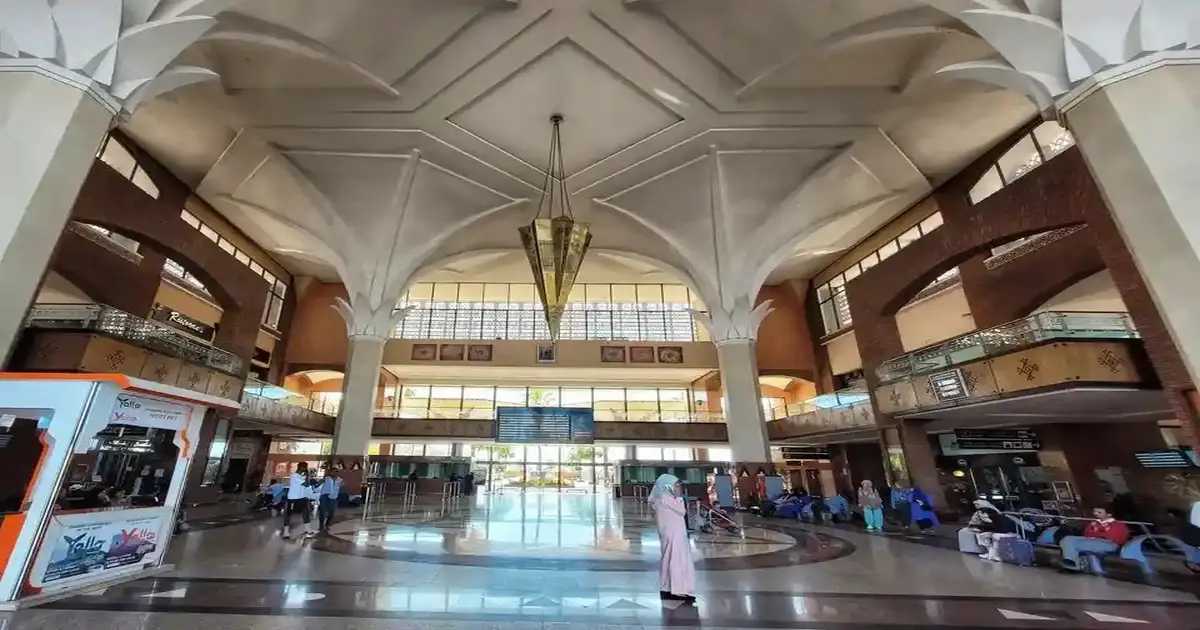
The Moroccan national railway ONCF operates a functional online booking system at www.oncf.ma that allows advance ticket purchases for all routes including the Al Boraq high-speed service. The website functions in French, Arabic, and English, though the English version sometimes displays inconsistent translations. Tickets can be purchased up to 30 days in advance, with prices fixed regardless of booking time unlike European dynamic pricing models.

Payment on the ONCF website accepts international credit cards from Visa and Mastercard, though some travelers report declined transactions requiring multiple attempts. If online booking proves difficult, tickets can be purchased at station counters without advance booking for most routes. The Al Boraq high-speed trains occasionally sell out during peak holiday periods (Eid, Christmas, August), making advance booking advisable for these specific trains. Conventional trains rarely sell out, and walk-up tickets at stations work reliably.

At stations, ticket counters typically open 1-2 hours before first departures. Arabic and French are the primary working languages, with English comprehension variable by staff member. Having your destination and preferred class/time written clearly helps facilitate communication. Tickets display the train number, departure time, arrival time, car number, and seat number. Train platforms are announced approximately 15-20 minutes before departure on electronic boards and public announcements in Arabic and French.

Boarding procedures are straightforward with no security screening or baggage inspection. Passengers simply walk to the correct platform and board the designated car. Conductors verify tickets after departure. Large luggage can be stored in overhead racks or in spaces between cars. The Al Boraq high-speed trains offer dedicated luggage areas similar to European TGV trains. Food service varies by train type, with Al Boraq offering café car service while conventional trains may have snack vendors walking the cars.

The Casa-Rabat train exemplifies the high-frequency urban service where advance booking is unnecessary. Trains depart every 30-60 minutes throughout the day, and passengers can arrive at the station, purchase tickets immediately, and board within 15-30 minutes. This flexibility makes train travel superior to scheduled flights for business travelers and tourists moving between these two cities.

Show more...

Car Rental Booking Process and Requirements

Booking renting a car in Morocco follows similar procedures to other countries but requires understanding local agency practices and document requirements. International aggregator sites (Rentalcars.com, Auto Europe, Kayak, Discover Cars) provide the best pricing through comparison shopping and typically offer 20-40% savings versus booking directly with agencies. Reservations made 30+ days in advance lock in better rates, particularly during high season (June-August, December).

When comparing quotes, verify what the base rate includes and excludes. Many advertised rates show only the bare minimum daily rental without insurance, additional driver fees, or young driver surcharges. The actual at-counter cost can be double the advertised rate once mandatory CDW insurance (150-250 MAD/day) and optional but recommended theft protection (50-100 MAD/day) are added. Some comparison sites offer “full coverage” packages that include these insurances in the upfront price, providing price transparency and avoiding counter pressure tactics.

Major international agencies (Hertz, Avis, Budget, Europcar) operate in Morocco alongside local companies (First Car Rental, LocationVoiture, Amin Cars). International agencies offer standardized service and transparent pricing but cost 10-30% more than local competitors. Local agencies can provide excellent service and value but require more careful review of contract terms and vehicle condition documentation. Reading recent reviews on Google Maps and TripAdvisor helps identify reliable local operators.

Document requirements for renting a car in Morocco include:

  • Driver’s license: Your home country license is legally sufficient for rentals up to 1 year. An International Driving Permit (IDP) is NOT legally required but some agencies request it. If an agency refuses your home license without IDP, find another agency rather than accepting their incorrect policy.
  • Passport: Required for rental contract. Agencies keep a copy.
  • Credit card: Required in the renter’s name for security deposit (typically 5,000-15,000 MAD hold depending on vehicle class). Debit cards are usually not accepted for the security deposit.
  • Age requirements: Minimum age is typically 21, with drivers under 25 facing young driver surcharges of 100-150 MAD per day. Maximum age is sometimes 70, though this varies by agency.

At vehicle pickup, conduct a thorough inspection of exterior and interior condition, documenting all existing damage with photos/video on your phone with agency representative present. Check tire condition, spare tire presence, jack and tools, triangle warning signs (legally required), and ensure the fuel tank is full as specified in contract. Confirm the return location and hours, as returning outside business hours can be complicated at smaller agencies. Verify the emergency phone number for roadside assistance.

Insurance deserves careful attention when renting a car in Morocco. Moroccan law requires third-party liability insurance (automatically included in all rentals). Beyond this, renters choose between accepting or declining Collision Damage Waiver (CDW) and theft protection. CDW typically includes a deductible (franchise) of 3,000-10,000 MAD, meaning you are liable for this amount if the vehicle is damaged. Some credit cards provide rental car insurance that may cover this deductible, but cardholders must verify coverage applies specifically in Morocco and understand the claims procedure.

For travelers planning off-road sections, standard CDW insurance typically excludes coverage for damage occurring on unpaved roads. Agencies offering 4×4 rentals for desert access provide specialized insurance covering piste driving, but this adds 200-400 MAD per day to rental costs. For most travelers following the classic South Morocco road trip on paved roads, standard CDW with theft protection provides adequate coverage.

Operational Logistics and Safety Considerations

Understanding operational realities of driving in Morocco prevents surprises that could disrupt your itinerary. Moroccan traffic patterns, road signage systems, fuel availability, and police procedures differ from European and North American norms. Advance knowledge of these factors allows you to navigate efficiently and legally while avoiding common mistakes that frustrate foreign drivers.
Show more...

Morocco Driving Regulations and Enforcement

Speed limits in Morocco are 120 km/h on autoroutes, 100 km/h on national roads, and 60 km/h in urban areas unless otherwise posted. Speed cameras (radars) are common on all major routes, with mobile police units supplementing fixed cameras. Fines for speeding start at 300 MAD for minor infractions and increase to 700-1,400 MAD for serious violations. Police can issue on-the-spot fines, though travelers report inconsistent enforcement where officers sometimes accept lower negotiated amounts.

Seat belt use is mandatory for all occupants, with fines of 500 MAD per violation. Child car seats are legally required for children under 10 but enforcement is minimal and rental agencies rarely stock them. Parents planning Morocco travel with small children should consider bringing car seats from home. The legal blood alcohol limit is extremely low at 0.02% (effectively zero tolerance), making any alcohol consumption before driving a serious legal risk with potential fines up to 10,000 MAD or arrest.

Right-of-way rules in Morocco differ from European norms at uncontrolled intersections, where vehicles entering from the right theoretically have priority. However, practical priority goes to larger vehicles, more aggressive drivers, and those who establish position first. Defensive driving is essential, with constant awareness that other vehicles may not respect theoretical traffic rules. Motorcycles and scooters frequently undertake (pass on the right) in city traffic and are a particular hazard requiring mirror vigilance.

Roundabouts (traffic circles) in Morocco follow the European convention where vehicles already in the circle have priority over entering vehicles. However, many drivers ignore this rule, creating chaotic conditions in busy urban roundabouts. The key survival strategy is to establish your position confidently while remaining prepared to yield to aggressive drivers who assume priority regardless of actual rules. Horn usage in Morocco is frequent and more communicative than aggressive, serving as alerts rather than expressions of anger.

Police checkpoints (contrôles de police) are common on major routes, particularly near city boundaries and in rural areas. When approaching a checkpoint, slow down and prepare documents even if the officer waves you through. If stopped, officers will request your license, registration (vehicle papers from rental agency), and insurance documentation. Foreign tourists typically face brief checks unless violations are apparent. Carrying photocopies of rental contract and insurance certificate separate from originals provides backup if documents are temporarily retained.

Nighttime driving is strongly discouraged in rural areas due to minimal street lighting, frequent pedestrian and animal presence on roadways, and potholes invisible in darkness. The risk of hitting livestock or striking pedestrians wearing dark clothing is significant. If nighttime driving is unavoidable, reduce speed substantially below daylight speeds and use high beams when no oncoming traffic is present. The most dangerous hours are the period immediately after sunset when light fades rapidly but drivers have not yet adjusted to darkness conditions.