

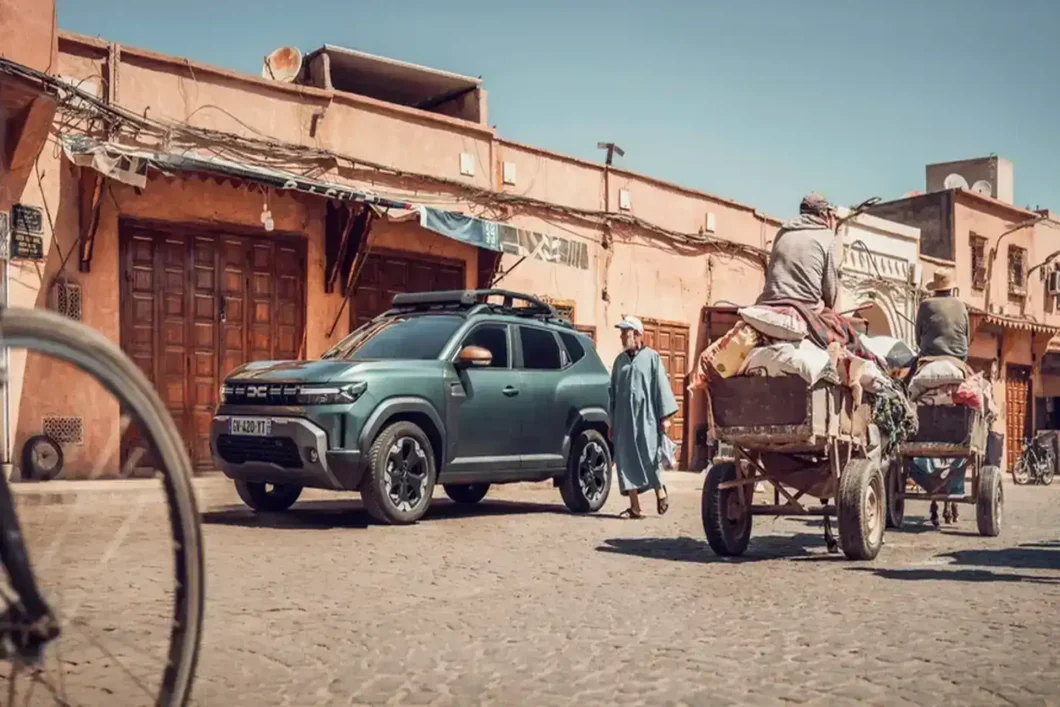
The highway was perfect. You cruised from Casablanca to Marrakech in two and a half hours, windows down, barely a care in the world. The GPS showed your riad just 15 minutes away. Easy.
Then you hit the city limits.
Suddenly, the road narrows. Scooters zip past on both sides. A donkey cart blocks your lane. Your GPS cheerfully announces “turn right” into what looks like an alleyway built for bicycles, not cars. And somewhere in this chaos, you’re supposed to find parking and somehow get yourself, your luggage, and your sanity to a riad buried deep in a pedestrian-only medina.
Welcome to driving in Moroccan cities. Where the rules change the moment you leave the autoroute.
This isn’t the Morocco of smooth toll roads and predictable traffic. This is the part where you need to understand the “gardien” system, know which gate to aim for, and accept that your rental car is staying outside the medina walls while you wheel your luggage through centuries-old streets.
Let’s break down exactly how this works, city by city, so you don’t end up circling Marrakech for an hour looking for a parking spot that doesn’t exist.
The Transition: From Highway Ease to Urban Chaos
Here’s what nobody tells you about Morocco’s cities: the excellent highway network ends abruptly at the city edge, and everything you learned about organized driving goes out the window.
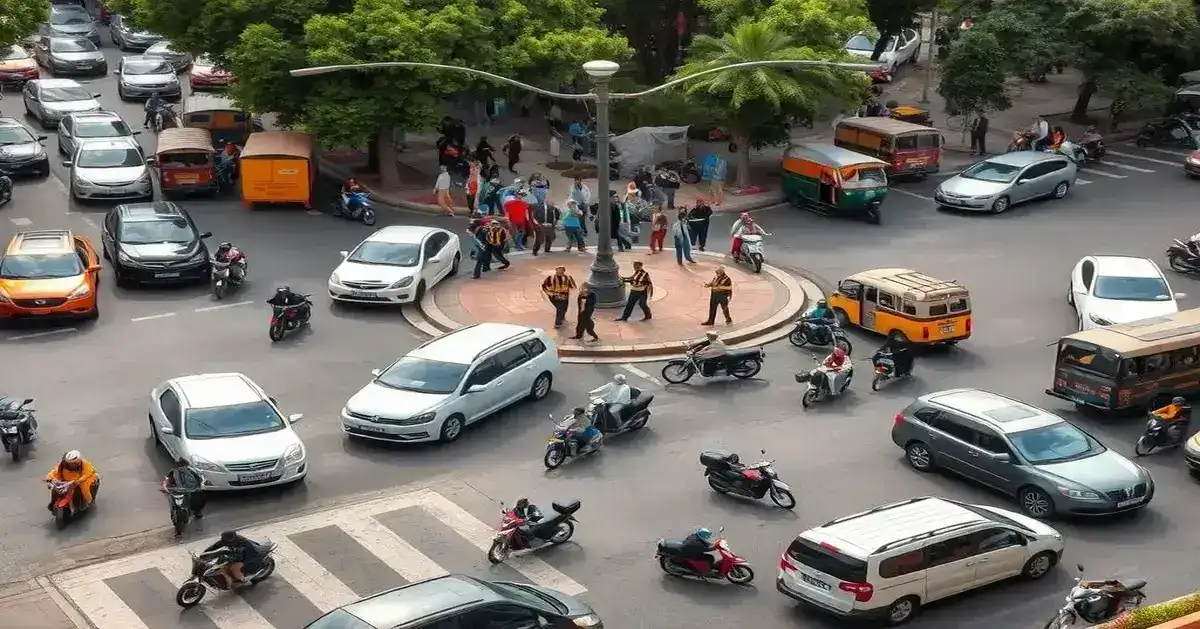
On the autoroute, you had lanes. Speed limits. Order. In Marrakech, Fes, or Casablanca, you have roundabouts where four lanes somehow become seven, taxis that stop without warning, and an unspoken agreement that turn signals are optional.
But the real challenge isn’t the traffic. It’s the medina walls.
The “Medina Wall” Barrier Nobody Warns You About
Most riads and traditional accommodations in Morocco are located inside the old medinas. These ancient walled cities were built for donkeys and foot traffic, not rental cars. Which means that charming riad you booked? You’re not driving to the door.
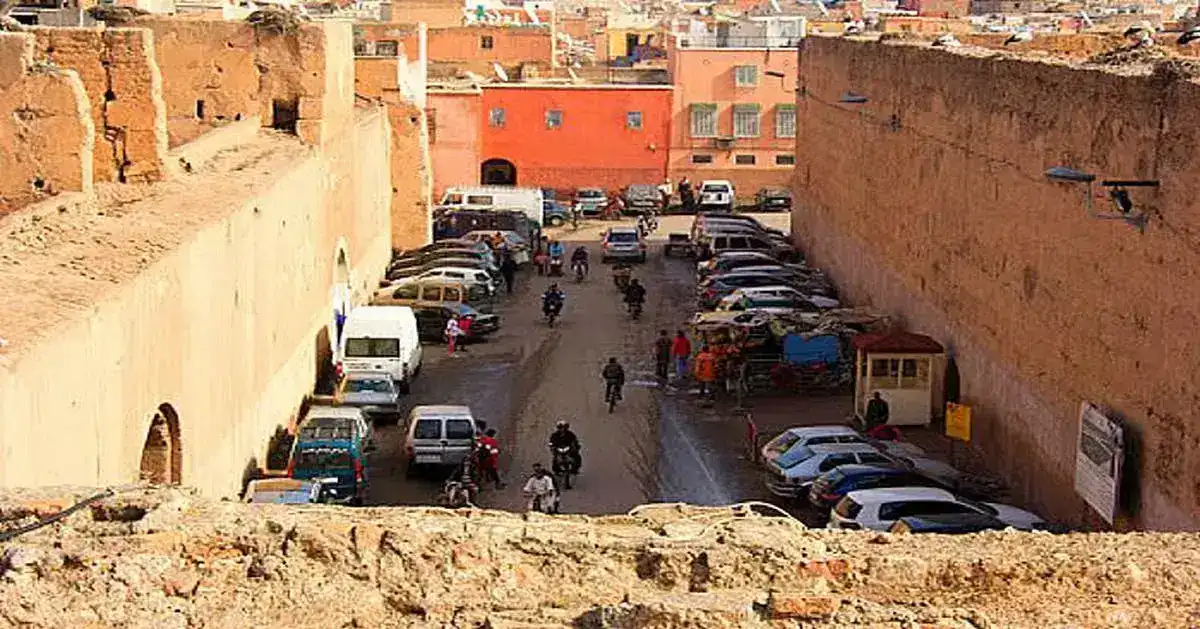
The medinas of Fes, Marrakech, Essaouira, and other historic cities are almost entirely pedestrian zones. Cars are forbidden. Even if Google Maps shows a route directly to your riad’s address, trust me, you’re not driving there.
This is the first mental shift you need to make when driving in Moroccan cities: your destination isn’t your riad. It’s the nearest parking area to the closest medina gate.
Finding the Right Gate (Bab) Changes Everything
Every medina has multiple gates, called “babs.” Each gate has nearby parking, and choosing the right one can mean a five-minute walk to your riad or a sweaty 20-minute trek hauling luggage uphill through narrow alleys.
The single best thing you can do? Call your riad before entering the city. Ask specifically: “Which bab should I park near?” and “What’s the name of the nearest parking?”
They’ll tell you exactly where to go. Follow that advice. Ignore Google Maps if it contradicts your riad’s directions.
The “Gardien” System: Your New Best Friend
You’ve parked near Bab Doukkala in Marrakech. You’re about to walk away from your rental car loaded with luggage. Then a man in a fluorescent vest appears, gesturing at your car.
This is a gardien. And understanding this system is crucial to stress-free city parking in Morocco.
Who Are These Guys?
Gardiens are unofficial parking attendants who watch over cars parked on streets and in public lots. They’re everywhere in Moroccan cities. Some wear official-looking vests. Others are just local guys who’ve claimed a stretch of street.
They’re not scamming you. This is how parking near Marrakech medina and other cities actually works. They genuinely do watch your car, help direct you into tight spots, and generally ensure nobody messes with your vehicle.
How Much to Pay
The going rate depends on how long you’re parking:
Short-term parking (few hours): 5-10 MAD when you return
Luggage Logistics: The “Handcart” Stage
Your car is parked. The gardien is watching it. Now you’re standing at Bab Doukkala with three suitcases, and your riad is a 10-minute walk through the medina.
This is where the real Morocco logistics kick in.
The “Porteur” and Handcart Solution
Near every major medina gate, you’ll find men with handcarts (charrettes) offering to transport your luggage. These are porteurs, and they’re your best option for luggage transfer in Morocco cities.
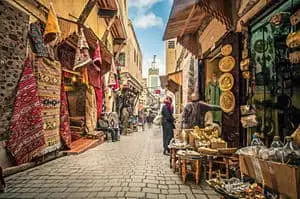
They’ll load your bags onto a wooden cart and push or pull it through the medina to your riad. You walk alongside them, unburdened, and actually get to enjoy the journey through the old city.
Cost: 20-50 MAD depending on distance and amount of luggage. Always agree on price before they touch your bags.
Narrow Streets & GPS Traps in Moroccan Cities
Google Maps thinks it knows Morocco. It doesn’t.
The Google Maps Trap (City Version)
Your GPS will confidently tell you to turn onto streets that are barely wide enough for a motorcycle. It’ll route you through medina pedestrian zones Morocco where cars physically cannot go. And it’ll show parking spots that don’t exist.
Different Cities, Different Rules for Driving
Not all Moroccan cities handle parking the same way. Here’s what you need to know for the major destinations:
Marrakech: Multiple Gates, Multiple Options
Marrakech has several good parking near Marrakech medina options. The best gates for parking:
Bab Doukkala: Large parking area, close to many riads in the northern medina. Usually 20 MAD/night with gardien.
Bab Debbagh: Near the tanneries, good for riads in the eastern medina. Less touristy, more local.
Jemaa el-Fna: Closest to the square but more expensive and chaotic. Only use if your riad is very close.
Most visitors do best parking at Bab Doukkala or wherever their riad recommends, then walking or using a handcart.
Fes: The World’s Largest Car-Free Zone
Fes el-Bali is the largest car-free urban area on Earth. You’re not getting anywhere near your riad by car. Accept this now.
Main parking areas: Bab Boujeloud: The most popular gate, large parking, many riads accessible from here. Rcif: Another major parking area on the opposite side of the medina.
In Fes, handcarts aren’t optional. The medina is massive, hilly, and genuinely confusing. Let the porteurs handle your bags and a riad staff member guide you in.
Casablanca & Rabat: Modern City Parking Stress
These cities aren’t built around medinas like Marrakech and Fes. They’re modern cities with modern parking problems.
Casablanca: Street parking is scarce. Use paid parking garages near your hotel. Gardiens are still common on streets, but spots are harder to find.
Rabat: Better than Casa but still crowded. The medina is smaller and more accessible. You can sometimes find street parking near your accommodation, always with a gardien watching.
For both cities, if your hotel has parking, use it. Fighting for street spots isn’t worth the stress.
The “Smooth Arrival” Checklist for City Driving
Before you enter any Moroccan city with your rental car, run through this checklist:
☑ Pin the parking location, not the riad location on your GPS
☑ Call the riad 30 minutes before arrival to confirm gate and parking
☑ Have small change ready (20 MAD bills and coins) for the gardien
☑ Close or fold in your side mirrors when entering narrow streets
☑ Ignore anyone flagging you down who isn’t in uniform
☑ Write down your parking location and gardien’s description/spot
☑ Take a photo of your parking spot for reference when returning
☑ Confirm handcart/porteur prices before they touch your luggage
What to Do If Things Go Wrong
Got lost? Pull over safely, put on hazards, and call your riad. Don’t keep driving hoping to find it.
Can’t find parking? Drive to the next gate. Most medinas have 4-6 major gates with parking options.
Scraped your mirror in a narrow street? It happens. Document it, tell your rental company immediately. Minor scrapes are usually covered by insurance.
Gardien asking for too much money? The standard rate is 20-30 MAD/night. Politely but firmly offer the standard rate. If they refuse, pay and find a different spot next time.
The Reality of City Driving in Morocco
Here’s the honest truth about driving in Moroccan cities: it’s manageable, but it’s not the highway.
You’ll navigate chaotic traffic. You’ll park outside the medina walls. You’ll pay gardiens to watch your car. You’ll wheel luggage through ancient streets on handcarts. And yes, you’ll probably make a wrong turn or two.
But once you understand the system—the gardiens, the gates, the handcarts, the need to call ahead—it all makes sense. This is how Morocco works. Not with parking garages and valet service, but with centuries-old systems adapted to modern needs.
The key is knowing what to expect before you arrive. Now you do.
For more guidance on driving in Morocco, including highway routes and mountain passes, check our complete guide. And if you’re planning your full Morocco road trip logistics, make sure you understand city parking before booking that charming medina riad.
Because the highway might be easy. But the medina parking? That’s where the real adventure begins.