Driving the Tizi n’Tichka Pass: Your Tactical Guide to Conquering Morocco’s High Atlas

If you’re planning a Morocco road trip from Marrakech to the southern desert regions, there’s one unavoidable reality you’ll face: the Tizi n’Tichka Pass. This isn’t just a scenic mountain road you casually drive through on your way to Ouarzazate or the Sahara. It’s a genuine logistical challenge that can make or break your travel day if you don’t approach it with the right strategy.

Driving the Tizi n’Tichka pass requires more than just basic driving skills. You’re looking at 2,260 meters of elevation, over 200 hairpin turns, and road conditions that can shift from smooth tarmac to rough construction zones without warning. The question most travelers ask isn’t “Is it beautiful?” — because it absolutely is — but rather “How do I cross this mountain barrier efficiently and safely?”

The reality is that 200 kilometers on a map translates to 4 to 5 hours of actual driving time. That’s not a typo. This is where many first-time visitors to Morocco miscalculate their day. They see the distance from Marrakech to Ouarzazate, assume it’s a straightforward 2.5-hour drive, and suddenly find themselves navigating mountain switchbacks in fading light with exhausted passengers in the back seat.

In this guide, we’ll break down the tactical details you need to know: the optimal departure time from Marrakech, how to handle the ongoing construction, what to expect weather-wise in different seasons, and even an alternative route if you want to trade efficiency for a more adventurous experience. This is about logistics, timing, and making smart decisions so your crossing of the High Atlas becomes a highlight of your trip rather than a stressful ordeal.

The Gateway to the South: Why Tichka is Unique

The Tizi n’Tichka Pass isn’t just another mountain road in Morocco. It’s the primary barrier — both geographical and logistical — between the bustling imperial city of Marrakech and everything that lies beyond: the kasbahs of the Draa Valley, the dunes of Merzouga, the dramatic gorges of Todra and Dades. If you want to experience southern Morocco by road, you go through Tichka. There’s no easy way around it.
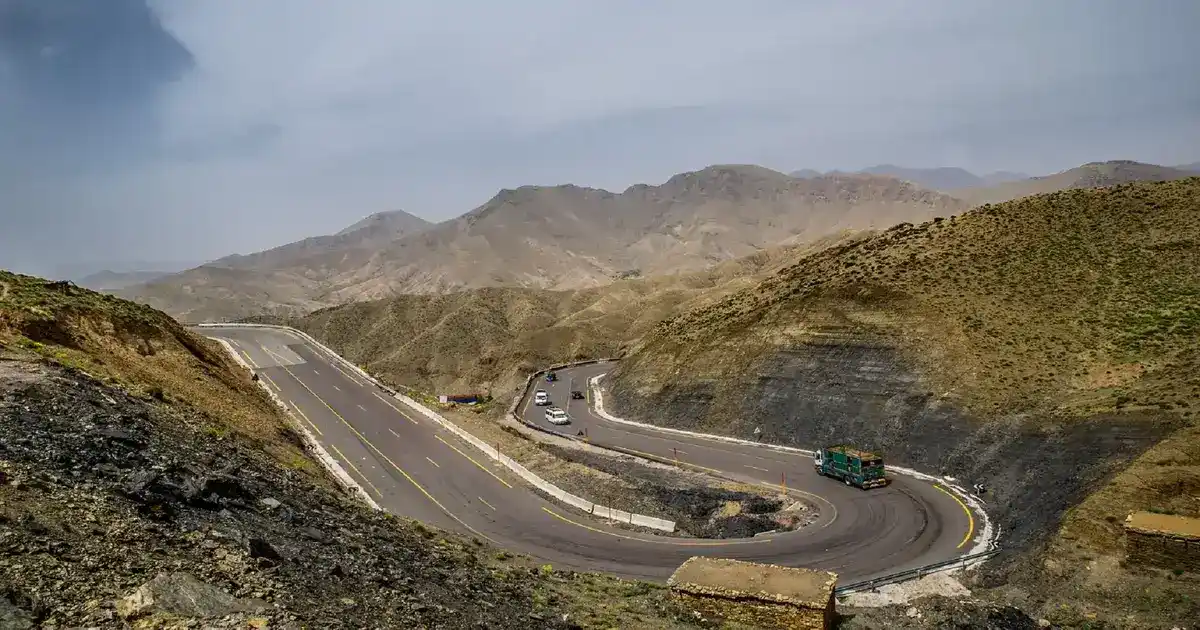
Let’s talk numbers. At its highest point, Tizi n’Tichka reaches 2,260 meters (7,415 feet) above sea level. For reference, that’s higher than most ski resorts in the eastern United States. The pass crosses the High Atlas Mountains via the N9 national road, and while the road is paved for its entire length, the sheer number of switchbacks — over 200 tight curves — means you’re rarely driving in a straight line for more than a few hundred meters.
This is where the “time warp” phenomenon kicks in. On paper, the distance from Marrakech to Ouarzazate is roughly 200 kilometers. In most countries, on a decent highway, that’s a 2-hour drive. In Morocco, across Tizi n’Tichka, it’s 4 to 5 hours minimum. Why? Because you’re not just covering horizontal distance — you’re climbing nearly 1,500 meters in elevation, navigating hairpin turns, sharing the road with overloaded trucks crawling at 20 km/h, and stopping (inevitably) at viewpoints that are too spectacular to pass by.

The geography creates a funnel effect. Almost all road traffic heading south from Marrakech — tourist buses, freight trucks, rental cars, local taxis — must use this single route. There’s an alternative road via Telouet (which we’ll discuss later), but the N9 via Tichka is the main artery. That means traffic, especially during peak tourist seasons (March-May and September-November), can slow things down significantly.

Read More: Timing Your Departure →

The “Golden Window”: Timing Your Departure

Here’s the secret that separates travelers who have a smooth crossing from those who spend 6+ hours grinding through traffic: departure time from Marrakech is everything. This single decision — when you leave your riad or hotel — has more impact on your Tichka experience than the type of car you rent or how skilled a driver you are.

The Early Bird Strategy

The optimal departure window from Marrakech is between 6:30 and 7:00 AM. Yes, that’s early. Yes, it means skipping the leisurely breakfast at your accommodation. But here’s what you gain: you’ll pass through the most congested sections of the pass before the big tour buses leave Marrakech (most don’t depart until 8:30-9:00 AM), and you’ll reach the summit and start descending before the heavy freight trucks begin their slow ascent from the Ouarzazate side.

An early start also gives you the best light for photography. The morning sun hitting the Atlas peaks is stunning, and the air is clearer before midday haze settles in. More practically, it means you’ll arrive in Ouarzazate or Aït Benhaddou by late morning or early afternoon, giving you the rest of the day to explore rather than arriving exhausted in the late afternoon with no energy left.

If 7:00 AM is impossible for whatever reason, the next best window is 1:00 to 2:00 PM. This puts you past the morning tour bus rush and gets you through the pass before late afternoon. But be aware: this timing is riskier because if anything delays you (construction stops, slow trucks, photo breaks), you risk being on the mountain as the sun sets, which brings us to the next point.

The Afternoon Trap

Arriving at the Tizi n’Tichka summit around sunset sounds romantic in theory. In practice, it’s a situation you want to avoid. Here’s why: as the day cools, fog and low clouds can roll in quickly, especially in winter and spring. Visibility drops from kilometers to meters in minutes. The temperature can plummet 10-15 degrees Celsius in an hour once the sun dips below the peaks.

Add driver fatigue to the mix — if you’ve been navigating switchbacks for 2+ hours already — and you have a recipe for a stressful, potentially dangerous situation. Night driving on Tichka is challenging even for locals. The road lighting is minimal to nonexistent, and the white lane markings on the pavement are often worn away. Oncoming trucks use their high beams aggressively, and the risk of encountering livestock or broken-down vehicles on the road increases after dark.

Bottom line: plan your departure from Marrakech so you complete the entire Tichka crossing in daylight, ideally finishing by 4:00 PM at the latest. If you’re driving in Morocco for the first time, this isn’t optional advice — it’s essential for your safety and peace of mind.

Mastering the Construction & Overtaking

One thing you need to understand about the Tizi n’Tichka Pass: it’s been “under construction” for years, and it will likely remain that way for years to come. The Moroccan government has been working on widening and improving the N9, but the sheer scale of the project — blasting through rock faces, stabilizing mountainsides, reinforcing tunnels — means the work is perpetual.

What does this mean for you as a driver? Expect sections where the smooth asphalt abruptly gives way to gravel, dirt, or freshly laid (and still rough) pavement. You’ll encounter construction zones marked by nothing more than a pile of rocks or a faded sign in Arabic. Road crews often work on one lane, forcing two-way traffic onto the remaining lane with minimal flagging or control.
Read More: Construction & Overtaking →

The Marrakech to Ouarzazate road conditions in 2026

As of early 2026, the most significant construction activity is concentrated on the northern approach to the summit, roughly between the 80 km and 110 km markers (if measuring from Marrakech). This is where you’ll find the steepest grades and the tightest switchbacks, which is precisely where the road needs the most reinforcement.

The good news: the construction has actually improved many sections compared to five or ten years ago. New guardrails have been installed, several blind curves have been widened, and some of the worst potholes have been permanently fixed. The bad news: you still need to stay alert for sudden changes in road surface, unmarked construction vehicles, and workers on the road.

Patience vs. Strategy: Overtaking Slow Trucks

You will get stuck behind overloaded trucks grinding uphill at 20 km/h. This is guaranteed. These trucks — often carrying goods from the ports of Casablanca or Agadir down to southern Morocco and beyond — are maxing out their engines just to maintain forward momentum on the steep grades.

The temptation is to overtake aggressively. Resist this urge unless you have a long, clear sightline ahead. The switchbacks on Tichka are deceptive — what looks like a straight stretch often has a hidden curve 200 meters ahead where an oncoming vehicle could suddenly appear. Moroccan truck drivers are used to this road, and they’ll often wave you past when it’s safe. Watch for their hand signals out the window.

Here’s the strategy: be patient for the first half of the climb. As you gain elevation and the road opens up slightly in certain sections, you’ll find safer passing opportunities. The stretch between the summit and the beginning of the descent toward Ouarzazate is where overtaking is easiest — the road straightens out a bit, and visibility improves.

If you’re in a rental car, remember that most compact cars and even some SUVs will struggle with power at higher altitudes. Don’t assume you can quickly zip around a truck. Acceleration is sluggish at 2,000+ meters, especially if your car is fully loaded with passengers and luggage.

Read More: Weather Logistics →

Weather Logistics: Snow and Heat

The weather on Tizi n’Tichka can shift dramatically depending on the season, and unlike other challenges on this road, weather is something you need to plan for in advance. You can’t just “wing it” when it comes to winter snow or summer heat — both can stop you in your tracks if you’re unprepared.

Winter (November – March): The Snow Barrier

Between late November and early March, snow at the summit of Tizi n’Tichka is a real possibility. Some years see heavy snowfall that closes the pass for hours or even days. When this happens, the authorities set up “barrières de neige” (snow barriers) — physical roadblocks at both the Marrakech and Ouarzazate approaches that prevent vehicles from entering until the road is cleared.

If you’re traveling in winter, check the weather forecast for the High Atlas Mountains before you depart. A good resource is the local news or asking at your hotel. If snow is predicted, you have two choices: delay your crossing by a day, or accept that you might get turned back at the barrier and need to return to Marrakech.

For those attempting a winter crossing, here’s the tactical advice: chains. If you’re renting a car, ask specifically if snow chains are included. Many rental agencies in Morocco don’t automatically provide them, and if you get stopped at a snow barrier without chains, you won’t be allowed through even if the road is technically open. The Gendarmerie enforces this strictly for safety reasons.

Winter crossings also mean colder temperatures at the summit — often below freezing even when Marrakech is a comfortable 15-20°C. Pack warm layers in the car, especially if you’re traveling with children. The temperature difference between the Marrakech valley and the Tichka summit can be 20°C or more.

Summer (June – August): Engine Heat and Cooling Systems

Summer brings the opposite problem: heat. While the summit of Tichka stays relatively cool even in July and August, the long, steep climbs put enormous strain on your vehicle’s engine and cooling system. This is especially true for smaller rental cars that aren’t designed for sustained uphill driving in 35-40°C heat.

Here’s a tip that will save you from an overheated engine: turn off the air conditioning during the steepest sections of the climb. Yes, it’ll get warm in the car, but the A/C system draws significant power from the engine, and on a steep grade at slow speed, that extra load can push the engine temperature into the red zone.

Watch your temperature gauge. If it starts climbing toward the hot end, pull over at the next safe spot, turn off the engine, and let it cool for 10-15 minutes. Don’t open the radiator cap — just wait. Better to lose 15 minutes than to blow a head gasket in the middle of nowhere.

The descent toward Ouarzazate is equally important for your brakes. Use engine braking (downshift to 2nd or 3rd gear) rather than riding the brake pedal constantly. Overheated brakes lose effectiveness, and on some of the steeper descents, brake fade is a genuine concern.

Motion Sickness & The “Stop Strategy”

Let’s address something nobody talks about in the glossy travel blogs: the Tizi n’Tichka Pass will make some passengers car sick. The endless switchbacks, the altitude change, the heat (if it’s summer), and the diesel fumes from trucks — it’s a perfect storm for motion sickness.

If you’re traveling with passengers who are prone to motion sickness, this isn’t something to ignore. Here’s what works:

  • Medication: Over-the-counter motion sickness pills (Dramamine, Kwells) taken 30 minutes before departure can make a huge difference. They’re available at pharmacies in Marrakech.
  • Front seat positioning: Put anyone susceptible to car sickness in the front passenger seat where they can see the road ahead. The back seat amplifies the sensation of motion.
  • Fresh air: Keep windows cracked open even if the A/C is running. Fresh air circulation helps.
  • Light snacks: An empty stomach or a too-full stomach both worsen nausea. Light crackers or fruit are ideal.

The Strategic Photo Stops
Read More: Passenger Comfort & Alternative Route →

You’ll want to stop for photos — the views are genuinely spectacular — but not every viewpoint is worth a 20-minute stop. Here are the best strategic stops that serve dual purposes: stretch legs, combat car sickness, and capture the scenery.

  • Summit marker (2,260m): Obviously worth a quick stop. There’s a paved pullout, souvenir vendors, and bathrooms (basic but functional).
  • Taddert village: About 30 km from Marrakech, this is a good first stop to check how everyone is feeling before the serious climbing begins.
  • The “big curve” overlook: Around the 95 km marker, there’s a dramatic pullout overlooking multiple switchbacks below. This is Instagram gold, but also a good place for a 10-minute break.

Keep stops short — 10 to 15 minutes maximum — unless you’re having lunch. Every time you stop, you’re adding time to the crossing, and remember, you want to finish before dark. The goal is to balance passenger comfort with forward progress.

The Alternative: The Telouet Route (P1506)

Not everyone wants to take the fastest route. Some travelers deliberately seek out the less-traveled road, and for those folks, there’s an alternative: the Telouet route via the P1506.

This road branches off from the main N9 about 20 km before the Tichka summit and winds through the village of Telouet, home to the crumbling but fascinating Glaoui Kasbah. From Telouet, the road continues south to reconnect with the main route near Aït Benhaddou. It’s narrower, more remote, and significantly less trafficked than the N9.

The trade-off: you gain scenic beauty and cultural authenticity, but you lose time and road quality. The Telouet route adds roughly 1.5 to 2 hours to your journey, and the road surface is rougher — expect gravel sections and potholes. It’s also narrower, meaning passing vehicles requires more care.

When does the Telouet route make sense? If you have extra time in your Morocco road trip itinerary and you want to visit the Glaoui Kasbah, it’s absolutely worth it. If you’re on a tight schedule or uncomfortable with more challenging driving conditions, stick to the N9.

A good compromise: take the N9 on your way south (faster, easier), and consider the Telouet route on your return north to Marrakech if you want variety and have already “conquered” Tichka once.

Final Thoughts: Respecting the Mountain

The Tizi n’Tichka Pass is both a challenge and a reward. It’s the gateway to some of Morocco’s most incredible landscapes — the kasbahs, the desert, the gorges — but it demands respect. This isn’t a road you can rush or take lightly, especially if you’re not used to mountain driving.

The key takeaways: leave Marrakech early (6:30-7:00 AM is ideal), expect construction and slow-moving trucks, prepare for weather extremes depending on the season, and keep passenger comfort in mind with strategic stops and motion sickness precautions. If you do these things, driving the Tizi n’Tichka pass transforms from a logistical headache into one of the highlights of your Moroccan adventure.

And once you’ve made it over? You’ll look back at those hairpin turns, those spectacular views, and that sense of accomplishment, and you’ll understand why how long to cross the High Atlas Mountains isn’t just about time — it’s about the experience. Take your time, drive safely, and enjoy the journey. The desert can wait an extra hour.