Morocco Coastal Road Trip Itinerary: 7 Days from Casablanca to Essaouira

Morocco’s Atlantic coast is often overlooked in favor of the desert and imperial cities, but the stretch between Casablanca and Essaouira offers a completely different rhythm. This is where the country slows down. Fishing villages appear frozen in time, lagoons shimmer with oyster beds, and cliffs drop dramatically into the ocean. A week-long coastal road trip lets you experience Morocco beyond the tourist circuits.

This 7-day Morocco coastal road trip itinerary is designed for travelers who want freedom without stress. You’ll navigate varied road types — from smooth toll highways to winding coastal routes — while understanding the practical logistics that make or break a self-drive journey. We’re talking car rental strategies at Casablanca airport, parking challenges in pedestrian medinas, gas station timing, and the real road conditions beyond what Google Maps tells you.

The itinerary covers roughly 620 kilometers over seven days, which sounds modest until you factor in the coastal roads’ slower pace, mandatory photo stops at windswept cliffs, and the inevitable detour to an argan cooperative or pottery workshop. You’re averaging 90 kilometers per day of actual driving, leaving plenty of time to explore towns properly rather than just ticking boxes.

The Logistical Setup: Starting in Casablanca

Your journey begins before you even leave the airport. How you handle the initial car rental and escape from Casablanca will set the tone for the entire week.

Car Rental at CMN Airport: Why It Matters

Rent your car at Mohammed V Airport (CMN), not in Casablanca city center. This isn’t about convenience — it’s about survival. Casablanca’s urban traffic is legendary for all the wrong reasons. Roundabouts with six unmarked lanes, aggressive petit taxi drivers cutting across three lanes without signaling, and streets where GPS simply gives up trying to make sense of the chaos.

By picking up your rental at the airport, you bypass the city entirely. The airport is located 30 kilometers southeast of downtown Casablanca, connected directly to the A3 highway. You can be heading south toward El Jadida within 10 minutes of leaving the rental lot, never touching Casablanca proper.

The rental process at CMN is straightforward. All major agencies (Avis, Europcar, Hertz, Budget) have desks in Terminal 1. Have your documents ready: driver’s license, passport, credit card for deposit, and your booking confirmation. International driver’s permit is technically required but rarely checked — still, bring it if you have one.

Expect to pay around 300-450 MAD per day for a compact car or small SUV. Diesel vehicles cost slightly more but offer better fuel economy for long-distance driving. Full insurance is non-negotiable in Morocco — the roads can be unpredictable, and you don’t want to be liable for a fender-bender caused by a donkey cart.

The “One-Way” Fee: Budget Consideration

If you’re planning to end your trip in Essaouira or Marrakech rather than returning to Casablanca, expect a one-way drop-off fee. This typically ranges from 500-1,000 MAD depending on the agency and distance. Some travelers consider this worth it to avoid backtracking; others build the return drive into their itinerary to save money.

The decision depends on your onward plans. If you’re flying out of Marrakech or continuing south toward Agadir, the one-way fee makes sense. If you’re returning to Casablanca anyway, save your money and complete the loop.
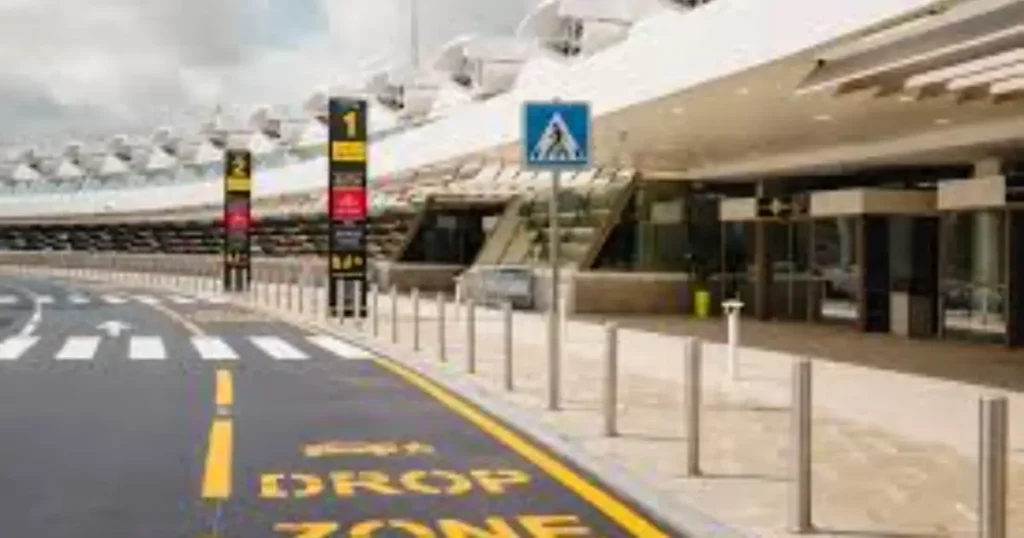
Mohammed V Airport car rental pickup area Morocco

Mohammed V Airport’s rental car area provides immediate highway access, allowing travelers to bypass Casablanca’s notorious traffic and head directly toward coastal destinations.

One critical detail: fuel policy. Most Moroccan rental agencies operate on a “full-to-full” basis, meaning you pick up the car with a full tank and return it full. If you return it empty, they’ll charge you an inflated rate per liter plus a service fee. Plan to fill up at a station near the airport before drop-off.
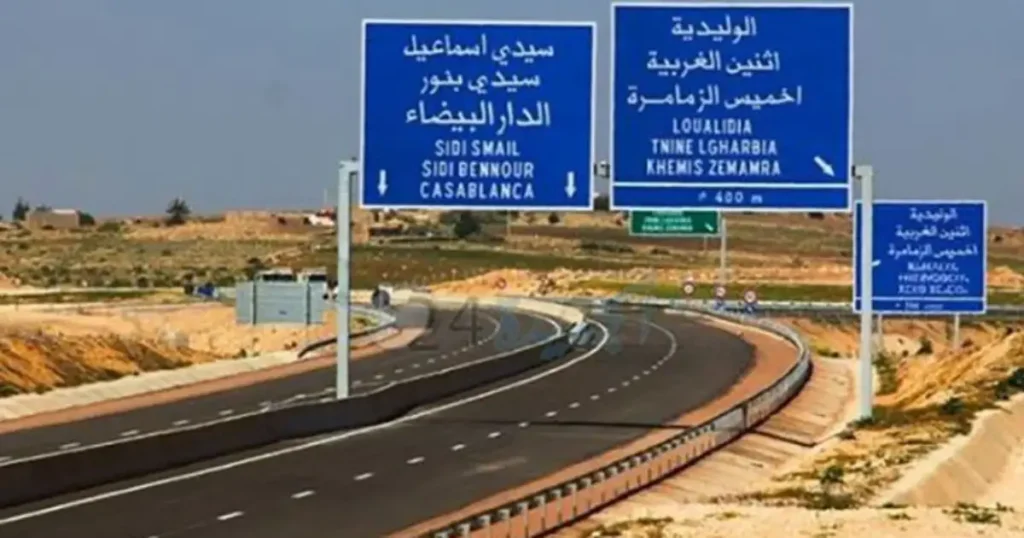
R301 coastal road between Casablanca and El Jadida Atlantic Ocean views

Read More: Day 1-2 Casablanca to El Jadida →

Day 1-2: Casablanca to El Jadida (The Choice of Roads)

The journey from Casablanca to El Jadida is your first real decision point: speed or scenery? Both routes work, but they offer completely different experiences.

The A1 Highway: Efficiency First

The A1 toll highway is the fastest route, covering the 100 kilometers to El Jadida in about 1 hour and 15 minutes. This is modern Moroccan infrastructure at its best — smooth asphalt, clear lane markings, and minimal traffic outside rush hours.

The highway uses a ticket system. You collect a ticket when you enter and pay when you exit based on distance traveled. The toll from Casablanca to El Jadida is around 15-20 MAD. Payment is cash-only at most toll booths, though some now accept the Tag Jawaz electronic system (only useful if you’re a resident or frequent traveler).

Keep small bills handy — 20 MAD and 50 MAD notes. Toll booth attendants sometimes claim they don’t have change for 200 MAD bills, which may or may not be true. Don’t get into arguments; just have the right denominations ready.

The A1 is your choice if you’re starting late in the day and want to reach El Jadida before dark, or if you’re eager to skip the buildup and get straight to the coast.

The R301 Coastal Road: The Scenic Alternative

The R301 coastal road is slower (around 2 hours) but infinitely more interesting. This route hugs the Atlantic, passing through small fishing villages, agricultural lands, and occasional stretches where the road runs right along the waterfront.

Road conditions on the R301 vary. The main stretches are well-paved, but you’ll encounter rough patches, especially near village entrances where heavy truck traffic has degraded the asphalt. Speed bumps appear without warning — locals call them “sleeping policemen” — so stay alert.

Traffic on the R301 is lighter than the highway but more unpredictable. You’ll share the road with farm tractors, horse-drawn carts, and motorcycles carrying improbable loads. Passing is frequent but requires patience. Locals drive aggressively; don’t feel pressured to match their speed.

The R301 coastal road between Casablanca and El Jadida offers Atlantic views and authentic village life, though slower speeds and occasional rough patches require patient driving.

Logistics: Timing Your Route Choice

Use the A1 if you’re leaving Casablanca airport in the late afternoon or evening. Driving unfamiliar coastal roads in fading light is needlessly stressful, and you’ll miss the views anyway.

Choose the R301 if you have morning or early afternoon departure time. The light is better for photography, villages are more active, and you’ll arrive in El Jadida with time to explore the Portuguese cistern and medina before dinner.

Hybrid option: Take the A1 southbound (fast escape from Casa), explore El Jadida, then use coastal roads for the rest of the journey where you have more time.

Safi Pottery Hill ceramic workshops Morocco Colline des Potiers

Day 3: El Jadida to Oualidia (The Oyster Route)

The 80-kilometer drive from El Jadida to Oualidia is where the Morocco coastal road trip reveals its true character. This is quintessential Atlantic Morocco — salt marshes, fishing harbors, and the famous lagoon where Morocco’s best oysters are cultivated.

Road Quality: What to Expect

The coastal road between El Jadida and Oualidia is generally good, though not as smooth as the highways. Expect a mix of recently resurfaced sections and older asphalt with occasional potholes. The road narrows in places, especially when passing through villages.
Read More: Day 3 Oualidia Route →

Drive time is approximately 1 hour and 30 minutes, but budget 2 hours to account for slow-moving traffic and inevitable photo stops. The landscape is flat coastal plains with views of the Atlantic appearing intermittently on your right.

Watch for farm tractors pulling trailers of produce. They travel at 30-40 km/h and don’t always pull over to let faster traffic pass. Patience is essential. Honking is ineffective and considered rude — just wait for a safe passing opportunity.

Parking in Oualidia: The Lagoon Challenge

Oualidia is built around its stunning lagoon, which means parking logistics require understanding the town’s layout. There are three main parking areas:

1. Near the oyster shacks (southern end): This is where most restaurants are located. Parking is informal, along the roadside. You’ll immediately be approached by unofficial parking attendants in yellow vests or improvised “guardian” badges. They’ll offer to “watch” your car.

The going rate is 5-10 MAD depending on how long you’re staying. This isn’t optional in the social sense — these guardians provide a real service (deterring break-ins, helping with directions) and the fee is customary. Pay when you return to your car, not upfront.

2. Near the royal villa (northern end): More formal parking area with designated spaces. Quieter, but farther from restaurants. Same guardian system applies.

3. Hotel parking: If you’re staying overnight at one of the beachfront hotels, use their secure parking. Some hotels allow non-guests to park for a fee (20-30 MAD) if you’re dining at their restaurant.

Never leave valuables visible in your car. The guardians do their best, but opportunistic theft happens. Put everything in the trunk before you park.

Essaouira medina blue cart porter transporting luggage Morocco

Day 4-5: Oualidia to Safi and the “Pottery Logistics”

Safi presents a different challenge from the previous coastal towns. This is an industrial port city, Morocco’s sardine capital, and home to the famous pottery workshops on Colline des Potiers. Navigation requires more attention, and parking isn’t as straightforward.

Safi Traffic: Industrial Reality

Driving in Safi means sharing roads with phosphate trucks, fishing fleet support vehicles, and dense urban traffic. The city sprawls along the coast, and signage for tourist sites isn’t always clear.

Read More: Day 4-5 Safi Logistics →

Your main objective is reaching Colline des Potiers (Pottery Hill) without getting stuck in the industrial port traffic. Here’s the smart route:

Coming from the north (Oualidia), follow signs for “Centre Ville” rather than “Port.” This keeps you on the main coastal road until you can turn inland toward the pottery quarter. Use GPS but cross-reference with physical signs — sometimes GPS routes you through congested areas unnecessarily.

The pottery workshops are clustered on a hill overlooking the city. There’s a large parking area at the base of the hill (free, with guardians expecting 5-10 MAD tip). From there, you can walk up to the workshops or drive if you want to visit specific studios at the top.

Traffic is worst during morning and late afternoon when workers are commuting. Mid-morning (10:00 AM – 12:00 PM) and mid-afternoon (2:00 PM – 4:00 PM) are calmer windows for exploring.

The Scenic Cliffs: South of Safi

Once you leave Safi heading south toward Essaouira, the landscape transforms. The road climbs onto dramatic cliffs with the Atlantic crashing below. This is some of the most photogenic coastline in Morocco, but it comes with a caveat: wind.

The Atlantic trade winds funnel through this section relentlessly, especially in spring and summer. Strong gusts can push your car, particularly if you’re driving a high-profile vehicle like an SUV or van. Keep both hands on the wheel and reduce speed when you feel crosswinds.

There are several unofficial viewpoints where you can pull over safely. Don’t stop on blind curves or narrow shoulders. If there’s no proper pullout, keep driving until you find one — the views continue for kilometers.

Safi’s Pottery Hill offers free parking at the base with traditional ceramic workshops climbing the hillside, requiring navigation around industrial port traffic to reach.

Oualidia lagoon oyster cultivation beds Atlantic coast Morocco

Day 6: Reaching Essaouira (The Pedestrian Challenge)

Essaouira is the jewel of Morocco’s Atlantic coast, but it’s also the most logistically complex stop on this itinerary because of one critical fact: the medina is entirely car-free.

The “No-Car” Zone: What It Means

The entire historic medina of Essaouira is closed to vehicle traffic. Cars cannot enter through Bab Doukkala, Bab Marrakech, or any of the old gates. This is strictly enforced, and there are no exceptions for tourists claiming they “just need to drop off luggage.

Read More: Day 6 Essaouira Arrival →


This means you need to park outside the medina and either walk with your bags or use one of the traditional luggage transport systems. If you’re staying in a riad inside the medina, plan accordingly.

Logistics of Luggage: The Blue Carts

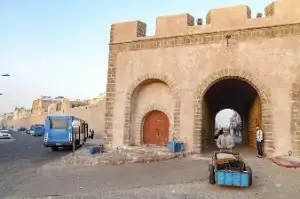
Essaouira has a unique solution: blue hand carts (charrettes) operated by licensed porters. These porters wait near the main parking areas and the medina gates. They’ll transport your luggage from your car to your accommodation for a fee.

Standard rate is around 20-30 MAD per cart, depending on the distance into the medina and the amount of luggage. Riads deep in the medina cost more because the porters have to navigate narrow alleys. Negotiate the price before they load your bags.

Alternatively, if you’re staying in one of the modern hotels outside the medina (along the beach road), you can drive right up to the entrance and use their parking, eliminating this logistical step entirely.

Long-term Parking: Where and How Much

If you’re staying multiple nights in Essaouira, you need secure parking. There are several options:

1. Parking near the port: Large paved lot just outside Bab Marrakech. Guarded 24/7. Cost: approximately 10 MAD per 24 hours. Close to medina entrance, but fills up quickly in high season.

2. Parking Bab Doukkala: On the north side of the medina. Similar pricing and security. Slightly farther walk but less crowded.

3. Private parking lots: Several entrepreneurs run small private lots near the medina. Prices range from 15-30 MAD per day. Ask to see the facility first and confirm it’s locked at night.

4. Hotel parking: Some hotels outside the medina allow non-guests to park for 30-50 MAD per day. This is the most secure option if budget allows.

Never park on random streets hoping it’s free. You’ll either get ticketed, towed, or return to find your car has been “guarded” by someone demanding payment you didn’t agree to.

Essaouira’s car-free medina requires using traditional blue carts operated by licensed porters to transport luggage from parking areas to riads inside the walled city.

Day 7: The Fast Return to Casablanca

Your final day is about efficient travel back to Casablanca, which means prioritizing highways over coastal scenery — unless you’ve built extra time into your trip.

The Inland Link: Highway Strategy

The fastest route back is the inland highway connection. From Essaouira, take the N1 national road toward Marrakech. After about 100 kilometers, you’ll reach the junction with the A7 highway near Chichaoua. Take the A7 north toward Casablanca, which connects to the A3.

Read More: Day 7 Return Journey →

Total distance: approximately 350 kilometers. Driving time: 4 hours and 30 minutes with normal traffic. Budget 5 hours to account for toll stops and a rest break.

This route is almost entirely on smooth, modern highways with minimal stress. Tolls will total around 60-80 MAD for the complete journey back to Casablanca airport. Have cash ready.

The alternative coastal route back through Oualidia and El Jadida is scenic but adds 2-3 hours to your journey. Only choose this if you have a late afternoon flight or you’re staying another night in Casablanca.

Gas Station Strategy: Final Details

This is crucial: fill up your rental car at a station near the airport, not at the airport itself. There are no gas stations inside the airport complex. The nearest stations are on the highway approaches, about 2-3 kilometers before the airport exits.

If you return your car without a full tank, the rental agency will charge you their inflated rate plus a service fee. This can easily cost 50-100 MAD more than filling up yourself.

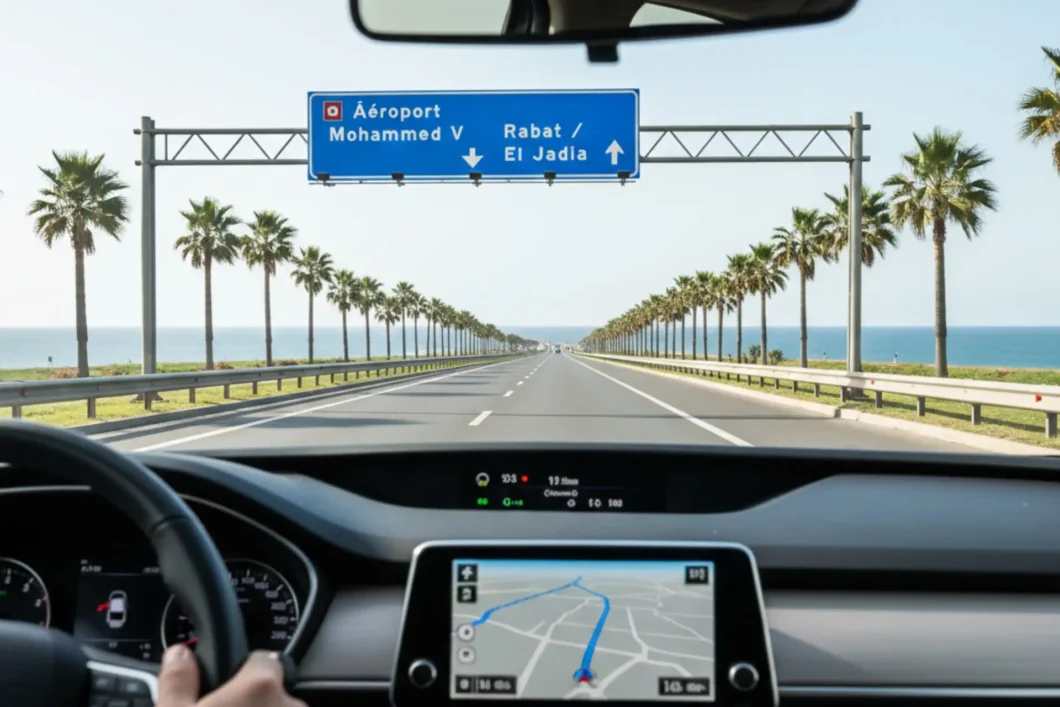
Signs for “Aéroport Mohammed V” appear well in advance. Watch for “Naftal” or “Afriquia” gas stations along the highway before you take the airport exit. Pull in, fill up completely, and keep the receipt (in case of disputes).

Allow at least 90 minutes before your flight to return the car and get through check-in and security. More if it’s peak travel hours or if you’re flying international.

Complete Itinerary Logistics Table

SegmentDistanceRoute TypeEst. TimeKey Logistics Tip
Casa → El Jadida100 kmA1 (Toll)1h 15minUse highway to escape Casa fast
El Jadida → Oualidia80 kmR301 (Coastal)1h 30minWatch for slow farm tractors
Oualidia → Safi65 kmR3011h 10minBeautiful cliffs, watch crosswinds
Safi → Essaouira125 kmCoastal/N12h 15minArgan cooperative stops en route
Essaouira → Casa350 kmN1 + A7 + A34h 30minThe “Return Leg” – use highways

Final Recommendations and Practical Tips

This 7-day coastal road trip itinerary balances driving time with exploration time. You’re never spending more than 2-3 hours driving in a single day, leaving mornings and afternoons free to explore towns, swim, eat fresh seafood, and simply relax along the Atlantic.

The route works equally well in both directions (Essaouira to Casablanca), but starting in Casablanca makes more sense for international arrivals. You get the airport rental pickup out of the way immediately and gradually wind down as you head south.

For broader context on driving conditions throughout Morocco, including mountain roads and desert routes, check our comprehensive guide. If you’re considering extending this trip south toward Agadir or inland to Marrakech, our complete Morocco road trip routes article covers all major itineraries.

Best times for this coastal drive are spring (March-May) and autumn (September-November) when temperatures are mild and winds are less intense. Summer can be hot and windy, though the Atlantic breeze keeps it more tolerable than inland. Winter is quieter with fewer tourists, but some restaurants and hotels close in smaller towns.

Pack layers. Atlantic Morocco is breezy, and even summer evenings can be cool. Bring sunscreen (the coastal sun is deceptive) and comfortable walking shoes for exploring medinas.

For more detailed information on car rental strategies in Morocco, including insurance options and agency comparisons, we have a dedicated guide. And if you need help planning the broader logistics of your trip, from accommodation booking to route timing, visit our Morocco road trip logistics resource and Travel Resources for Morocco.

The Atlantic coast won’t overwhelm you with Morocco’s more famous attractions — no towering kasbahs, no vast dunes, no UNESCO medinas (well, except Essaouira). But that’s precisely the appeal. This is Morocco at a human scale, where you can actually relax instead of checking off sites. It’s road tripping the way it should be: slow, scenic, and slightly unpredictable.