

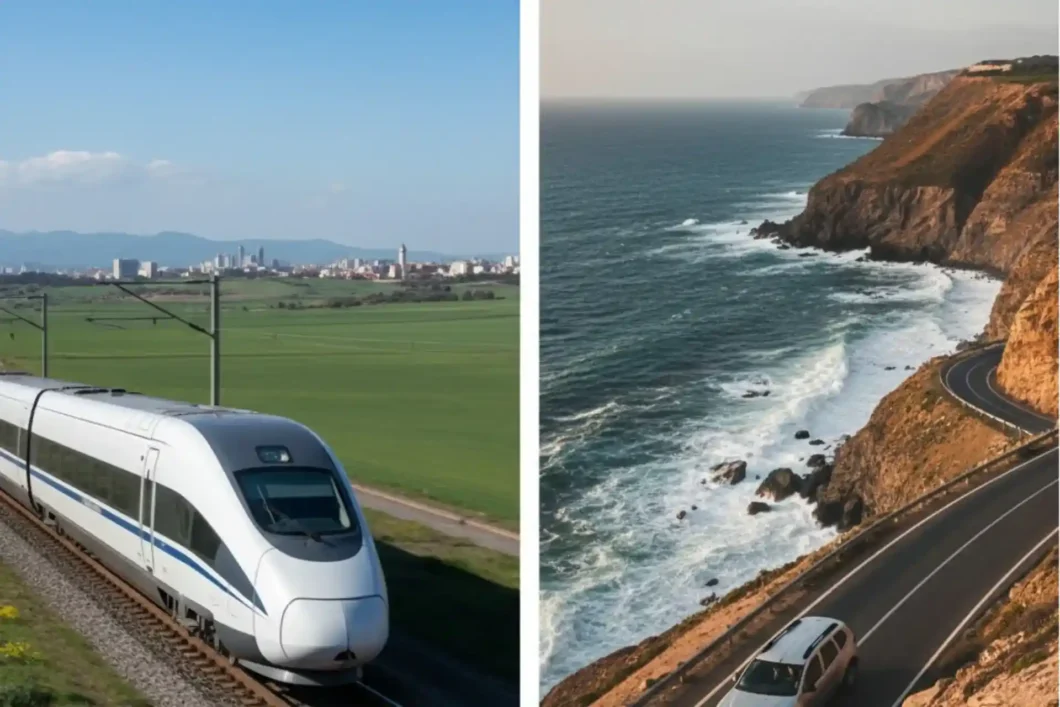
Morocco’s Atlantic coast stretches over 1,800 kilometers from Tangier in the north to the edge of the Western Sahara. A 10-day Morocco Atlantic coast road trip from Tangier to Agadir captures the best of this dramatic shoreline without feeling rushed. You’ll experience imperial cities, windswept beaches, Portuguese forts, and fishing villages where time moves slower than anywhere else in the country.
What makes this itinerary different is the transport strategy. Instead of renting a car for the entire journey and battling urban traffic in Tangier, Rabat, and Casablanca, you’ll use Morocco’s excellent rail network for the northern cities, then pick up a rental car in Casablanca to explore the coastal roads south. This hybrid approach — train for efficiency, car for freedom — is how smart travelers navigate Morocco.
The logistics matter here. Knowing when to use the high-speed Al Boraq train versus when you absolutely need four wheels makes the difference between a smooth journey and a stressful one. Understanding Morocco’s toll highway system, the informal parking guardian economy, and the “medina gap” (why your car can’t go where your hotel is) transforms this from a trip into an adventure you’re equipped to handle.
The Logistical Strategy: Train + Car Hybrid
The biggest mistake first-time visitors make is either renting a car for their entire Morocco trip (unnecessary expense and urban driving stress) or trying to rely entirely on public transport (limiting and time-consuming for coastal exploration). The solution is splitting your journey into two distinct phases.
Phase 1: The High-Speed North (Train-Based)
From Tangier to Casablanca, you’re traveling between major cities connected by Morocco’s pride: the Al Boraq high-speed train. This French-built TGV covers the route in under 2 hours, compared to 4-5 hours by car through congested urban areas and toll highways.
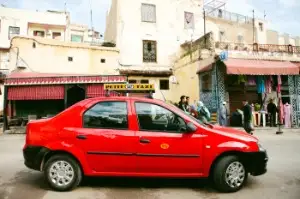
In these northern cities — Tangier, Rabat, Casablanca — a car is a liability. Parking is expensive or nonexistent, traffic is chaotic, and medinas (where you’ll likely stay) don’t allow vehicles anyway. The train deposits you at centrally located stations where petit taxis can shuttle you to your accommodation for 15-30 MAD.
Train travel in Morocco is comfortable, punctual, and remarkably affordable when you book in advance. First-class tickets on the Al Boraq from Tangier to Casablanca cost around 200-250 MAD (versus 400+ MAD per day for car rental plus fuel and tolls).
Phase 2: The Coastal Freedom (Car-Based)
South of Casablanca, the logic flips entirely. The coastal route through El Jadida, Oualidia, Safi, and Essaouira to Agadir isn’t served by convenient trains or frequent buses. The towns are smaller, accommodation is spread out, and the real treasures — hidden beaches, argan cooperatives, clifftop viewpoints — lie between towns, not in them.
This is where renting a car becomes essential. You pick up your rental at Casablanca airport or city center, drive the coast at your own pace, and either return the car in Agadir (with a one-way fee) or complete the loop back to Casablanca via the faster inland highway.
The hybrid strategy saves money, reduces stress, and maximizes your time actually experiencing Morocco rather than sitting in traffic or waiting for buses.
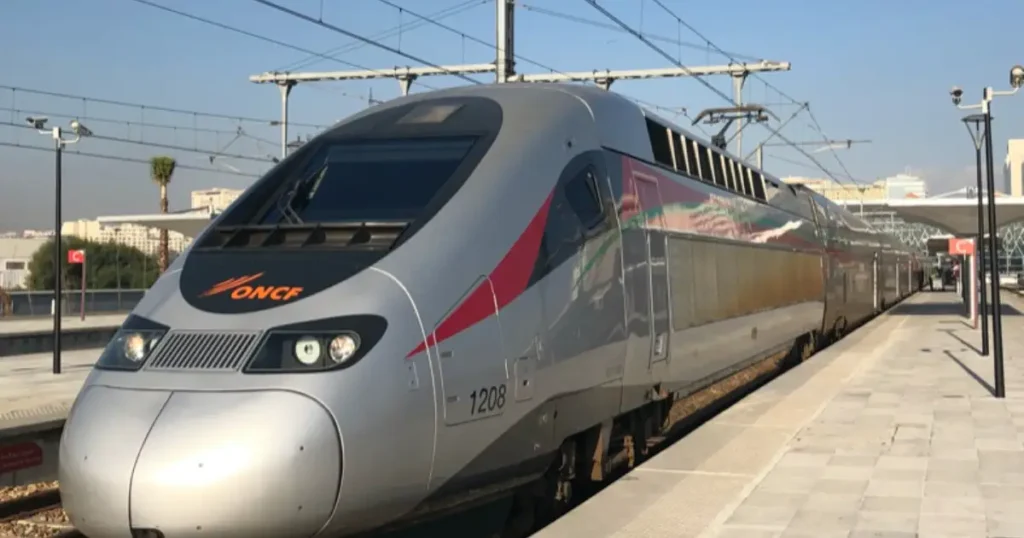
Morocco’s Al Boraq high-speed train connects Tangier to Casablanca in under 2 hours, providing comfortable first-class service that eliminates the need for car rental in northern cities.
One critical detail: timing your car rental pickup. Don’t collect your vehicle the moment you arrive in Casablanca. Spend a day exploring the city by foot and taxi, then pick up your car the morning you’re ready to head south. This avoids paying for a car that sits unused in expensive parking while you navigate an urban medina.
Phase 1: The High-Speed North (Days 1-3)
Your journey begins in Tangier, Morocco’s gateway to Europe. The city’s Tanger Ville train station is modern and efficient, with clear signage in Arabic, French, and English. This is where you board the Al Boraq.
Tangier to Rabat & Casablanca: TGV Logistics
The Al Boraq train departs multiple times daily from Tangier to Casablanca, with stops in Kenitra and Rabat. If you’re stopping in Rabat (recommended for 1-2 nights to explore Morocco’s capital), you’ll disembark after about 1 hour and 20 minutes.
Phase 2: The Freedom of the Open Road (Days 4-10)
After exploring Casablanca, you’re ready to pick up your rental car and head south. This is where your Atlantic coast road trip truly begins.
After exploring Casablanca, you’re ready to pick up your rental car and head south. This is where your Atlantic coast road trip truly begins.
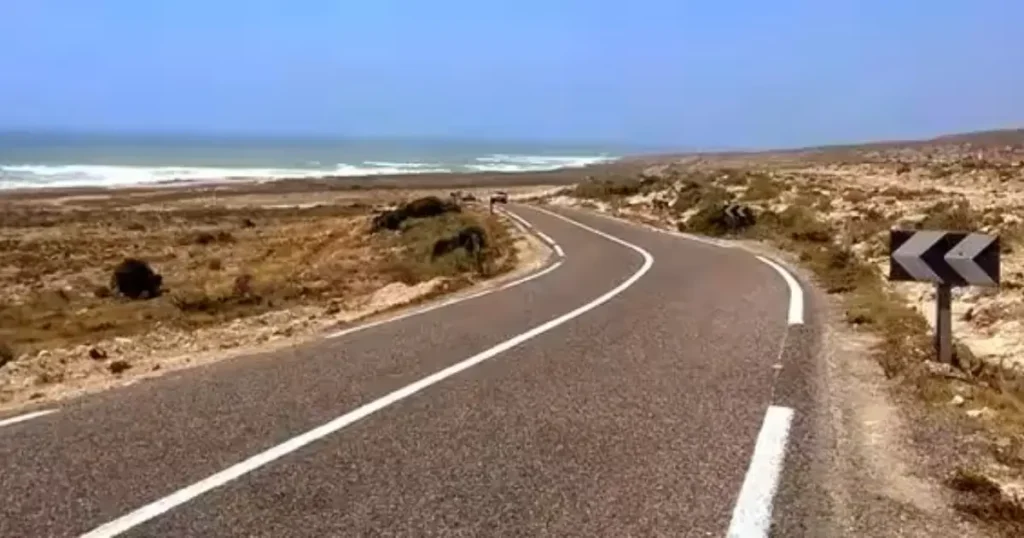
Navigating the Scenic Coastal Roads (R301 & N1)
Once you leave the highways and hit the coastal roads, the pace changes completely. This is where the journey becomes the destination.
The “Parking Guardian” Logistics One aspect of driving in Morocco that confuses first-timers is the informal parking guardian system. Understanding this saves frustration and actually makes parking easier.

Managing the “Medina Gap”
This is the single biggest logistical challenge for drivers in Morocco: your car cannot go where your hotel is if you’re staying in a traditional medina riad.The Car-Free Reality
Morocco’s historic medinas — the old walled cities in Rabat, El Jadida, Essaouira, and others — are entirely or mostly car-free. Streets are too narrow, often just 1-2 meters wide. Cars are prohibited, period.Your beautiful riad deep in the medina’s labyrinth? You can’t drive there. You must park outside the medina walls and either walk with your luggage or use a porter service.
Complete 10-Day Itinerary Logistics Table
| Étape | Transport Idéal | Durée | Conseil Logistique |
|---|---|---|---|
| Tanger → Rabat | TGV Al Boraq | 1h 20min | Réservez 1 semaine avant pour tarif “S’rîi” |
| Rabat → Casa | Train Atlas | 50min | 1ère classe pour confort bagages |
| Casa → Oualidia | Voiture location | 2h 30min | Évitez sortie Casa 17h-19h |
| Oualidia → Essaouira | Voiture (Côte R301/N1) | 3h 30min | Route sinueuse, attention vent latéral |
| Essaouira → Agadir | Voiture (N1) | 3h | “Route du Miel” – virages serrés montagne |
Final Recommendations and Practical Wisdom
This 10-day Atlantic coast itinerary works because it respects Morocco’s transportation realities. Trains are brilliant for city-hopping in the north. Cars are essential for coastal exploration in the south. Trying to force one method for the entire trip creates unnecessary problems.
Budget approximately 1,500-2,500 MAD for train tickets (depending on class and booking timing), plus 2,500-4,000 MAD for car rental (7 days at 350-500 MAD per day plus fuel). Total transport costs: around 4,000-6,500 MAD for the complete journey.
For comprehensive guidance on driving conditions and road safety throughout Morocco, including desert and mountain routes, check our detailed resource. If you need help choosing between different Morocco road trip routes, we cover all major itineraries from 7 to 21 days.
The car rental process in Morocco deserves its own attention — understanding insurance options, fuel policies, and agency comparisons can save hundreds of dirhams. And for broader trip planning, from accommodation strategies to seasonal timing, visit our Morocco road trip logistics guide.
Best times for this Atlantic coast journey are spring (March-May) when wildflowers bloom and temperatures hover around 20-25°C, or autumn (September-November) when summer heat subsides but the ocean remains warm. Winter is possible but brings rain and cooler temperatures. Summer can be hot inland but pleasant along the coast with Atlantic breezes.
Pack layers. Coastal Morocco experiences microclimates — sunny and warm one hour, foggy and cool the next. Bring a light jacket even in summer. Comfortable walking shoes are essential for medina exploration. And don’t forget sunscreen; the coastal sun is deceptively strong.
This journey isn’t about ticking off UNESCO sites or Instagram hotspots. It’s about rhythm — the slow unfurling of Morocco’s Atlantic character from the European-facing north to the Berber-influenced south. It’s fresh sardines grilled on beach fires, kasbahs crumbling into the sea, and the constant conversation between land and ocean.
The hybrid transport strategy — train for efficiency, car for discovery — lets you experience both Moroccos: the modern, connected one represented by the Al Boraq streaking through the countryside, and the timeless, unhurried one revealed only from behind a steering wheel on a coastal road going nowhere in particular.