

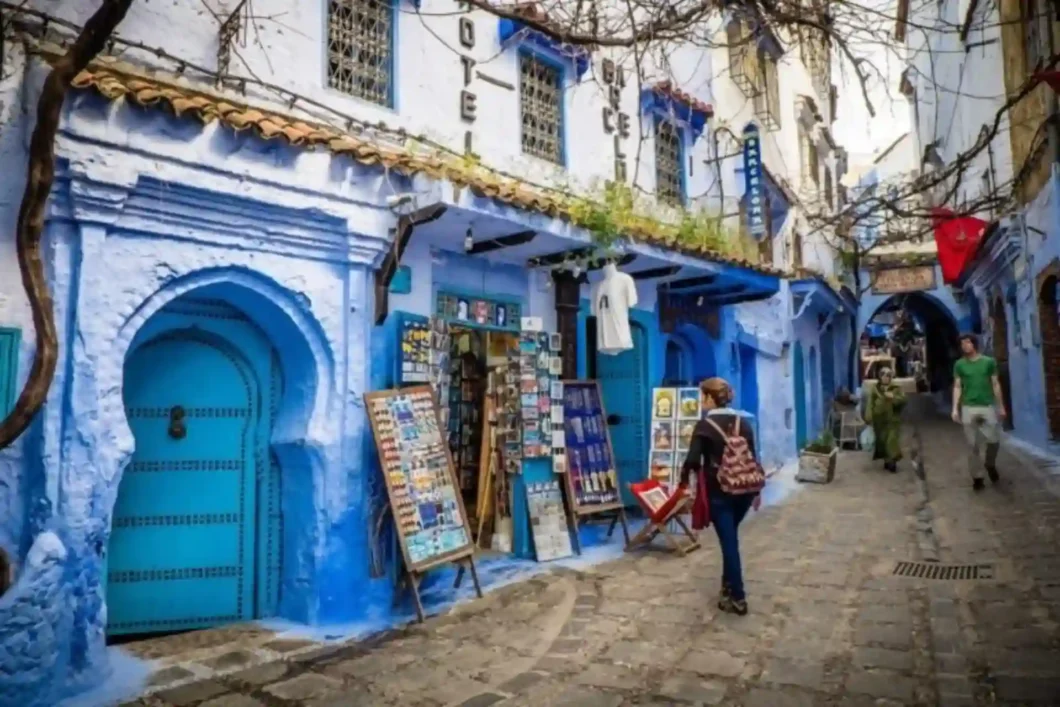
The Northern Morocco road trip from Tangier to Chefchaouen isn’t just another scenic drive through North Africa. It’s a masterclass in road trip logistics that most travel guides gloss over. While everyone talks about the blue-washed streets of Chefchaouen, few discuss the reality of navigating Morocco’s N2 highway, the strategic differences between renting a car versus hiring a Grand Taxi, or where exactly you’ll park when you arrive at the Blue Pearl perched on a mountainside.
This guide cuts through the romantic travel writing to give you what you actually need: hard logistics for driving Tangier to Chefchaouen. We’re talking road conditions on the N2, the truck factor that will define your journey, parking strategies in a city built vertically on a cliff, and the transport decisions that will either make or break your northern Morocco experience.
If you’re planning to drive this route, you’re not just choosing destinations. You’re committing to mountain roads, managing vehicle logistics, and navigating the practical realities that turn a beautiful route into either a smooth adventure or a stressful nightmare. Here’s everything you need to know before you turn that key.
Why Drive the Northern Route? The Driver’s Perspective
The northern route from Tangier through Tetouan to Chefchaouen represents one of Morocco’s most logistically interesting drives. Unlike the heavily touristed southern circuits that rely on modern autoroutes, this journey introduces you to Morocco’s National Roads system, specifically the N2 highway Morocco that winds through the Rif Mountains.
From a driver’s perspective, this isn’t the comfortable cruise you’d experience on the Marrakech-Casablanca autoroute. The N2 demands active driving. You’re dealing with elevation changes, hairpin turns, and a road that requires constant attention. The trade-off? Some of Morocco’s most spectacular mountain scenery and a driving experience that actually feels like an adventure rather than highway monotony.
The northern route also offers superior flexibility compared to organized tours. Want to stop at the Akchour Waterfalls? With your own vehicle, it’s a detour. Traveling by bus or shared transport? It’s a logistical puzzle. This route rewards drivers who appreciate the journey as much as the destination.
The timing works in your favor too. While southern Morocco bakes under summer heat, the Rif Mountains maintain comfortable temperatures. Spring brings wildflowers across the mountain passes. Autumn offers crystal-clear visibility perfect for photography. Winter requires more caution due to potential rain and occasional fog, but the roads remain passable year-round.
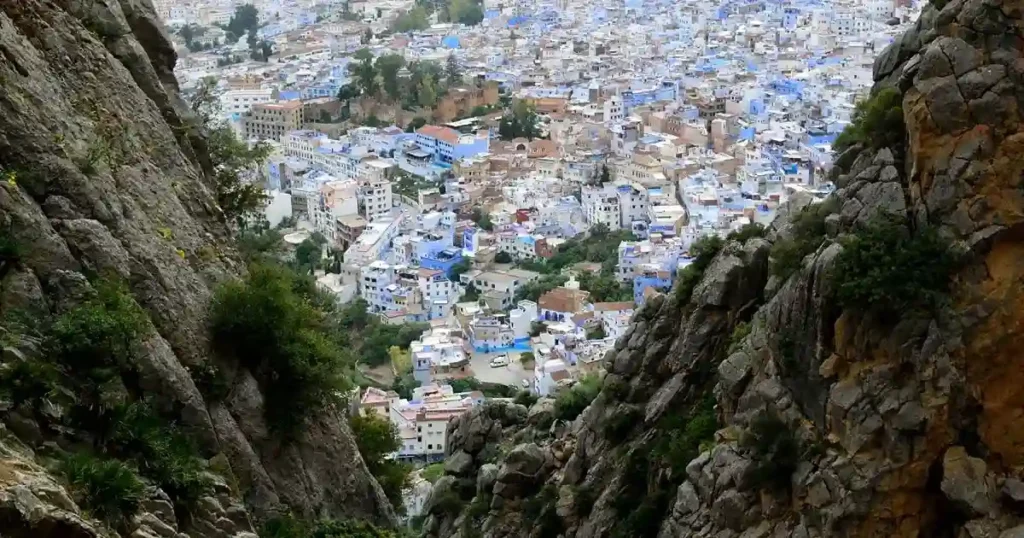
The Rif Mountains offer dramatic landscapes along the N2 highway between Tetouan and Chefchaouen
Consider also the cultural angle. The northern region sees fewer tourists than Marrakech or Fes, meaning your interactions feel more authentic. Local restaurants serve meals to Moroccans, not tour groups. The medinas function as actual marketplaces, not souvenir bazaars. Your Morocco road trip here connects you to everyday Moroccan life in a way the tourist circuit rarely achieves.
Road Trip Logistics: Mastering the N2 Highway
The N2 is the backbone of northern Morocco transport, but it’s a completely different beast from the autoroutes that connect Morocco’s major cities. Understanding its characteristics will determine whether you enjoy this drive or endure it.
N2 Road Conditions: What to Actually Expect
The N2 highway Morocco road conditions vary significantly along its length. The stretch from Tangier to Tetouan runs relatively flat and straight, well-maintained asphalt with clear lane markings. This 60-kilometer section lulls many drivers into a false sense of what’s ahead.
Everything changes after Tetouan. The road begins climbing into the Rif Mountains, and the N2 transforms into a genuine mountain highway. Expect tight hairpin curves, grades steep enough that trucks struggle, and sections where the road narrows significantly. The pavement quality remains generally good, but the engineering demands attention.
The curves between Tetouan and Chefchaouen aren’t the gentle bends of a modern highway. These are the switchbacks where you’re dropping to second gear and checking your rearview mirror constantly. Locals drive these curves with casual confidence. Visitors should take them with appropriate respect.
Visibility can be an issue. Morning fog occasionally settles in the mountain passes, particularly in winter and spring. By midday it usually burns off, but if you’re driving at dawn, factor in reduced visibility. The road has guardrails on the most dramatic sections, but not everywhere.
The Grand Taxi Alternative: Efficiency and Local Expertise
Grand Taxi vs Car Rental Morocco comparisons often miss the Grand Taxi’s biggest advantage: the driver knows every curve, every truck pattern, and every police checkpoint on the N2. They’ve driven this route hundreds of times. That expertise translates to faster, smoother journeys and zero navigation stress on your part.
Cost-wise, Grand Taxis shine for solo travelers and couples. Tangier to Chefchaouen runs approximately 400-600 MAD total for the vehicle, negotiable based on season and your haggling skills. Split between two passengers, you’re looking at 200-300 MAD per person for direct transport, competitive with rental costs when you factor in fuel and potential parking fees.
The Grand Taxi system operates on a seat-sharing model or private hire. Seat-sharing means waiting until six passengers fill the vehicle, departing from designated taxi stands in each city. Private hire costs more but leaves on your schedule. For the Tangier-Chefchaouen route, private hire is standard since this isn’t a high-traffic commuter route.
Booking logistics: most riads and hotels can arrange Grand Taxis with a day’s notice. Alternatively, head to the taxi stand and negotiate directly. Early morning departures are easiest to arrange. Afternoon or evening transport requires more advance planning as drivers prefer to make their runs earlier in the day.
Tanger Med, in contrast, sits 40 kilometers east of the city, built to handle commercial freight traffic. Ferries from Algeciras use Tanger Med. Your arrival here requires onward transport to reach Tangier proper, either by taxi (300-400 MAD) or by waiting for the bus connection (30 MAD but infrequent). For road trippers, this creates an extra logistical step.
If you’re planning to rent a car, both ports offer options, but Tanger Ville provides easier access to downtown rental agencies. Tanger Med serves primarily commercial traffic, so rental infrastructure is limited.
The Petit Taxi System: Tangier’s Blue Network
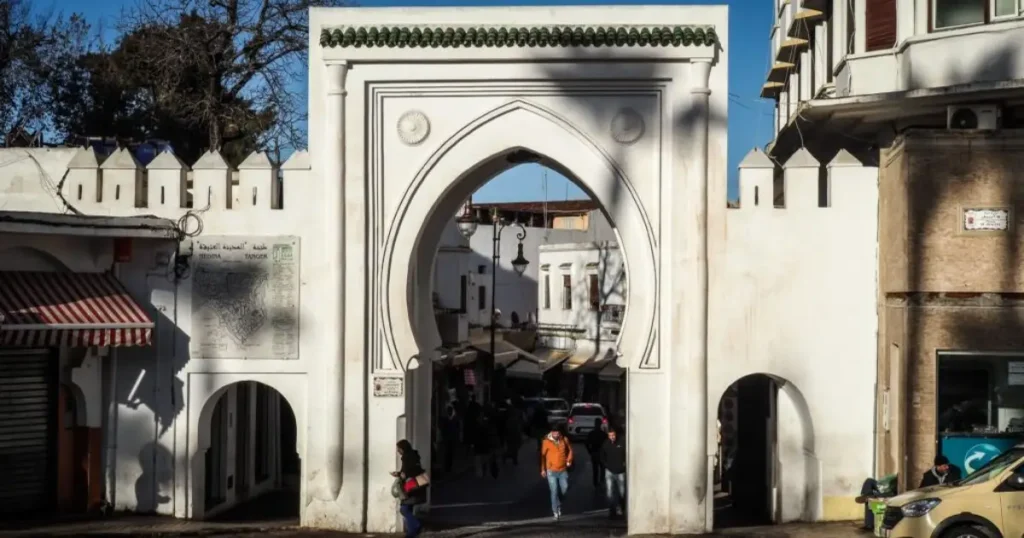
Parking in Tangier can be challenging in the medina area, making the city’s petit taxi network your best friend for local transport. These blue taxis distinguish themselves from Grand Taxis both by color and function. Petit taxis operate within city limits, Grand Taxis handle intercity routes.
The system: Tangier’s petit taxis use meters, a pleasant surprise compared to many Moroccan cities where negotiation is required. Insist on the meter. If the driver claims it’s broken, find another taxi. Fares within the city rarely exceed 20-30 MAD.
The mountain route continues from Tetouan toward Chefchaouen, approximately 60 kilometers of increasingly dramatic scenery. This is where the N2 transitions from regional highway to mountain road.
Walking vs. Driving: Tetouan Medina Logistics
Tetouan’s medina earned UNESCO World Heritage status for good reason, but accessing it requires parking logistics. The medina, like all traditional Moroccan old cities, excludes vehicles. You’ll need to park outside and walk in.
Feddan Park parking serves as the primary parking area for medina visitors. Located just outside the main medina gate, it offers secure attended parking for 10-20 MAD depending on duration. The attendants watch vehicles during business hours. This isn’t a formal parking garage but rather an open lot with an attendant system common throughout Morocco.
Truck Factor”: Sharing the Road in the Rif
Commercial trucks define the rhythm of N2 traffic. These aren’t the modern semi-trailers of European highways. You’re dealing with older vehicles hauling everything from construction materials to agricultural products, often pushed to their mechanical limits on these mountain grades.
On uphill sections, trucks slow to 20-30 km/h. The N2 is mostly single-lane in each direction, meaning you’ll spend time stuck behind slow-moving freight. Passing opportunities exist, but they require judgment. The road’s curves limit sight lines, and Moroccan drivers coming downhill aren’t always expecting overtaking traffic.
Specific Spots: Where to Actually Park
Parking near Outa el Hammam Square represents the closest you’ll get to the medina heart while still being able to park legally. This area just outside the main square has limited street parking and usually fills by midday. Arrive before 11 AM if you want a spot here. Cost is minimal, usually 5-10 MAD to the informal parking attendant.
The better option for most visitors: parking near Hotel Parador or the adjacent area along Avenue Hassan II. This zone offers more parking capacity, official attendants, and easier vehicle access. From here, you’re a 10-15 minute walk uphill to the medina center. The walk is steep but manageable with luggage.
For comprehensive information on planning your Morocco road trip, check out our detailed Morocco road trip routes guide. If you’re planning a longer journey through Morocco, our complete Morocco travel resources cover everything from accommodation to cultural insights.
The northern route rewards drivers who appreciate active travel over passive tourism. You’re not being driven through Morocco; you’re driving through it, making decisions, solving small logistical problems, and earning your arrival in Chefchaouen through the journey itself. That engagement transforms a simple point-to-point transport into an actual adventure worth remembering.For a comprehensive overview of all transport options across Morocco, including buses, trains, and domestic flights, consult our detailed Morocco transportation guide covering the entire country’s transit network.