

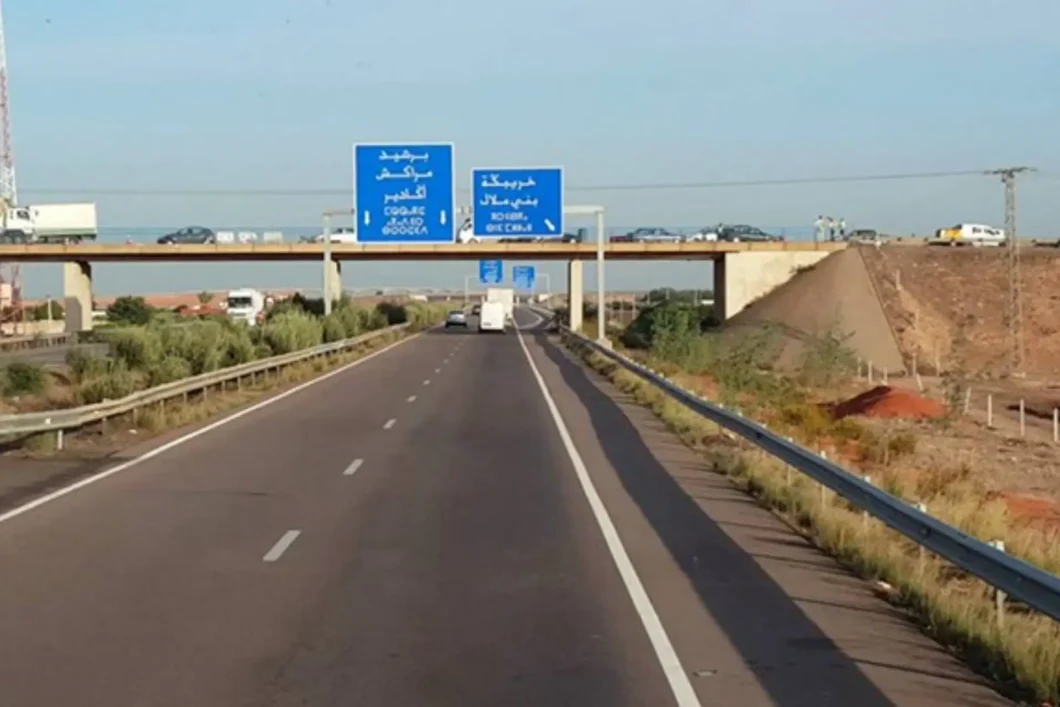
I’ve made this drive four times now. Twice on the highway, twice through the mountains. And here’s what nobody mentions in those “Fes to Marrakech in one day!” blog posts: the choice isn’t just about driving from Fes to Marrakech—it’s about what kind of day you want to have.
The first time, I took the highway. Efficient, boring, done in under six hours. The second time, a Moroccan friend laughed when I told him my plan. “The highway? Why would you skip the Middle Atlas?”
So I tried his route. Through Ifrane, past the cedar forests, over mountain passes where the road clings to cliffsides. It took nearly 10 hours. My neck hurt from looking at scenery. And I’d do it again tomorrow.
But here’s the thing: both routes work. It just depends whether you’re chasing efficiency or experience. And sometimes—like in winter when snow closes the mountain passes—the choice gets made for you.
The Great Strategic Choice: Speed or Scenery?
You’ve got roughly 500 kilometers separating Fes and Marrakech. On a map, it looks simple. In reality, you’re deciding between two completely different experiences.
The highway route runs 530 km through Rabat and Casablanca. Smooth, fast, predictable. The kind of drive where you set cruise control and think about other things. Six hours, door to door, if you don’t stop much.
The Middle Atlas road trip Morocco route is 480 km but feels longer. National roads wind through mountains, forests, and Berber villages. Your average speed drops to 60-70 km/h because of curves, trucks, and the fact that you’ll keep stopping to take photos. Eight to ten hours, realistically.
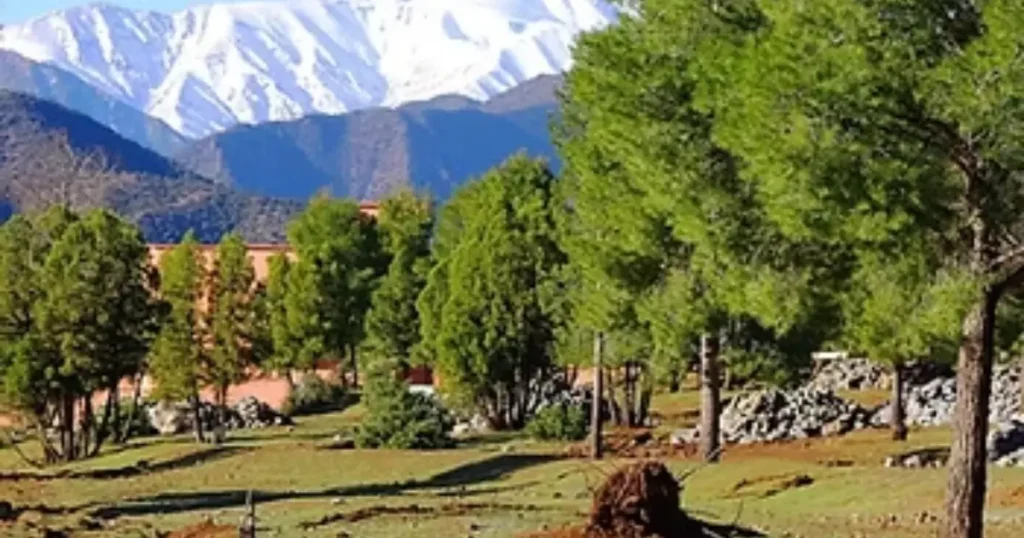
I thought I’d save time taking the highway. I did—about three hours. But those three hours cost me seeing the cedar forests of Azrou, the mountain lakes, and the unexpected snow in May at 2,000 meters elevation.
The question isn’t which route is better. It’s which route matches your trip.
What Your Timeline Actually Dictates
If you’re leaving Fes at 8 AM and need to be in Marrakech for a 6 PM dinner reservation? Highway. No debate. The mountain route has too many variables—slow trucks, photo stops, construction delays.
But if you’ve got two days and don’t mind sleeping in Beni Mellal or near Ouzoud Falls? The scenic route transforms from a long drive into an actual journey. This is when the Beni Mellal route makes sense.
I met a French couple in Ifrane who’d budgeted 12 hours for the drive. They weren’t stressed. They stopped for lunch, walked through the cedar forest, watched monkeys steal someone’s sandwich. They arrived in Marrakech at 8 PM, exhausted but satisfied.
Compare that to my highway experience: arrived fresh at 2 PM, had nothing to talk about except gas station coffee.
Option A: The Highway (The Efficient Way)
The Fes to Marrakech via Casablanca highway is what you take when driving is a means to an end, not the activity itself.
You leave Fes on the A2 autoroute heading toward Rabat. This is Morocco’s best highway—two lanes each direction, actual shoulders, clear signage. It feels like driving in Europe, not North Africa.
At Rabat, you merge onto the A1 toward Casablanca. Then switch to A3 for the final stretch into Marrakech. The whole route is tolled, which keeps it maintained and relatively empty.
Speed limit is 120 km/h, but you’ll see locals doing 140. I stuck to 120 after watching a BMW get pulled over near Kenitra. The highway police use radar—this isn’t a suggestion.
Rest stops appear every 40-50 km. Afriquia and TotalEnergies stations have clean bathrooms (5 MAD charge), espresso machines, and pre-packaged sandwiches that range from decent to depressing. I learned to bring my own food after the third dried-out croissant.
The drive itself? Flat agricultural land for the first half, then industrial sprawl around Casablanca. The most interesting thing I saw was a shepherd moving sheep across the highway emergency lane near Settat. Traffic stopped. Nobody honked. Just Morocco things.
The Real Cost of Speed
Tolls add up on this route. I tracked every booth:
Fes → Rabat: 65 MAD
Rabat → Casablanca: 45 MAD
Casablanca → Marrakech: 70 MAD
Total: 180 MAD (about $18)
Fuel consumption is better on highways—steady speed, no elevation changes. My rented Dacia Duster averaged 6.5L/100km, costing about 350 MAD ($35) for the full journey.
So total highway costs: 180 MAD tolls + 350 MAD fuel = 530 MAD ($53). Plus food and coffee if you stop.
The mountain route has no tolls but burns more fuel climbing passes. I calculated roughly equal costs, but the highway is more predictable.
But let’s talk about what you’re missing by taking the highway: everything that makes Morocco interesting.
Option B: The Middle Atlas Route (The Scenic Way)
The mountain route—N8 through Ifrane and Azrou, then N13 toward Khénifra and Beni Mellal—is why people rent cars in Morocco instead of taking trains.
You’re not just driving. You’re climbing through cedar forests where Barbary macaques sit on the road demanding food. You’re passing mountain lakes that appear around corners like surprise gifts. You’re seeing Morocco that tourists in Marrakech riads never know exists.
But logistics? Completely different game than the highway.
I left Fes at 7 AM, confident I’d make Marrakech by 4 PM. Google Maps said 7 hours. I arrived at 6:30 PM, and that was without stopping much. The average speed calculation is generous when roads have hairpin turns and trucks carrying lumber at 40 km/h.
The Logistics of Curves
The Ifrane and Azrou road trip section is beautiful but slow. Ifrane sits at 1,650 meters elevation. You’re climbing constantly out of Fes, then descending toward Azrou through forests.
The road is well-maintained—it’s a national highway—but it’s single lane each direction with limited passing zones. Get stuck behind a truck, you’re stuck until the next straight section. Which might be 10 kilometers away.
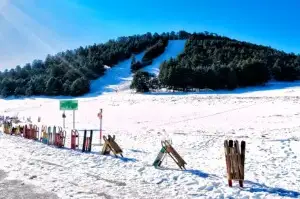
Ifrane feels wrong. Like someone copy-pasted a Swiss village into Morocco. Red-tiled roofs, European architecture, a town square with a stone lion statue. It’s where wealthy Moroccans escape summer heat and where royal family has a palace.
I stopped for coffee at a café near the lion statue. Overpriced (25 MAD for espresso vs 7 MAD in Fes), but the break was necessary after two hours of mountain driving.
After Ifrane, the cedar forest of Azrou is mandatory. Not because you planned it, but because traffic stops when monkeys appear. Barbary macaques own this forest. They sit in the road. They approach cars. Tourists feed them, which you’re not supposed to do but everyone does anyway.
I watched a monkey steal a baguette from a French family’s car. They’d left the window down. The monkey reached in, grabbed the bread, and climbed a tree. The family was angry. The monkey seemed pleased with himself.
Must-Stop Hubs
After Azrou, the route gets serious. You’re crossing the Middle Atlas plateau—high, remote, beautiful, and completely empty for stretches.
Khénifra is where you realize how far you are from anywhere. Small city, basic services, not touristy. Good for fuel and bathroom breaks, but don’t expect Instagram-worthy cafés.
Beni Mellal is your last major stop before Marrakech. Sitting at the base of the Atlas foothills, it’s a proper city with restaurants, hotels, and the gateway to Ouzoud Falls.
This is where driving time Fes to Marrakech becomes flexible. Some people push through to Marrakech (another 2.5 hours). Smart people stop for the night, visit Ouzoud in the morning, then continue refreshed.
I did both. The push-through left me exhausted, stressed about driving mountain roads in fading light, and regretting the decision. The overnight in Beni Mellal turned the drive into a trip.
For more detailed route planning strategies, check our comprehensive Morocco road trip routes guide.
But before you commit to the mountain route, we need to talk about winter.
The Winter Logistical Warning (Snow!)
This is critical. Between December and March, the Middle Atlas route isn’t just slower—it can be completely impossible.
I learned this the hard way in late February. Planned the scenic route, checked the weather (clear in Fes and Marrakech), figured I’d be fine. Got to Ifrane and saw snow on the road. Not picturesque dusting. Actual snow, with chains required signs.
The N8 crosses passes at 2,000+ meters elevation. Ifrane is a ski resort. Azrou gets snow regularly. And when it snows, the road closes until plows clear it—which can take hours or days depending on severity.
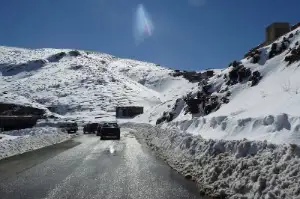
I turned around. Drove back to Fes, took the highway to Marrakech. Lost three hours and my pride. Met another tourist at a gas station who’d tried to push through—his rental car slid off the road into a ditch. No damage, but he waited two hours for a tow truck.
The highway via Casablanca stays open year-round. It’s lower elevation, coastal influence keeps it warmer, and it’s maintained as a priority route. This is your winter backup plan.
Weather checking isn’t optional if you’re driving November-March. Not just Fes and Marrakech weather—specifically check Ifrane and Azrou conditions. If snow is forecast, take the highway. If snow is already there, definitely take the highway.
For comprehensive winter driving strategies, see our driving in Morocco guide which covers seasonal challenges.
When the Mountain Route is Actually Closed
It doesn’t happen often, but it happens. Usually late December through early February, after heavy snowfall. The road doesn’t get officially “closed”—there’s no barrier. But you’ll see locals not driving it, which is your signal.
I asked a taxi driver in Ifrane during my February attempt. He laughed. “You want to go to Marrakech today? Take Casa road. This road, maybe tomorrow, maybe two days.”
Rental car companies won’t explicitly forbid the mountain route, but they also won’t cover you if you crash in snow conditions. Your insurance has weather-related exclusions. Getting stuck isn’t just inconvenient—it’s financially risky.
Summer (June-September)? The mountain route is perfect. Cool temperatures, clear skies, all roads open. Spring and fall are usually fine but check forecasts. Winter? Highway only, unless you’re prepared for real mountain driving with chains and experience.
The “Hybrid” Option: The Ouzoud Detour
Here’s the smart traveler move: take the Middle Atlas route but build in the Ouzoud Falls stop, turning one long drive into a two-day adventure.
Ouzoud Falls is about 150 km northeast of Marrakech, accessible via a detour from Beni Mellal. Instead of pushing through to Marrakech in one exhausting day, you stop at Ouzoud, sleep nearby, see the falls in the morning, then finish the drive refreshed.
The logistics shift completely. Day one becomes Fes to Ouzoud (about 6-7 hours of relaxed driving with stops). Day two is Ouzoud to Marrakech (2.5 hours after seeing the falls).
I tried this on my third Fes-Marrakech trip. Left Fes at 8 AM, no rush. Stopped in Ifrane for proper breakfast. Spent an hour in the cedar forest. Had lunch in Khénifra. Arrived at Ouzoud around 4 PM.
The next morning, saw the falls before the tour groups arrived (get there by 8 AM). Back on the road by 10 AM, in Marrakech by lunch. Completely different experience than the highway sprint or the mountain marathon.
Accommodation in Ouzoud ranges from basic guesthouses (200-300 MAD) to nicer riads (600-800 MAD). Book ahead in summer—the falls are popular with Moroccan families in July-August.
The falls themselves are worth it. 110 meters high, multiple cascades, rainbows in the afternoon light. You can swim in the pools below (cold, but doable in summer). Barbary macaques live in the area—yes, more monkeys.
This hybrid approach works best if you’re not on a tight schedule. It adds a night’s accommodation (300-800 MAD) but removes the stress of 10-hour driving days. Plus you actually see one of Morocco’s best natural sites instead of just driving past everything.
For more information on planning multi-day routes with strategic stops, visit our Morocco road trip logistics page.
Comparison Table: At a Glance
Here’s the decision matrix, based on real driving experience:
| Feature | The Highway (via Casa) | The Middle Atlas (N8) |
|---|---|---|
| Duration | 5h 45min – 6h | 8h 30min – 10h |
| Distance | ~530 km | ~480 km |
| Road Quality | 100% Toll Highway (A2/A1/A3) | National Road (Single lane, paved) |
| Scenery | Industrial / Flat farmland | Mountains / Cedar forests / Lakes |
| Toll Costs | 180 MAD (~$18) | 0 MAD (no tolls) |
| Fuel Cost | ~350 MAD (flat, efficient) | ~400 MAD (hills, slower speeds) |
| Average Speed | 110-120 km/h | 60-70 km/h |
| Photo Stops | Rest areas only | Cedar forest, Ifrane, viewpoints |
| Winter Viability | Always open | Can close (snow Dec-Feb) |
| Best For… | Families, tight schedules, winter | Photographers, slow travelers, summer |
| Stress Level | Low (predictable, maintained) | Medium (curves, trucks, altitude) |
| Food Options | Rest stop cafeterias (mediocre) | Local restaurants, roadside grills |
Looking at this table, the choice becomes clearer. If you’re optimizing for time and predictability, the highway wins. If you’re optimizing for experience and memories, the mountains win.
But there’s also the question of car type. The highway works with any vehicle. The mountain route is easier with a car that handles hills well—underpowered economy cars struggle on the climbs, though they’ll make it eventually.
For detailed vehicle selection advice, check our car rental Morocco guide.
Which Route Did I Choose Last Time?
My fourth and most recent Fes-Marrakech drive: Middle Atlas route with Ouzoud overnight. Left Fes at 9 AM (no rush), arrived Ouzoud at 5 PM. Saw the falls the next morning, reached Marrakech by 1 PM.
Why that route? Because I’d already done the highway twice. It’s efficient but forgettable. The mountain route is slower but that’s the point—you’re supposed to see things.
Would I recommend the highway to everyone? No. But I’d recommend it to:
– Anyone traveling November through March (winter safety)
– Families with young kids (shorter drive, cleaner bathrooms)
– People with tight Marrakech arrival schedules
– Anyone who gets carsick on winding roads
– Travelers who’ve already done the scenic route and just need to get there
The mountain route is better for:
– First-time Morocco visitors (it’s more “Moroccan”)
– Photographers (the light in the cedar forests is incredible)
– People with flexible schedules
– Anyone who enjoys driving as an activity
– Travelers planning the Ouzoud stop
Neither choice is wrong. They’re just different tools for different trips.
FAQ: Fes to Marrakech Driving Questions
Q: Can I drive Fes to Marrakech in one day?
A: Yes, easily on the highway (6 hours). The mountain route is also doable in one day (8-10 hours) but you’ll be tired. Most people who take the scenic route wish they’d split it into two days with an overnight in Beni Mellal or Ouzoud.
Q: Is the Middle Atlas route safe for solo drivers?
A: Yes, in good weather. The road is well-maintained and regularly traveled. Main risks are fatigue from long curves and occasional truck traffic. Not recommended solo in winter or if you’re inexperienced with mountain driving.
Q: Do I need a 4×4 for the mountain route?
A: No. Both routes are paved highways/national roads. A regular sedan or small SUV works fine. 4×4 only needed if you plan unpaved detours, which isn’t part of the standard Fes-Marrakech drive.
Q: What happens if it snows while I’m on the Middle Atlas route?
A: Turn around and take the highway via Casablanca. Don’t risk it. Snow on mountain passes is serious—cars slide off regularly. Rental insurance won’t cover weather-related accidents. The highway stays open year-round.
Q: Can I stop and see Ouzoud Falls on the same day?
A: Technically yes, but it makes for a 12+ hour day. Better to overnight near Ouzoud, see the falls in the morning when it’s quiet, then drive to Marrakech refreshed. The falls deserve at least 2-3 hours to explore properly.
Q: Are there speed cameras on the highway?
A: Yes, frequently. Fixed cameras and mobile police radar. Speed limit is 120 km/h and it’s enforced. Fines are 300-400 MAD for 10-20 km/h over, higher for more serious speeding. Pay at post offices within 15 days.
Q: Which route has better gas stations?
A: Highway has modern rest stops every 40-50 km with clean facilities. Mountain route has basic stations in towns (Ifrane, Azrou, Khénifra, Beni Mellal) but gaps of 60+ km between them. Fill up before long stretches.
Q: Can I get Moroccan SIM data for the drive?
A: Yes, recommended. Buy in Fes before leaving (Maroc Telecom has best coverage in mountains). Highway has coverage everywhere. Mountain route has dead zones between towns, but main N8/N13 roads are covered. Offline maps (Maps.me) are backup.
Final Thoughts: The Route That Fits Your Trip
After four drives between these cities, I’ve stopped thinking about which route is “better.” They’re tools. The highway is a screwdriver—efficient, reliable, gets the job done. The mountain route is a handcrafted knife—slower, more beautiful, requires more skill.
If I’m driving in January? Highway. No question. Snow in the Middle Atlas isn’t worth the risk, and I’ve already learned that lesson the hard way.
If I’m driving in May with no schedule pressure? Mountains. Every time. The scenery alone justifies the extra hours, and spring weather makes the passes perfect.
The hybrid option—Middle Atlas route with Ouzoud overnight—is what I recommend to friends. It splits the difference. You get the scenery without the exhaustion, you see the falls properly instead of rushing, and you arrive in Marrakech actually remembering the journey.
What I don’t recommend: rushing the mountain route to “save time” versus the highway. If you’re time-constrained, just take the highway. The Middle Atlas deserves slow travel. Speeding through it defeats the purpose and makes for stressful driving.
One last thing: this drive is a microcosm of Morocco travel in general. You can optimize for efficiency and miss the character, or you can lean into the chaos and discover things you didn’t plan for. Both approaches work. Just know which one you’re choosing.
For complete Morocco travel planning and more route options, visit our Morocco Travel Trip homepage.