

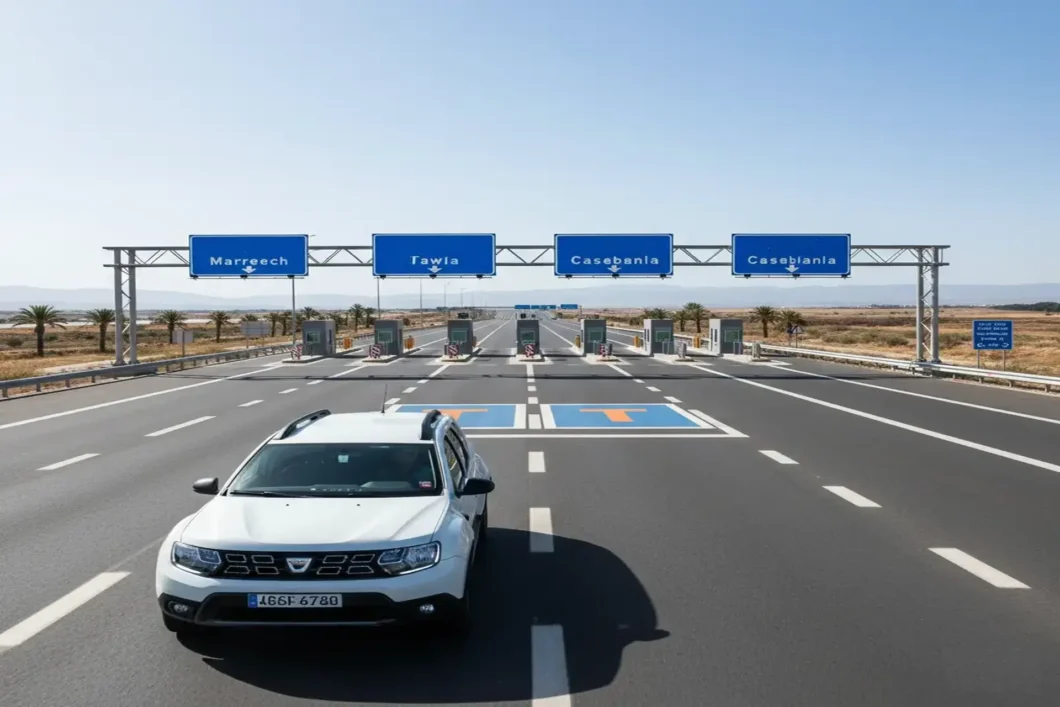
Here’s what most travelers don’t realize about driving on Morocco’s autoroutes: you can actually breeze through toll booths without stopping, just like locals do. The secret? A little electronic tag called Jawal. But before we get into that game-changing detail, let’s talk about why Morocco’s highway system is one of the best-kept secrets for road-tripping in North Africa.
If you’re planning a Morocco road trip, understanding the autoroute network can save you hours of driving time and a fair bit of stress. The Morocco toll roads are modern, well-maintained, and connect all the major cities you’ll want to visit. They’re also surprisingly affordable compared to European highways.
In this guide, we’ll walk you through everything you need to know about navigating Morocco’s autoroutes, from the ADM network layout to that Jawal tag trick, plus the real-world logistics like Morocco highway speed limits, rest areas, and estimated travel times between major destinations.
The Backbone of the Kingdom: The ADM Network
The Autoroutes du Maroc (ADM) network is the number one solution for covering long distances quickly in Morocco. Forget the winding mountain roads for a moment — those are spectacular for sightseeing, but when you need to get from Tangier to Marrakech in a day, the autoroute is your best friend.
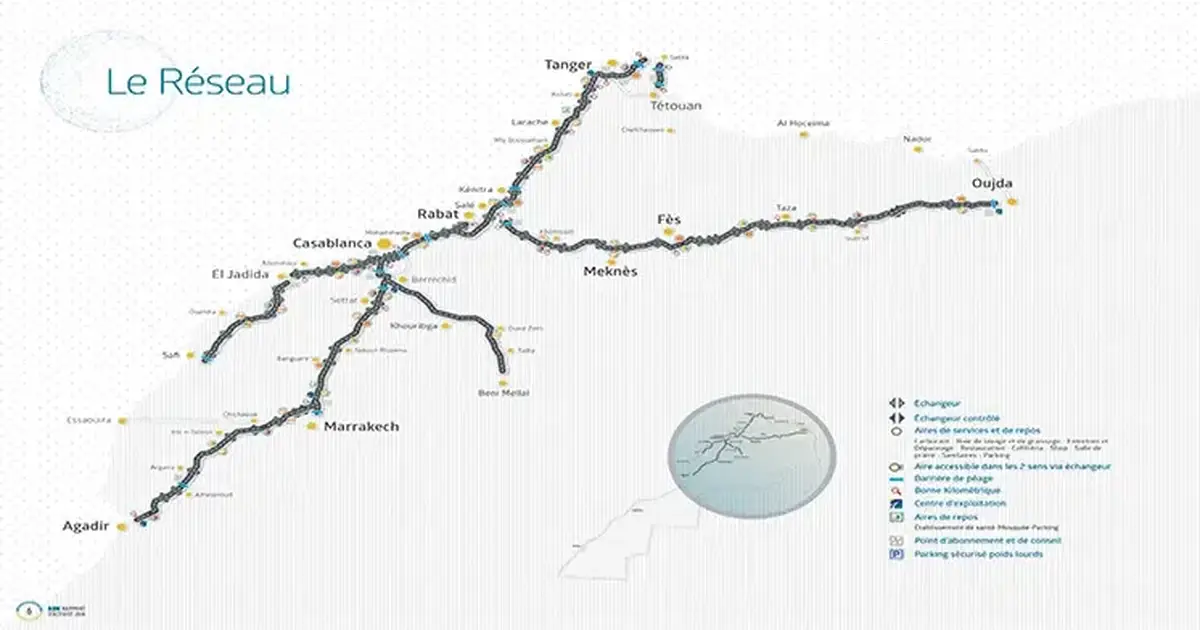
The ADM network connects Morocco’s major cities through two main axes. The primary north-south corridor runs from Tangier down through Rabat, Casablanca, and Marrakech, all the way to Agadir on the Atlantic coast. This is the busiest and most developed stretch, with smooth tarmac and excellent signage. The second major axis branches eastward from Rabat toward Fès, Meknès, and continues to Oujda near the Algerian border.
What makes these highways stand out? They’re genuinely world-class. The paid autoroutes in Morocco often surpass what you’d find on American interstates in terms of maintenance and road quality. You’ll encounter smooth surfaces, clear lane markings, and well-placed service areas. The contrast with the national roads (routes nationales) is stark — while those secondary roads offer stunning scenery through the Atlas Mountains or along the coast, they also come with tight curves, slower speeds, and the occasional donkey cart.
Here’s the practical takeaway: use the autoroutes for transfers between cities, and save the scenic national roads for when you have time to explore. If you’re driving in Morocco for the first time, this strategy will help you cover ground efficiently while still experiencing the country’s diverse landscapes.
Understanding the Toll System (Le Péage)

The toll system in Morocco is straightforward, but if you’ve never used it before, the first encounter with a péage booth can feel a bit intimidating. Here’s exactly how it works.
When you enter the autoroute, you’ll pull up to a booth and collect a small paper ticket. This ticket records your entry point. You hold onto this ticket for your entire journey on that stretch of highway. When you exit or reach a toll barrier, you hand over the ticket and pay based on the distance traveled.
Payment Methods at Toll Booths
Most toll booths accept cash in Moroccan Dirhams — and only Dirhams, so don’t expect to use euros or dollars. Credit and debit cards are accepted at many booths, particularly on the busier routes between Casablanca and Marrakech, but the card readers can be temperamental. Our experience? Always carry enough cash dirhams to cover toll costs, even if you plan to use a card. There’s nothing worse than holding up a line of frustrated drivers because the card machine decided to take a coffee break.
Typical toll costs are quite reasonable. For context, the run from Casablanca to Marrakech (about 240 kilometers) will set you back roughly 80 to 100 MAD in tolls. That’s less than 10 USD for a smooth, safe highway journey.
Highway Logistics: Speed and Safety
Morocco’s autoroutes come with clear rules, and they’re enforced more consistently than you might expect. Understanding the speed limits and safety protocols will keep you out of trouble and moving smoothly.
Morocco Highway Speed Limits
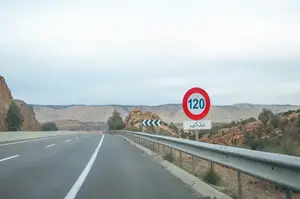
The standard speed limit on autoroutes is 120 km/h (roughly 75 mph). This applies to the main highway lanes under normal conditions. Some stretches may have reduced limits — typically 100 km/h — especially near major interchanges, construction zones, or urban approaches.
Here’s what catches people off guard: speed cameras. Morocco uses both fixed speed cameras and mobile radar units operated by the Gendarmerie Royale (Royal Gendarmerie). The fixed cameras are usually well-marked with warning signs a kilometer or so in advance, but mobile units can appear anywhere, often set up at entry and exit ramps where drivers tend to accelerate or slow down carelessly.
Getting pulled over for speeding isn’t fun in any country, but in Morocco, fines must be paid on the spot or at the nearest tribunal if you can’t pay immediately. Typical speeding fines start around 300-400 MAD, but they scale up significantly for serious violations. Keep your speed in check, respect the posted limits, and you’ll be fine.
Rest Areas (Aires de Repos): More Than Just a Stop
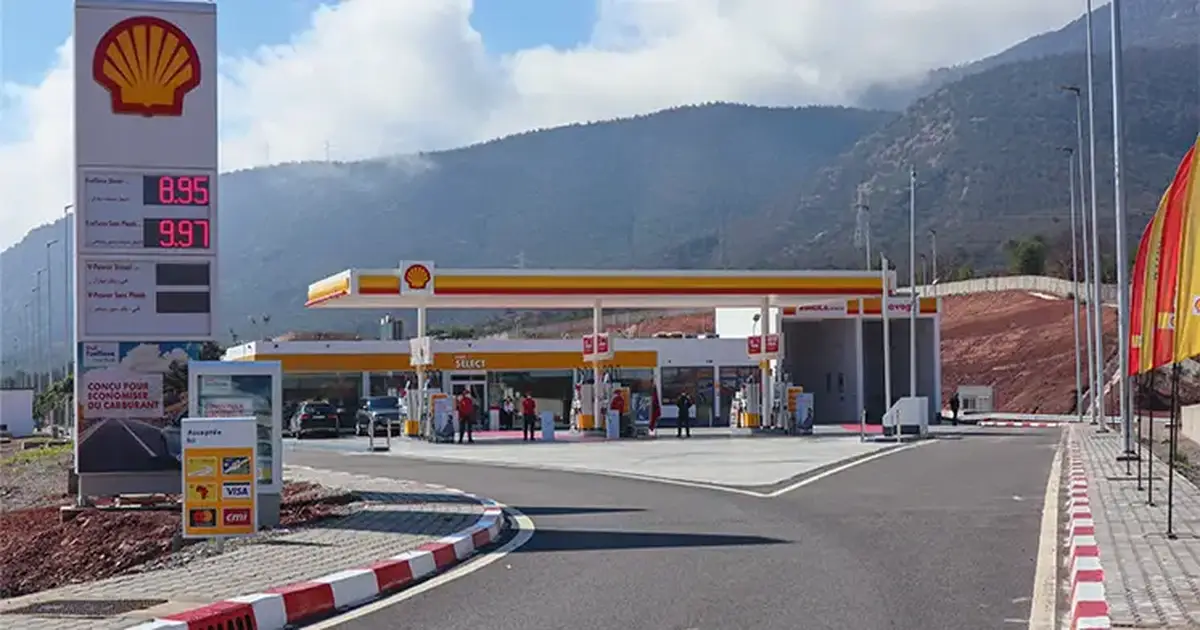
Morocco’s autoroute rest areas are surprisingly well-appointed. These aren’t just places to use the restroom and grab a coffee — they’re legitimate stops where you can refuel, eat a proper meal, and even let kids burn off energy in play areas.
Quality of Facilities
The major rest areas are operated by recognized brands: Afriquia, Shell, and TotalEnergies are the big three. Each station typically includes fuel pumps (diesel and unleaded), a convenience store stocked with snacks, drinks, and basic supplies, and clean restroom facilities.
The restrooms — this is worth noting — are generally clean and well-maintained, which isn’t always a given in every country. Expect to pay a small fee (2-5 MAD) to the attendant, which goes toward upkeep. It’s a small price for facilities that are often cleaner than what you’d find at highway stops in many European countries.

Estimated Travel Times: Quick Reference
Planning your route? Here’s a scannable breakdown of the most common autoroute journeys, with estimated times and toll costs. These times assume normal traffic conditions and adherence to speed limits.
| Route | Distance | Estimated Time | Toll Cost (Approx.) |
|---|---|---|---|
| Casablanca → Marrakech | 240 km | 2h 15min | 80 – 100 MAD |
| Tanger → Rabat | 250 km | 2h 30min | 90 – 110 MAD |
| Marrakech → Agadir | 250 km | 2h 45min | 100 – 120 MAD |
| Rabat → Fès | 200 km | 2h 00min | 70 – 90 MAD |
| Casablanca → Rabat | 90 km | 1h 00min | 30 – 40 MAD |
| Fès → Meknès | 60 km | 45 min | 20 – 30 MAD |
Final Thoughts: Making the Most of Morocco’s Autoroutes
Morocco’s autoroute network is one of the country’s underappreciated assets for travelers. It’s safe, efficient, and genuinely makes multi-city road trips feasible without spending entire days in transit. Whether you’re doing the classic Casablanca to Marrakech run or venturing further afield to Tangier or Agadir, the highways give you freedom and flexibility that trains and buses simply can’t match.
The Jawal tag, while not essential, transforms the experience from good to great if you’re covering serious distance. And knowing the basics — the 120 km/h speed limit, the 5050 emergency number, where the rest areas are — turns what could be a stressful experience into a smooth, enjoyable part of your Moroccan adventure.
So grab your rental car, load up that Jawal tag, and hit the road. Morocco’s autoroutes are waiting, and they’re better than you think.