

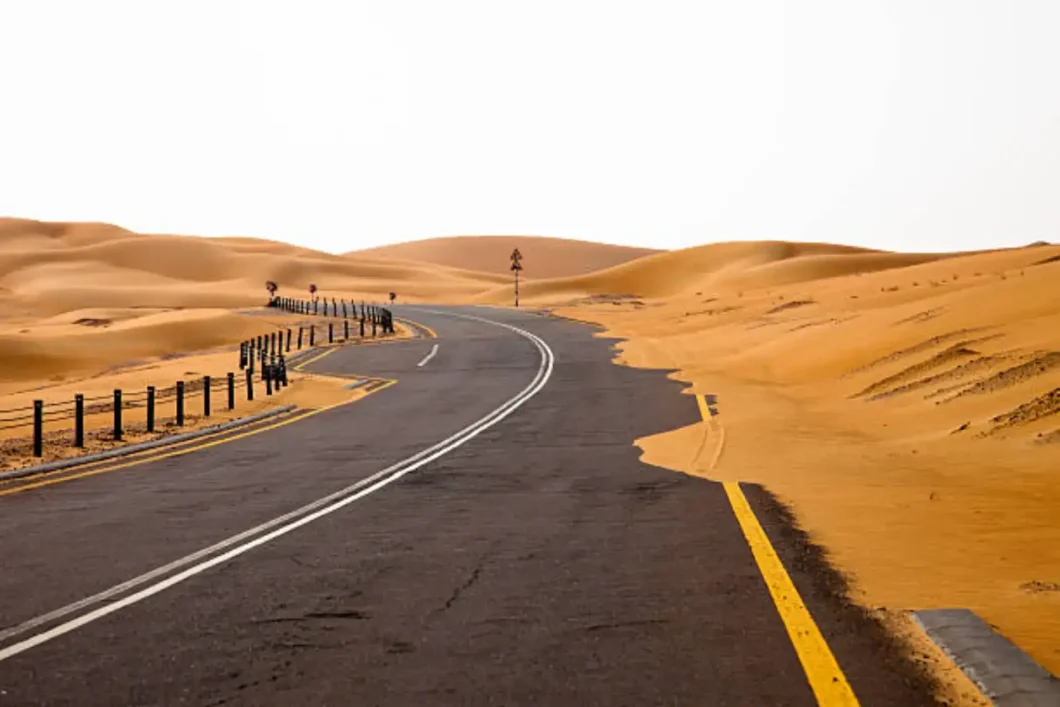
So you’ve decided to make the journey to Merzouga, Morocco’s gateway to the vast Sahara Desert. Smart choice. But here’s the thing most travelers don’t realize until they’re halfway there: the drive to those iconic orange dunes is half the adventure itself.
Whether you’re starting from the maze-like streets of Marrakech or the ancient medina of Fes, the road to Merzouga is a masterclass in Moroccan driving logistics. You’ll cross mountain passes that make your GPS nervous, navigate police checkpoints where a smile goes further than any international license, and experience road conditions that swing from pristine European-grade asphalt to… well, let’s just say “character-building.”
This isn’t your typical driving guide. We’re diving deep into the real logistics of driving to Merzouga—the stuff you won’t find in guidebooks. From the hairpin turns of the Tizi n’Tichka pass to the peculiar art of parking your car in the sand, consider this your complete manual for making it to the dunes in one piece (and with your sanity intact).
Marrakech vs. Fes: Choosing Your Desert Access Route
Right off the bat, you need to make a choice: Which city will serve as your launching point? This isn’t just about picking a starting line. Each route to Merzouga has its own personality, its own challenges, and frankly, its own way of testing your driving skills.
The Southern Route from Marrakech clocks in at roughly 560 kilometers. On paper, that’s about 9 hours of driving. In reality? Add another hour or two for construction delays, photo stops, and the inevitable “Is that a camel crossing the road?” moments. This route takes you over the High Atlas Mountains via the legendary Tizi n’Tichka pass, sitting pretty at 2,260 meters above sea level.
The Northern Route from Fes measures about 470 kilometers. Shorter distance, yes, but don’t let that fool you. The N13 highway cuts through the Middle Atlas before descending into the spectacular (and narrow) Ziz Valley. Different mountains, different challenges.
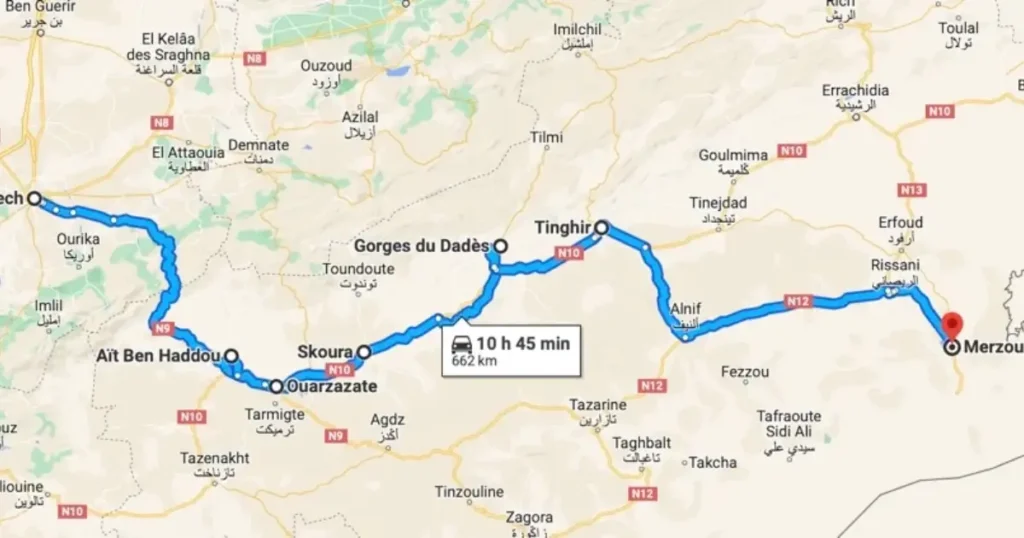
Here’s what really matters when choosing your route. If you’re coming from Marrakech, you’ll deal with the Tizi n’Tichka pass—a serpentine mountain road with hairpin turns that seem designed to test your nerve. The pass itself is an engineering marvel, but it’s also frequently under construction. Road crews love working here in summer, which means expect delays. Winter brings a different challenge: snow. Yes, snow in Morocco. The pass can close entirely when conditions get bad, usually between December and February.
The Fes route via the N13 offers a more direct shot, but “direct” is relative. You’ll navigate the Middle Atlas cedar forests before dropping into the Ziz Valley—a stunning gorge that’s simultaneously breathtaking and butt-clenching. The road here is narrow, carved into cliffsides, with just enough room for two cars to squeeze past each other. When a tour bus comes barreling around the corner, you’ll understand why the locals drive with such… confidence.
The Real Talk on Drive Times
GPS says 9 hours? Double-check that math. In Morocco, driving time estimates are more like gentle suggestions. The actual journey from either Marrakech or Fes to Merzouga typically takes 10-11 hours of solid driving. And that’s if you’re not stopping every 30 minutes to photograph kasbahs or grab mint tea.
Most seasoned travelers split this drive over two days. It’s not just about fatigue—though Moroccan roads will fatigue you—it’s about sanity preservation. The mountain passes demand concentration. The long stretches through the desert require constant vigilance for livestock, potholes, and the occasional donkey cart doing 5 kilometers per hour in the passing lane.
Smart logistics? Plan an overnight stop in the Dades Valley or Todra Gorge. You’ll break up the drive, catch some of Morocco’s most spectacular scenery, and arrive at Merzouga refreshed instead of road-weary.
The 4×4 Question: Settling This Once and For All
Here’s the question everyone asks: Do I need a 4×4 to drive to Merzouga? And here’s the answer that disappoints rental companies hoping to upsell you: No, you do not need a 4×4.
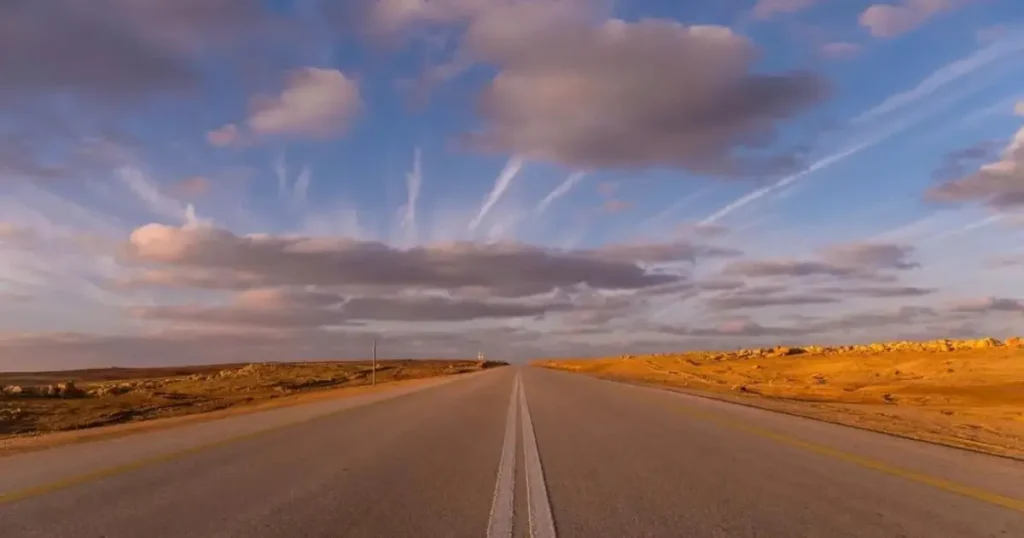
Let’s be crystal clear about what we’re talking about. The road to Merzouga is fully paved. It’s asphalt all the way from Marrakech or Fes to the village of Merzouga. A regular sedan handles it just fine. We’ve seen Renault Clios, Dacia Logans, even the occasional Fiat 500 make the journey without issue.
The final stretch into Merzouga along the N12 and N13 is well-paved but remote. Gas stations become sparse. Villages are smaller. This is where you want to ensure your tank is full and your spare tire is actually inflated (check it before leaving—rental companies sometimes neglect this).
Speed Traps, Radars, and Traffic Fines
Morocco takes speeding seriously. Fixed radar cameras dot the highways, especially approaching villages and towns. You’ll usually see a sign warning of radar ahead, but not always. The speed limits are clearly posted: 120 km/h on autoroutes, 100 km/h on national roads, 60 km/h through villages, and 40 km/h in some residential areas.
Here’s the tricky part: the transition zones. You’ll be cruising at 100 km/h on open highway, then suddenly you’re in a village with a 60 km/h limit. The radar is usually positioned right at that transition point. Slow down as soon as you see the village sign, not after you’re already in the village.
The etiquette: slow down, honk gently to alert the shepherd, and wait for them to move the herd. Don’t try to navigate through a flock of sheep like you’re playing real-life Frogger. The shepherds will move them, but on their timeline, not yours. Factor this into your driving time estimates.
Arrival Logistics: The Last Mile to the Dunes
You’ve made it to Merzouga village. Congratulations. But you’re not actually at the dunes yet. Here’s where the logistics get interesting.
Most desert camps are located 5-20 kilometers into the Erg Chebbi dunes. The paved road ends at the village. From there, you have options.
Parking in Merzouga
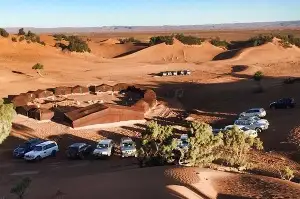
The parking areas are basic—dirt lots, essentially—but they’re safe. Your car will be fine. Lock it, take your valuables, and don’t leave anything visible in the vehicle. The bigger concern isn’t theft, it’s sand. Morocco’s desert sand is fine and invasive. It will find every crevice in your car. Accept this.
The Transfer: 4×4 or Camel
Getting from the parking lot to your camp happens one of two ways. Most camps include 4×4 transfer in their package. A driver picks you up in Merzouga village and takes you directly to the camp. This is the practical choice if you’re arriving late or have luggage.
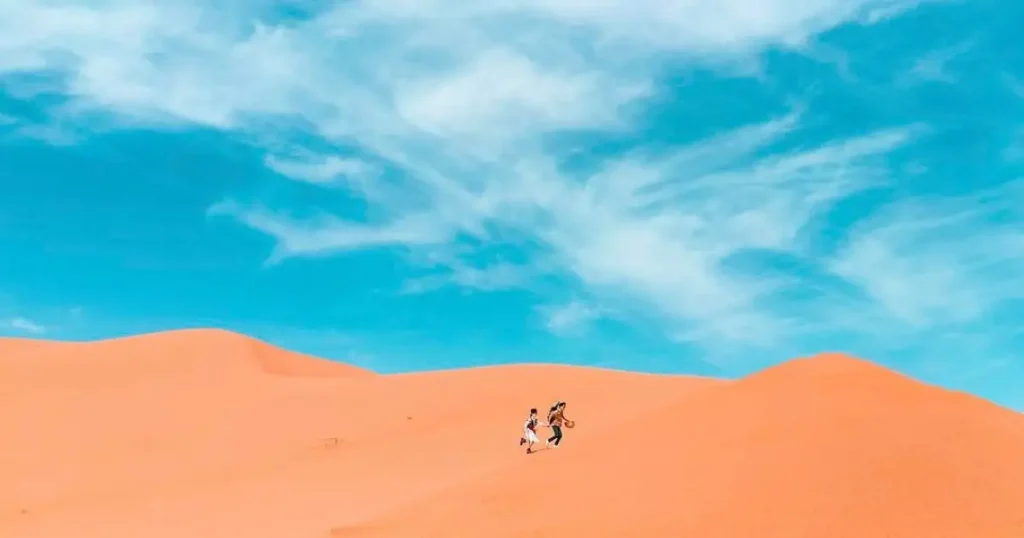
Your hotel or camp will typically arrange parking for your rental car. These are secure lots, often gated and watched, located on the edge of the village. Cost runs 20-30 MAD per night, sometimes included in your accommodation rate.