

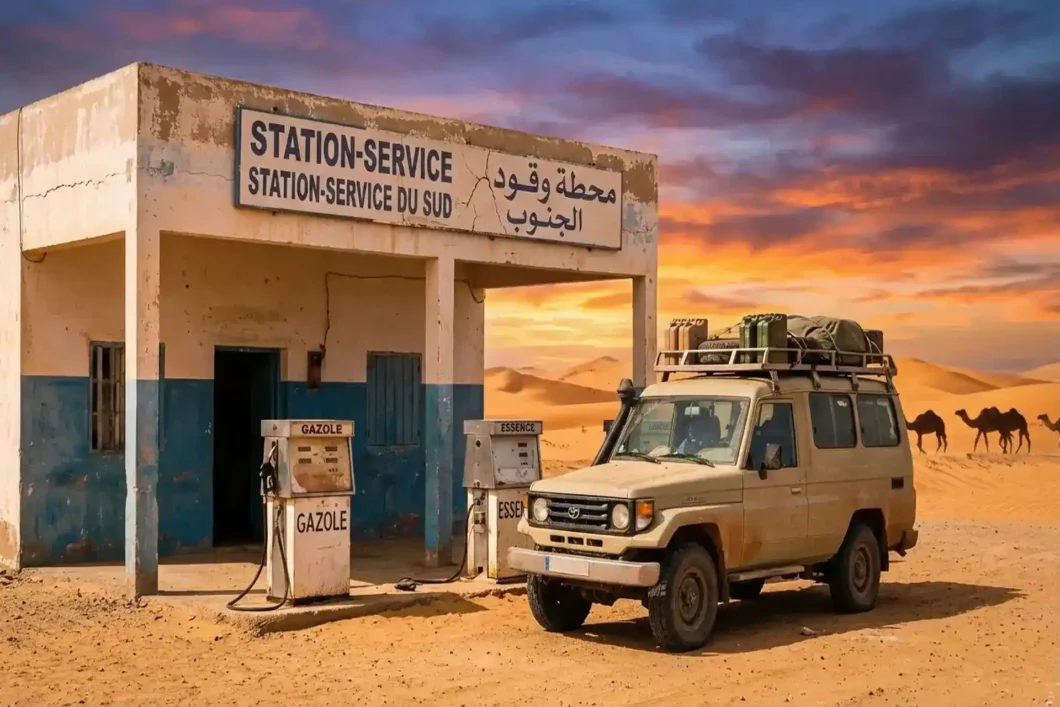
Running out of fuel in the Sahara desert or on a mountain pass isn’t a travel story you want to tell. After seven road trips across Morocco covering everything from coastal highways to High Atlas passes to deep Sahara routes, I’ve learned one critical lesson: fuel availability in Morocco requires actual strategy, not assumptions.
Google Maps will show you a gas station 50 kilometers ahead. What it won’t tell you is that station ran out of diesel three days ago and won’t get a delivery until next week. Or that it closes at 17:00 for Iftar during Ramadan. Or that the credit card terminal has been “broken” for six months.
Understanding gas stations in Morocco means understanding that this isn’t Europe or North America. You can’t just assume the next station will be there when you need it. The rules change dramatically depending on whether you’re on the Casablanca-Marrakech highway or climbing toward Merzouga or navigating mountain passes in the High Atlas.
This guide covers everything: the golden rule that will save you from disaster, why mountain kilometers consume twice the fuel, which cities are your last fuel stops before remote areas, which brands to trust, why cash matters more than credit cards, and how Ramadan affects fuel availability.
Let me start with the most important rule — the one that separates prepared travelers from those calling for roadside assistance at 2 AM.
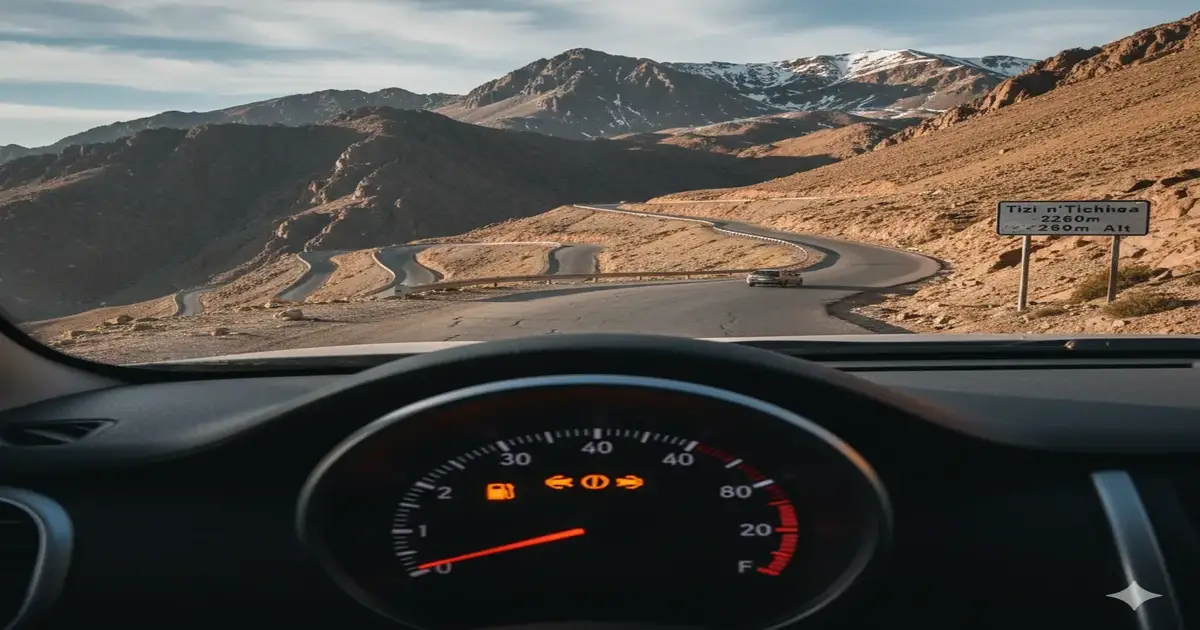
Never let your gauge drop below 50% in Morocco’s remote areas — your safety margin
The “Golden Rule” of the Desert & Mountains
Here it is, the rule that overrides every other consideration when driving in Morocco: Never let your tank drop below 50%.
Not 40%. Not “I’ll fill up at the next town.” Not “Google Maps shows a station 30km ahead.” Fifty percent is your minimum operating fuel level once you leave major highways and cities.
Why this specific number? Because in the Atlas Mountains or southern Morocco, a gas station in Morocco appearing on Google Maps means almost nothing about its actual availability. Here’s what I’ve encountered:
The station exists but ran out of diesel last week. Delivery trucks can’t reach remote stations daily — some get fuel once every 7-10 days. You arrive to find pumps dry and locals waiting for the next delivery.
The station is temporarily closed. The owner went to visit family in another city. Or it’s Friday afternoon prayer time. Or Ramadan Iftar. Or the electricity is out and the pumps don’t work without power.
The station only has gasoline, but you need diesel (or vice versa). Small rural stations might stock only one fuel type based on local demand. If you’re in a diesel rental and the station only serves gasoline for local scooters, you’re stuck.
The “station” is actually just a guy selling fuel from jerry cans at inflated prices. This happens in very remote areas. You’ll pay 2-3x normal rates and the fuel quality is questionable.
Real Examples Where the 50% Rule Saved Me
Tizi n’Tichka Pass (Marrakech to Ouarzazate): I filled up in Marrakech at 80% capacity even though my destination was only 190km away. Good thing — halfway through the pass, the station I’d planned to use in Ait Benhaddou had a line of 12 vehicles waiting because they’d received a fuel delivery after three days without. I bypassed it entirely and still had 40% remaining when I reached Ouarzazate.
Merzouga approach: Filled up in Erfoud even though I only had 150km to Merzouga. The two small stations in Rissani were both out of diesel. I would have been stranded if I’d waited, gambling that Rissani would have fuel.
Anti-Atlas backroads near Tafraout: Topped off in Tiznit with a 60% tank because I was taking mountain roads. Encountered three “closed” signs at small village stations. The 50% buffer meant I never worried, just drove through to the next reliable stop.
The Psychology of the 50% Rule
This rule fights against your instincts. Your brain says “I have half a tank, I can easily drive 200km, why stop now?” But stopping when you don’t urgently need fuel is exactly the point. You’re choosing your fuel stop based on station quality and reliability, not desperation.
At 50%, you have options. You can skip a sketchy-looking station or one with a long line. You can choose a Shell or Total station over a no-name local pump. You maintain control.
At 20%, you have no options. You take whatever station appears next, pay whatever they charge, accept whatever fuel quality they offer. You’ve lost all negotiating power.
Adapting the Rule by Region
Highways (Casablanca-Marrakech, Rabat-Tangier): The 50% rule can relax slightly to 40% on major toll roads. Stations are reliable, numerous, and rarely run out of fuel. But I still prefer 50% because traffic jams can extend your fuel consumption unexpectedly.
Atlas Mountains: 50% is absolute minimum. I actually prefer 60% before entering mountain zones. Your consumption doubles in the mountains (more on this next), and station reliability drops dramatically.
Sahara and deep south: 50% minimum, and plan your entire route around confirmed fuel stops. Don’t gamble on small desert stations. Stick to regional hubs like Erfoud, Zagora, or M’Hamid for fuel.
The “Mountain Tax”: Why 100km ≠ 100km
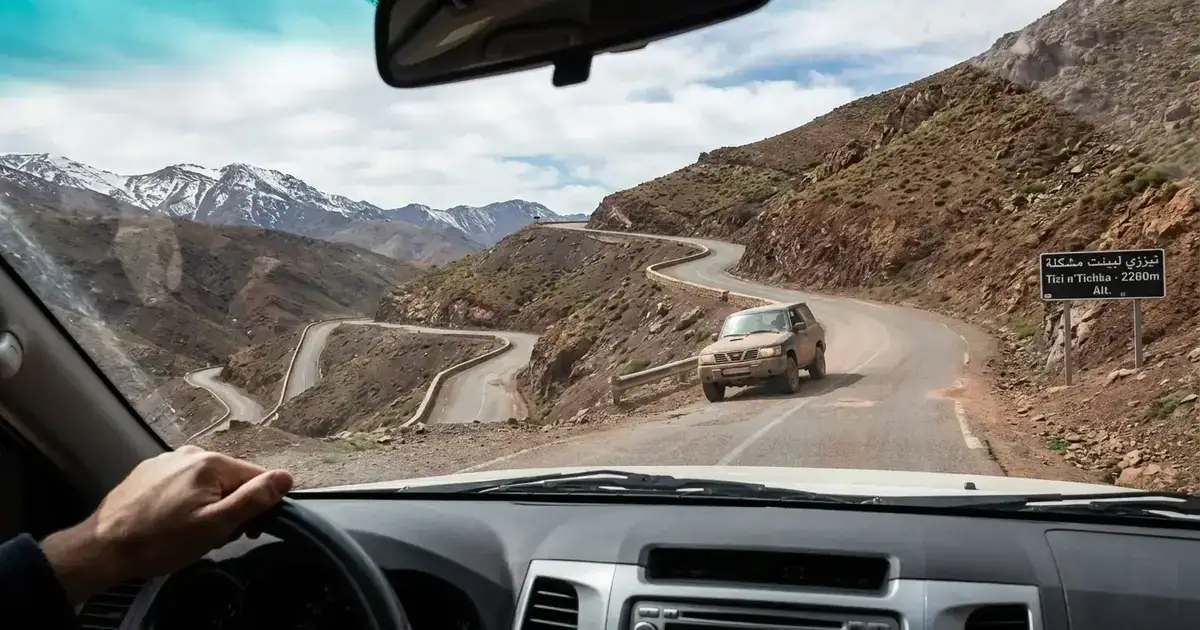
Your rental car’s fuel consumption rating means nothing in Morocco’s mountains. The manufacturer says 6 liters per 100km on the highway. In the High Atlas, you’ll burn 10-12 liters per 100km. This isn’t an exaggeration — it’s physics and geography combining to wreck your fuel estimates.
Mountain passes like Tizi n’Tichka double your fuel consumption — plan accordingly
Why Mountains Destroy Fuel Economy
Key “Gateway” Cities (Your Last Safe Fuel Stops)
Morocco has critical “gateway cities” — the last reliable fuel stops before you enter regions where stations become scarce, unreliable, or nonexistent. Missing these fills can leave you stranded. Here’s your definitive list.
Erfoud: your last reliable fuel stop before Merzouga and the Sahara
Before Merzouga / Sahara Desert
Last reliable stop: Erfoud
Erfoud is 80km before Merzouga and has multiple stations including Shell and Total. This is where you fill up, not Rissani (30km from Merzouga) and definitely not Merzouga itself.
Why not Rissani? It’s smaller, stations are less reliable, and they frequently run out of diesel. I’ve personally encountered “no diesel” signs three times in Rissani. Yes, there are stations there, but they’re not dependable.
Why not Merzouga? The small stations in Merzouga serve local 4×4 tour operators and are often dry or charge inflated prices. They’re emergency options, not planning options. The last gas station before Merzouga that you should actually count on is Erfoud.
If you’re going deeper (Erg Chigaga, M’Hamid): Fill up in Zagora. This is 90km before M’Hamid and your last completely reliable stop before the deep desert.
Brands and Quality: Who to Trust
Not all gas stations in Morocco are created equal. Brand matters — not for status, but for reliability, fuel quality, and service standards.
Major Brands (Your Safe Choices)
Shell: The largest network in Morocco. You’ll find Shell stations on highways, in cities, and in many regional towns. Quality is consistent, stations are well-maintained, and fuel supply is reliable. This is my default choice whenever available.
Credit cards work at Shell stations more reliably than smaller brands. Highway Shell stations have clean toilets, small shops, and often cafes. They’re the closest thing Morocco has to Western-style service stations.
TotalEnergies: Second-largest network. Comparable quality to Shell. Stations are clean, fuel quality is good, and they’re common in cities and on major routes. I use Total and Shell interchangeably — whichever appears first when I need fuel.
Total stations often have better coffee than Shell (if the cafe is open). This matters on long drives when you need caffeine along with fuel.
Petrom: Smaller network but growing. Quality is acceptable. You’ll see Petrom in medium-sized towns and some highway locations. Not as widespread as Shell or Total, but trustworthy when you find one.
Winxo: Local Moroccan brand, increasingly common. Quality has improved significantly in recent years. Fine for gasoline, generally okay for diesel. Less reliable than Shell/Total for credit card acceptance.
Payment Logistics: Cash is King
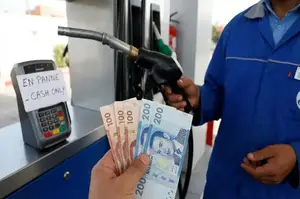
Credit cards work great in Morocco… at hotels, restaurants, and some tourist shops. At gas stations in Morocco? It’s complicated. And by complicated, I mean you need cash.
Always carry 300-500 MAD cash specifically for fuel — card terminals “break” frequently
Highway Stations: Cards Usually Work
On major toll roads (Casablanca-Marrakech, Rabat-Tangier, Marrakech-Agadir), credit card acceptance is reliable at Shell and Total stations. These are modern facilities with functioning payment terminals and staff who know how to use them.
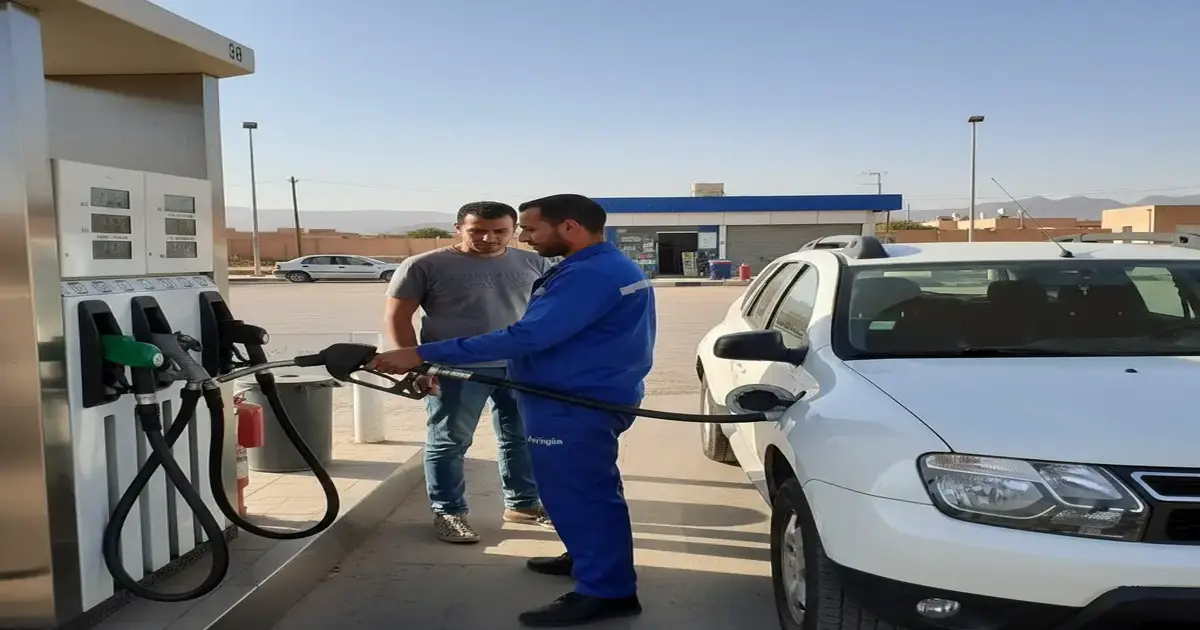
The “Ramadan Factor” (Special Considerations)
I’ve covered Ramadan driving extensively in another guide, but fuel stations Ramadan Morocco logistics deserve specific mention because they can catch you completely off guard if you’re not prepared.
Iftar Closures (The Sunset Problem)
During Ramadan (February 18 – March 19, 2026), many provincial gas stations close 17:00-20:00 for Iftar — the evening meal breaking the daily fast. This isn’t all stations, but enough to cause problems.
Highway toll road stations stay open. Shell and Total on major routes maintain service because they can rotate staff for Iftar breaks. You’re safe on the Marrakech-Casablanca or Rabat-Tangier highways.
Small town and rural stations close completely during Iftar. The owner/operator is fasting and goes home to break fast with family. The station locks up from roughly 18:00-20:00 depending on sunset time.
Strategic Timing
Practical Fuel Stop Checklist
Every time you stop for fuel in Morocco, follow this routine to avoid problems and ensure you’re getting what you paid for.
Before Filling
- Check your fuel type: Diesel or gasoline? Rental cars in Morocco are often diesel. Verify before the attendant starts pumping. Putting gasoline in a diesel car (or vice versa) means expensive repairs.
- Note your current fuel level: Look at your gauge and mileage. This helps you verify you received the fuel you paid for.
- Confirm the pump counter is at zero: Watch the attendant reset the pump before filling begins. Scams exist where the counter starts at 50 MAD from the previous customer.
During Filling
- Stay with your vehicle: Don’t wander off to use the toilet or buy snacks while fuel is being pumped. Watch the process.
- Monitor the pump counter: You should see the numbers increasing in real-time. If the counter seems to jump or move suspiciously fast, question it.
- Don’t let attendants “top off” excessively: Some try to squeeze extra fuel by repeatedly clicking the nozzle after the auto-shutoff. A click or two is fine, but 10+ clicks is padding the bill.
After Filling
- Verify the amount: Check the pump counter matches what the attendant tells you. Memorize or photograph the counter if you’re worried.
- Get a receipt if paying by card: Always request and keep fuel receipts. They’re evidence for rental car fuel disputes.
- Check your fuel gauge: It should show full (or close to full) if you filled completely. If you paid for a full tank but your gauge shows 75%, something is wrong.
Additional Services
Many attendants offer to check your oil, water, or tire pressure. This is usually genuine helpfulness, not a scam. However:
Decline unless you actually need these services. Oil and water checks in a rental car aren’t necessary unless warning lights are on.
If they find “low oil” and suggest adding oil, verify with your dipstick before agreeing. Unnecessary oil changes are a minor scam.
Tire pressure checks are genuinely useful in Morocco’s heat. If offered, accept — it’s free and beneficial.
Tipping Expectations
Fuel attendants expect small tips: 5-10 MAD is standard. If they wash your windshield (common at nicer stations), 10 MAD. If they just pump fuel, 5 MAD is fine.
Don’t feel obligated to tip for service you didn’t request or didn’t want. If someone aggressively washes your windshield without asking, a minimal tip (or no tip) is acceptable.
Emergency Fuel Situations
Despite all planning, you might find yourself genuinely low on fuel with no station in sight. Here’s how to handle it.
If Your Fuel Light Comes On
Don’t panic. Most vehicles have 50-80km of range remaining when the fuel light activates. Check your owner’s manual or rental car documents for specifics.
Reduce speed to 80km/h or below. Lower speeds significantly extend remaining range. Turn off air conditioning if possible.
Avoid sudden acceleration or braking. Smooth, steady driving maximizes the distance you can cover on your remaining fuel.
Head for the nearest confirmed station, not the nearest theoretical station. A Shell 60km away is better than an unknown village station 20km away that might be closed.
If You’re Truly Stranded
Pull over safely — completely off the road on flat ground if possible. Turn on hazard lights. Don’t let your car die in the middle of the highway.
Call your rental company’s roadside assistance. This is why you kept their phone number. They can send fuel or tow you to the nearest station. Yes, you might wait 2-3 hours, but it solves the problem.
Ask passing drivers for help. Moroccans are generally helpful to stranded tourists. Someone will likely offer to drive you to the nearest station or sell you fuel from their own jerry can.
Look for nearby villages or farms. Small communities often have residents with fuel supplies for agricultural equipment. Offer to pay premium prices — 50-100 MAD for 5-10 liters to reach the next station.
What NOT to Do
Don’t try to drain fuel from your rental car’s tank to transfer to another vehicle. You’ll damage the fuel system and void your rental agreement.
Don’t accept “free” help from random people who then demand payment. Agree on a price before accepting assistance.
Don’t drive on fumes hoping to reach a station “just a bit further.” Running a fuel injection system completely dry can cause expensive damage. Stop and get help before the tank is truly empty.
Current Fuel Prices (2026 Reference)
Morocco’s fuel prices are government-regulated and change quarterly. As of early 2026:
Diesel prices Morocco 2026: Approximately 11-12 MAD per liter (fluctuates based on global oil prices and government subsidies)
Gasoline (essence): Approximately 13-14 MAD per liter
Full tank costs:
- Small car (45L tank): 500-630 MAD diesel, 585-630 MAD gasoline
- SUV (60L tank): 660-720 MAD diesel, 780-840 MAD gasoline
These prices are consistent nationwide — you won’t find significantly cheaper fuel in one region versus another. The government controls pricing to prevent regional disparities.
Remote stations might charge slightly more (1-2 MAD per liter) due to transportation costs to reach them, but the difference is minimal.
Budgeting Fuel for Your Trip
For trip budgeting purposes, calculate 0.10€ per kilometer for economy cars, 0.12€ per kilometer for SUVs. This covers fuel costs plus a buffer for mountain consumption increases.
Example: Marrakech to Merzouga round trip (1,120km) in a Dacia Duster = approximately 134€ in fuel costs. Add 20% for safety margin = 160€ total fuel budget.
Final Fuel Strategy for Morocco Road Trips
After everything I’ve covered, here’s the simplified strategy that works for any Morocco road trip logistics situation:
The 50% rule is non-negotiable in remote areas, mountains, and deserts. This single rule prevents 90% of fuel problems.
Know your gateway cities and fill up there before entering remote regions. Erfoud before Merzouga, Marrakech before the Atlas, Agdz before Draa Valley, Tiznit before Anti-Atlas.
Choose branded stations (Shell, Total) whenever possible, especially for diesel rental cars. The quality difference matters.
Carry 300-500 MAD cash specifically for fuel. Cards are backup, not primary payment in remote areas.
Plan for double consumption in mountains. The Tizi n’Tichka pass uses twice the fuel per kilometer as highway driving. Calculate accordingly.
During Ramadan, fuel before 16:00. Small stations close for Iftar, and you don’t want to be hunting for fuel at sunset.
Morocco’s fuel availability Sahara desert and mountain regions requires active planning. You can’t be passive about fuel stops the way you might in Europe or North America. But with the strategies in this guide, you’ll never face that sinking feeling of watching your gauge drop with no station in sight.
Drive smart, fuel strategically, and keep that tank above 50%. Your Morocco road trip will be memorable for the right reasons — the landscapes, the culture, the adventure — not for running out of fuel on a mountain pass.