

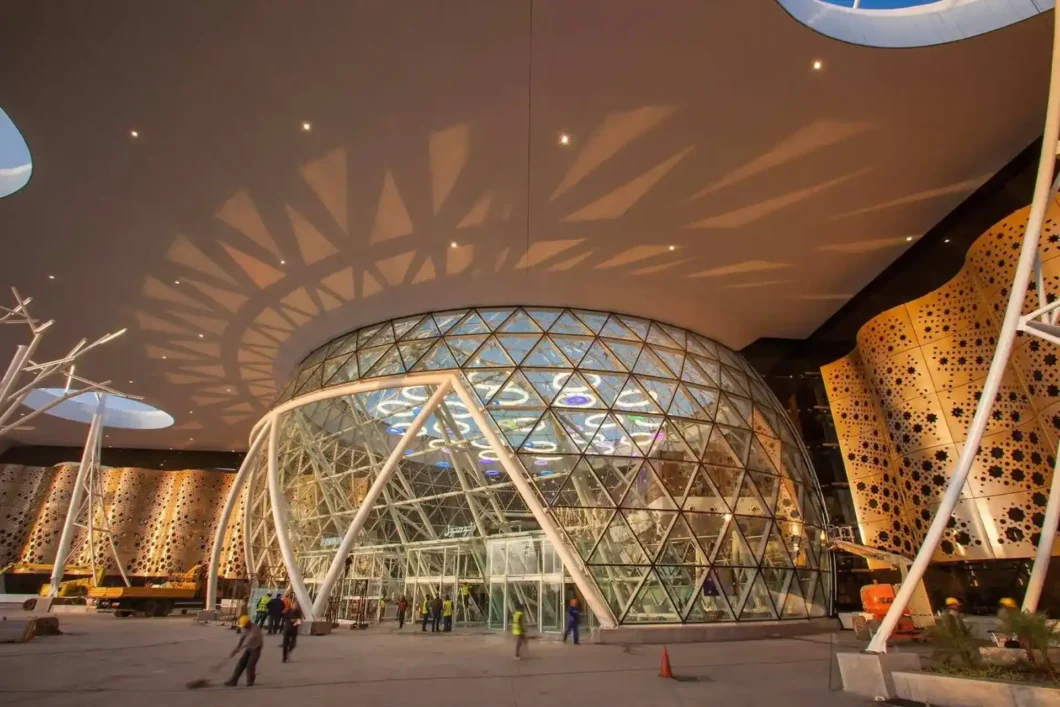
Car Rental Cost Calculator
Calculate your estimated total rental cost including insurance and extras.
Picture this: you’ve just landed at Marrakech Menara Airport after a long flight, ready to explore Morocco’s imperial cities, mountain villages, and desert landscapes. But then you’re hit with confusing rental counters, unexpected fees, and pushy upsells. Sound familiar?
Renting a car at Marrakech airport doesn’t have to be stressful. With the right information, you can avoid common pitfalls, save money, and drive away confidently in under 30 minutes.
This guide walks you through everything: which companies to trust, what insurance you actually need, how deposits work, and the exact pickup process from landing to hitting the road. Whether you’re planning a weekend in the Atlas Mountains or a two-week Moroccan road trip, you’ll find clear answers here.
Most travelers waste time comparing prices on multiple sites, only to discover hidden charges at the counter. Others arrive unprepared, missing required documents or caught off guard by deposit amounts. Some choose the cheapest option without understanding what’s actually covered, leading to expensive surprises when something goes wrong.
Here’s what we’ll cover: the complete rental process from booking to driving away, comparison of local versus international companies, real pricing for 2025 including seasonal variations, insurance options explained in plain English, deposit requirements and how to get your money back, driving expectations including tolls and parking, common mistakes and how to avoid them, and insider tips for a smooth experience.
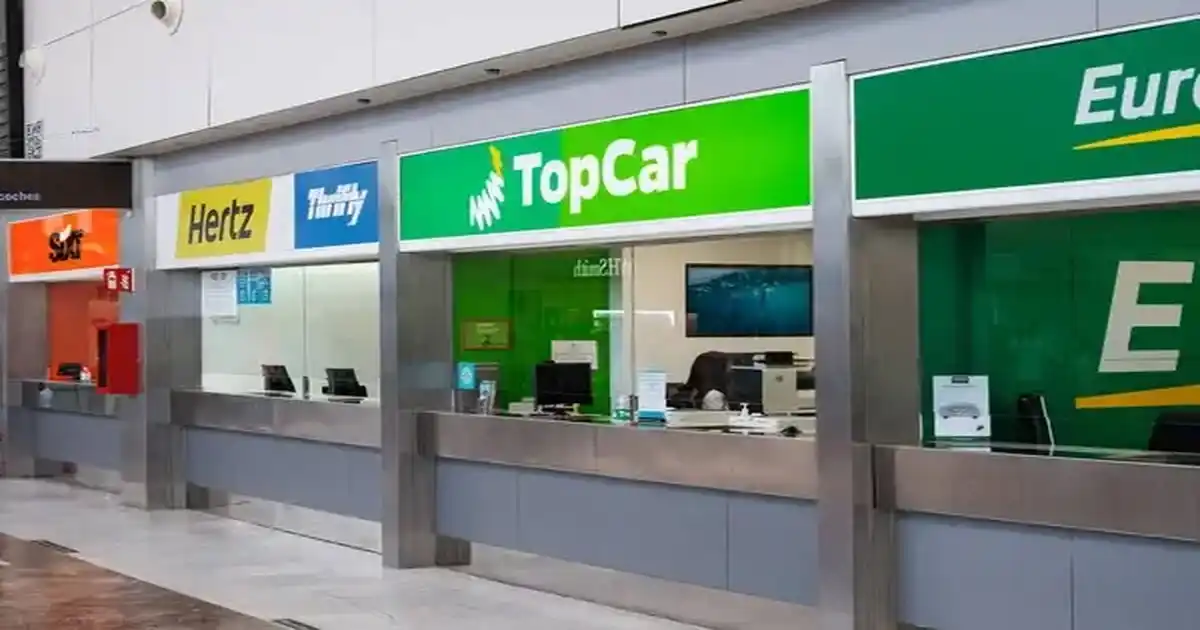
The rental desks sit in the arrivals hall, just past baggage claim. You’ll spot the familiar international brands alongside local Moroccan companies, each promising the best deal. But which one actually delivers?
Why Rent at the Airport
Landing in Marrakech and picking up a rental car right at the airport saves you time and hassle. No waiting for shuttle buses to off-site lots. No navigating unfamiliar streets in a taxi just to reach your rental office. You clear customs, grab your bags, walk to the rental desk, and you’re on your way.
The freedom matters too. Public transport in Morocco works well between major cities, but exploring the countryside requires your own wheels. Want to visit that mountain village your friend recommended? Need to reach a remote guesthouse in the desert? Planning sunrise at the sand dunes? A rental car makes it possible.
Airport locations also mean more vehicle choices. Downtown offices might have three or four cars available. Airport branches stock dozens, from compact city cars to rugged 4x4s built for desert tracks. You’ll find automatic transmissions here when they’re scarce elsewhere.
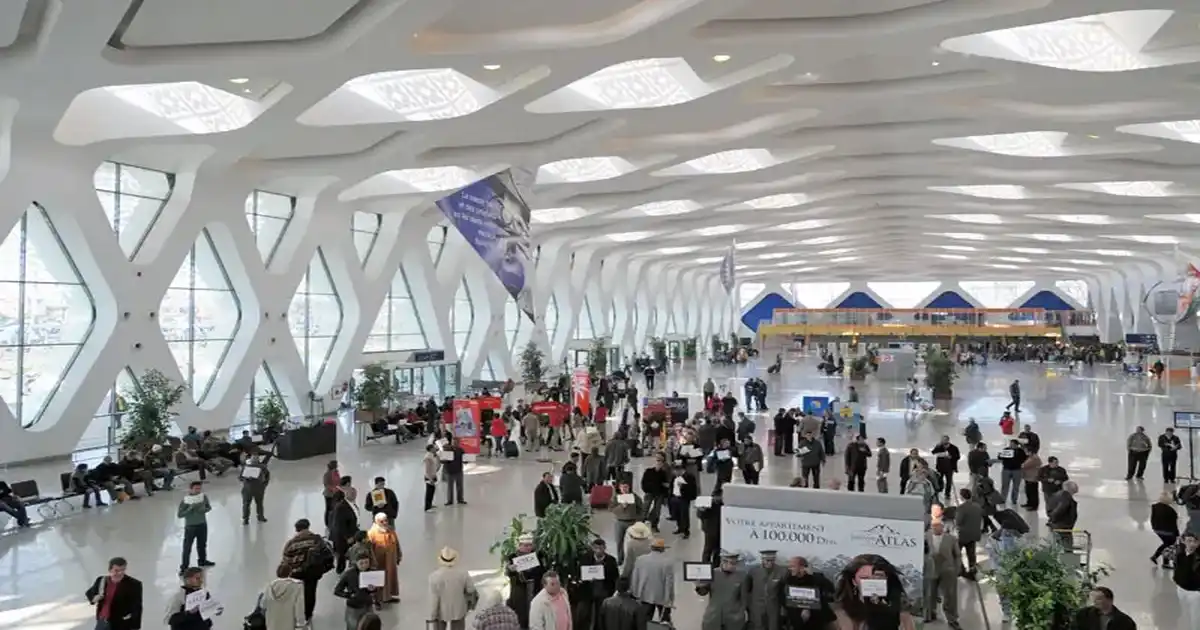
The arrivals hall buzzes with energy. Drivers hold name signs. Tour guides gather their groups. Rental agents watch for customers. It’s organized chaos, but the car rental process follows a clear pattern once you know what to expect.
How the Rental Process Actually Works
Understanding the flow helps you move through it smoothly. The process has five clear stages, and knowing what happens at each one prevents confusion and delays.
Before You Arrive
Book online at least two weeks ahead for better rates and vehicle availability. Prices jump during peak season, which runs from March through May and September through November. Summer brings fierce heat but lower prices. Winter means cool weather and decent deals, except around Christmas and New Year.
Read the terms carefully. Check what’s included in your base rate. Note the deposit amount. Understand the fuel policy. Most companies require you to return the car with a full tank. Some offer prepaid fuel, but you’ll typically pay above pump prices.
Download your confirmation. Save it on your phone and print a copy. Rental agents move faster when you can show your booking reference immediately.
At the Counter
Present your documents: passport, driving license, credit card in the driver’s name, and booking confirmation. Your license must be valid, and you need to meet the minimum age requirement, usually 21 or 23 depending on the company and vehicle type.
The agent reviews your reservation and presents the rental agreement. This is when they’ll mention additional insurance options and other extras. Stay focused. We’ll cover what you actually need in the insurance section.
They’ll explain the deposit hold on your credit card. This isn’t a charge, it’s a temporary authorization that gets released when you return the car undamaged. The amount varies, typically ranging from 500 to 2000 dirhams depending on the vehicle category.
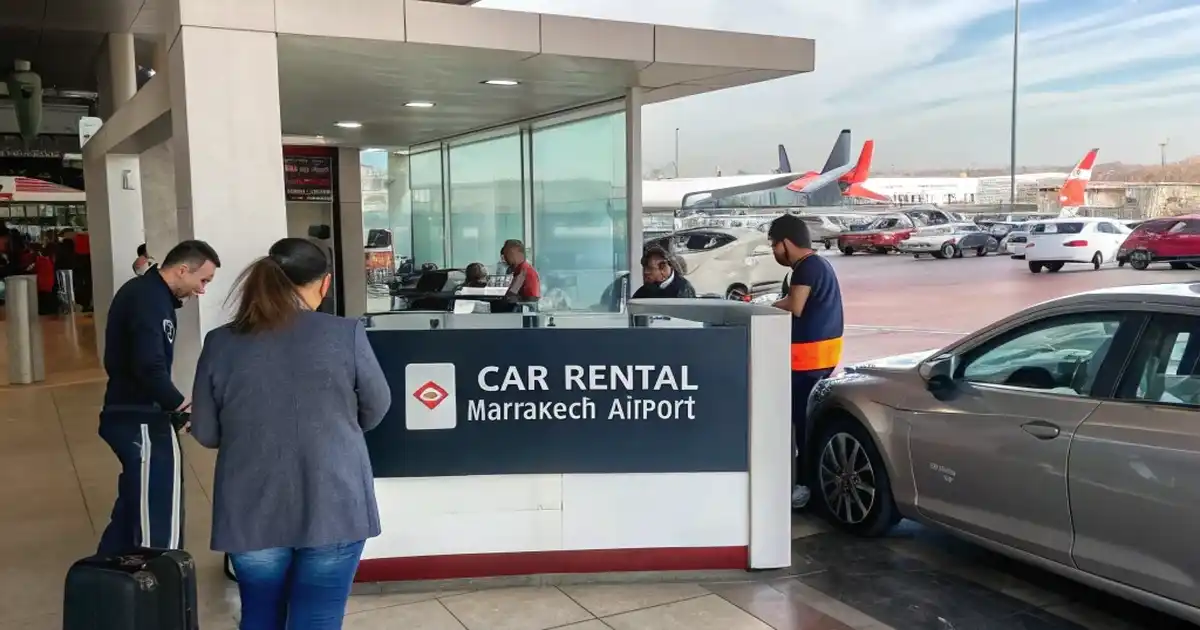
Take your time at the counter. Ask questions if something isn’t clear. Good rental agents appreciate customers who understand what they’re signing.
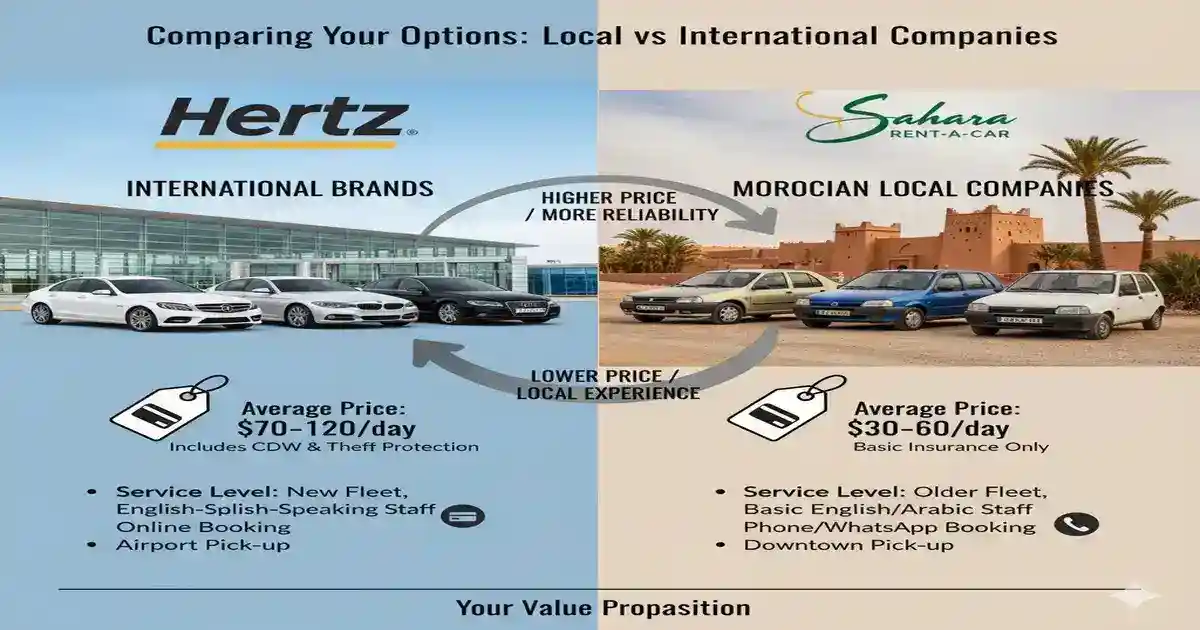
Comparing Your Options: Local vs International Companies
You’ll find both international brands and Moroccan companies at the airport. Each type has advantages and drawbacks. Understanding the differences helps you choose what works for your situation.

International companies like Hertz, Europcar, and Avis offer consistency. You know what to expect from their service. They maintain newer vehicles. Their staff speaks English. Their booking systems work smoothly. You can resolve problems through their global customer service networks.
But that reliability costs more. International brands charge premium prices for the same vehicles local companies offer. Their insurance rates run higher. Their deposit requirements can be steeper.
Local Moroccan companies provide better value. Expect to pay 30 to 50 percent less for comparable vehicles. They’re often more flexible about pickup and drop-off times. Many include better insurance coverage in their base rates.
The trade-off comes in consistency. Vehicle age and condition vary more widely. Some have excellent English-speaking staff, others struggle with communication. Booking systems might be less sophisticated. Customer service quality depends heavily on the specific company and individual staff members.
Understanding Insurance and Coverage
Insurance confuses most travelers. Rental agents use technical terms and push expensive options. Let’s break down what coverage you actually need and what you can skip.
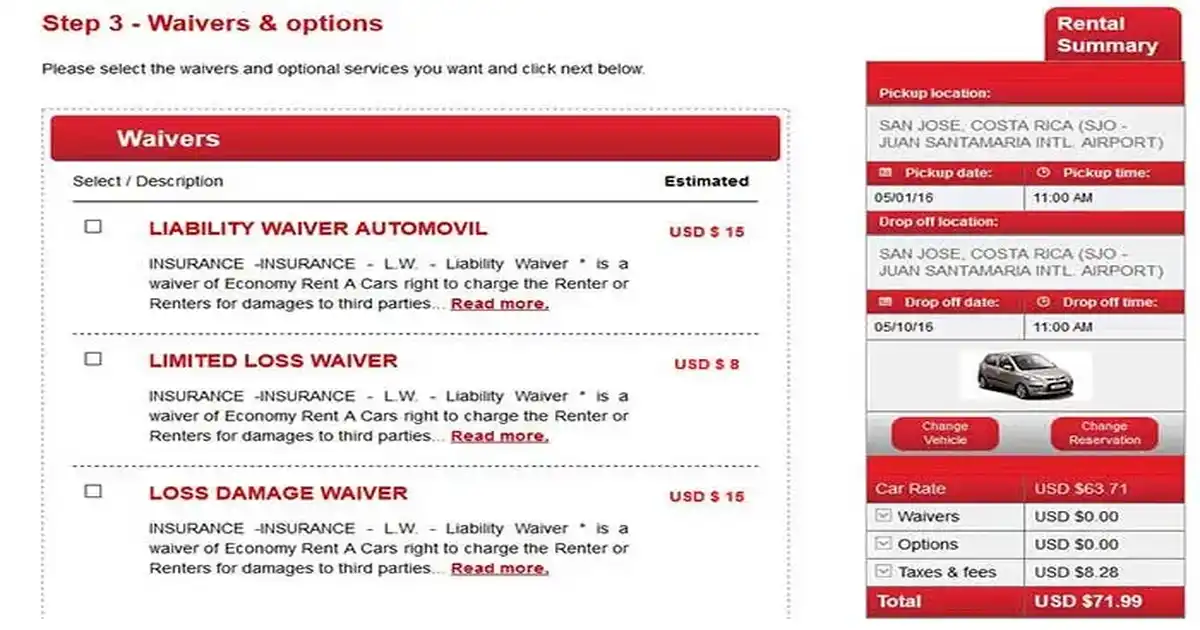
Every rental in Morocco must include basic third-party liability insurance. This covers damage you cause to other people, vehicles, or property. It’s required by law and included in all rental rates. You can’t opt out.
Deposits: How Much and How to Get It Back
The deposit question worries many travelers. How much will they hold? When do you get it back? What if there’s a dispute?
Rental companies place a hold on your credit card for a security deposit. This isn’t a charge. They’re not taking your money. They’re reserving a portion of your available credit as security.
Driving in Morocco: What to Expect
Moroccan roads range from smooth highways to rutted dirt tracks. Driving styles differ from Europe or North America. Understanding local patterns helps you navigate confidently.
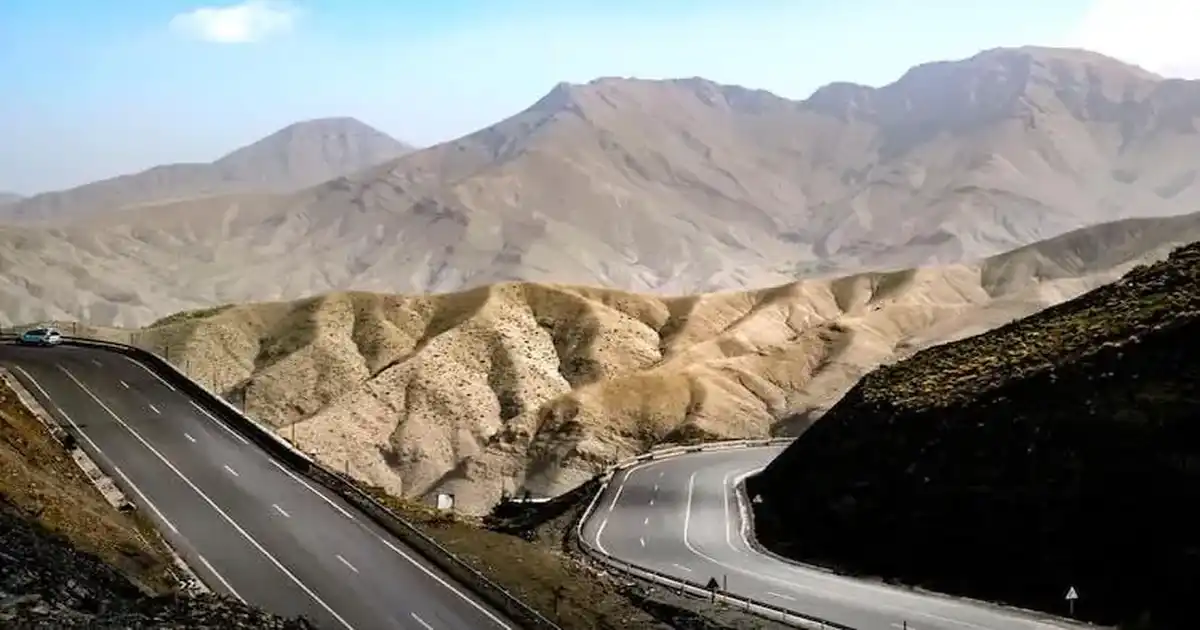
Major highways connecting cities maintain good condition. The toll road between Marrakech and Casablanca runs smooth and fast. Speed limits post clearly. Rest areas appear regularly.
Common Mistakes and How to Avoid Them
Learning from others’ errors saves you money and frustration. These problems appear repeatedly in traveler reports and my own experiences.
Booking Too Late
Waiting until the last minute limits your vehicle choices and increases prices. Popular periods sell out of specific car types. Booking two weeks ahead provides good availability at fair prices.
Ignoring the Fine Print
Rental contracts contain crucial details about insurance, deposits, fuel policy, mileage limits, and geographic restrictions. Read everything before signing. Ask questions about anything unclear.
Skipping the Inspection
Rushing through the vehicle inspection leads to disputes later. Companies might claim you caused damage that existed previously. Thorough inspection with photos protects you.
Choosing the Cheapest Without Research
The lowest advertised price often excludes essential coverage and includes the oldest vehicles. Compare total costs including insurance. Read recent reviews. Balance price against reliability.
Underestimating Insurance Needs
Declining important coverage to save money backfires if something happens. Understand what protection you have through credit cards or travel insurance before reducing rental company coverage.
Poor Fuel Management
Returning the car without a full tank triggers expensive refueling charges plus service fees. Fill up at a station near the airport just before drop-off. Keep the receipt as proof.
Missing Documents
Arriving without proper licenses, credit cards, or identification prevents rental completion. Verify requirements weeks before your trip. Check your documents are valid for your entire rental period.
Automatic Transmission Assumptions
Most Moroccan rental cars use manual transmission. Automatics exist but cost significantly more and require advance booking. Specify automatic when reserving if you can’t drive stick shift.
Final Tips for Smooth Car Rental
Small details make the difference between a smooth experience and a frustrating one.
Book directly with rental companies when possible. Third-party sites sometimes offer lower prices but add layers of complexity if problems arise. Direct bookings simplify communication and problem resolution.
Join loyalty programs even for one rental. They often provide faster service, better vehicle selection, and occasional upgrades. Sign up takes minutes and costs nothing.
Download offline maps before driving. Cell service falters in rural areas. Google Maps and Maps.me both offer offline functionality. Having navigation that works everywhere reduces stress significantly.
Learn basic French or Arabic car-related terms. “Essence” means gasoline. “Gasoil” means diesel. “Plein” means full tank. These simple words help at fuel stations and with attendants.
Program important numbers into your phone: the rental company’s 24-hour emergency line, your accommodation contacts, and local emergency services. Hope you don’t need them, but feel better knowing they’re accessible.
Allow extra time at the airport for the rental process. Figure 30 to 60 minutes from clearing customs to driving away. Rushing creates mistakes and stress.
Consider timing your rental to avoid airport peak hours. Early morning and evening flights bring crowds that slow everything down. Midday pickups often move faster.
Trust your instincts about vehicle condition. If the car seems poorly maintained or the company representative dismisses your concerns, consider walking away. Plenty of other options exist at the airport.
What Now? Your Next Steps
You’ve got the complete picture now. Time to turn knowledge into action.
First, decide your travel dates and route. Map out where you want to go and how long you’ll need the vehicle. This determines whether you need a compact car, SUV, or 4×4. Check our Morocco travel guides for route inspiration and practical tips.
Second, compare companies and prices. Look at both international brands and established local operators. Read recent reviews. Calculate total costs including insurance and deposit holds. Understanding car rental in Morocco broadly helps you make informed choices.
Third, verify your documents and credit card coverage. Make sure everything remains valid throughout your rental period. Understand what your credit card does and doesn’t cover.
Fourth, book early. Lock in good rates and ensure vehicle availability. Download and save your confirmation.
Finally, prepare for pickup. Print your documents. Download offline maps. Review this guide’s inspection and deposit sections one more time.
The freedom of exploring Morocco with your own car transforms the experience. You’ll discover hidden valleys, remote kasbahs, and mountain villages that tour buses never reach. You’ll stop when you want, take detours that intrigue you, and create your own adventure.
Yes, the rental process involves paperwork and decisions. But it’s straightforward when you understand what to expect. Thousands of travelers rent cars at Marrakech airport every month without problems. You can too.
Safe travels, and enjoy the incredible journey ahead.