


<
The drive from Marrakech to Fes is more than just getting from point A to point B. This journey takes you through some of Morocco’s most breathtaking landscapes, from the dramatic High Atlas Mountains to the endless golden dunes of the Sahara. Whether you’re short on time or ready for the adventure of a lifetime, this guide covers everything you need to know about the Marrakech to Fes road trip.
Picture yourself winding through mountain passes at over 2,000 meters elevation, stopping at ancient kasbahs that have stood for centuries, and falling asleep under a blanket of stars in the desert. That’s what awaits you on this iconic Moroccan route. And the best part? You have options. Lots of them.
Some travelers blast through on the direct highway in under six hours. Others take a week or more, meandering through valleys and gorges that most tourists never see. There’s no wrong way to do it, really. But there are definitely smarter ways to plan your trip, and that’s exactly what we’re going to break down here.
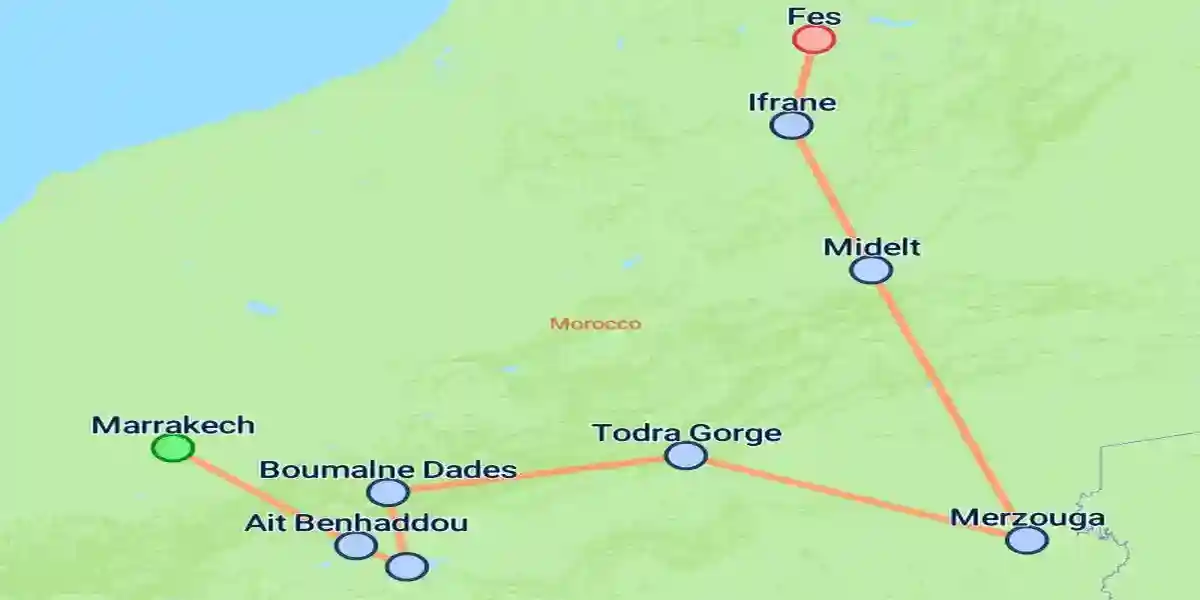
The scenic route from Marrakech to Fes via the Sahara Desert
Marrakech Fes Driving Route: Two Main Options
When planning your Marrakech Fes driving route, you essentially face a choice between speed and scenery. Both have their merits, and your decision will shape the entire character of your Morocco experience.
The Direct Highway Route
The fastest way between Morocco’s two most famous cities is the A7 and A2 toll motorway system. This route covers approximately 530 kilometers and takes around 5 to 6 hours of pure driving time. The roads are modern, well-maintained, and feel distinctly European in quality.
This option makes sense if you’re pressed for time or simply want to maximize your days exploring the medinas at either end. The toll fees run about 200-250 MAD (roughly €20-25) for the full journey. You’ll pass through relatively unremarkable terrain, though the rolling agricultural lands have their own quiet beauty.
Is it worth noting that this route bypasses everything that makes Morocco’s interior so special? Absolutely. But sometimes practical considerations win out, and there’s no shame in that.
The Scenic Desert Route via Merzouga
Now we’re talking. The Marrakech to Fes desert route is what most travelers dream about when they imagine a Moroccan road trip. This route stretches over 900 kilometers and requires a minimum of 4-5 days to do it any justice. Seven to ten days is ideal.
You’ll cross the Tizi n’Tichka pass at 2,260 meters, descend into the dramatic Draa Valley, explore ancient kasbahs, wind through spectacular gorges, and spend at least one night camping in the Sahara dunes near Merzouga. This is the Morocco that fills Instagram feeds and travel documentaries.
The roads along this route vary considerably. The main N10 highway is paved and generally in good condition, though you’ll encounter plenty of winding mountain sections that demand attention. A standard rental car handles the route fine, though an SUV provides more comfort and confidence on rougher stretches.
Best Stops Marrakech to Fes: Essential Highlights
Choosing the right stops can make or break your journey. Here’s where you should absolutely consider pulling over, listed roughly in the order you’ll encounter them heading east then north.
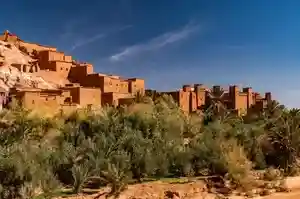
Ait Ben Haddou (UNESCO World Heritage Site)
This fortified village, or ksar, sits about 30https://moroccotraveltrip.com/wp-content/uploads/2025/11/ait-ben-haddou-sunset.webp kilometers from Ouarzazate and represents one of Morocco’s most photogenic locations. The earthen clay architecture rises dramatically against the surrounding landscape, and the site has served as a backdrop for countless films including Gladiator, Game of Thrones, and Lawrence of Arabia.
Why stop: The sunset views here are genuinely spectacular, with the golden light transforming the ancient walls into something almost otherworldly. Climb to the top of the ksar for panoramic views across the valley.
Recommended time: 2-3 hours minimum, though staying overnight in a nearby kasbah hotel allows you to experience both sunset and sunrise without the day-trip crowds.
Ouarzazate and Atlas Film Studios
Known as the “Hollywood of Morocco,” Ouarzazate serves as a practical base for exploring the region and offers its own attractions. The Taourirt Kasbah in the town center and the nearby Atlas Studios provide interesting diversions.
Why stop: Film enthusiasts will enjoy touring the studios where sets from Kingdom of Heaven, Babel, and The Mummy still stand. The kasbah offers a more intimate experience than the crowds at Ait Ben Haddou.
Recommended time: Half a day, or overnight if using as a base for the region.
Dades Valley and the Road of a Thousand Kasbahs
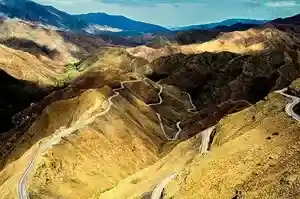
East of Ouarzazate, the N10 highway threads through what’s often called the “Road of a Thousand Kasbahs.” The Dades Valley in particular offers some of Morocco’s most dramatic scenery, with towering rock formations and traditional villages clinging to cliffsides.
Why stop: The famous hairpin turns of the Dades Gorge road make for incredible photographs and an exciting driving experience. Consider a 4×4 excursion deeper into the valley to reach viewpoints inaccessible by standard vehicles.
Recommended time: One full day minimum, ideally with an overnight stay in one of the valley’s charming guesthouses.
Todra Gorge
These towering canyon walls rise 300 meters on either side of a narrow passage, creating one of Morocco’s most impressive natural wonders. The gorge narrows to just 10 meters wide at its most dramatic point, with the afternoon sun illuminating the red-orange rock faces.
Why stop: Rock climbers come from around the world for the challenging routes here, but even non-climbers will appreciate the sheer scale and beauty. The afternoon light in the narrowest section creates magical photography conditions.
Recommended time: 2-3 hours for a leisurely walk through the gorge, or overnight for rock climbing or sunrise photography.
Merzouga and the Erg Chebbi Dunes
No Marrakech to Fes via Merzouga trip is complete without experiencing the Sahara. The Erg Chebbi dunes near Merzouga reach heights of 150 meters and offer the classic desert experience most travelers envision when they think of Morocco.
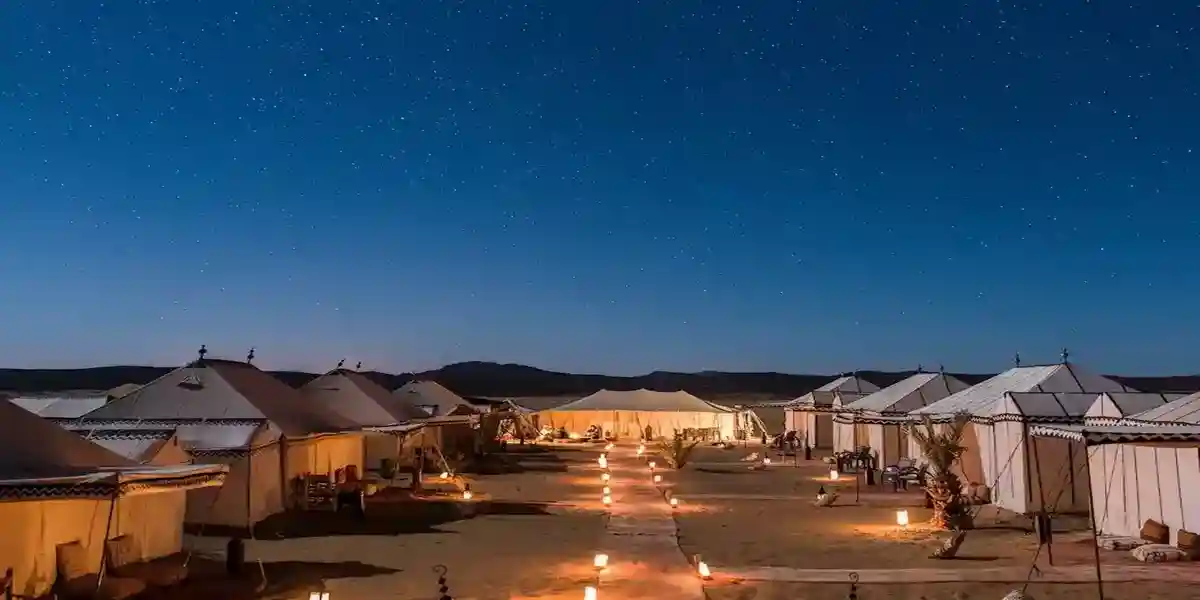
Luxury desert camp in the Erg Chebbi dunes near Merzouga
Why stop: A night under the stars in a desert camp, whether basic bivouac or luxury glamping, ranks among Morocco’s most memorable experiences. Camel treks into the dunes at sunset and sunrise reveal the desert’s ever-changing moods.
Recommended time: Minimum one night, though two nights allows for deeper exploration including visits to Gnawa villages, fossil sites, and the seasonal salt lake.
Marrakech to Fes Road Trip: Route Variants and Maps
The classic Marrakech to Fes road trip follows the southern route through the desert, but several variations exist depending on your interests and available time.
The Classic Southern Loop
Marrakech → Tizi n’Tichka → Ait Ben Haddou → Ouarzazate → Dades Valley → Todra Gorge → Merzouga → Errachidia → Midelt → Fes
This route covers approximately 900 km and requires 5-7 days minimum. The return leg from Merzouga to Fes via Errachidia and Midelt passes through the Middle Atlas Mountains, offering completely different scenery from the outbound journey.
The Full Circuit
For travelers with more time, continuing from Fes to Chefchaouen and returning to Marrakech via Rabat and Casablanca creates a comprehensive Morocco circuit. This loop covers around 1,500 km and requires 10-14 days to appreciate properly.
Quick Desert Option
Short on time but still want the desert experience? The direct route from Marrakech to Merzouga and back, skipping the continuation to Fes, can be accomplished in 3-4 days. You’ll miss the imperial city of Fes, but you’ll capture the essence of the Atlas crossing and Sahara experience.
Is It Worth Driving from Marrakech to Fes?
This question comes up constantly, and the answer depends entirely on what kind of traveler you are. Let’s break down the considerations honestly.
Yes, it’s absolutely worth it if:
- You value flexibility and the freedom to stop whenever something catches your eye
- You have at least 4-5 days for the journey (more is better)
- You’re comfortable with driving in Morocco and its sometimes challenging road conditions
- You want to experience the Morocco that exists between the cities, not just the famous medinas
- Photography or landscape appreciation ranks high on your priorities
Consider alternatives if:
- You have less than 3 days available
- The thought of mountain driving makes you nervous
- Budget is extremely tight (organized tours can sometimes be more economical)
- You’d rather focus your energy on exploring Marrakech and Fes thoroughly
For many travelers, the journey between cities becomes the highlight of their entire Morocco trip. Those kasbahs, gorges, and desert camps create memories that outlast any medina wandering. But it requires time and a certain adventurous spirit to fully appreciate.
Seasonal Considerations for Your Road Trip
Timing matters enormously for this route. The mountain passes and desert extremes create distinct seasonal challenges that can significantly impact your experience.
Winter (December – February)
The Tizi n’Tichka pass can receive significant snowfall during winter months, occasionally closing entirely. Even when open, icy conditions make the crossing treacherous without proper equipment or experience. Many rental companies prohibit their vehicles from crossing the pass during adverse weather.
On the positive side, winter brings mild temperatures to the desert regions, making exploration comfortable during midday hours. The crowds thin considerably, and accommodation prices drop.
Spring (March – May)
Arguably the ideal season for the Marrakech to Fes road trip. Temperatures remain comfortable throughout, the mountain passes are reliably open, and the landscape often shows surprising greenery following winter rains. Desert temperatures are warm but not yet brutal.
Summer (June – August)
Desert temperatures exceeding 45°C make outdoor activities challenging and potentially dangerous. The mountain sections provide relief, but the valleys and lowlands become furnaces. Most travelers wisely avoid this season for extended road trips in southern Morocco.
Autumn (September – November)
Another excellent window, with cooling temperatures and beautiful light. The date harvest in the oasis valleys adds cultural interest, and the tourist crowds of peak season have begun to disperse.
Accommodation Guide: Kasbahs, Riads, and Desert Camps
Where you sleep shapes your road trip experience as much as where you drive. The route between Marrakech and Fes offers accommodation options ranging from simple guesthouses to restored palace hotels.
Kasbah Hotels
These converted fortified buildings offer atmosphere in spades. Many date back centuries and have been lovingly restored with modern comforts while preserving traditional architecture. Expect thick walls keeping rooms cool, interior courtyards with fountains, and rooftop terraces perfect for sunset drinks.
Quality varies enormously. The best kasbah hotels rival any luxury accommodation in Morocco, with prices to match (2000-5000+ MAD per night). Mid-range options (600-1500 MAD) often provide excellent value with character-filled rooms and spectacular locations.
Valley Guesthouses (Auberges)
In the Dades and Todra valleys, family-run guesthouses offer intimate experiences and genuine hospitality. Rooms are typically simple but clean, and the home-cooked meals often prove memorable. Prices range from 300-800 MAD per person including dinner and breakfast.
These places represent some of Morocco’s best accommodation value, particularly for travelers seeking authentic cultural exchange. Many owners speak excellent English or French and delight in sharing their knowledge of the region.
Desert Camps
The Merzouga area offers desert camps at every price point. Basic bivouacs provide an affordable taste of the Sahara, while luxury glamping operations deliver five-star comfort amid the dunes. See the Merzouga section above for detailed pricing information.
Practical Tips for Your Marrakech to Fes Road Trip
Vehicle Choice
A standard rental car handles the entire route when paved roads are in good condition. However, an SUV provides better comfort over rough patches and instills greater confidence on mountain switchbacks. For renting a vehicle in Morocco, book in advance during peak season.
Navigation
Download offline maps before departing Marrakech. Cell coverage is surprisingly good along most of the route, but gaps exist in the gorges and remote desert sections. Google Maps and Maps.me both work well, though local signage can occasionally contradict GPS directions.
Fuel
Fill up whenever you see a station, particularly before entering the desert sections. Distances between services can stretch to 100+ kilometers in some areas. For detailed information about driving conditions and fuel availability, check our comprehensive guide.
Budget Planning
Beyond accommodation and fuel, budget for entrance fees (Ait Ben Haddou, studios, kasbahs: 10-100 MAD each), tips for guides and camel handlers (50-100 MAD), and meals at restaurants and cafes (60-200 MAD per person). Cash is essential in smaller towns and rural areas where cards are rarely accepted.
Suggested Itineraries
5-Day Classic Route
Day 1: Marrakech to Ouarzazate via Tizi n’Tichka, stopping at Ait Ben Haddou for sunset. Overnight Ouarzazate area.
Day 2: Ouarzazate to Dades Valley, exploring kasbahs along the route. Overnight Dades Gorge.
Day 3: Dades to Merzouga via Todra Gorge. Afternoon arrival for camel trek into dunes. Overnight desert camp.
Day 4: Sunrise in Sahara, then drive to Midelt via Errachidia. Overnight Midelt.
Day 5: Midelt to Fes via Ifrane and Azrou. Arrive Fes by early afternoon.
7-Day Extended Route
Add extra nights in the Dades Valley and Merzouga to allow for hiking, 4×4 excursions, and deeper exploration of each region. This pacing transforms a road trip into a genuine immersion experience.
For complete route planning assistance and detailed itinerary suggestions, explore our comprehensive Morocco road trip resources.
Final Thoughts
The Marrakech to Fes road trip ranks among Morocco’s greatest travel experiences. Whether you choose the fast highway or the scenic desert route, you’re tracing paths that merchants, scholars, and adventurers have followed for centuries.
The key lies in matching your route choice to your available time and travel style. Rush through and you’ll see Morocco’s surface. Take your time, stop often, and engage with the people and places along the way, and you’ll discover why this journey captures imaginations like few others.
The mountains, gorges, kasbahs, and dunes aren’t just scenery to pass through. They’re invitations to step out of the car, breathe deeply, and let Morocco work its ancient magic. Plan carefully, stay flexible, and prepare for memories that will last far longer than the drive itself.
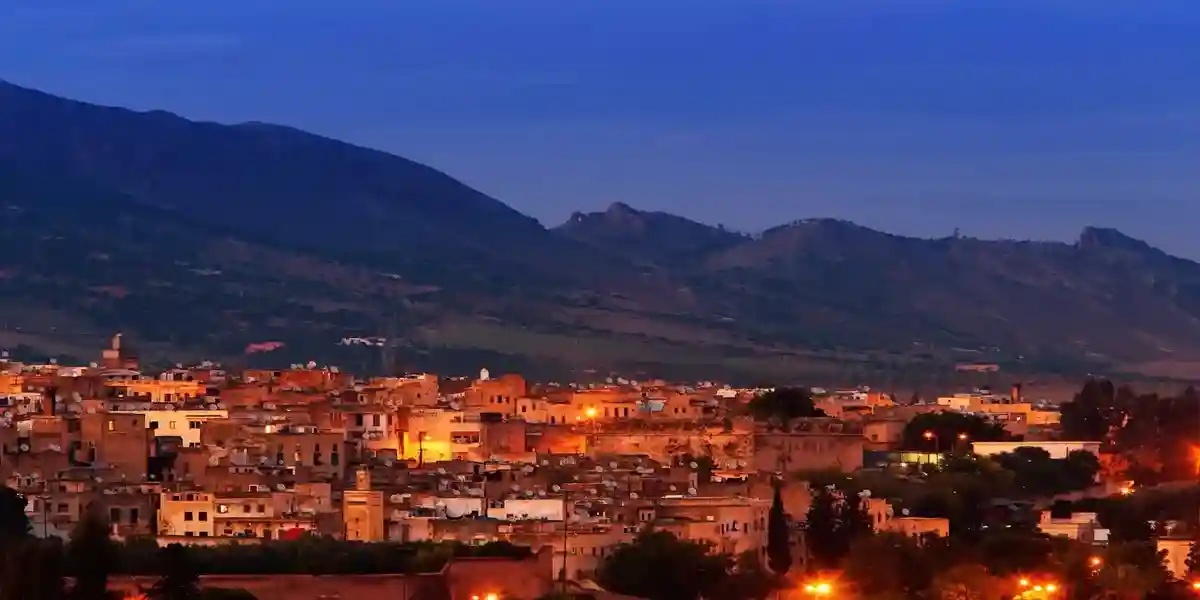
Arriving in Fes after the scenic desert route from Marrakech
For more comprehensive road trip planning resources including vehicle rental, insurance considerations, and detailed logistics, visit our complete Morocco travel guide.