

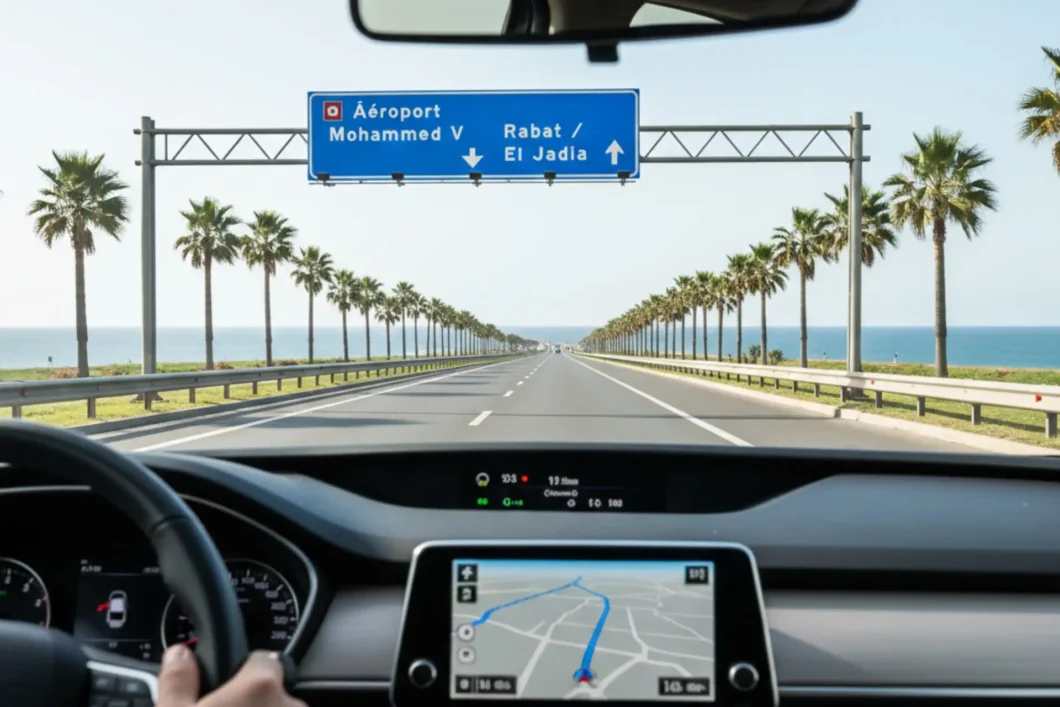
Morocco’s Atlantic coast is often overlooked in favor of the desert and imperial cities, but the stretch between Casablanca and Essaouira offers a completely different rhythm. This is where the country slows down. Fishing villages appear frozen in time, lagoons shimmer with oyster beds, and cliffs drop dramatically into the ocean. A week-long coastal road trip lets you experience Morocco beyond the tourist circuits.
This 7-day Morocco coastal road trip itinerary is designed for travelers who want freedom without stress. You’ll navigate varied road types — from smooth toll highways to winding coastal routes — while understanding the practical logistics that make or break a self-drive journey. We’re talking car rental strategies at Casablanca airport, parking challenges in pedestrian medinas, gas station timing, and the real road conditions beyond what Google Maps tells you.
The itinerary covers roughly 620 kilometers over seven days, which sounds modest until you factor in the coastal roads’ slower pace, mandatory photo stops at windswept cliffs, and the inevitable detour to an argan cooperative or pottery workshop. You’re averaging 90 kilometers per day of actual driving, leaving plenty of time to explore towns properly rather than just ticking boxes.
The Logistical Setup: Starting in Casablanca
Your journey begins before you even leave the airport. How you handle the initial car rental and escape from Casablanca will set the tone for the entire week.
Car Rental at CMN Airport: Why It Matters
Rent your car at Mohammed V Airport (CMN), not in Casablanca city center. This isn’t about convenience — it’s about survival. Casablanca’s urban traffic is legendary for all the wrong reasons. Roundabouts with six unmarked lanes, aggressive petit taxi drivers cutting across three lanes without signaling, and streets where GPS simply gives up trying to make sense of the chaos.
By picking up your rental at the airport, you bypass the city entirely. The airport is located 30 kilometers southeast of downtown Casablanca, connected directly to the A3 highway. You can be heading south toward El Jadida within 10 minutes of leaving the rental lot, never touching Casablanca proper.
The rental process at CMN is straightforward. All major agencies (Avis, Europcar, Hertz, Budget) have desks in Terminal 1. Have your documents ready: driver’s license, passport, credit card for deposit, and your booking confirmation. International driver’s permit is technically required but rarely checked — still, bring it if you have one.
Expect to pay around 300-450 MAD per day for a compact car or small SUV. Diesel vehicles cost slightly more but offer better fuel economy for long-distance driving. Full insurance is non-negotiable in Morocco — the roads can be unpredictable, and you don’t want to be liable for a fender-bender caused by a donkey cart.
The “One-Way” Fee: Budget Consideration
If you’re planning to end your trip in Essaouira or Marrakech rather than returning to Casablanca, expect a one-way drop-off fee. This typically ranges from 500-1,000 MAD depending on the agency and distance. Some travelers consider this worth it to avoid backtracking; others build the return drive into their itinerary to save money.
The decision depends on your onward plans. If you’re flying out of Marrakech or continuing south toward Agadir, the one-way fee makes sense. If you’re returning to Casablanca anyway, save your money and complete the loop.
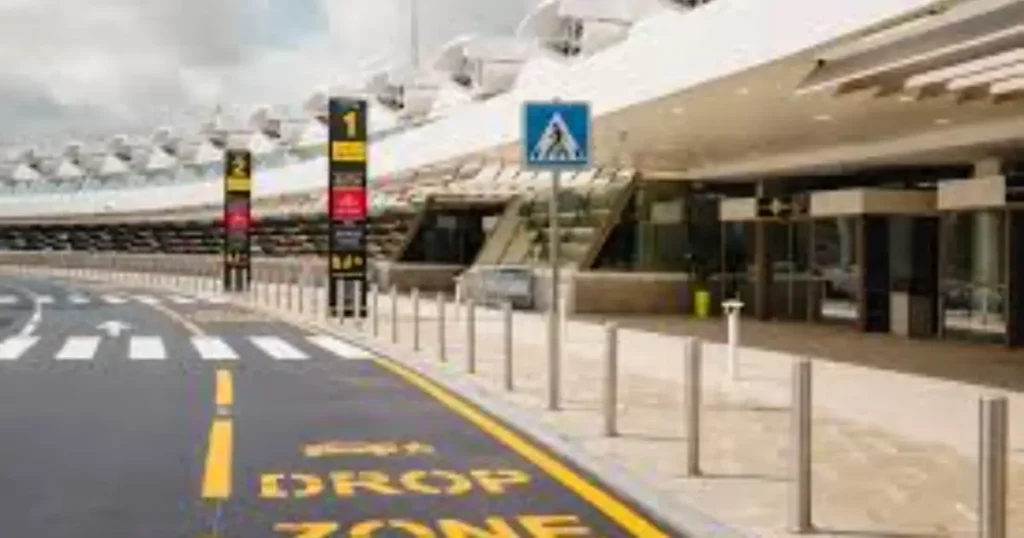
Mohammed V Airport’s rental car area provides immediate highway access, allowing travelers to bypass Casablanca’s notorious traffic and head directly toward coastal destinations.
One critical detail: fuel policy. Most Moroccan rental agencies operate on a “full-to-full” basis, meaning you pick up the car with a full tank and return it full. If you return it empty, they’ll charge you an inflated rate per liter plus a service fee. Plan to fill up at a station near the airport before drop-off.
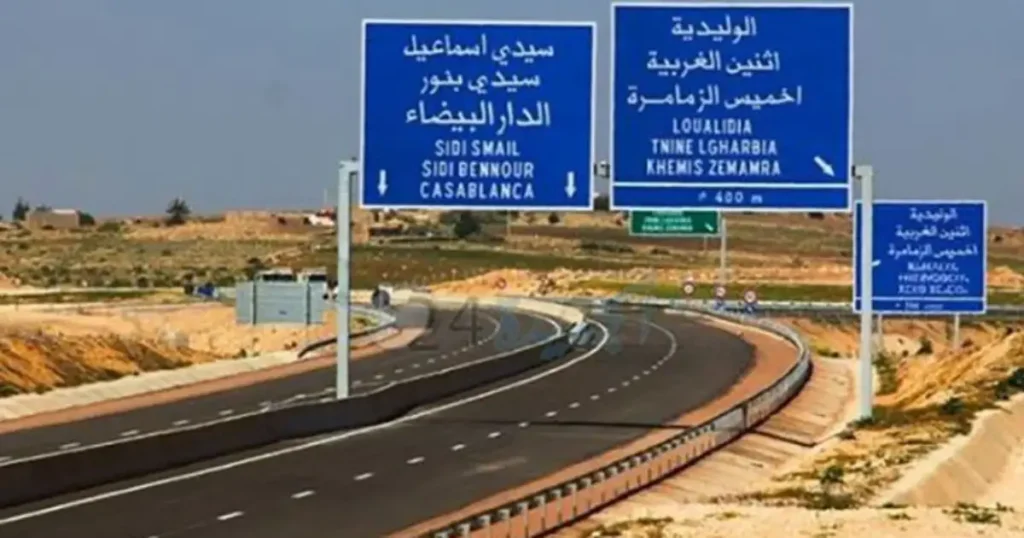
Day 3: El Jadida to Oualidia (The Oyster Route)
The 80-kilometer drive from El Jadida to Oualidia is where the Morocco coastal road trip reveals its true character. This is quintessential Atlantic Morocco — salt marshes, fishing harbors, and the famous lagoon where Morocco’s best oysters are cultivated.
Road Quality: What to Expect
The coastal road between El Jadida and Oualidia is generally good, though not as smooth as the highways. Expect a mix of recently resurfaced sections and older asphalt with occasional potholes. The road narrows in places, especially when passing through villages.
Day 4-5: Oualidia to Safi and the “Pottery Logistics”
Safi presents a different challenge from the previous coastal towns. This is an industrial port city, Morocco’s sardine capital, and home to the famous pottery workshops on Colline des Potiers. Navigation requires more attention, and parking isn’t as straightforward.
Safi Traffic: Industrial Reality
Driving in Safi means sharing roads with phosphate trucks, fishing fleet support vehicles, and dense urban traffic. The city sprawls along the coast, and signage for tourist sites isn’t always clear.

Day 6: Reaching Essaouira (The Pedestrian Challenge)
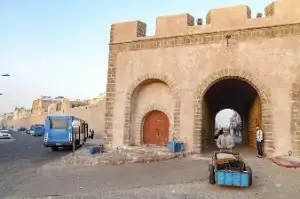
Essaouira is the jewel of Morocco’s Atlantic coast, but it’s also the most logistically complex stop on this itinerary because of one critical fact: the medina is entirely car-free.
The “No-Car” Zone: What It Means
The entire historic medina of Essaouira is closed to vehicle traffic. Cars cannot enter through Bab Doukkala, Bab Marrakech, or any of the old gates. This is strictly enforced, and there are no exceptions for tourists claiming they “just need to drop off luggage.
Day 7: The Fast Return to Casablanca
Your final day is about efficient travel back to Casablanca, which means prioritizing highways over coastal scenery — unless you’ve built extra time into your trip.
The Inland Link: Highway Strategy
The fastest route back is the inland highway connection. From Essaouira, take the N1 national road toward Marrakech. After about 100 kilometers, you’ll reach the junction with the A7 highway near Chichaoua. Take the A7 north toward Casablanca, which connects to the A3.
Complete Itinerary Logistics Table
| Segment | Distance | Route Type | Est. Time | Key Logistics Tip |
|---|---|---|---|---|
| Casa → El Jadida | 100 km | A1 (Toll) | 1h 15min | Use highway to escape Casa fast |
| El Jadida → Oualidia | 80 km | R301 (Coastal) | 1h 30min | Watch for slow farm tractors |
| Oualidia → Safi | 65 km | R301 | 1h 10min | Beautiful cliffs, watch crosswinds |
| Safi → Essaouira | 125 km | Coastal/N1 | 2h 15min | Argan cooperative stops en route |
| Essaouira → Casa | 350 km | N1 + A7 + A3 | 4h 30min | The “Return Leg” – use highways |
Final Recommendations and Practical Tips
This 7-day coastal road trip itinerary balances driving time with exploration time. You’re never spending more than 2-3 hours driving in a single day, leaving mornings and afternoons free to explore towns, swim, eat fresh seafood, and simply relax along the Atlantic.
The route works equally well in both directions (Essaouira to Casablanca), but starting in Casablanca makes more sense for international arrivals. You get the airport rental pickup out of the way immediately and gradually wind down as you head south.
For broader context on driving conditions throughout Morocco, including mountain roads and desert routes, check our comprehensive guide. If you’re considering extending this trip south toward Agadir or inland to Marrakech, our complete Morocco road trip routes article covers all major itineraries.
Best times for this coastal drive are spring (March-May) and autumn (September-November) when temperatures are mild and winds are less intense. Summer can be hot and windy, though the Atlantic breeze keeps it more tolerable than inland. Winter is quieter with fewer tourists, but some restaurants and hotels close in smaller towns.
Pack layers. Atlantic Morocco is breezy, and even summer evenings can be cool. Bring sunscreen (the coastal sun is deceptive) and comfortable walking shoes for exploring medinas.
For more detailed information on car rental strategies in Morocco, including insurance options and agency comparisons, we have a dedicated guide. And if you need help planning the broader logistics of your trip, from accommodation booking to route timing, visit our Morocco road trip logistics resource and Travel Resources for Morocco.
The Atlantic coast won’t overwhelm you with Morocco’s more famous attractions — no towering kasbahs, no vast dunes, no UNESCO medinas (well, except Essaouira). But that’s precisely the appeal. This is Morocco at a human scale, where you can actually relax instead of checking off sites. It’s road tripping the way it should be: slow, scenic, and slightly unpredictable.