

Updated: November 17, 2025
I’ll never forget my first hour driving in Morocco. Fresh off the ferry from Spain, confident after years of European road trips, I pulled onto the Tangier ring road and immediately realized I’d entered a completely different driving universe. A taxi cut across three lanes without signaling. A moped family of four weaved between cars. An elderly Mercedes stopped dead in the fast lane to let someone out.
Welcome to Morocco, where the official rules are clear and strictly enforced, but the unofficial rules of the road require a completely different education. This guide covers both.
After five years and roughly 50,000 kilometers driving across Morocco, from the Rif Mountains to the Sahara, I’ve learned that understanding Moroccan traffic laws isn’t just about avoiding fines. It’s about survival, about reading the unwritten rules that keep traffic flowing despite apparent chaos, and about knowing when the rules actually matter versus when they’re more like suggestions.
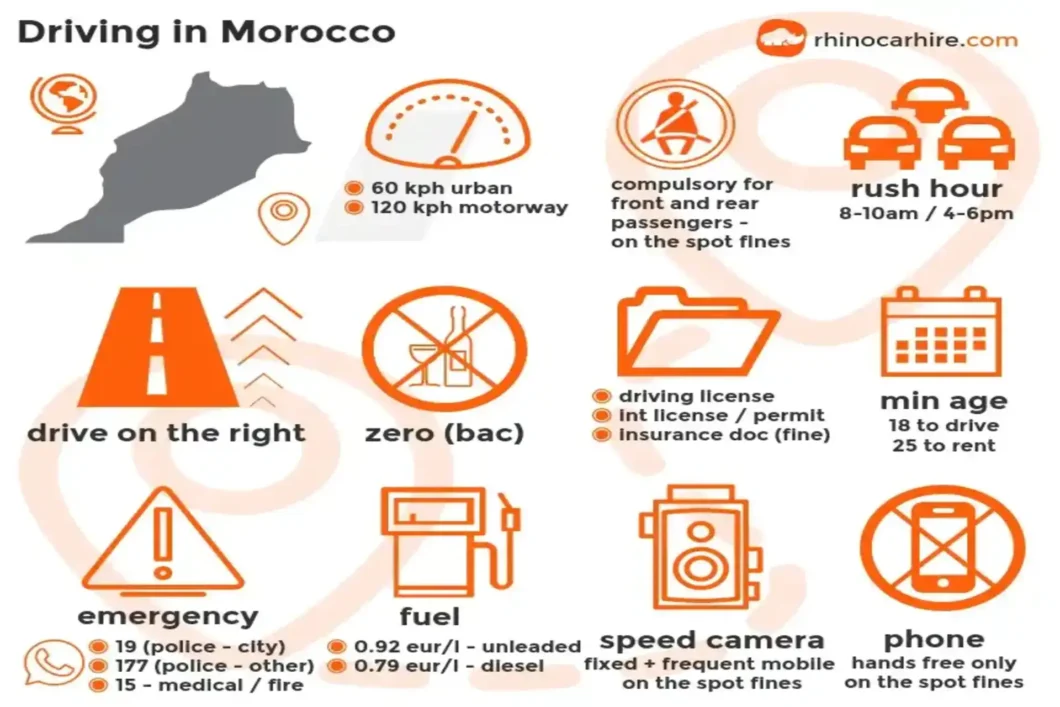
The good news? Morocco driving rules follow a logical European-style framework. Drive on the right, wear seatbelts, don’t use your phone. The challenge? Enforcement varies wildly by location, local driving culture often contradicts official regulations, and police checkpoints are frequent enough that you need your documents accessible at all times.
This isn’t a lecture about following every rule religiously. This is practical advice from someone who’s been stopped at checkpoints, ticketed for violations I didn’t know existed, and learned through experience what actually matters on Moroccan roads. Let’s break down the essential driving regulations in Morocco you need to know.
The Essential Rules: What You Must Know Before Starting the Engine
Some rules in Morocco are negotiable depending on context and location. These aren’t. Get these wrong and you’ll either get ticketed immediately or cause an accident. I learned most of these the expensive way.
Drive on the Right Side
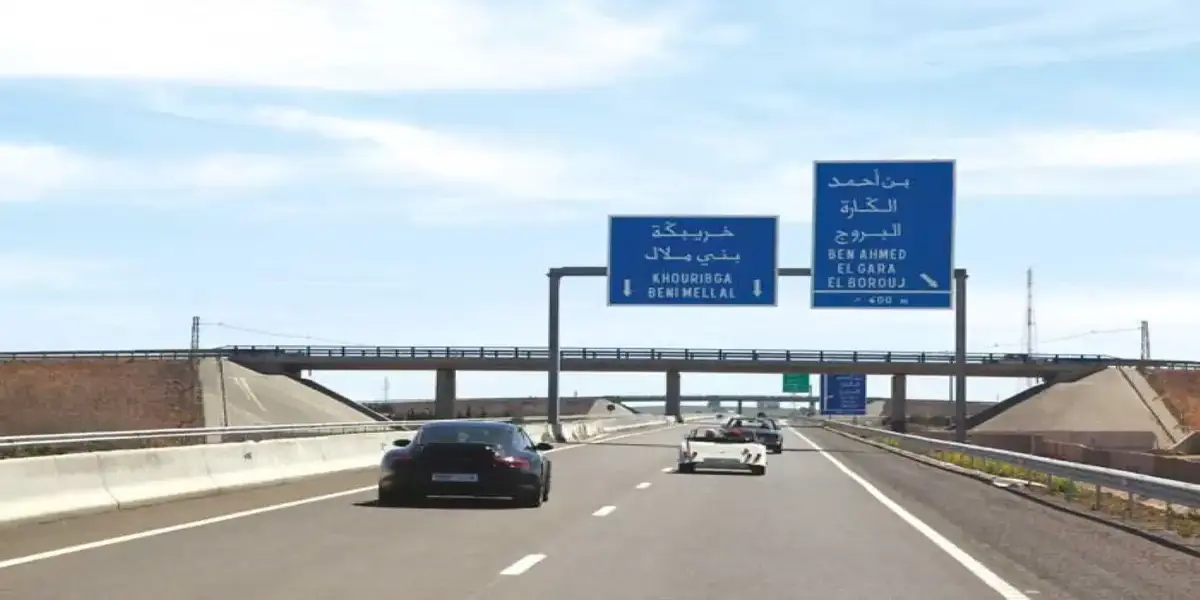
This seems obvious but it’s worth stating explicitly for drivers from UK, Ireland, Australia, Japan, and other left-side countries. Morocco follows continental European driving conventions. Drive on the right, pass on the left, steering wheel is on the left side of the vehicle.
The first few hours after switching sides are the most dangerous. Your instincts are wrong. You’ll drift toward the center line. You’ll check mirrors in the wrong direction. Roundabouts will feel backward. Give yourself time to adjust before attempting mountain passes or high-speed highway driving.
I once watched a British couple in a rental car exit a roundabout on the wrong side and drive a full kilometer against traffic before realizing their error. Don’t be that couple.
Seatbelts Are Mandatory for Everyone
 This is one of the most strictly enforced Morocco traffic rules. Every person in the vehicle must wear a seatbelt at all times, front seats and back seats. No exceptions for children (who need appropriate car seats), no exceptions for short distances, no exceptions for rural roads where “nobody checks.”
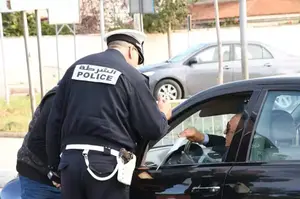
Police look for this specifically at checkpoints. The fine is 300 dirhams (about $30) per unbelted person. I’ve seen entire families pulled over and ticketed because grandma in the back seat wasn’t buckled up. The police don’t care about excuses.
Interestingly, you’ll see many Moroccans driving without seatbelts, especially in cities. Don’t let this fool you. Locals know which routes have checkpoints and which don’t. You don’t have that local knowledge, and police often target rental cars and foreign plates specifically.
Mobile Phones: Hands-Free Only
Holding a phone while driving is illegal and actively enforced. The fine is 500 dirhams ($50) and police have gotten good at spotting phone users from a distance.
Hands-free systems (Bluetooth, car integration, earpieces) are legal and recommended. What surprises tourists is that this rule applies even when stopped at red lights. I watched police ticket a driver who was checking his phone at a traffic light in Rabat. The driver argued he wasn’t “driving” because the car was stopped. The officer didn’t care.
For detailed car rental advice that includes phone mount recommendations, check our Morocco car rental guide.
Daytime Running Lights: Mandatory Outside Cities
This is a newer regulation that catches many tourists off guard. When driving outside urban areas during daylight hours, you must have your headlights on. Not just parking lights. Full dipped beam headlights.
The official rule applies to routes nationales (N-roads) and routes régionales (R-roads) outside city limits. Enforcement isn’t universal but it’s common enough on major highways that you should just make it habit. The fine is 300 dirhams.
Most modern rental cars have automatic daytime running lights that handle this for you. If you’re driving an older vehicle or one without this feature, manually turn on your lights before leaving any city.
Speed Limits and Enforcement: What You Actually Need to Know
The official Morocco speed limits are clearly posted and theoretically straightforward. Reality is considerably more nuanced.
Official Speed Limits
| Road Type | Speed Limit | Notes |
|---|---|---|
| Autoroutes (Highways) | 120 km/h | Toll roads, best maintained |
| Routes Nationales (N-roads) | 100 km/h | Main routes between cities |
| Routes Régionales (R-roads) | 80 km/h | Secondary roads, variable quality |
| Urban Areas | 60 km/h | Sometimes 40 km/h near schools |
| Residential Zones | 40 km/h | Often poorly marked |
These limits are strictly enforced through a combination of fixed speed cameras, mobile police radar units, and unmarked police vehicles. The cameras are everywhere on highways and major routes. Some are obvious with warning signs. Many aren’t.

Speed Camera Reality
Morocco has invested heavily in automated speed enforcement. Modern fixed cameras are installed on virtually every autoroute and most major N-roads. They’re highly accurate and the system works efficiently.
If a camera photographs your rental car speeding, the fine goes to the rental company, who then charges your credit card plus an administrative fee (typically 200-500 dirhams on top of the actual fine). You might not know about this until weeks after returning home when you see the charge.
Speed camera fines follow this structure: 1-20 km/h over limit: 300 dirhams ($30). 21-40 km/h over limit: 600 dirhams ($60). 41-50 km/h over limit: 1,000 dirhams ($100) plus possible license suspension. Over 50 km/h: 1,200 dirhams ($120) plus likely license suspension and possible vehicle impoundment.
The cameras photograph both your speed and your license plate clearly. Arguing with the rental company later is pointless. The system is automated and the evidence is clear.
My approach: Set cruise control at exactly the speed limit on autoroutes. It’s boring but it saves money and stress. On rural roads where enforcement is lighter, I match the flow of traffic but never exceed posted limits by more than 10 km/h.
Alcohol and Driving: Zero Tolerance in Practice
Morocco’s official blood alcohol limit is 0.02%, which is effectively zero tolerance. For comparison, most European countries allow 0.05% and many US states allow 0.08%. Morocco’s limit means even one beer puts most people over the legal threshold.
Random breath testing is rare but does happen, especially at night near entertainment districts in cities like Marrakech, Casablanca, and Agadir. If caught over the limit, penalties are severe: Minimum 500 dirhams fine. Possible license suspension. If you’re significantly over the limit or cause an accident, jail time is possible.
Taxis are everywhere and cheap. If you’ve been drinking anything at all, take a taxi. A 100 dirham taxi ride is infinitely better than a DUI conviction in a foreign country.
For comprehensive planning that includes accommodation close to nightlife districts, see our Morocco road trip logistics guide.
Accidents and Emergencies: The Process Nobody Explains
If you’re involved in a traffic accident in Morocco, even a minor one, the process is different from what you might expect in Europe or North America.
Minor Accidents (No Injuries)
For fender benders with only vehicle damage, you’re legally required to fill out a “constat amiable” (friendly accident report). This is a standardized form that both parties complete describing the accident. Your rental company should provide this form.
If both parties agree on fault, complete the form, both sign, exchange insurance information, take photos of damage and scene, and you can leave without police involvement. Submit the form to your insurance company or rental agency within 24 hours.
If parties disagree about fault (common), call police immediately. Don’t move vehicles until police arrive unless they’re blocking traffic. Police will document the scene and determine fault for insurance purposes.
Accidents with Injuries
Any accident involving personal injury, no matter how minor, requires immediate police involvement. Call emergency services (190 for police, 150 for ambulance). Don’t move injured persons unless there’s immediate danger. Stay with your vehicle until police arrive.
If the other party is injured and you’re found at fault, expect to be detained until the situation is clarified. This isn’t arrest, it’s administrative detention while police investigate. You’ll need to contact your embassy or consulate if this happens.
This is why having proper insurance that includes legal assistance is crucial. Our car rental guide covers insurance requirements in detail.
Hit and Run: Never Do This
Leaving the scene of an accident in Morocco is a serious criminal offense, even for minor accidents with no injuries. If police identify you later (and they will, from witness statements or camera footage), you face significant fines, license suspension, possible vehicle confiscation, and in serious cases, criminal charges.
If you hit a parked vehicle with nobody around, leave a note with your contact information and insurance details. Take photos showing you left a note. Report it to your insurance or rental company immediately.
Special Situations and Edge Cases
Some driving scenarios in Morocco don’t fit neatly into standard rule categories. Here’s what you need to know about the unusual situations you’ll encounter.
Animals on Roads
Livestock, donkeys, and stray dogs on roads are common, especially in rural areas. You’re legally responsible for avoiding them, and hitting an animal can create serious liability issues.
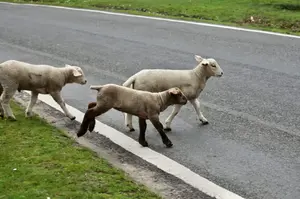
If you hit livestock, the owner can claim damages. The police will determine fault but generally side with the animal owner if you were speeding or not paying attention. Sheep and goats cost 500-2,000 dirhams. Cows and camels cost significantly more.
Slow down on rural roads, especially at dawn and dusk when animals are most active. Use your horn liberally to warn animals and herders. Never assume an animal will move out of your way.
Police Authority
Moroccan police have broad authority to stop vehicles for random checks. You must comply immediately when signaled to stop. Arguing with police about whether they have cause to stop you is pointless and counterproductive.
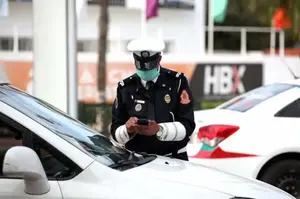
Police can issue fines on the spot for many violations. They’ll give you a receipt showing the fine amount and violation. You can pay immediately or receive instructions for paying later. The system is generally professional and non-corrupt at the street level.
If you believe a fine is unjust, don’t argue at the roadside. Pay it, keep the receipt, and file a complaint later through official channels (though honestly, this rarely accomplishes anything for minor fines).
Bribes and Corruption
Direct demands for bribes from police are rare and becoming rarer. Morocco has cracked down hard on police corruption and the vast majority of officers are professional.
If an officer suggests you can “solve this problem here” instead of receiving an official fine, they’re hinting at a bribe. I recommend declining politely and insisting on an official receipt for any payment. The official fine might be higher, but it’s legal and won’t complicate your life if discovered later.
Offering bribes proactively is definitely illegal and can get you into far more trouble than whatever violation you committed.
Regional Variations: How Driving Changes Across Morocco
While Morocco road laws are national, enforcement and driving culture vary significantly by region. What’s tolerated in one area might get you ticketed immediately in another.
Northern Cities (Tangier, Tetouan, Chefchaouen)
Driving culture here feels more European, influenced by proximity to Spain. Traffic rules are more consistently followed. Police enforcement is stricter. Roundabout priority typically follows European conventions (priority to vehicles already in the roundabout).
Highway tolls are collected efficiently. Signage is generally good. Road quality is high on major routes. This is probably the easiest region for foreign drivers to navigate.
Casablanca and Rabat
These major cities have the most sophisticated traffic infrastructure and the most aggressive enforcement. Speed cameras are everywhere. Police checkpoints are frequent. Parking regulations are actually enforced.
Traffic is dense and fast-moving. Drivers are assertive to the point of aggressive. Lane discipline is optional. Using your horn is constant. This is urban driving at its most challenging.
For detailed city navigation strategies, check our comprehensive driving in Morocco guide.
Marrakech and the South
Traffic enforcement is lighter except on major highways. Local driving styles are more relaxed about rules but more chaotic in execution. Roundabouts follow southern priority rules (priority to entering vehicles in many cases).
The medina areas have complex traffic restrictions. Many streets are pedestrian-only or so narrow that only motorcycles fit. GPS routing often tries to send you down these streets. Use common sense over GPS here.
Mountain Regions (Atlas, Rif)
Mountain driving requires special attention. Roads are narrow, winding, and often lack guard rails. Passing is difficult and dangerous. Livestock and foot traffic share the road.
The rules here are more about mountain driving competence than traffic regulations. Use lower gears on descents. Take switchbacks wide. Honk before blind curves. Assume something is coming around every corner.
Desert and Remote Areas
South of the Atlas, traffic enforcement drops to near zero outside of towns. You might drive 500 kilometers without seeing a checkpoint. This doesn’t mean rules don’t exist, just that enforcement is impractical.
The challenges here are environmental: blowing sand reduces visibility, roads disappear into pistes (dirt tracks), navigation is difficult, and help is far away if something goes wrong. Safe driving matters more than legal compliance.
Final Advice: The Real Rules of Moroccan Roads
After all this discussion of official Morocco driving regulations and practical reality, here’s what actually matters:
Be Defensively Alert
Other drivers will do unexpected things. Pedestrians will cross without looking. Motorcycles will appear from nowhere. Donkey carts will be in the highway lane. Your job is to avoid all of it while maintaining progress.
Defensive driving in Morocco means assuming everyone else might do something unpredictable at any moment. Leave space. Check mirrors constantly. Have an exit strategy at all times.
Follow the Critical Rules
Seatbelts always. No phone in hand ever. Lights on when required. Speed limits respected. Documents ready. These are non-negotiable and strictly enforced.
Adapt to Local Flow
For everything else, watch what locals do and adapt accordingly. If everyone is driving 110 km/h in a 100 zone, matching their speed is safer than rigidly doing 100 while everyone passes you. If locals are parking in a certain area despite no clear markings, it’s probably okay.
Stay Calm and Courteous
Moroccan roads will test your patience. Someone will cut you off. A taxi will do something insane. A truck will block the entire road. Getting angry accomplishes nothing.
Use your horn liberally but not aggressively. It’s a communication tool in Morocco, not an insult. Flash your lights to signal intentions. Wave thank you when someone lets you in. The roads work better when everyone stays calm.
Get Proper Insurance and Documents
This isn’t optional. Driving without proper insurance and documentation in Morocco will eventually catch up with you in expensive ways. The money you save by cutting corners on insurance isn’t worth the risk.
For complete information on insurance requirements and options, see our Morocco car rental guide.
Morocco’s roads are navigable, often enjoyable, and the right vehicle opens up the entire country to you. Understanding the rules – both official and practical – makes the experience safer and more enjoyable. Start conservatively, build confidence gradually, and remember that millions of people drive in Morocco every day without incident.
You can do this. Just respect the rules that matter, stay alert, and enjoy the journey.
For more comprehensive Morocco travel planning, including route suggestions and detailed logistics, visit our Morocco Travel Trip homepage.