

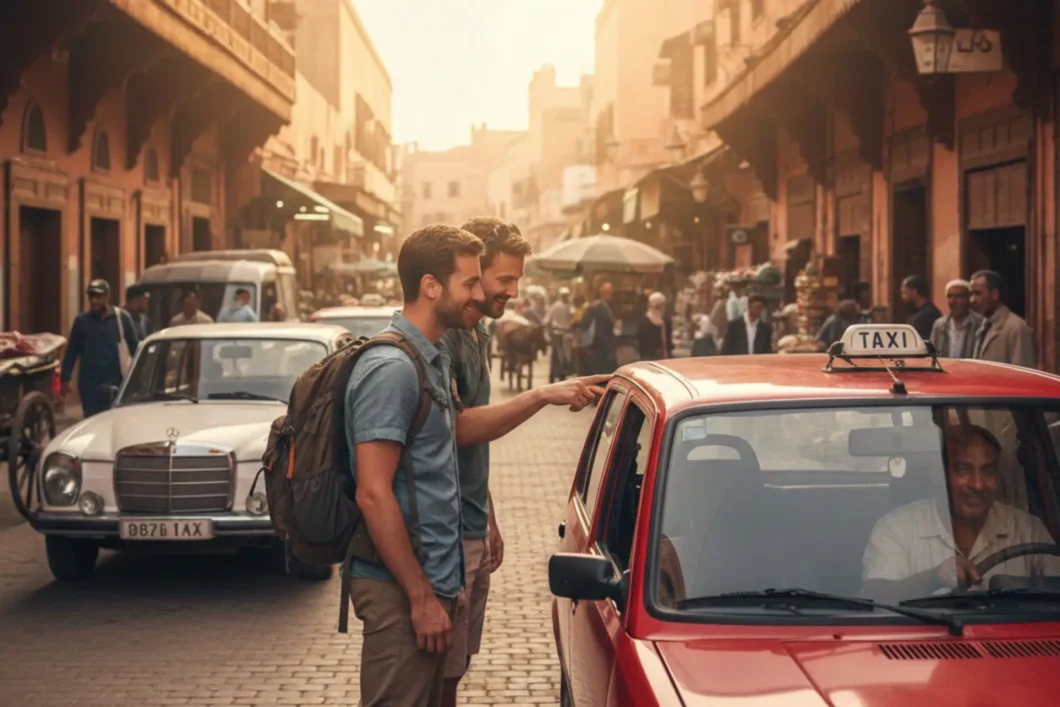
Navigating Morocco’s taxi system can feel overwhelming at first. Between the different colored cars, confusing pricing rules, and occasional scams, many travelers end up paying more than they should. But here’s the thing: once you understand the basics, Moroccan taxis become one of the most convenient and affordable ways to explore the country.
This comprehensive Morocco taxi guide breaks down everything you need to know. We’ll cover the technical differences between Petit taxi and Grand taxi, decode the color system used across major cities, and arm you with anti-scam strategies that actually work. Whether you’re landing in Casablanca or exploring the medinas of Marrakech, you’ll know exactly how to get around safely and affordably.
Let’s start with the most important distinction every traveler needs to understand.
Petit Taxi vs. Grand Taxi: The Technical Differences
Morocco operates two completely separate taxi systems, each with specific legal limits and purposes. Understanding the difference between Petit taxi and Grand taxi is essential because they serve different functions and operate under different rules.
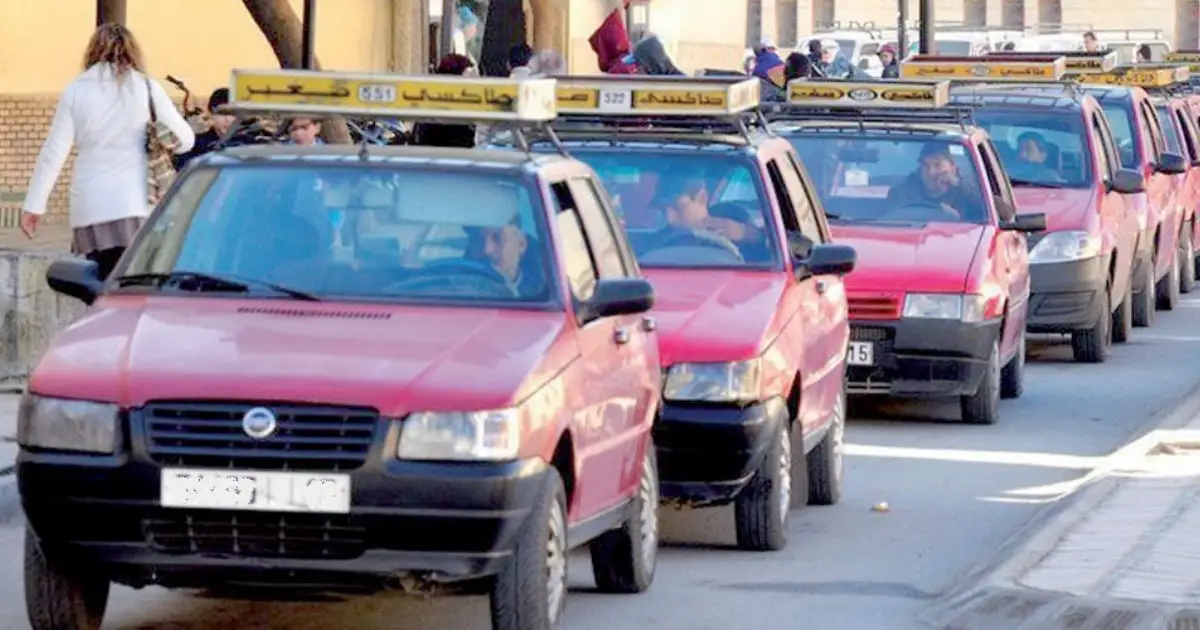
Petit taxis are small vehicles—typically compact sedans like Fiat Uno, Dacia Logan, or Peugeot 206. They’re designed for urban transportation only. By law, Petit taxis cannot leave city limits. This restriction is strictly enforced, and drivers face heavy fines if caught operating outside their designated zone.
The Petit taxi capacity is officially three passengers. You’ll sit in the back while the driver occupies the front. These taxis use meters (called “compteurs” in French), and fares are government-regulated. Base rates start around 7-8 MAD, with incremental charges per kilometer. Nighttime rates (typically 8 PM to 6 AM) increase by 50%.
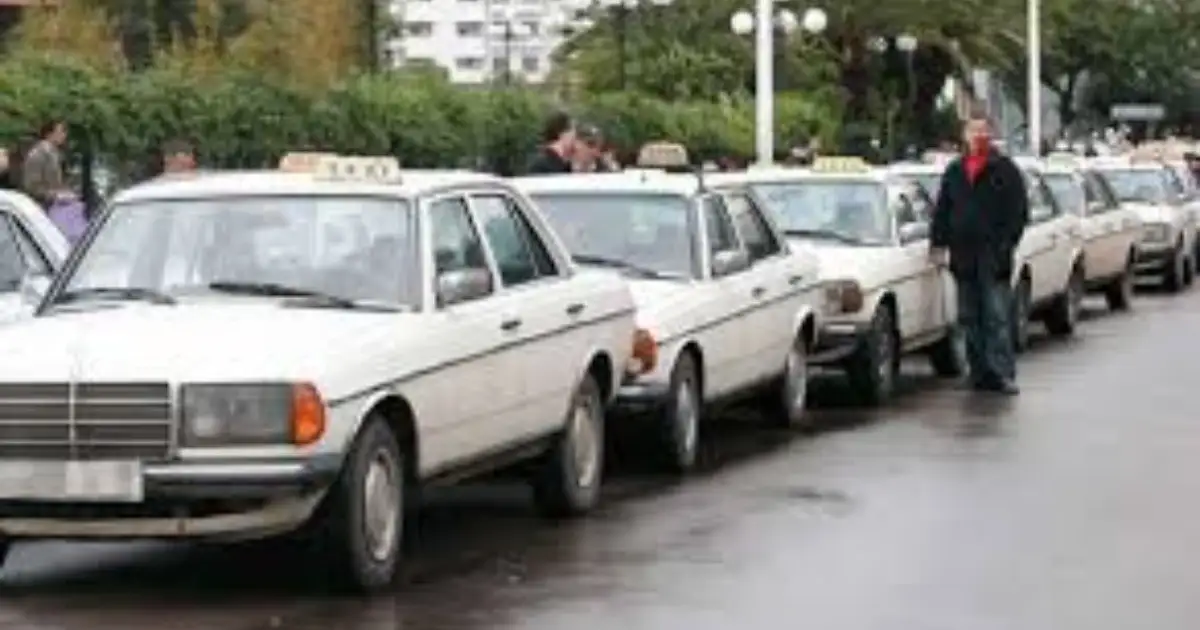
Grand taxis, on the other hand, are larger vehicles—usually Mercedes sedans or similar models. These are the workhorses of inter-city travel in Morocco. Grand taxis connect cities, towns, and rural areas. They operate on fixed routes with set departure points, often near bus stations or designated taxi stands.
Here’s where Grand taxis get interesting: they work on a shared system. Each vehicle holds six passengers—two in front, four in back. The taxi doesn’t depart until all six seats are filled. You pay a fixed price per seat, not per vehicle. If you’re in a hurry, you can pay for multiple seats to leave immediately.
Unlike Petit taxis, Grand taxis rarely use meters. Prices are negotiated or follow established local rates. For popular routes like Marrakech to Essaouira or Tangier to Chefchaouen, prices are standardized. Always ask locals or your hotel for the going rate before boarding.
The key difference? Petit taxis = metered city transport. Grand taxis = shared inter-city travel with fixed per-seat pricing. Mix them up, and you’ll either end up stranded outside city limits or overpaying for a short urban trip.
[read_more_less]Decoding Taxi Colors by City
One of Morocco’s most distinctive taxi features is the color-coding system. Each major city assigns a specific color to its Petit taxis, making them instantly recognizable. This isn’t just aesthetic—it’s a practical system that helps authorities regulate taxis and prevents drivers from operating illegally in other cities.
The color system serves multiple purposes. First, it helps tourists identify legitimate taxis quickly. Second, it prevents drivers from neighboring cities from poaching fares. A red Casablanca taxi operating in blue Rabat would be immediately obvious and face penalties.
Red, Blue, or Yellow? The City List
Here’s your quick reference guide to taxi colors Morocco uses across major destinations:
- Casablanca taxi color: Bright red. These crimson cabs dominate Morocco’s economic capital. With the country’s largest taxi fleet, you’ll rarely wait more than a few minutes for a ride.
- Rabat taxi blue: Sky blue. The capital’s taxis stand out with their distinctive blue paint. Easy to spot along Avenue Mohammed V or near government buildings.
- Marrakech taxi color: Beige/ochre. Matching the city’s famous terracotta architecture, Marrakech’s taxis blend into the urban landscape. Some locals call them “cream” colored.
- Tangier taxi color: Cyan (turquoise blue) or yellow. Tangier uses both colors depending on the licensing period. Newer taxis tend toward cyan, while older ones remain yellow.
- Agadir taxi color: Orange. The beach city’s taxis match its sunny, coastal vibe. Impossible to miss against Agadir’s white buildings.
- Fez taxi red: Red, similar to Casablanca. Don’t confuse the two cities—Fez taxis only operate within Fez’s medina and ville nouvelle.
- Meknes: Blue-green (turquoise)
- Essaouira: Blue
- Tetouan: Yellow
Pro tip: If you see a taxi in the “wrong” color for your city, it’s likely a Grand taxi from another region or an unlicensed vehicle. Stick to the correct color for your destination to ensure you’re in a legal, regulated taxi.
Grand taxis, meanwhile, typically come in white or beige regardless of city. Their color consistency across Morocco makes them easy to identify at inter-city taxi stations.
Pricing & The Meter: How Not to Get Scammed
The most common taxi scam Morocco travelers encounter is the “broken meter” excuse. You get in, ask the driver to use the compteur, and he claims it’s not working. He then offers a “fair” fixed price—usually 2-3 times what the metered fare would be.
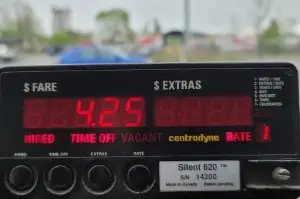
Here’s how to protect yourself: Before entering any Petit taxi, verify the meter is visible and functional. Point to it and say “Compteur?” (pronounced “con-tour”). If the driver says it’s broken, exit immediately and find another taxi. Working meters are legally required, and “broken” meters are rarely actually broken—it’s just more profitable for drivers to charge tourists flat rates.
When the meter is running, watch it. Fares should increase gradually, not jump randomly. Typical Casablanca rates start at 7 MAD, adding roughly 1.50-2 MAD per kilometer. A 10-minute ride across downtown should cost 15-25 MAD, not 50-100 MAD.
If you encounter resistance about using the meter, these strategies work:
- Insist firmly but politely: “Le compteur, s’il vous plaît” (The meter, please)
- Show you know the approximate fair price: “C’est combien jusqu’à [destination]?”
- Be prepared to exit: Open the door if they refuse
- Take a photo of the taxi license number (visible inside)
Remember: legitimate drivers have nothing to hide. The meter protects them too by providing official documentation of the fare.
The ‘Shared Ride’ Confusion
Many first-time visitors panic when their Petit taxi driver stops to pick up additional passengers. This is completely normal and legal. Shared taxi Morocco operations are standard practice for Petit taxis.
Here’s how it works: You’re paying per seat, not for exclusive use of the vehicle. The driver can stop for others heading in roughly the same direction. Each passenger pays their own metered fare based on their journey. You’re only responsible for the portion of the trip you take.
For example: You board at Point A and the meter reads 7 MAD (base fare). Another passenger boards at Point B when the meter shows 15 MAD. You exit at Point C when it reads 22 MAD. You pay 22 MAD. The second passenger pays from their pickup point onward.
If you prefer privacy, you can request a “private” ride, but expect to pay more—essentially compensating the driver for potential lost fares from other passengers. Simply say “Privé” or negotiate a fixed price upfront.
Modern Solutions: Using Apps to Fix the Price
The single best way to avoid taxi overcharge is using ride-hailing apps. Morocco has three main options: Careem, Heetch Morocco, and InDrive Morocco.
Careem taxi operates like Uber. You enter your destination, see the price upfront, and pay through the app. No haggling, no meter disputes, no confusion. Careem is widely available in Casablanca, Rabat, Marrakech, and Tangier. Prices are typically 10-20% higher than metered Petit taxis but include the convenience premium.
Heetch Morocco offers slightly cheaper rates than Careem and has good coverage in major cities. The app interface is user-friendly, and you can save favorite locations. Payment is cash or card.
InDrive Morocco uses a unique model: you propose a price, drivers counter-offer, and you accept or decline. This gives you more control but requires knowing approximate fair rates. Best for experienced travelers who’ve learned local pricing.
Download at least two apps before your trip. Coverage varies by city and time of day. Having backup options prevents getting stranded when one app has no available drivers.
Essential Darija Phrases for Taxis
Communication can prevent most taxi issues. These taxi Arabic phrases are essential:
- “Khedem l-compteur” (khed-dem el-com-tour) = “Turn on the meter”
- “Wqaf hna” (oo-kaf huh-nah) = “Stop here”
- “B’shhal?” (besh-hal) = “How much?”
- “Ghali bezaf” (gha-lee bez-af) = “Too expensive”
- “Sir neshan” (seer nee-shan) = “Go straight”
- “Dour l’limen” (door luh-lee-min) = “Turn left”
- “Dour l’liser” (door luh-lee-ser) = “Turn right”
- “Shukran” (shoo-kran) = “Thank you”
Even basic attempts at Darija earn respect and often better service. Drivers appreciate tourists who make an effort, and you’re less likely to be seen as an easy target for overcharging.
Practice pronunciation before your trip. The phrase “Khedem l’compteur” alone will save you significant money and headaches throughout Morocco.
[/read_more_less]Final Tips for Taxi Success in Morocco
Mastering Moroccan taxis is about knowledge, not luck. Now you understand the technical differences between Petit and Grand taxis, can identify legitimate vehicles by their city colors, and have multiple strategies to ensure fair pricing.
Remember the core principles: Always insist on the meter for Petit taxis. Understand that shared rides are normal. Use apps when available for guaranteed pricing. Learn basic Darija phrases to communicate clearly.
For longer journeys beyond city limits, explore car rental options in Morocco or review our recommended road trip routes. And if you’re planning to drive yourself, check our complete guide to driving in Morocco for essential safety and navigation tips.
Taxis remain one of the most authentic ways to experience Moroccan cities. With these tools, you’ll navigate like a local, pay fair prices, and enjoy the vibrant street life that makes Morocco unforgettable. For comprehensive trip planning, visit our Morocco road trip logistics guide or return to our homepage for more travel resources.
Safe travels, and may your meters always be working!