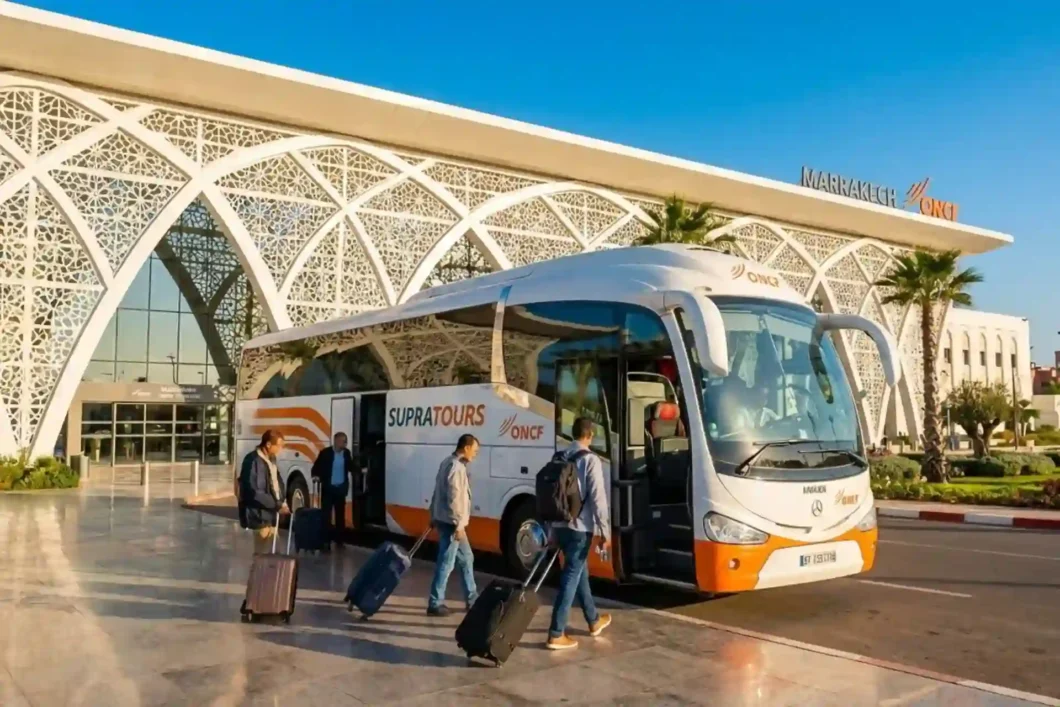
ONCF Supratours Combined Ticket: The Easiest Way to Reach Morocco’s Sahara Desert

Getting to the Sahara Desert from Morocco’s cities without renting a car might seem complicated. You’re looking at hundreds of kilometers of winding mountain roads, isolated stretches through the Anti-Atlas, and the logistical puzzle of coordinating multiple transport connections. But here’s what most travelers don’t realize: Morocco’s national railway, ONCF, has solved this problem with remarkable efficiency.

The ONCF Supratours combined ticket is Morocco’s best-kept travel secret. It’s a single booking that seamlessly connects Morocco’s high-speed trains with dedicated bus services running directly to desert destinations like Merzouga and Zagora. You buy one ticket, deal with one company, and never worry about missed connections or stranded luggage.

This isn’t some budget workaround or backpacker hack — it’s the official integrated transport system used by Moroccans and savvy travelers alike. The trains are modern, often high-speed. The buses are comfortable coaches, not decrepit “chicken buses.” And the whole operation runs with Swiss-like precision.

To understand why this system works so well, you need to know the backstory. Supratours isn’t just some random bus company that happens to coordinate with the trains. Supratours is owned by ONCF, Morocco’s national railway operator.

The Concept

Morocco’s rail network is extensive, but it doesn’t reach everywhere. The Atlas Mountains and the desert regions are too remote and sparsely populated to justify laying track. So ONCF created Supratours as their bus subsidiary to extend rail service to destinations the trains can’t reach.

The combined ticket system works like this: You book a journey from, say, Casablanca to Merzouga. The system automatically routes you on a train to the nearest rail hub (usually Marrakech or Fes), then transfers you to a Supratours bus that completes the journey to the desert. It’s all handled as one continuous trip under one ticket.

This integration means your train arrival and bus departure are synchronized. You don’t need to leave the station. You don’t need to rebuy tickets or negotiate with bus drivers. Your luggage is transferred from train to bus by staff. You literally just walk from one vehicle to the other.

The “One-Stop Shop” Advantage

Here’s what makes this system brilliant for travelers: you have a single point of contact. If something goes wrong — a delay, a cancellation, a lost bag — you’re dealing with ONCF, not juggling multiple operators who blame each other.

The schedules are coordinated down to the minute. The bus won’t leave before the train arrives. If the train is delayed, the bus waits. This is fundamentally different from trying to coordinate independent bus and train tickets, where you’re at the mercy of timetables that don’t talk to each other.
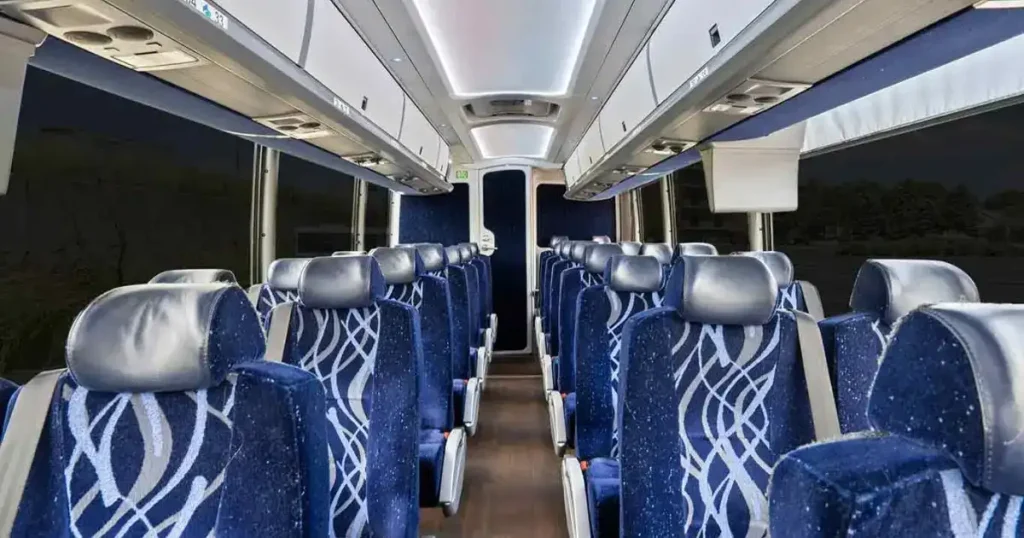
Modern Supratours bus interior with air conditioning and reclining seats Morocco

Supratours buses feature modern air-conditioned coaches with comfortable reclining seats and secure luggage compartments, far exceeding typical intercity bus standards.

The pricing is also unified. You see one total fare, paid once, with no hidden fees or surprise charges when you transfer. It’s transparent and predictable.
Read More: Main Routes & Connections →

The Main Route: Casablanca/Rabat to Merzouga

The flagship route of the ONCF Supratours system connects Morocco’s economic capitals on the Atlantic coast with Merzouga, the gateway to Erg Chebbi, the most famous dune field in the Moroccan Sahara.

The Logistics

If you’re starting from Casablanca or Rabat, the journey works in two stages:

Stage 1: High-Speed Train to Marrakech

You board either the Al Boraq (Morocco’s high-speed train, similar to France’s TGV) or a conventional Atlas train at Casablanca Voyageurs or Rabat Ville station. The Al Boraq is faster — about 2 hours and 10 minutes from Casablanca to Marrakech — while the Atlas train takes closer to 3 hours.

The Al Boraq is worth the slight premium if it’s available. It’s smooth, quiet, and you can actually work or read without feeling like you’re on a roller coaster. First class has wider seats and more legroom, but second class is perfectly comfortable for most travelers.

Stage 2: Immediate Bus Transfer to Merzouga

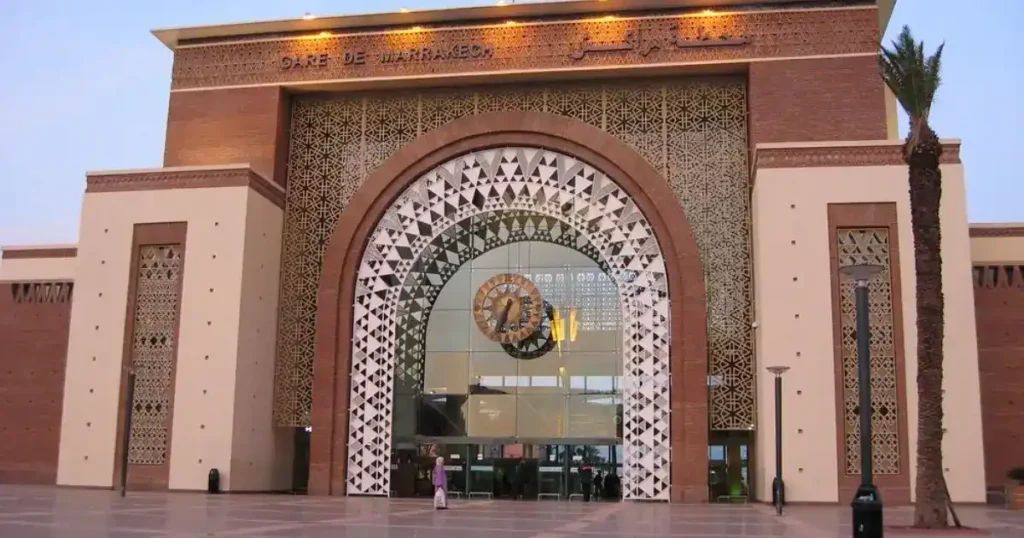
You arrive at Marrakech station, and here’s where the magic happens. You don’t exit the station complex. Instead, you follow signs for “Supratours” or “Bus ONCF,” which lead you to a designated area where the Supratours buses are waiting.

Staff check your combined ticket and direct you to the correct bus. Your checked luggage is transferred from the train’s baggage car to the bus’s cargo hold. You board, settle in, and the bus departs within 20-30 minutes of the train’s arrival.

Marrakech train station serves as the primary transfer hub where passengers seamlessly switch from high-speed trains to desert-bound Supratours coaches.

Why It Works

This route is the solution for crossing the entire country without the exhaustion of driving yourself through the Atlas Mountains. The train segment is fast and relaxing. The bus segment is long (around 10 hours from Marrakech to Merzouga), but you’re not doing the driving, navigating hairpin turns, or dealing with mountain weather.

You can work, sleep, read, or just stare out the window as the landscape transforms from flat agricultural plains around Marrakech to the dramatic gorges and kasbahs of the south. The bus makes scheduled rest stops where you can stretch, use clean facilities, and grab food or coffee.

By the time you arrive in Merzouga around 8:00 PM, you’ve traveled from the Atlantic coast to the edge of the Sahara in a single day, without once touching a steering wheel or worrying about fuel, directions, or parking.

Marrakech ONCF train station Supratours bus transfer area

The Marrakech-Sahara Connection (The Most Popular)

Many travelers start their Moroccan journey in Marrakech, making the Marrakech to Merzouga Supratours route the most heavily trafficked desert connection in the entire system.
Read More: Marrakech-Sahara Details →

Departure: The Morning Ritual

The standard departure from Marrakech is around 8:00 AM. You need to be at the ONCF station in Marrakech at least 30 minutes early, not because there’s extensive security (there isn’t), but because you want to secure your seat preference and get your luggage loaded without stress.

The Marrakech ONCF station has a dedicated Supratours waiting area. It’s clean, has restrooms, and usually has a small café where you can grab a last-minute coffee and croissant. The atmosphere is calm, organized, and nothing like the chaos of some Moroccan bus stations.

When boarding is called (usually around 7:45 AM for an 8:00 AM departure), you present your ticket, they tag your luggage, and you board via the front door. Choose your seat wisely — the right side of the bus offers better views of the Atlas peaks and kasbahs, though both sides get spectacular scenery.

The Journey: A Geographic Odyssey

The Marrakech to Merzouga bus route is one of the great overland journeys in North Africa. You cross the High Atlas via the Tizi n’Tichka pass (2,260 meters elevation), descend into the arid landscapes around Ouarzazate, pass through the Valley of Roses, and thread through the dramatic Todra Gorges before finally emerging at the edge of the Erg Chebbi dunes.

Key stops and highlights along the way:

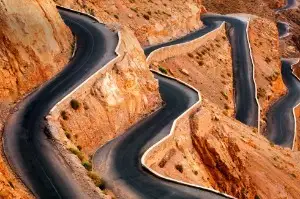
Tizi n’Tichka Pass: The road climbs through dramatic switchbacks. On clear days, you can see snow-capped peaks in winter and spring. The views are staggering, and you’ll be grateful you’re not navigating this yourself.

Ait Benhaddou: The bus typically makes a brief photo stop near this famous UNESCO World Heritage ksar (fortified village). You won’t have time to explore inside, but you can snap photos of the exterior, which is impressive enough.

Ouarzazate: A longer stop (20-30 minutes) at a roadside restaurant where you can use facilities, have lunch, and stretch your legs. The food is decent but overpriced — consider bringing snacks from Marrakech.

Valley of Roses (Kelaat M’Gouna): Quick stop in rose season (April-May) where vendors sell rose water and other products. Skip this unless you’re actually interested — the bus won’t wait long.

Todra Gorges: Another photo stop where the road threads through towering canyon walls. Spectacular and worth the brief pause.

The “End of the Line”

The bus pulls into Merzouga around 8:00 PM, give or take 30 minutes depending on traffic and stops. This is literally as far as motorized transport goes — the road ends at the edge of the dunes.

Most riads and desert camps send 4×4 vehicles to meet arriving buses. If you’ve booked accommodation, your driver will be holding a sign with your name or your riad’s name. If you haven’t booked ahead (not recommended), there will be touts offering rooms and desert tours. Negotiate firmly if you go this route.

Your luggage is unloaded from the bus’s cargo hold. Check that you have everything before the 4×4 whisks you off into the desert darkness toward your accommodation.

Supratours Espace Confort premium bus seats with extra legroom

Booking Logistics: Online vs. In-Person

Booking your ONCF Supratours combined ticket is straightforward, but there are a few tricks to getting it right.
Read More: Booking Process →

Online Booking: The Website Method

The official website is oncf-voyages.ma. It’s available in French, Arabic, and English, though the English translation can be a bit clunky. Don’t let that deter you — it works.

Here’s the process:

Step 1: Go to oncf-voyages.ma and select your journey type (one-way or round-trip).

Step 2: Enter your departure city (e.g., Casablanca, Rabat, Tangier) and your destination. Here’s the trick: type “Merzouga” or “Zagora” directly into the destination field. The system recognizes these as Supratours endpoints and will automatically create a combined train+bus itinerary.

If you only see train options (which would end at Marrakech or Fes), you’re doing it wrong. Make sure you’re typing the full desert destination name, not just the rail hub city.

Step 3: Select your travel date. The system shows available departures with the full journey time and price. You’ll see options like “Al Boraq + Bus” or “TNR + Bus” (TNR is another train type).

Step 4: Choose your seat class. First class on the train portion is more spacious but significantly more expensive. The bus portion is the same regardless of your train class.

Step 5: Enter passenger details and payment information. The site accepts Moroccan and international credit cards. You’ll receive an e-ticket via email, which you can either print or show on your phone.

Physical Ticket: The Traditional Method

You can buy your combined ticket at any ONCF train station in Morocco, even if you’re nowhere near your departure city. Want to buy your Casablanca-Merzouga ticket while you’re in Tangier? No problem. Just go to the ticket counter and tell them your route and date.

The advantage of buying in person is that you can ask questions, get advice on timing, and pay in cash if you prefer. The disadvantage is that you’re subject to station hours and potential queues, especially during busy periods.

Ticket windows are usually open from 6:00 AM to 10:00 PM in major stations. Bring your passport (required for ticket purchase) and have your dates and times written down to avoid miscommunication.

Advance Booking: How Far Ahead?

For high season (March-May and September-November), book at least 7-10 days in advance. The Marrakech-Merzouga route is popular and can sell out, especially on weekends and during Moroccan holidays.

During low season (June-August when it’s scorching, and December-February when it’s cold at night), you can often book just a few days ahead. But why risk it? Lock in your dates as soon as you know them.

Tizi n'Tichka mountain pass High Atlas Morocco Supratours route

Comfort Levels: Is it a “Chicken Bus”?Let’s address the concern head-on: Are Supratours buses those rickety, overcrowded, livestock-carrying nightmares you might associate with budget bus travel in developing countries?

Absolutely not.

Read More: Comfort & Facilities →

The Reality: Modern Coaches

Supratours operates modern, air-conditioned coaches that would look at home on European intercity routes. These are proper touring buses with reclining seats, tinted windows, onboard restrooms, and secure luggage holds.

The buses are maintained to the same standards as the ONCF trains. They’re cleaned between journeys. Seats have adjustable backs and footrests. There’s overhead storage for small bags and a large cargo compartment underneath for checked luggage.

Air conditioning is reliable and often overzealous — bring a light jacket or sweater because it can get chilly, especially if you’re traveling overnight or through mountain sections where the outside temperature is cool.

Premium Espace Confort buses feature extra legroom and wider seats, making the 10-hour journey to Merzouga significantly more comfortable.

The “Espace Confort” Upgrade

For a modest surcharge (usually 50-80 MAD extra), you can book an Espace Confort seat on certain routes. This gets you:

– Wider seats with more padding

– Extra legroom (crucial for tall travelers or anyone doing 10+ hours)

– Fewer passengers per bus (more personal space)

– Priority boarding and baggage handling

For the Marrakech-Merzouga route, which is a full day’s journey, the Espace Confort upgrade is worth every dirham. Regular seats are fine for shorter trips (2-4 hours), but when you’re looking at 10 hours, comfort matters.

Onboard Amenities

Each bus has a restroom at the rear. It’s basic but functional — think airplane lavatory, not luxury spa. Use the facilities during scheduled rest stops when possible, as the onboard restroom can get less pleasant as the journey progresses.

There’s no onboard food service, but the scheduled stops (every 2-3 hours) are at roadside restaurants or cafés where you can buy meals, snacks, and drinks. Prices are inflated, so bring your own supplies if you’re budget-conscious.

WiFi is not standard on Supratours buses. Some newer coaches have it, but don’t count on it. Download movies, books, or work files before you depart. Cell coverage is spotty in the Atlas Mountains and non-existent in remote desert areas.

What About Motion Sickness?

The Atlas crossing involves winding roads with switchbacks and elevation changes. If you’re prone to motion sickness, sit near the front of the bus where movement is less pronounced. Take medication beforehand. The drivers are professional, but they can’t eliminate the reality of mountain roads.

The coastal and desert segments are much flatter and easier on the stomach.

Summary Comparison: Freedom vs. Ease

FeatureDriving YourselfONCF + Supratours Combo
Stress LevelHigh (Atlas navigation, hairpins)Zero (relax and enjoy views)
Cost400 MAD/day + fuel + tolls~250 MAD total one-way
SpeedFaster with flexibility to skip stopsSlower with fixed rest stops
FlexibilityStop anywhere, anytimeFixed schedule, no detours
ComfortDepends on rental car qualityModern coach, reclining seats
Best For…Photographers, families, groupsSolo travelers, couples, budget-conscious
Photography StopsUnlimited at your discretionLimited to scheduled stops
Night DrivingYou handle dark mountain roadsProfessional driver manages it

Final Recommendations

The ONCF Supratours combined ticket is the smart choice if you value ease over absolute freedom. It’s perfect for solo travelers who don’t want the expense of renting a car alone, couples who’d rather not deal with navigation stress, and anyone on a tighter budget who still wants reliable, comfortable transport.

It’s also ideal if you’re arriving in Morocco for the first time and aren’t confident about driving in Morocco’s challenging terrain. The Atlas Mountains, while beautiful, are no joke — hairpin turns, aggressive local drivers, and limited signage make them stressful for inexperienced visitors.

That said, if you’re a photographer who needs to stop every 20 minutes for golden hour light, if you’re traveling with young kids who need frequent breaks on their schedule, or if you want to explore off-the-beaten-path kasbahs and villages that buses don’t serve, then renting a car makes more sense.

For most travelers, though, the combined ticket hits the sweet spot. You get to the Sahara safely, affordably, and without the headaches of navigation, fuel stops, or parking. You can read, work, nap, or just watch the landscape unfold outside your window.

Book through oncf-voyages.ma at least a week in advance, opt for the Espace Confort upgrade if available, and bring layers for the air conditioning. Pack snacks and entertainment for the long haul. And prepare for one of the great overland journeys in North Africa — from Atlantic cities to Saharan dunes, all under one ticket.

For comprehensive planning of your Morocco road trip logistics or exploring alternative Morocco road trip routes, check our detailed guides for more options.