


Navigating Moroccan cities becomes significantly easier once you understand the petit taxi system. These colorful vehicles are the backbone of urban transportation across the country, offering an affordable and efficient way to get around Marrakech, Casablanca, Fes, and beyond.
If you’ve ever wandered through the bustling streets of a Moroccan medina, you’ve certainly spotted them. Those small, brightly painted cars weaving through traffic with practiced ease. The petit taxi Morocco system might seem chaotic at first glance, but it operates on rules that every traveler should know before their trip.
Whether you’re heading from your riad to the souks or catching an early morning train, these city taxis are your most practical option. Unlike the larger grand taxis designed for intercity travel, petit taxis serve exclusively within city limits. They’re metered, affordable, and once you know the basics, remarkably easy to use.
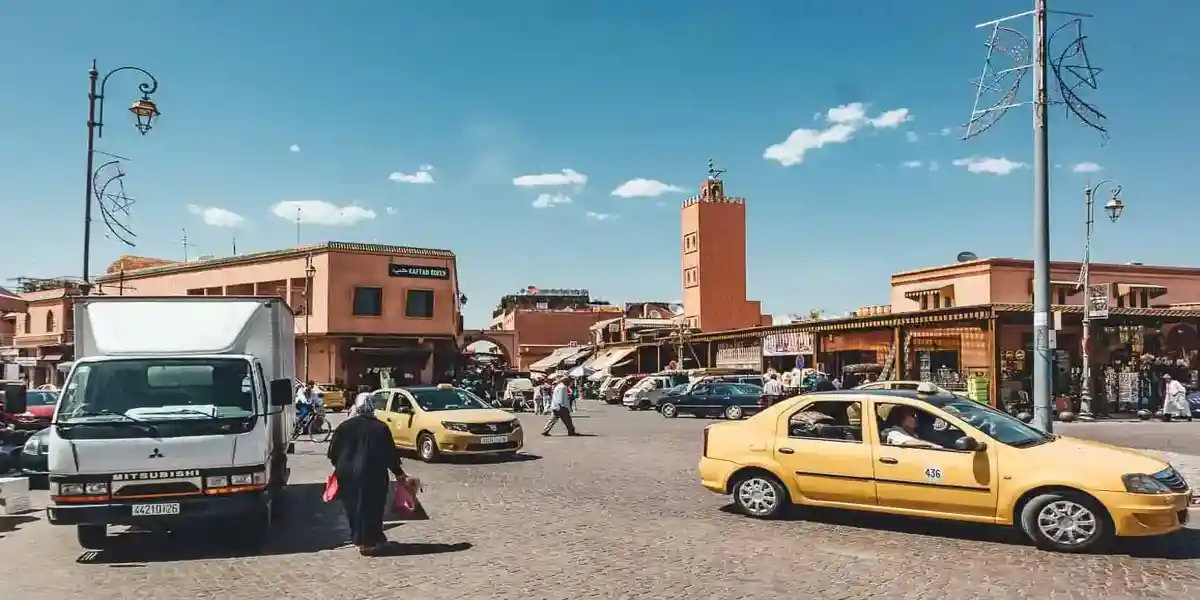
Petit taxis lined up near the medina entrance in Marrakech
What Exactly is a Petit Taxi?
The term petit taxi translates literally to “small taxi” in French, Morocco’s second official language. These vehicles are compact cars, typically Fiat Unos, Dacia Logans, or Peugeots, licensed to operate exclusively within city boundaries. Each Moroccan city assigns its petit taxis a distinctive color, making them instantly recognizable.
In Marrakech, you’ll spot them in a warm beige or tan shade. Casablanca taxis wear a striking red. Fes features blue petit taxis, while Tangier opts for a lighter blue-green. Rabat’s fleet runs in dark blue, and Essaouira showcases pale blue vehicles. This color-coding isn’t merely decorative. It prevents drivers from operating outside their designated city.
Petit taxis legally carry a maximum of three passengers. This regulation stems from vehicle size and insurance requirements. If your group exceeds three people, you’ll need to split between two taxis or consider a grand taxi instead. Drivers who accept more than three passengers risk fines and license suspension.
Cities Where Petit Taxis Operate
You’ll find petit taxi services in virtually every Moroccan city and major town. The system functions most efficiently in urban centers with established tourist infrastructure.
The primary cities where tourists rely on petit taxi services include Marrakech, Casablanca, Fes, Rabat, Tangier, Meknes, Essaouira, Agadir, Ouarzazate, and Chefchaouen. Each city maintains its own fleet with distinctive colors and local regulations regarding fares and operating hours.
In smaller towns like Taroudant or Taza, petit taxis exist but in smaller numbers. Rural areas and villages typically lack this service entirely, where transportation depends on private vehicles or shared grand taxis connecting to larger cities.
The petit taxi Marrakech fleet is particularly extensive given the city’s tourism importance. You’ll find them stationed near major attractions, hotels, and transportation hubs. The Jemaa el-Fnaa square area maintains several unofficial taxi ranks where drivers wait for fares.
Taxi in Casablanca operates somewhat differently due to the city’s sprawling layout. Casa’s red taxis cover more ground, and fares naturally run higher for longer distances. The Hassan II Mosque area, Casa Port train station, and Mohammed V Airport approaches all have designated taxi waiting areas.
Understanding the Taxi Meter System
Every licensed petit taxi in Morocco must have a functioning meter, known locally as a “compteur.” This taxi meter Morocco regulation exists to protect both drivers and passengers from fare disputes. However, the reality on the ground sometimes differs from the official policy.
How to Use a Petit Taxi: Step by Step
Using the petit taxi system effectively requires understanding local customs and practical strategies. How to use petit taxi services becomes second nature after a few rides, but first-time visitors benefit from knowing the process beforehand.
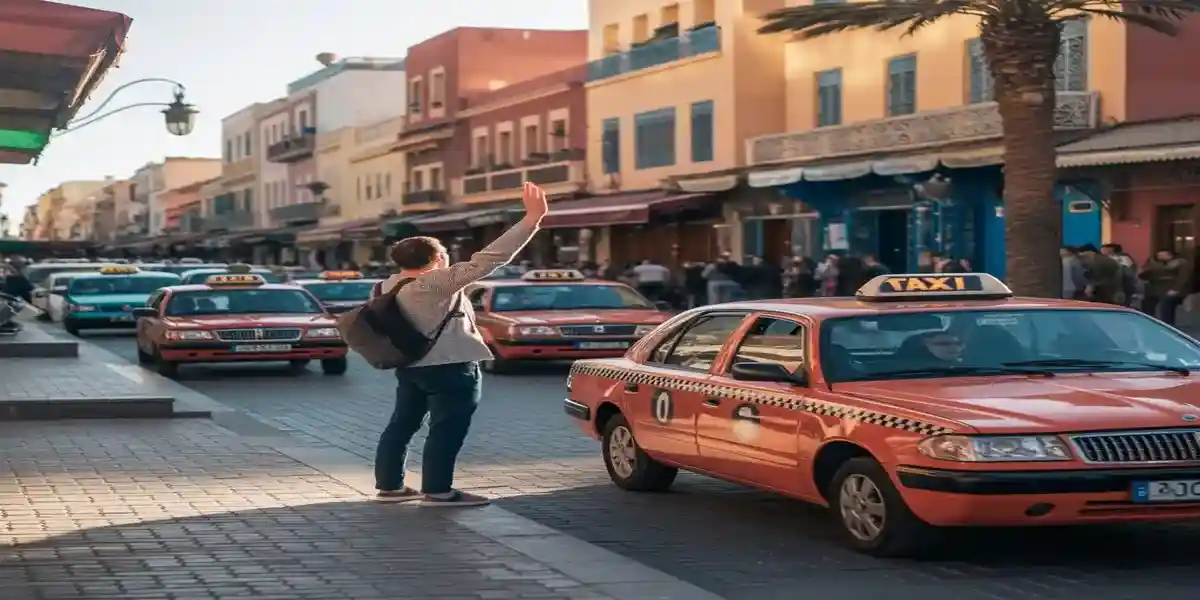
Hailing a petit taxi on a busy Moroccan street
Hailing Your Taxi
Petit taxis can be hailed directly from the street. Stand on the curb, make eye contact with approaching taxis, and raise your hand clearly. Available taxis display a small sign or light indicating they’re free. Occupied taxis may still stop if they’re heading your direction and have space.
The shared-ride tradition means drivers sometimes pick up additional passengers traveling similar routes. You can decline to share by stating “bghit wahed” (I want alone) when entering, though this may limit your options during busy periods.
Recognizing Official Licensed Taxis
Safety begins with identifying legitimate petit taxis. Unlicensed vehicles occasionally operate, particularly around airports and tourist zones. Knowing taxi tips Morocco travelers rely on helps you avoid potential problems.
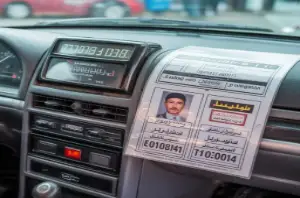
Official petit taxis display several identifying features. The city-specific color is your first indicator. Beyond paint, look for the official taxi sign mounted on the roof. Licensed vehicles have registration plates beginning with specific letters designating taxi status.
Inside, legitimate taxis display the driver’s photo ID and license number on the dashboard or sun visor. A functioning meter should be visible and accessible. The vehicle should have seatbelts and appear reasonably maintained.
Red Flags to Watch
Avoid vehicles without proper signage, meters, or driver identification. Private cars offering taxi services, especially those approaching you rather than waiting at ranks, should be declined. Drivers who refuse to use meters for standard routes or quote obviously inflated prices are best avoided.
At airports, follow signs to official taxi ranks rather than accepting offers from individuals inside terminals. The petit taxi Casablanca service at Mohammed V Airport operates from a clearly marked area outside arrivals. Marrakech Menara Airport similarly has designated taxi zones.
Negotiating When the Meter Doesn’t Work
Reality check: not every taxi meter functions perfectly, and not every driver uses it willingly. Knowing how to negotiate fair prices protects your budget without creating conflict.
When Fixed Prices Make Sense
Certain situations favor fixed-price arrangements. Very short rides of a few blocks sometimes cost the minimum fare regardless of meter calculation. Late-night journeys, when the meter tariff increases anyway, might work equally well as negotiated rates.
Airport transfers often operate on fixed prices set by authorities. The Marrakech taxi service to and from Menara Airport, for instance, has official rates posted at the terminal. Knowing these beforehand prevents overpaying.
Availability and Operating Hours
Petit taxi availability fluctuates throughout the day and varies by city. Understanding these patterns helps you plan transportation effectively.
Petit taxis remain available during evening hours throughout major Moroccan cities
Peak Hours and Rush Periods
Morning rush hour (7:30-9:00 AM) and evening rush (5:30-7:30 PM) see highest demand. Finding available taxis becomes challenging, and those you do find may already have passengers. Journeys take longer due to traffic, and some drivers prefer shorter, quicker fares.
Friday afternoons around prayer time (approximately 1:00-2:30 PM) see reduced availability as many drivers attend mosque. Similarly, during Ramadan, the pre-sunset hour becomes difficult for finding taxis as drivers head home for iftar.
When to Choose Petit Taxi Over Alternatives
Moroccan transportation offers several options. Knowing when petit taxi services make the most sense optimizes both convenience and cost.
Petit Taxi vs. Grand Taxi
Grand taxis handle intercity routes and longer distances. Within city limits, petit taxis cost less and provide door-to-door service. Grand taxis follow fixed routes, often requiring transfers, and operate on a shared basis.
If you’re traveling between cities, exploring car rental options provides flexibility that neither taxi type offers. For city-to-city journeys on a budget, grand taxis remain economical if you accept the shared-ride format.
Common Mistakes to Avoid
First-time visitors often encounter predictable problems that experienced travelers have learned to circumvent. These taxi tips Morocco newcomers should memorize.
Fare-Related Mistakes
Never agree to a price without understanding the route distance. A driver suggesting 100 MAD for what should be a 20 MAD ride isn’t offering a deal. Similarly, not having small bills leads to “no change” claims where drivers keep excessive amounts.
Assuming all taxis should cost the same regardless of time causes confusion. Night tariffs legitimately cost more. Rush-hour traffic extends journey times and increases metered fares. These aren’t scams but rather the system working as designed.
Practical Tips for a Smooth Experience
Beyond avoiding mistakes, proactive strategies enhance every taxi journey. These recommendations come from experienced Morocco travelers who’ve refined their approach over countless rides.
Preparation Strategies
Keep a “taxi kit” readily accessible: small bills and coins, destination written in Arabic or French, offline map loaded, and basic phrases memorized. This preparation makes every ride smoother.
Ask your accommodation about typical fares to common destinations. Hotel staff know current rates and can advise what constitutes fair pricing. Some riads arrange trusted drivers for regular routes at set prices.
Communication Enhancements
Learn three numbers in Arabic: the price you expect (for negotiation), your destination’s house or building number, and the approximate time your journey should take. This knowledge positions you as an informed traveler.
Screenshots of your destination on maps work offline and communicate precisely when language fails. Zoom in enough to show the exact location, including nearby cross-streets or landmarks.
Building Positive Experiences
Treating drivers with respect generates goodwill. A greeting (“Salaam”), basic pleasantries, and genuine thanks for safe arrival create positive interactions. Many drivers share interesting local insights when passengers engage conversationally.
If a driver provides excellent service, consider exchanging contact information for future rides. Having a reliable driver’s number proves valuable for airport transfers, repeated routes, or when exploring less accessible areas.
Final Thoughts on Using Petit Taxis
The petit taxi Morocco system, despite initial complexity, serves travelers remarkably well. These affordable, ubiquitous vehicles connect neighborhoods, attractions, and transportation hubs throughout Morocco’s cities. Understanding the meter system, recognizing official taxis, and knowing when to negotiate transforms potential frustration into efficient transportation.
Your first few rides may feel uncertain. That’s completely normal. By your fifth or sixth taxi journey, the rhythm becomes familiar. You’ll hail confidently, negotiate fairly when needed, and navigate cities with the ease of someone who knows the system.
For travelers combining city exploration with broader Moroccan adventures, petit taxis form just one element of a comprehensive transportation strategy. They complement walking through medinas, grand taxis between cities, and rental vehicles for flexible itineraries. Each option serves specific needs, and knowing when to use each maximizes both experience and budget.
Safe travels, and may your taxi meters always run true.