

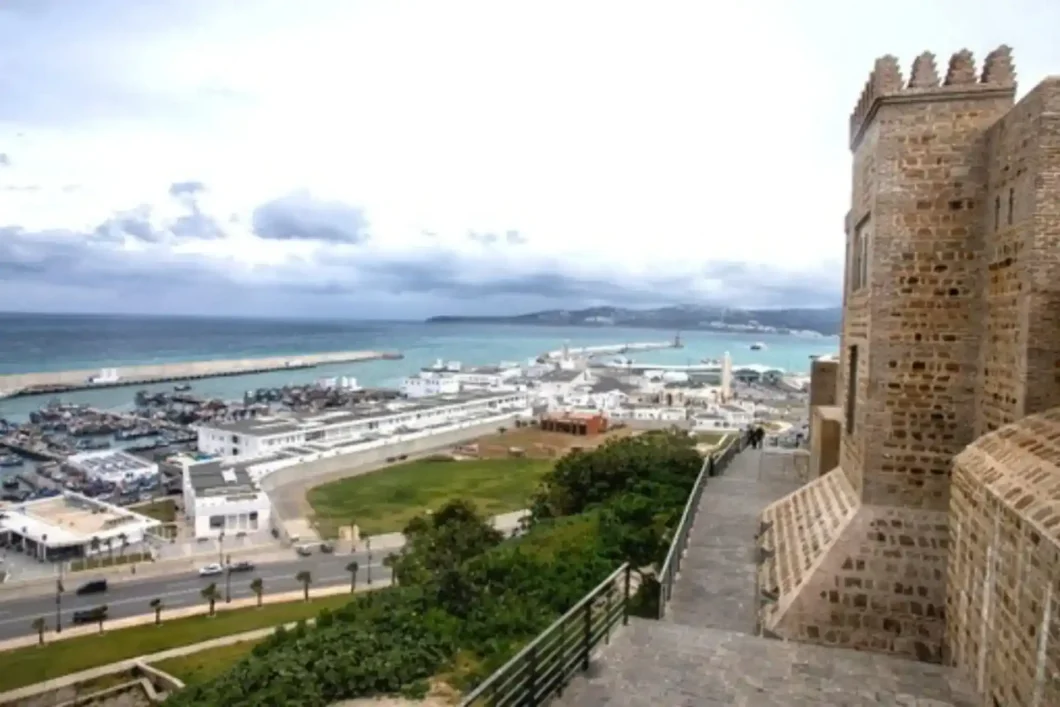
You’ve just arrived at Morocco’s mega-port after crossing the Mediterranean, passport stamped, ready to explore Tangier’s chaotic medina and coastal cafés. There’s just one problem: you’re not in Tangier. You’re 50 kilometers away at an industrial port complex, and the city you want to reach might as well be on another planet.
Welcome to the **Tangier Med port logistics puzzle** that confuses thousands of travelers every year. The confusion starts before you even book your ferry, continues through arrival, and culminates in potentially paying triple the fair price for a taxi because you didn’t understand the system.
This guide cuts through the confusion. We’ll explain the critical difference between Tangier Med and Tangier Ville, break down your three transport options (train, bus, grand taxi), reveal the actual fair prices, and arm you with the phrases you need to avoid getting ripped off. Whether you’re arriving from Algeciras on a massive cargo ferry or from Tarifa on a quick passenger crossing, you’ll know exactly what to do the moment you step off the boat.
The Great Confusion: Tanger Med vs. Tanger Ville
Before we dive into transport options, you need to understand the single most important distinction that catches travelers off-guard: **there are two ports in the Tangier region, and they’re completely different**.
Tanger Med: The Industrial Giant
**Tanger Med** (also spelled Tangier Med or Tanja Med) is Africa’s largest port and one of the busiest container terminals in the Mediterranean. Located approximately **50 kilometers east** of Tangier city center, it’s a massive, modern facility that handles cargo ships, ferries from Spain, and passenger traffic.
This is where ferries from **Algeciras** arrive — the main crossing point from Spain to Morocco. The journey from Algeciras takes about 1.5-2 hours, and you’ll dock at Tanger Med’s passenger terminal.
**What it’s like:** Industrial. Efficient. Soulless. Think shipping containers, highway interchanges, and zero Moroccan charm. There’s no medina here, no cafés, no accommodation worth staying at — just a functional port designed to move cargo and passengers quickly. Your goal is to get out and reach actual Tangier as fast as possible.
**Distance to Tangier city center:** 50 kilometers (31 miles), approximately 45 minutes to 1 hour by road depending on traffic.
Tanger Ville: The City Port
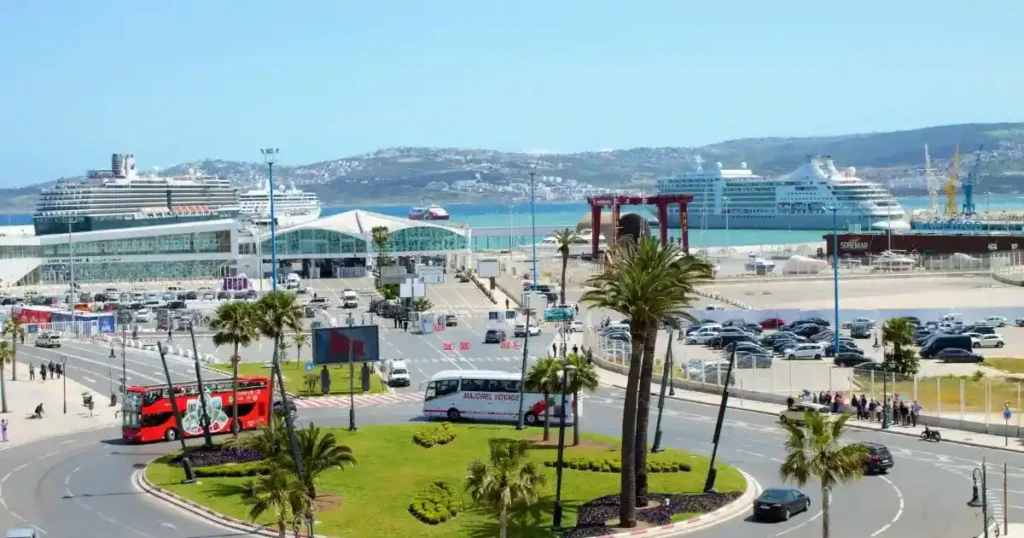
**Tanger Ville** (Tangier Ville or Tangier City Port) is the old port located right in the heart of Tangier city, at the bottom of the medina. This is where ferries from **Tarifa** (Spain) arrive — the quick 35-40 minute crossing popular with foot passengers and day-trippers.
**What it’s like:** You step off the ferry and you’re literally in central Tangier. The medina walls are visible, cafés are 200 meters away, hotels and riads are within walking distance. This is infinitely more convenient.
**If you’re arriving at Tanger Ville port, you don’t need this guide** — just walk out of the terminal, and you’re already in the city. This guide is specifically for those arriving at the distant Tanger Med port.
How to Know Which Port You’re Using
Check your ferry booking:
- **Ferry from Algeciras** → You’re arriving at **Tanger Med** (need transport to city, 50km away)
- **Ferry from Tarifa** → You’re arriving at **Tanger Ville** (already in city center, no extra transport needed)
Most travelers coming from mainland Europe with vehicles use the Algeciras-Tanger Med route because it handles cars, trucks, and campers. Foot passengers and day-trippers often prefer the quicker Tarifa-Tanger Ville crossing.
Now that we’ve established you’re arriving at Tanger Med and need to cover 50 kilometers to reach the city, let’s break down your options.
Option 1: The Train (The ONCF Shuttle Connection)
Morocco’s national railway company, **ONCF**, operates a train service connecting Tanger Med port directly to Tangier city and beyond. On paper, this sounds perfect — comfortable, affordable, modern train from port to city. In practice, it’s the least flexible option due to limited frequency.
How the Tanger Med Train Works
Inside the Tanger Med port complex, there’s a small railway station called **Tanger Med Port Station** (Gare Tanger Med Port). After clearing customs and immigration, follow signs for “Train” or “ONCF” — it’s about a 5-10 minute walk from the ferry terminal through covered walkways.
The train service runs between Tanger Med Port and **Tanger Ville train station** in the city center. Journey time is approximately **45 minutes** to Tangier city.
**Cost:** Approximately **35-40 MAD** ($3.50-$4 USD) for a second-class ticket. First class costs slightly more (around 50 MAD) and offers more comfortable seating.

Option 2: The Bus (Alsa Shuttle I-3 — The Budget Secret)
The best-kept budget secret for **getting from Tangier Med port to Tangier city center** is the public bus service operated by Alsa (a Spanish-Moroccan transport company). For the price of a coffee in Europe, you can ride from the port to Tangier’s main bus station.
The Alsa I-3 Shuttle Service
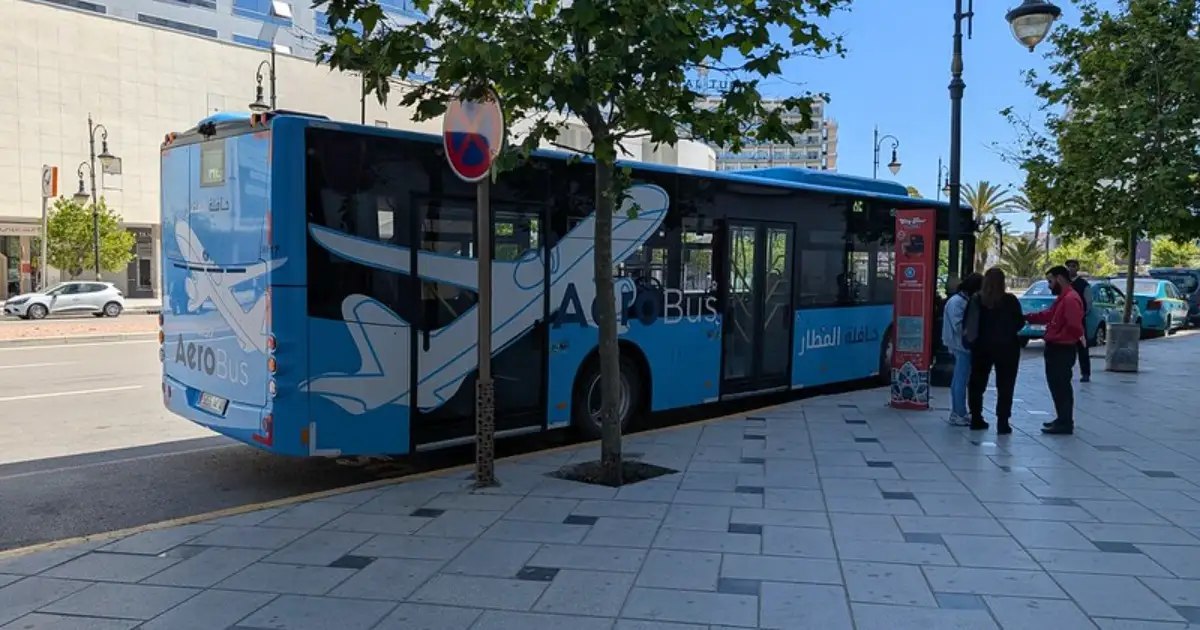
**Line I-3** is a dedicated shuttle bus connecting Tanger Med port with Tangier city. The bus is white with blue markings, clearly labeled “I-3” and showing “Tanger Ville” or “Tanger” as the destination.
**Where to find it:** Exit the ferry terminal building and look for the bus stop/parking area. The Alsa buses wait near the taxi rank. Ask any port worker “Alsa? I-3?” and they’ll point you in the right direction.
**Cost:** Approximately **7-10 MAD** ($0.70-$1 USD). This is by far the cheapest option and makes the bus the go-to choice for backpackers and budget travelers.
**Frequency:** Buses run every **30-60 minutes** during daytime hours (roughly 7:00 AM to 9:00 PM). The schedule loosely coordinates with ferry arrivals, though you might wait 20-40 minutes for the next departure.
**Journey time:** Approximately **1 hour** from Tanger Med to Tangier, depending on traffic and stops.

Option 3: Grand Taxis (The Fastest Way — and the Scam Minefield)
**Grand taxis** waiting outside Tanger Med port offer the most direct, fastest route to Tangier city center. They’re also where unsuspecting tourists get absolutely fleeced if they don’t know the fair price and aren’t prepared to negotiate firmly.
How Grand Taxis Work at Tanger Med
As you exit the ferry terminal building at Tanger Med, you’ll see a line of **white or beige Mercedes sedans** — these are grand taxis. Drivers will approach you, often aggressively, offering “taxi to Tangier.”
Grand taxis operate on two pricing models:
**1. Shared (à la place):** You pay for one seat in a 6-passenger taxi. The driver waits until all six seats are filled, then departs. Cost per person: **30-50 MAD** ($3-$5 USD).
**2. Private (course privée):** You pay for the entire taxi (all 6 seats), and you leave immediately without waiting for other passengers. Cost for the whole vehicle: **200-300 MAD** ($20-$30 USD).
**Journey time:** Approximately **40-50 minutes** from Tanger Med to central Tangier, making it the fastest option.
Arrival at Night: What Changes After 10 PM?
If your ferry from Algeciras arrives late in the evening — and many do, especially during summer when there are night crossings — your transport options narrow significantly.
Night Logistics Reality
**Trains:** The last train from Tanger Med to Tangier typically departs between 7:00-8:00 PM. If you’re arriving after this, the train is not an option.
**Buses:** The Alsa I-3 shuttle runs until approximately 9:00-9:30 PM. After that, no more buses.
**Grand taxis:** Available 24/7. This becomes your only option for late arrivals.
Night Pricing and Safety
**Official night tariff:** Moroccan taxis are supposed to charge a 50% surcharge after 8:00 PM. In practice, at Tanger Med, drivers often try to charge even more to late arrivals, knowing you have no alternatives.
**Expected night prices:**
- **Shared grand taxi:** 50-80 MAD per person (vs. 30-50 MAD during day)
- **Private grand taxi:** 300-400 MAD for entire vehicle (vs. 200-300 MAD during day)
**Safety:** The road from Tanger Med to Tangier is well-maintained and well-lit. Night driving is not inherently dangerous on this route. The main risk is overpaying, not safety.
**Pro tip for night arrivals:** If possible, book accommodation near Tanger Ville train station or the city center that can arrange a pick-up for a fixed price. Many hotels and riads offer airport/port transfer services at reasonable fixed rates (250-350 MAD) that eliminate the haggling stress after a long ferry journey.
The Comparison: Which Option is Right for You?
Here’s a quick summary to help you decide which transport option best fits your situation:
| Mode | Frequency | Cost (approx.) | Journey Time | Best For |
|---|---|---|---|---|
| Train (ONCF) | Very Low (4-5/day) | 35-40 MAD | ~45 min | Comfort, TGV connections, avoiding haggling |
| Bus (Alsa I-3) | Every 30-60 min | 7-10 MAD | ~1 hour | Backpackers, budget travelers, daytime arrivals |
| Grand Taxi (Shared) | Instant (after waiting) | 30-50 MAD per person | ~45 min | Moderate budget, some flexibility needed |
| Grand Taxi (Private) | Instant departure | 200-300 MAD total | ~40 min | Families, groups, late arrivals, door-to-door |
Final Recommendations: The Smart Choice Based on Your Situation
After helping countless travelers navigate the Tanger Med arrival experience, here’s our honest advice tailored to different situations:
Take the Bus (Alsa I-3) If…
- You’re a solo traveler or couple on a budget
- You’re arriving during daytime hours (before 8:00 PM)
- You’re comfortable with basic public transport
- You don’t have excessive luggage
- You want to avoid taxi negotiation completely
At 7-10 MAD, the bus is unbeatable value. Yes, you’ll need an onward taxi from the bus station (add 20 MAD), bringing your total to around 30 MAD — still cheaper than any other option. Perfect for backpackers and budget-conscious travelers.
Take the Train If…
- Your ferry arrival aligns with a train departure (with 1+ hour buffer)
- You’re continuing to Casablanca or Rabat via Al Boraq
- You value comfort and air conditioning
- You want fixed pricing without negotiation
- You don’t mind the limited schedule
The train is the sweet spot for comfort and cost if the timing works. At 35-40 MAD with a comfortable journey and seamless connection to Morocco’s high-speed rail network, it’s ideal for travelers heading beyond Tangier.
Take a Private Grand Taxi If…
- You’re traveling as a group of 3-4+ people (cost splits nicely)
- You’re arriving late at night (after 9:00 PM)
- You have lots of luggage or young children
- You want door-to-door service directly to your riad
- You’re comfortable negotiating firmly on price
- Speed and convenience are worth the extra cost
Split 4 ways, a 250 MAD private taxi costs 62.50 MAD per person — only slightly more than a shared taxi but with immediate departure and direct service. Just make sure you negotiate the price down from the initial inflated quote.
Consider a Shared Grand Taxi If…
- Buses aren’t running but trains are too infrequent
- You don’t mind waiting 20-40 minutes for the taxi to fill
- You’re okay with cramped seating
- 30-50 MAD fits your budget better than 200+ MAD private
Shared grand taxis are a middle ground — faster than the bus, cheaper than private taxi, but with waiting time and negotiation hassle.
Beyond Transport: Continuing Your Morocco Journey
Once you’ve successfully navigated from Tanger Med to Tangier city center, you’re at the northern gateway to Morocco’s many wonders. Tangier itself deserves at least 1-2 days to explore the kasbah, enjoy mint tea with Atlantic views, and wander the revitalized medina.
From Tangier, many travelers continue to:
- **Chefchaouen (the Blue City):** 2-3 hours by bus or shared taxi, one of Morocco’s most photogenic destinations
- **Fes:** 5-6 hours by train or car, Morocco’s cultural and spiritual capital
- **Marrakech:** 8 hours by train or overnight bus, the tourism heartbeat of Morocco
- **The Rif Mountains:** For hiking, rural villages, and stunning landscapes
If you’re planning a broader Morocco road trip, Tangier is an excellent starting point. Consider renting a car to explore at your own pace — our complete guide to car rental in Morocco covers everything from documentation to navigating Moroccan roads.
For tips on driving in Morocco, including what to expect on highways and in cities, check our detailed driving guide.
You’ve Arrived: Welcome to Morocco
The confusion of Tanger Med vs. Tangier Ville, the negotiation dance with grand taxi drivers, the budget calculation between bus and private car — it’s all part of arriving in Morocco. Within an hour of stepping off that ferry, you’ll be navigating medina alleys, sipping mint tea, and wondering why you stressed so much about the port transport logistics.
Now you know the reality: the bus costs 10 MAD and runs every hour, the train costs 35 MAD but runs 4-5 times daily, and the grand taxi should be 30-50 MAD shared or 200-300 MAD private (not a dirham more, no matter what the driver claims).
Armed with this knowledge, you’re not a confused tourist stepping off the boat anymore. You’re someone who knows the system, knows the prices, and knows how to navigate one of Morocco’s trickiest arrival points.
Welcome to Morocco. The adventure starts now.