

When you’re planning a Tangier to Essaouira road trip, you’re not just choosing a route — you’re selecting between two distinct Moroccos. The Atlantic coast highway offers something the desert routes can’t match: predictable infrastructure, consistent fuel stations, and sea breezes that keep your engine cool. This isn’t the romantic chaos of mountain passes or the raw adventure of Saharan tracks. This is Morocco’s most efficient north-south corridor, and knowing how to work it saves you hours, dirhams, and unnecessary stress.
The 630-kilometer stretch from Tangier’s port city energy to Essaouira’s bohemian Atlantic vibe represents one of Morocco’s most underrated logistical achievements. While everyone’s Instagramming Chefchaouen’s blue walls or Merzouga’s dunes, the A1-A3 autoroute network has been quietly revolutionizing how travelers move through the country. But here’s what the rental companies won’t tell you: choosing between the fast autoroute and the scenic nationale isn’t just about time versus views. It’s about tolls versus fuel efficiency, rest stop quality versus roadside tagine authenticity, and whether your idea of “experiencing Morocco” includes watching sheep cross a two-lane highway at sunset.
This guide breaks down the real logistics — the ones that matter when you’re actually behind the wheel, not just dreaming about mint tea stops. We’re talking car rental Morocco tips that go beyond “book in advance,” driving in Morocco safety protocols that actually work, and the truth about those “parking guardians” who’ll appear the moment you stop in any medina. Whether you’re doing the full seven-day coastal crawl or just connecting Tangier to Casablanca before flying out, understanding the Atlantic route’s rhythm changes everything.
The Strategy: Why the Atlantic Route is a Transport Dream
The Atlantic corridor isn’t Morocco’s most dramatic drive, but it’s certainly its most forgiving. Unlike the High Atlas passes where one miscalculation can leave you white-knuckling hairpin turns, or the desert routes where “next gas station: 180km” signs aren’t joking, the Tangier-Essaouira run offers consistent infrastructure. The A1 and A3 autoroutes are maintained to European standards — smooth asphalt, clear signage, and toll booths that actually take credit cards most of the time.
Why Coast Beats Desert for First-Timers
The autoroute network density between Tangier and Agadir means you’re never more than 50 kilometers from the next service area. Compare that to the Marrakech-Merzouga route where gas stations appear every 100-150 kilometers, and you understand why the Atlantic is the smart choice for rental cars. Engine overheating? Not an issue when you’re at sea level with consistent ocean breezes. Summer temperatures rarely crack 30°C on the coast, while inland routes regularly hit 40°C+ by July.
For comprehensive details on Morocco’s complete transportation network—from trains to buses to ferries—check our Morocco transportation guide for travelers weighing all their options beyond self-drive routes.
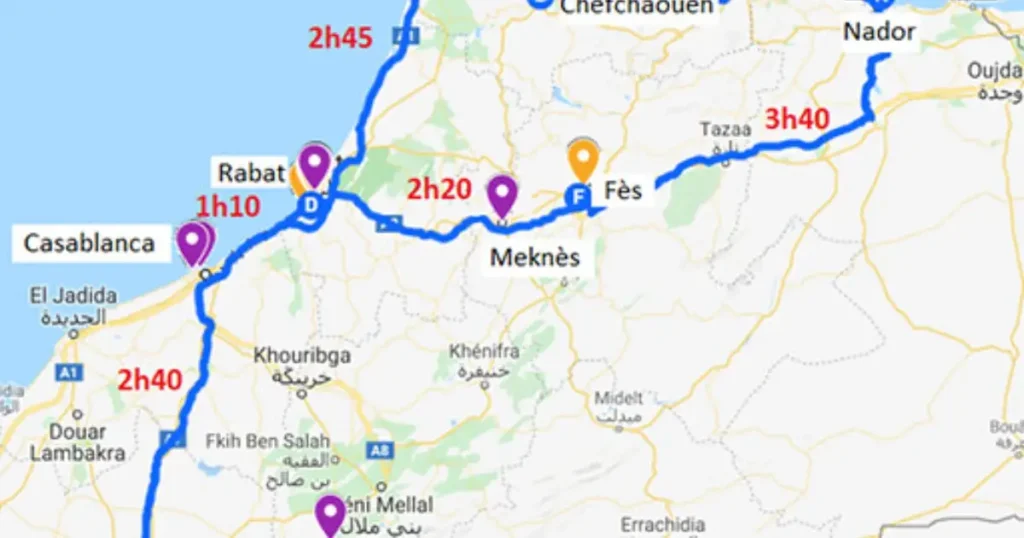
Here’s the network breakdown travelers actually need:
- Tangier to Rabat: 240km via A1 — Pure highway driving, three toll stops, average time 2h15min
- Rabat to Casablanca: 90km via A3 — Morocco’s busiest autoroute, factor 1h30min with traffic
- Casablanca to El Jadida: 100km via A5 — Newest section, opened 2023, pristine condition
- El Jadida to Essaouira: 200km via R301 — Where you choose between speed and scenery
The beauty of this route is modularity. Flying into Tangier but want to skip Rabat? Take the A1 straight to Casa. Already done Casablanca? The R301 coastal road from El Jadida to Essaouira delivers fishing villages and lagoon views that the autoroute bypasses entirely.
Network Overview: Train vs. Car Reality
Morocco’s Al Boraq high-speed train connects Tangier and Casablanca in 2h10min, and it’s spectacular — when it matches your schedule. But here’s the logistics truth: the train doesn’t stop in Asilah’s medina, can’t detour to the Oualidia lagoon, and definitely won’t wait while you photograph Safi’s pottery kilns at sunset. For the Tangier-Essaouira route specifically, rail gets you halfway (Tangier to Casa), then you’re switching to bus, grand taxi, or — ironically — renting a car anyway.
Driving from Tangier to Essaouira in your own vehicle means stopping when those “Poterie Traditionelle” signs appear, pulling over when the light hits the Atlantic just right, and not caring that it’s 3 p.m. and you’re nowhere near your planned lunch stop. The autoroute offers freedom the train schedule simply can’t match.
Read More: The Technical Setup →
Car Rental & Fuel: The Technical Setup
The romance of Morocco ends quickly when you’re arguing with a rental agent about scratch documentation at 9 p.m. in a Tangier parking lot. Skip the drama by understanding the logistics before you land.
Pick-up Logistics: Airport vs. City Center
Tangier Ibn Battouta Airport (TNG) rental desks close at 11 p.m., but most international companies (Europcar, Avis, Budget) stay open until the last flight clears. The airport pickup advantage isn’t just convenience — it’s avoiding Tangier’s port district traffic. The city center agencies cluster near the Grand Socco and Avenue Mohammed V, which means navigating medina-adjacent streets where donkey carts have equal right-of-way with your rental Dacia.
City center pickup makes sense if: You’re spending two nights in Tangier first and want to explore on foot. The medina’s pedestrian, the Kasbah’s walkable, and the port’s better reached by petit taxi than dealing with parking.
Airport pickup wins when: You’re doing the coastal run immediately. Clear signage gets you onto the A1 within 15 minutes, no medina navigation required.
The “One-Way” Fee Reality
Returning your car to a different city costs extra — that’s universal rental economics. But Morocco’s one-way fees vary wildly between companies and routes. For car rental Morocco tips that actually save money: expect 500-800 MAD ($50-80) for Tangier to Essaouira dropoff with major international chains. Local Moroccan companies (LocationVoiture.ma, Surprise Car) sometimes charge double, sometimes charge nothing if you book 2+ weeks ahead.
The calculation that matters: Is the one-way fee cheaper than the fuel and time to return the car to Tangier? If you’re flying out of Marrakech (100km from Essaouira), absolutely yes. If you’re circling back north, maybe rent for the full loop.
Planning a multi-city Morocco adventure? Our complete road trip logistics guide covers everything from border crossings to seasonal road conditions across the entire country.
The Fuel Guide: Gazole 10 Explained
Morocco’s fuel naming confused me initially too. Here’s what you need: Gazole 10 is the standard diesel fuel for modern rental cars. It’s called “10” because it contains maximum 10 ppm sulfur — the European standard most rental fleet vehicles require. Regular “Gazole” (50 ppm) exists but damages newer engines.
Current prices (February 2026):
- Gazole 10: 10.50 MAD/liter ($1.05/liter, $4/gallon)
- Super (Premium gasoline): 12.80 MAD/liter
- Eurosuper (Regular unleaded): 11.50 MAD/liter
Your rental contract specifies fuel type — double-check before filling. Most economy cars (Dacia Logan, Sandero) run on Gazole 10. Smaller city cars might take Eurosuper.
Payment logistics matter more than tourists expect. Major autoroute service stations (Afriquia, Total, Shell) accept Visa and Mastercard reliably. But once you leave the A-roads for the R301 coastal route, cash becomes essential. The station at Oualidia? Cash only. The one outside Sidi Kaouki? Ditto. Carry 500 MAD minimum for rural fuel stops.
Show Less ↑
Read More: Autoroute vs Nationale Battle →
The “Autoroute” vs. “Nationale” Battle
This is where your Tangier-Essaouira trip strategy crystallizes: speed versus experience, efficiency versus serendipity. The autoroute network (A1, A3, A5) delivers you south with Germanic precision. The Route Nationale 1 (R301 below Casablanca) makes you work for every kilometer — and rewards you accordingly.
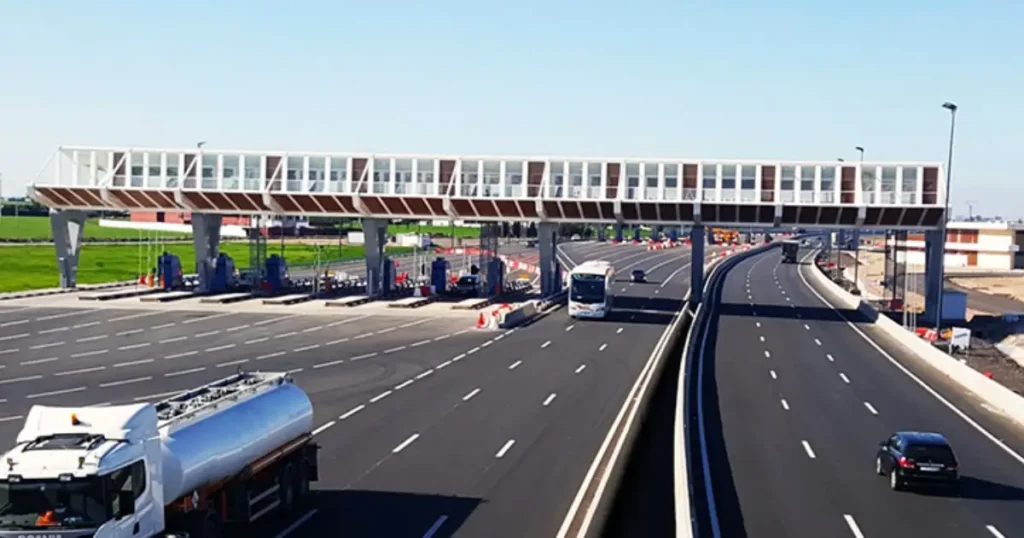
The A1 & A3: The Fast Lane
Morocco’s autoroutes charge tolls based on distance traveled, not flat fees per section. The electronic Jawaz badge system exists but requires a Moroccan bank account and isn’t worth the hassle for short-term visitors. You’ll pay cash or card at each toll plaza.
Morocco highway tolls for the Tangier-Essaouira route break down roughly:
- Tangier to Rabat (A1): 45 MAD (~$4.50)
- Rabat to Casablanca (A3): 20 MAD
- Casablanca to El Jadida (A5): 25 MAD
- Total autoroute tolls: ~90 MAD ($9) one-way
Toll booths accept 20 MAD, 50 MAD, 100 MAD, and 200 MAD notes. Larger bills (500 MAD) sometimes cause problems — the attendant might not have change. Credit cards work at major plazas but keep cash backup.
Aires de Repos: Where to Actually Stop
Not all rest stops are created equal. The service areas (aires) on the A1 between Tangier and Rabat offer clean bathrooms, WiFi, and Café Maure chains serving decent coffee. The standout is Aire de Sidi Yahya (km 140) — full restaurant, prayer room, and reliable phone signal for upload-your-location-to-worried-parents needs.
Skip the smaller aires unless desperate. The facilities vary from “surprisingly clean” to “hold it until the next one.” The A3 between Rabat and Casa has fewer quality stops — plan bathroom breaks in the cities instead.
The R301: The Scenic Choice
Below El Jadida, the autoroute ends and you’re on the R301 — a well-maintained two-lane road hugging the Atlantic. This is where driving times Morocco calculations shift from GPS estimates to reality checks.
Speed Reality Check: Google Maps says El Jadida to Essaouira is 3 hours via R301. Add 45 minutes. Why? Because the road passes through Oualidia (you’ll stop for oysters), Safi (pottery district begs exploration), and Sidi Kaouki (beach break mandatory). The listed speed limit is 100 km/h, but you’ll average 60-70 km/h between towns, animals crossing roads, and slow-moving trucks hauling fish.
The R301 surface quality varies by section:
- El Jadida to Oualidia: Excellent asphalt, recent repaving
- Oualidia to Safi: Good overall, some rough patches near coastal villages
- Safi to Essaouira: Older surface, more potholes, goats
Choose the R301 when you have time flexibility and want Morocco beyond highway rest stops. Choose the autoroute when you need to make Essaouira by sunset and “experiencing Morocco” can wait.
New to driving in Morocco entirely? Start with our Morocco travel homepage to understand the bigger picture of road-tripping this country before diving into specific routes.
Show Less ↑
Read More: Day-by-Day Transport Map →
Day-by-Day Transport Map
Breaking the route into manageable daily drives prevents the “we drove 8 hours and saw nothing but asphalt” regret common among rushed travelers.
Day 1-2: Tangier/Asilah Navigation
Tangier’s street network near the medina confuses even GPS. The old city’s pedestrian, but parking nearby requires local knowledge. Your best bet: Parking de la Corniche near the port (10 MAD/hour, guarded). From there, walk into the Kasbah or take a petit taxi (15-20 MAD) to specific restaurants.
For Asilah (45km south, 40 minutes via N1), parking outside the medina walls works better than attempting to drive in. The “gardiens” (unofficial parking attendants in yellow vests) charge 5-10 MAD — pay it, they genuinely watch your car.
Day 3: Rabat’s Tramway Solution
Rabat’s Morocco road network through the capital includes a modern tramway that tourists ignore to their detriment. Park your rental at Hay Karima tram station (free parking, guarded lot) and ride Line 1 directly to Bab Lamrissa (the medina) or Hassan Tower. Tickets cost 6 MAD, trams run every 10 minutes until 10:30 p.m.
For Hassan Tower and Mohammed V Mausoleum specifically, parking exists on Avenue Abi Regreg — but it fills by 10 a.m. on weekends. The alternative: blue “petit taxis” charge 20-30 MAD from anywhere in Rabat to anywhere else. Meter usage is law, but confirm “avec compteur” (with meter) before departing.
Day 4: Casablanca/El Jadida — The Traffic Truth
Casablanca driving requires different skills than rural Morocco. The city’s traffic density peaks 8-9:30 a.m. and 5-7 p.m. If you’re just passing through en route to El Jadida, take Boulevard de la Corniche (the coastal road) instead of cutting through downtown. It adds 15 minutes but subtracts stress.
For Hassan II Mosque visits, paid parking exists at the mosque complex (20 MAD/hour). Street parking near the mosque attracts aggressive “helpers” — use the official lot.
El Jadida’s Portuguese Cistern parking is straightforward: Look for “Parking Citerne Portugaise” signs, 10 MAD flat fee, five-minute walk to the old medina.
Day 5-7: The Coast — Parking-Friendly Stops
The R301 between El Jadida and Essaouira rewards spontaneous stops, but knowing where parking works prevents tickets (rare but they happen).
Oualidia Lagoon: Park at the northern end near Ostrea II restaurant (free if eating, otherwise 10 MAD). Walking the lagoon takes 20 minutes.
Safi Pottery District: The “Colline des Potiers” has dedicated visitor parking at the base of the hill. 5 MAD fee, unofficial guardians will guide you in.
Sidi Kaouki Beach: Parking directly on the beach sand is permitted (and encouraged). Face your car away from the wind, pay the guardian 10 MAD, enjoy the surf.
Show Less ↑
Read More: Police, Parking & Pedestrians →
The Survival Guide: Police, Parking & Pedestrians
Understanding Morocco’s informal traffic culture prevents the confusion that trips up first-time drivers.
Police Checkpoints: The Logistics
Random police checkpoints appear on major routes, especially near city limits. They’re not targeting tourists — they’re checking local drivers for documents and registration. When waved over:
- Slow down calmly — sudden stops look suspicious
- Have documents ready: Passport, driver’s license, rental contract (carte grise), insurance green card
- Smile and greet: “Salam alaikum” or “Bonjour” sets a friendly tone
- Let them lead: They’ll ask for specific documents — hand them over, answer questions politely
What they’re checking: Your rental contract confirms you’re authorized to drive the car. Your insurance proves coverage. Your license shows you’re legal to drive. That’s it.
If you’re missing any document, expect delays. If everything’s in order, the interaction lasts 60 seconds.
The “Gilet Jaune” Economy
Parking in Morocco medinas involves unofficial guardians who wear yellow vests (gilets jaunes) and “watch” your car. This isn’t a scam — it’s an informal but legitimate service. How it works:
- Day rate: 5-10 MAD for a few hours
- Night rate: 10-20 MAD overnight
- Payment timing: When you return to your car, not when you park
They genuinely do watch your vehicle. In medinas without official parking, they’re your best option. Pro tip: Give 10 MAD even if they ask for 5 — the goodwill helps if you return late.
Roundabouts & Right of Way
Morocco’s roundabout rules theoretically follow European standards: vehicles in the roundabout have right of way, entering vehicles yield. Reality is… flexible. Expect drivers to enter roundabouts without looking, assume they can merge, and generally treat yields as suggestions.
Defensive driving means: Assume no one will yield to you, even when they should. Flash headlights to communicate “I’m coming through” — it’s accepted practice. Never assume eye contact means they’ve seen you.
Show Less ↑
The “Last Mile” in Essaouira
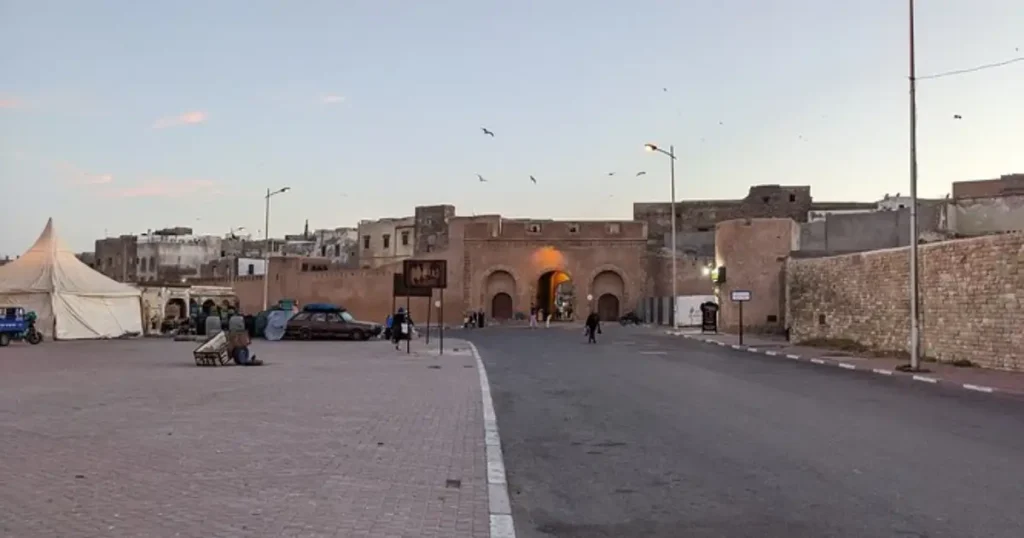
Essaouira’s medina is entirely pedestrian — no debate, no exceptions, no “but I’m just dropping luggage” loopholes. Your rental car stays outside the walls.
The No-Car Zone Reality
The old medina’s gates (Bab Doukkala, Bab Marrakech) have physical barriers preventing vehicle entry. Your accommodation likely sits inside these walls. Plan accordingly.
The Port Parking Strategy
Parking du Port (near the fishing harbor) is Essaouira’s main visitor lot. It’s large, guarded 24/7, and costs 10 MAD for the first three hours, then 5 MAD per additional hour (capped at 50 MAD for 24 hours). Located at GPS: 31.5078° N, 9.7719° W — plug that in before you arrive.
The lot fills by 11 a.m. in high season (March-May, September-October). Arrive early or expect to circle looking for street parking along Boulevard Mohammed V.
Blue Carts (Charrettes): The Final Link
Those blue wooden carts pulled by donkeys or pushed by hand aren’t tourist attractions — they’re Essaouira’s luggage transport system. The drivers (charretiers) cluster at the port parking exit.
Standard rates: 20-30 MAD per cart from parking to most riads in the medina. Agree on price before loading. The journey takes 5-10 minutes depending on your riad’s location. Yes, your suitcases in a donkey cart feels medieval. It’s also the most charming part of arriving in Essaouira.
Some riads offer porter service (included or 20 MAD tip expected) — confirm when booking. Otherwise, the charrettes are your move.
The Route Summary: Making Your Call
The Tangier to Essaouira road trip works as a speed run (7 hours straight via autoroutes) or a week-long coastal exploration. Most travelers find the sweet spot at 4-5 days: two nights in Tangier, one in Rabat or Casablanca, and two in Essaouira, with R301 scenic driving filling the final stretch.
Choose your vehicle at Tangier Airport, factor one-way fees into your budget, and remember that Gazole 10 is your friend. The autoroute tolls total under $10 each way — worth it for time savings. The R301 coastal alternative costs nothing but delivers everything Instagram promised Morocco would be.
Driving in Morocco safety comes down to defensive awareness and cultural adaptation. Yield when you shouldn’t have to, assume livestock has right of way, and remember that the journey between destinations often matters more than the destinations themselves. The Atlantic route isn’t Morocco’s most dramatic drive, but it might be its most revealing — the one where you understand how this country actually moves, beyond the postcard fantasies.
For more detailed guidance on navigating Morocco’s road systems, check out our comprehensive driving in Morocco guide. If you’re planning a broader road trip through the country, our Morocco road trip routes overview covers seven epic itineraries. And for rental vehicle specifics, our car rental Morocco guide breaks down every company, insurance requirement, and hidden fee.
The Atlantic coast awaits. The highway’s paid for (via tolls, anyway). And somewhere between Tangier’s port chaos and Essaouira’s windy ramparts, you’ll figure out why driving Morocco’s western edge makes more sense than flying city to city. It’s not about the destinations. It’s about the 630 kilometers of Moroccan life that happens between them.