

The Truth About Winter Driving in Morocco That Nobody Warns You About
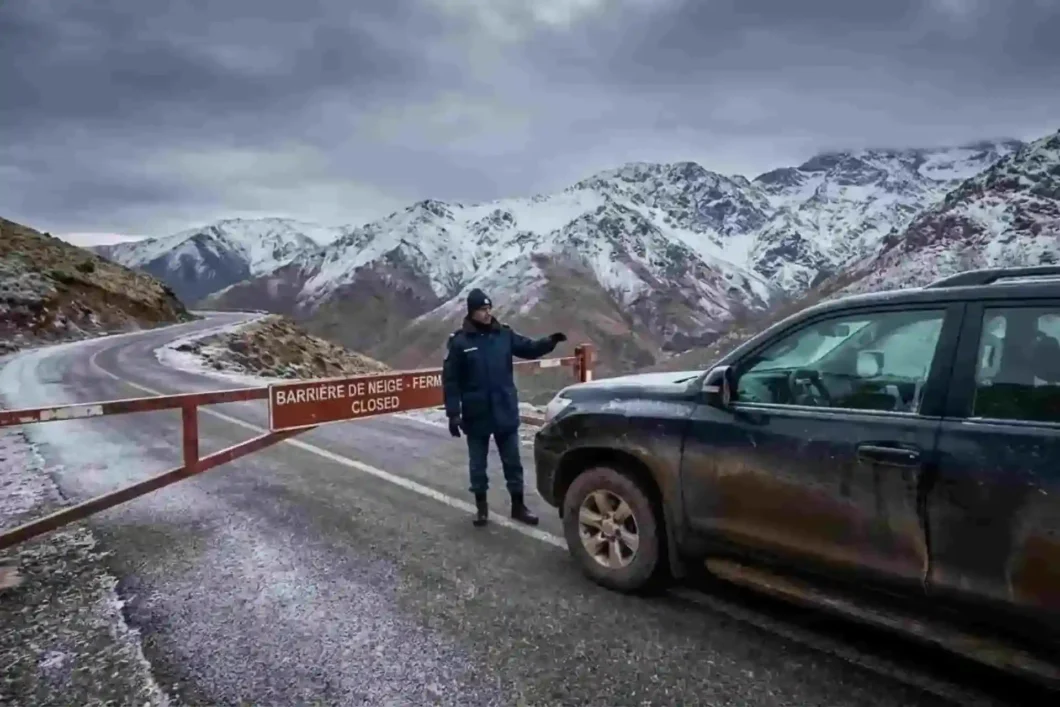
I remember standing at the edge of the Tizi n’Tichka pass in late January, watching a thin layer of frost creep across the windshield while my rental car’s heating system struggled to keep up. Behind me, a small queue of vehicles had formed. Ahead? A metal barrier, lowered, with a gendarme standing next to it holding a clipboard. We waited. And waited. For almost four hours.
That morning had started perfectly. Blue sky over Marrakech, mild temperatures, the kind of day that makes you think, “Yeah, winter in Morocco is no big deal.” But the Atlas Mountains had other plans.
If you’re planning to drive through Morocco between November and March — especially through the mountains — this is the article you actually need to read before you go. Not the generic “pack a jacket” kind of advice. The real stuff. The snow in the Atlas Mountains is a genuine logistical challenge that can strand you, eat up your schedule, and cost you money if you’re not prepared.
So let’s talk about it honestly.
Wait — It Snows in Africa?
Yeah. I know. The first time someone told me that Morocco gets real, proper snow, I laughed. Sahara desert, right? Camels, sand dunes, heat that melts your brain. But that image only tells half the story.
Morocco has serious mountain ranges. The High Atlas stretches across the country with peaks topping 4,000 meters. The Tizi n’Tichka pass sits at 2,260 meters. The Tizi n’Test is even more dramatic. These are not gentle hills. When winter rolls in, snow falls here the same way it would in the Alps or the Pyrenees.
Then there’s the Middle Atlas — Ifrane, specifically. People call it the “Little Switzerland of Morocco” and it’s not just a marketing line. Ifrane sits at around 1,600 meters and regularly gets heavy snowfall between December and February. The cedar forests around Azrou turn into something that genuinely looks like a postcard from the French Alps. It’s beautiful. It’s also freezing.
And don’t forget the Rif Mountains up north, around Chefchaouen. Snow up there is less predictable, but it happens. If you’re driving that route in deep winter, keep an eye on conditions.
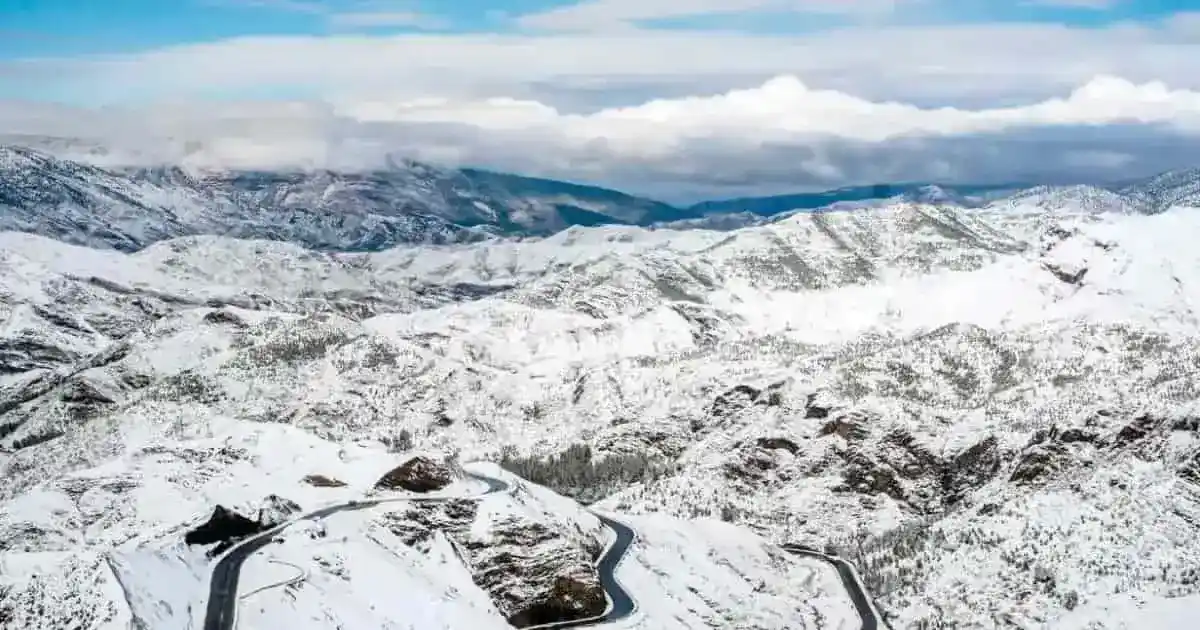
The point is simple: Morocco is not one climate zone. The coast can be mild and pleasant while the mountains are buried under half a meter of snow on the exact same day. Planning your Marrakech to Ouarzazate winter travel route means understanding this difference — it’s not optional.
The Snow Barrier System: How It Actually Works
This is the part that catches most tourists off guard. In Morocco, when a mountain road gets dangerous due to snow or ice, the authorities don’t just put up a sign and hope for the best. They physically close the road with metal barriers guarded by gendarmerie officers.
These are called barrières de neige. And they are non-negotiable.
I watched a French couple try to talk their way past one near Tizi n’Tichka. Polite smiles, a bit of French charm, maybe a small bribe attempt. The gendarme didn’t budge. The barrier stays down until the road is cleared and deemed safe. Period. There’s no workaround, no “just be careful” option. If it’s closed, it’s closed for your safety.
Now, the wait times. This is where it gets frustrating. If conditions are mild, the barrier might go up after two hours. If there’s a serious snowstorm and the road needs full clearing and salting? You could be waiting up to two full days. I’ve seen both scenarios personally. You need to factor this into your timeline — especially if you’re planning a tight road trip schedule.
The lesson here is straightforward: if you’re driving through the mountains in winter, add at least one full extra day to your trip for unexpected delays. Trust me on this one.
The Tire Trap: Your Rental Car Is Not Ready for Snow
This is probably the single most important thing in this entire article. Pay attention.
When you rent a car in Morocco — anywhere in Morocco, any rental company — there is an almost certain chance that car is equipped with summer tires. Year-round. Even in January. Even if you’re driving to Ifrane.
Why? Because 90% of Morocco’s roads don’t need winter tires. The coast is mild. The plains are fine. The rental companies optimize for the majority of their customers, not for the 5% who decide to drive into the mountains in deep winter.
So what do you do? Before you sign anything at the rental counter, ask specifically about tire type. And then, honestly, assume the answer is summer tires regardless of what they tell you. If you’re planning mountain driving between November and March, you need to either find a rental with proper tires or buy snow chains for rental cars Morocco yourself.
If you want to avoid the whole tire and chains situation entirely, the smartest move is to research your rental options carefully before your trip and specifically ask about winter-ready vehicles. Some smaller, local agencies in Marrakech are more flexible about this than the big international brands.
Black Ice: The Silent Danger After Dark
Snow on the road is visible. You can see it, you can feel it under the tires, you can adjust your speed. Black ice is invisible. It forms when temperatures drop below zero after sunset, coating the road surface with a thin, transparent layer of ice. You often don’t know it’s there until your car starts sliding.
In the Atlas Mountains, this is a real and serious hazard. The temperature swings between day and night in winter can be enormous — sometimes 15 to 20 degrees in a single evening. A road that’s perfectly fine at 3 PM can be genuinely dangerous by 7 PM.
The rule is brutal but simple: avoid driving in the Atlas after dark in winter. If you’re not sure about conditions and the sun is going down, find somewhere to stop. There are small hotels, gîtes, and even roadside cafés scattered along most mountain routes. A night in a gîte near Tizi n’Tichka beats sliding off a mountain road into nothing.
When you do drive on these roads during the day, use engine braking on descents. Especially the long, steep drops on the south side of the High Atlas. Your brakes will heat up and fade if you rely on them alone. Downshift. Go slow. And for the love of everything, check your driving technique for mountain roads before you tackle these passes.
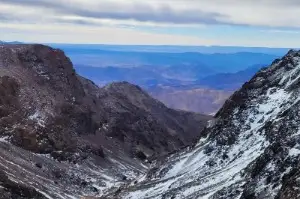
The combination of black ice and mountain descents is where most winter driving accidents happen in Morocco. Respect it. Slow down more than you think you need to. And seriously — stop driving when it gets dark.
What to Pack in Your Car for Winter Mountain Driving
This isn’t about being dramatic. It’s about being practical. If you get stuck behind a snow barrier for several hours — or overnight — your car becomes your shelter. And a rental car’s heating system is not designed to run indefinitely without overheating the engine or burning through fuel.
Here’s what I keep in the car every time I drive through the Atlas in winter. Nothing fancy. Nothing expensive. Just the basics that make the difference between a frustrating delay and a genuinely uncomfortable night.
- Warm blankets or a sleeping bag. If the engine has to be shut off to conserve fuel, the car gets cold fast. A single blanket won’t cut it at 2,000 meters in January. Two thick blankets or one decent sleeping bag is the minimum.
- Water and high-energy snacks. Dates, nuts, maybe some chocolate. You’re not starving — you’re just keeping your energy up while you wait. Dehydration happens faster in cold air than most people realize.
- Fuel above 50% at all times. This is the golden rule for mountain driving in any season, but it’s critical in winter. If you’re stuck for hours with the engine running for heat, that fuel disappears. Never enter a mountain pass on less than half a tank.
- A phone charger (portable power bank). Signal is spotty in mountain passes. Your battery drains faster in cold. A charged power bank is insurance.
- A small flashlight. If you’re stuck after dark, you’ll need one. The interior light doesn’t count.
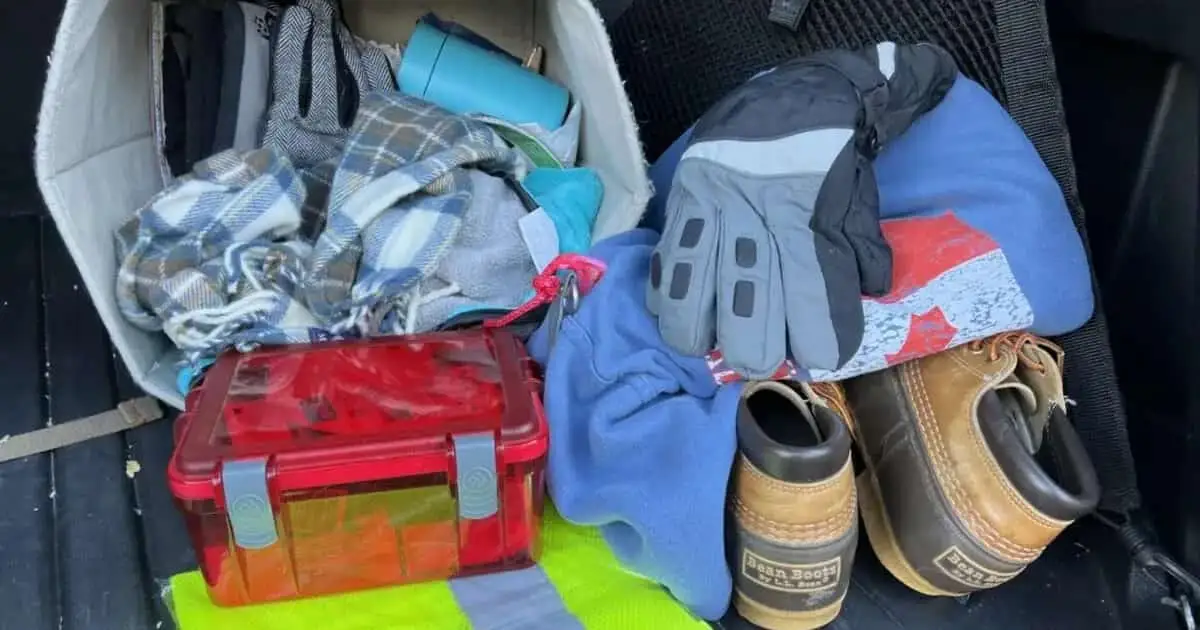
None of this takes up much space. All of it can save you a genuinely miserable experience. If you’re planning a broader winter road trip across Morocco, check our mountain route guides for specific advice on each pass.
The Honest Verdict on Winter Driving in Morocco
Is winter driving in Morocco dangerous? Honestly — it can be, if you’re not prepared. The mountains in winter are not a casual Sunday drive. But they’re also not impossible. Thousands of people drive through the Atlas every winter without incident, because they know what they’re getting into and they plan accordingly.
The mistakes that get people into trouble are all avoidable. Driving after dark on icy passes. Trusting that a rental car is winter-ready. Ignoring a closed barrier. Not having a single warm blanket in the trunk. These aren’t rookie mistakes — they’re the kind of thing that happens when nobody told you the rules of the game.
So here’s my personal recommendation: if you want to see the Atlas in winter — and you should, because the snow-covered landscape is genuinely stunning — go. But go prepared. Buy or bring chains. Check conditions before every mountain crossing. Drive only in daylight. Keep your tank full. And give yourself extra time, because the mountains in Morocco don’t care about your flight home.
For the full picture on planning a safe road trip through Morocco at any time of year, start with our Morocco Travel Trip homepage and work from there.
FAQ: Winter Driving in Morocco
Does it really snow in Morocco?
Yes. The High Atlas (Tizi n’Tichka, Tizi n’Test), the Middle Atlas (Ifrane, Azrou), and parts of the Rif near Chefchaouen all receive regular snowfall between November and March. Ifrane in particular can get heavy snow and temperatures well below zero.
Can I drive from Marrakech to Ouarzazate in winter?
Yes, but the Tizi n’Tichka pass can be closed by snow barriers for hours or even days during heavy snowfall. Check conditions before you leave, drive only in daylight, and add at least one extra day to your schedule for potential delays.
Do rental cars in Morocco come with snow chains?
Almost never. You’ll need to buy or bring your own if you’re driving into the mountains in winter. The best place to buy them is a supermarket or auto parts store in Marrakech or Fès before heading into the Atlas.
What time of year is safest to drive the Atlas?
Spring (March–May) and autumn (September–November) are the sweet spot — mild temperatures, minimal snow risk, and the passes are open. If you go in deep winter (December–February), go prepared and go slow.
Is driving to Ifrane in winter worth it?
Absolutely, if you’re prepared. The landscape is extraordinary. Just make sure you have proper tires or chains, drive during the day, and book accommodation in advance — winter visitors are fewer, but the good gîtes and hotels fill up on weekends.